kottke.org posts about DNA
Carl Zimmer writes about the results of a new genetic study of humans and the diseases that afflicted us over the past 37,000 years. It’s a really fascinating read — in part because of how scientific results can defy our expectations. For instance, the researchers expected to find the plague when people first started domesticating animals 11,000 years ago. But they didn’t:
But the ancient DNA defied that expectation. The scientists found that plague and a number of other diseases jumped to people from animals thousands of years later, starting about 6,000 years ago. And those microbes did not jump into early farmers.
Instead, the new study points to nomadic tribes in Russia and Asia. Thousands of years after the dawn of agriculture, those nomads started rearing vast herds of cattle and other livestock.
And then:
Those epidemics were so intense that they changed the genetic profile of the nomads. Last year, Dr. Willerslev and his colleagues found that the nomads experienced a spike in mutations that boosted their immune system and that may have helped them resist the diseases they contracted. But their active immune systems may have also attacked their own bodies, producing chronic diseases such as multiple sclerosis.
These diseases might have played a part in Bronze Age history. In previous research, Dr. Willerslev and other scientists have found evidence that nomads expanded from the steppes of Asia into Europe about 4,500 years ago.
The study published on Wednesday suggests that the nomads may have gotten help from their pathogens. European farmers and hunter-gatherers had not evolved resistance to diseases such as plague and may have died off in huge numbers, making it easier for the nomads to move in.
Read the whole thing — it’s interesting throughout.
20 million people (a figure for the US I imagine) have uploaded their genetic profiles to consumer DNA sites like Ancestry.com, 23andMe, and GEDmatch. The first two have pledged to keep their users’ genetic information private and the third severely restricted access. But a warrant granted in Florida might supersede their good intentions.
Last week, however, a Florida detective announced at a police convention that he had obtained a warrant to penetrate GEDmatch and search its full database of nearly one million users. Legal experts said that this appeared to be the first time a judge had approved such a warrant, and that the development could have profound implications for genetic privacy.
Other agencies are sure to try to get similar warrants, so lets not forget that at the scale these services have reached, there are now implications for everyone, not just those who sent their DNA for analysis.
If that comes to pass, the Florida judge’s decision will affect not only the users of these sites but huge swaths of the population, including those who have never taken a DNA test. That’s because this emerging forensic technique makes it possible to identify a DNA profile even through distant family relationships.
In 2018, California police used GEDmatch data to identify a man they believe is the Golden State Killer, Joseph James DeAngelo. Since then, other police forces have followed suit, turning tools meant to find relatives, into ones that can be used to search family trees for criminals.
Because of the nature of DNA, every criminal is likely to have multiple relatives in every major genealogy database. Without an outcry, Professor Murphy and others said, warrants like the one obtained by Detective Fields could become the new norm, turning all genetic databases into law enforcement databases.
For The Atlantic, Sarah Zhang tells the story of dozens of people who found out through DNA testing that a fertility doctor named Donald Cline had used his own sperm in artificial insemination procedures on their mothers. The piece begins with the story of a woman whose parents had been treated by Cline more than 30 years ago.
It was only when she got home and replaced her phone that she saw the barrage of messages from even more half siblings. They had found her on Facebook, she realized, after searching for the username linked to her Ancestry.com account. Her husband had given her a DNA test for Christmas because she was interested in genealogy. Her heritage turned out to be exactly what she had thought — Scottish, with English, Irish, and Scandinavian mixed in — and she never bothered to click on the link that would show whether anyone on the site shared her DNA.
Apparently she did have relatives on Ancestry.com — and not just distant cousins. The people now sending her messages said they were Cline’s secret biological children. They said their parents had also been treated by Cline. They said that decades ago, without ever telling his patients, Cline had used his own sperm to impregnate women who came to him for artificial insemination.
According to her DNA, Woock, too, was one of his children.
In the time since Woock’s half siblings got in touch with her, they have broken the news dozens more times. The children Cline fathered with his patients now number at least 48, confirmed by DNA tests from 23andMe or Ancestry.com. (Several have a twin or other siblings who likely share the same biological father but haven’t been tested.) They keep in touch through a Facebook group. New siblings pop up in waves, timed perversely after holidays like Christmas or Mother’s Day or Father’s Day, when DNA tests are given as well-intentioned gifts.
One of Cline’s patients said recently: “I feel like I was raped 15 times.”
This commercial from Mexican airline AeroMexico cleverly reminds some Americans of the melting pot nature of our nation, where even “white” folks living near the border share significant amounts of DNA with those in Mexico. According to this piece in Adweek, the ad features non-actors and their actual DNA test results.
For those wondering how legit the scenarios shown in the ad are, Agost Carreño says it’s all real and that each person featured in the video was a non-actor who did have a 23andMe DNA test done in advance of the reveal.
Update: A possible inspiration for the AeroMexico video is The DNA Journey commercial by travel search engine Momondo:
The folks in that commercial may seem a bit naive about how DNA and ancestry works, but I took the 23andMe DNA test many years ago and was also surprised to find a few significant possible geographic outliers (British/Irish, Dutch) that were not accounted for in the handed-down family genealogy. (via @rudhraigh)
Sarah Zhang writes about a support group on Facebook for people who have discovered surprising parentage through DNA testing.
Lisa, 44, admits she is still trying to go of that anger. She had always felt out of place in her family. Her hair — which she always straightened — was naturally fine and curly, her skin dark. “People would think I’m Hispanic, and would speak Spanish to me on the street,” she says. So when an DNA test in 2015 revealed her biological father was likely African American, it clicked into place. But her mom denied it. “She wouldn’t answer me. She would change the subject,” recalls Lisa. When she kept pressing, her mother broke down, saying it would destroy the family and that her dad — the man she grew up with — would kill her. She refused to say anything else about Lisa’s biological father.
I’ve written about this before (here and here) and reading these stories never gets any less heartbreaking. Back in 2010, I shared this:
I know someone who adopted a baby and they have never told her that she’s adopted and don’t plan to (she’s now in her 20s). When DNA testing becomes commonplace in another 5-15 years, I wonder how long that secret will last and what her reaction will be.
DNA testing confirms what we should have known all along: family is more than what biology says it is. Families already look quite differently than they did 40-50 years ago and they will continue to shift in the future, MAGA be damned.
Science writer Carl Zimmer has a new book on genetics and heredity called She Has Her Mother’s Laugh. The New York Times published an excerpt this week focusing on mosaicism — an unexpected but surprisingly common condition where different cells in the same organism display different DNA (sometimes strikingly, fatally different).
Dr. Walsh and his colleagues have discovered intricate mosaics in the brains of healthy people. In one study, they plucked neurons from the brain of a 17-year-old boy who had died in a car accident. They sequenced the DNA in each neuron and compared it to the DNA in cells from the boy’s liver, heart and lungs.
Every neuron, the researchers found, had hundreds of mutations not found in the other organs. But many of the mutations were shared only by some of the other neurons.
It occurred to Dr. Walsh that he could use the mutations to reconstruct the cell lineages — to learn how they had originated. The researchers used the patterns to draw a sort of genealogy, linking each neuron first to its close cousins and then its more distant relatives.
When they had finished, the scientists found that the cells belonged to five main lineages. The cells in each lineage all inherited the same distinctive mosaic signature.
Even stranger, the scientists found cells in the boy’s heart with the same signature of mutations found in some brain neurons. Other lineages included cells from other organs.
Based on these results, the researchers pieced together a biography of the boy’s brain.
I’ve always been drawn to the idea that each of us are many people, an assembly of mismatched parts, manifesting themselves in different times and contexts. It’s striking to see that reflected, albeit in a refracted way, in our array of possible genomes.
Finding out about your family history through a DNA test can be a thrilling or disturbing experience, particularly when it comes to race and identity. In the NY Times, researcher Anita Foeman writes about asking people how they identify and then DNA testing them. A man named Bernard identifies as black and predicted his test would show 50% European and 50% African ancestry (his father was black and his mother was white):
His comments before the test: My mother said, “I know you are me, but no cop is going to take the time to find out your mother is white.” She was very specific about raising me as a black man.
His DNA test showed he is “91% European, 5% Middle Eastern, 2% Hispanic; less than 1% African and Asian”:
Thoughts about his ancestry results: What are you trying to do to me? You have caused a lot of problems in my family. I know my nose is sharp and my skin is light, but my politics are as black as night. Today, I don’t identify as mixed. I reject my white privilege in a racist America. There is no way that I or my kids will identify as anything other than black.
In a follow-up newsletter, Times reader Carl Johnson writes:
I am a 55-year-old American male of African descent. I have a dark complexion and grew up in rural East Tennessee with my mother’s relatives. I wanted to have DNA testing done to confirm rumors of my Native American heritage. To my surprise, my results were 84 percent West African, 14 percent European, and 2 percent East Asian.
My bigger dilemma is: How do I embrace my European origins? It’s assumed that the European DNA was obtained by force during slavery. I think that is most likely. But what if my European ancestors were indentured servants who worked closely with African slaves and a real romance evolved, despite the cultural norms of that time, and now here I am?
If I am true to myself and the scientific evidence that provides richness to the DNA I’ve inherited, I now need to figure out a way to honor all of me and those who survived to make me possible. The journey and adventure continues.
I got DNA tested many years ago and I just went back to look at the results. My parents’ grandparents (or great grandparents, don’t really know) settled in Minnesota and Wisconsin in the mid-to-late 1800s as part of a wave of upper Midwestern immigration from Germany and Scandinavia.1 Unsurprisingly, my results came back as 100% European — mostly Northern European with some Eastern European2 — but with more British and Irish than I suspected (12%):
You most likely had a grandparent, great-grandparent, or second great-grandparent who was 100% British & Irish. This person was likely born between 1850 and 1910.
Huh.
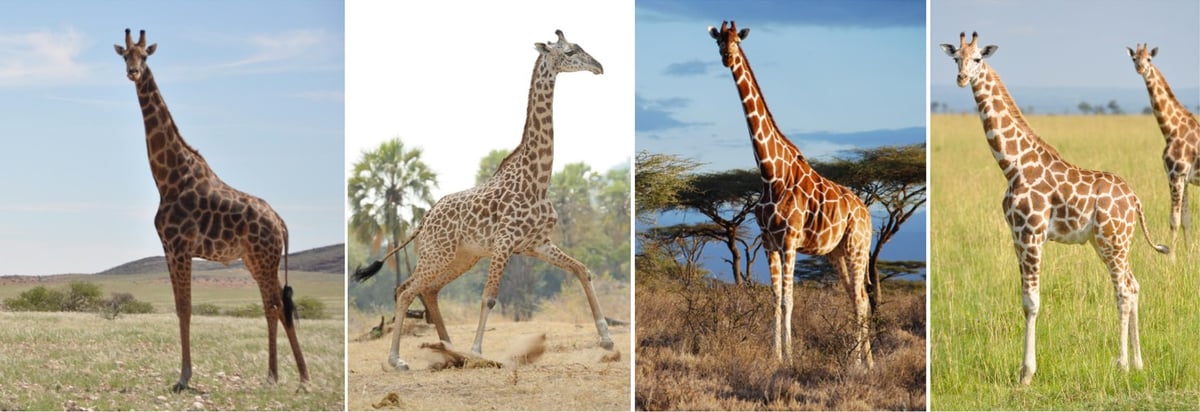
Suddenly, there are four species of giraffe now. Previously there was only one. Scientists have analyzed the genetic code of hundreds of giraffes in Africa and found much variation in their DNA, enough to split one species into four.
Some of the differences were as large or larger than the differences between brown bears and polar bears.
Despite their similar appearances, members of the different species don’t appear to mate with each other. It’s amazing that scientists didn’t know this until now.
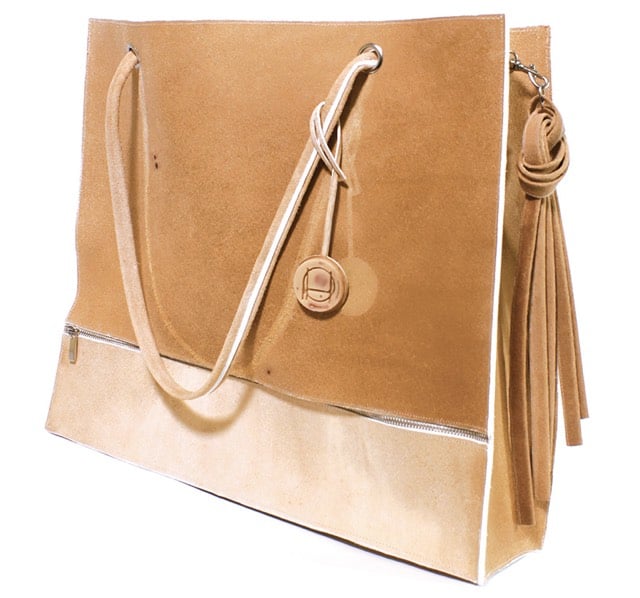
Designer Tina Gorjanc plans to create a collection of leather goods made from skin grown from human DNA, specifically the DNA of fashion designer Alexander McQueen. McQueen died in 2010, but he sewed his own hair into the items in his first collection, which is where Gorjanc is sourcing the genetic material for her leather.
The Pure Human project was designed as a critical design project that aims to address shortcomings concerning the protection of biological information and move the debate forward using current legal structure.
Furthermore, the project explores the ability of the technology to shift the perception of the production system for luxury goods as we know it and project its implementation in our current commercial system.
In other words, should we be able to make handbags from of Alexander McQueen’s DNA without his (or his estate’s) permission? Dezeen has more details on the project. BTW, the handbag pictured above is a mockup created from pigskin, onto which freckles have been applied. Other mockups include replicas of McQueen’s tattoos, which, you know, wow. (via @claytoncubitt)
Veronique Greenwood’s story on a new method to infer someone’s physical appearance from DNA evidence doubles as a skeptical mini-history of forensic science:
In 2009 the National Academy of Sciences released a blistering report calling into question the scientific validity of the analysis of fingerprints, bite marks, blood spatters, clothing fiber, handwriting, bullet markings, and many other mainstays of forensic investigation. It concluded that with one exception [DNA evidence], no forensic method could be relied on with a high degree of certainty to “demonstrate a connection between evidence and a specific individual or source.”
And even with DNA, it’s tricky. The common theme: academics doing pure research have a better track record than criminal investigators trying to prove or crack a case, or companies trying to develop a product. (See also: everything.)
Michael Specter has a truly fascinating piece in the New Yorker about CRISPR, a relatively new genetic tool for editing genes that geneticists are very excited about.
With CRISPR, scientists can change, delete, and replace genes in any animal, including us. Working mostly with mice, researchers have already deployed the tool to correct the genetic errors responsible for sickle-cell anemia, muscular dystrophy, and the fundamental defect associated with cystic fibrosis. One group has replaced a mutation that causes cataracts; another has destroyed receptors that H.I.V. uses to infiltrate our immune system.
The story has everything: the cheap copy/paste of DNA, easily editable mice, pig Hitler, “destroyer of worlds” overtones, and an incredible tale of science that could actually revolutionize (or ruin, depending on who you talk to) the world. I was shocked at how easy it is to do genetic research nowadays.
Ordering the genetic parts required to tailor DNA isn’t as easy as buying a pair of shoes from Zappos, but it seems to be headed in that direction. Yan turned on the computer at his lab station and navigated to an order form for a company called Integrated DNA Technologies, which synthesizes biological parts. “It takes orders online, so if I want a particular sequence I can have it here in a day or two,” he said. That is not unusual. Researchers can now order online almost any biological component, including DNA, RNA, and the chemicals necessary to use them. One can buy the parts required to assemble a working version of the polio virus (it’s been done) or genes that, when put together properly, can make feces smell like wintergreen. In Cambridge, I.D.T. often makes same-day deliveries. Another organization, Addgene, was established, more than a decade ago, as a nonprofit repository that houses tens of thousands of ready-made sequences, including nearly every guide used to edit genes with CRISPR. When researchers at the Broad, and at many other institutions, create a new guide, they typically donate a copy to Addgene.
And CRISPR in particular has quickened the pace. A scientist studying lung cancer mutations said of her research:
“In the past, this would have taken the field a decade, and would have required a consortium,” Platt said. “With CRISPR, it took me four months to do it by myself.”
Also recommended: Radiolab’s podcast on CRISPR from back in June.
No hunger. No pollution. No disease. Wired’s Amy Maxmen welcomes you to the age of copy and paste DNA editing and the end of life as we know it.
Genome editing started with just a few big labs putting in lots of effort, trying something 1,000 times for one or two successes. Now it’s something that someone with a BS and a couple thousand dollars’ worth of equipment can do. What was impractical is now almost everyday. That’s a big deal.
[I recently listened to Radiolab’s show on Crispr. Recommended. -jkottke]
A new analysis of the genomes of two extinct human species (Neanderthals and Denisovans) shows more clearly that they interbred with our species of human, contributing 2-4% of our modern genomes in some cases.
“What it begins to suggest is that we’re looking at a Lord of the Rings-type world — that there were many hominid populations,” says Mark Thomas, an evolutionary geneticist at University College London who was at the meeting but was not involved in the work.
But, more interestingly, the analysis also detected the Denisovans also bred with an as-yet-unknown species of humans.
The Denisovan genome indicates that the population got around: Reich said at the meeting that as well as interbreeding with the ancestors of Oceanians, they also bred with Neanderthals and the ancestors of modern humans in China and other parts of East Asia. Most surprisingly, Reich said, the genomes indicate that Denisovans interbred with yet another extinct population of archaic humans that lived in Asia more than 30,000 years ago — one that is neither human nor Neanderthal.
Is this the first time a new human species has been discovered through DNA evidence alone?
For the first time, scientists have created a living cell with DNA containing more than just the familiar A, T, C, and G units.
Hailed as a breakthrough by other scientists, the work is a step towards the synthesis of cells able to churn out drugs and other useful molecules. It also raises the possibility that cells could one day be engineered without any of the four DNA bases used by all organisms on Earth.
“What we have now is a living cell that literally stores increased genetic information,” says Floyd Romesberg, a chemical biologist at the Scripps Research Institute in La Jolla, California, who led the 15-year effort.
So instead of just using the GATTACA alphabet, scientists may eventually gain the use of an alphabet containing dozens or even hundreds or thousands of different letters. Potentially powerful stuff.
Did you know that there are new human beings? Like, not just new human babies but new species of humans? And not just new species of humans, but new species of humans who lived at the same time as, and even possibly bred with, modern humans, aka us? (Helloooooo, mesofacts.)
If you’ve read kottke.org over the years, you’ve likely heard of Homo floresiensis (aka Flores man, aka Hobbits), a species whose remains were discovered in present-day Indonesia in 2003. Homo floresiensis lived 95,000 to 13,000 years ago and stood about three feet high.
In this month’s National Geographic, Jamie Shreeve tells the story of the 2010 discovery of the Denisovans, hominids who lived in modern-day Russia as late as 40,000 years ago. Only a handful of bone fragments and teeth have been recovered, but DNA and other evidence suggests that Denisovans, Neanderthals, and modern humans lived together in the same place and interbred.
By the time of the Denisova symposium, Pääbo and his colleagues had published first drafts of the entire Neanderthal and Denisovan genomes. Reading so many more pages allowed Pääbo and his colleagues, including David Reich at Harvard University and Montgomery Slatkin at the University of California, Berkeley, to discover that human genomes today actually contain a small but significant amount of Neanderthal code — on average about 2.5 percent. The Neanderthals still may have been swept into extinction by the strange, high-browed new people who followed them out of Africa, but not before some commingling that left a little Neanderthal in most of us, 50,000 years later. Only one group of modern humans escaped that influence: Africans, because the commingling happened outside that continent.
Although the Denisovans’ genome showed that they were more closely related to the Neanderthals, they too had left their mark on us. But the geographic pattern of that legacy was odd. When the researchers compared the Denisovan genome with those of various modern human populations, they found no trace of it in Russia or nearby China, or anywhere else, for that matter — except in the genomes of New Guineans, other people from islands in Melanesia, and Australian Aborigines. On average their genomes are about 5 percent Denisovan. Negritos in the Philippines have as much as 2.5 percent.
In 2012, evidence emerged of a possible new human species, the Red Deer Cave people, who lived in what is now southern China.
The Red Deer Cave dwellers’ unusual features included a flat face, a broad nose, a jutting jaw that lacked a chin, large molar teeth, a rounded braincase with prominent brow ridges, and thick skull bones, the researchers say.
Their brains were “moderate in size,” Curnoe added.
Despite this seemingly primitive human design, radiocarbon dating of charcoal from the fossil deposits suggests the Red Deer Cave people lived just 14,500 to 11,500 years ago, the team says-a time by which all other human species, such as Neanderthals, are thought to have died out.
As with the other potential new human species, and as is proper in science, there is some skepticism about the Red Deer Cave people.
The team’s suggestion that the Red Deer Cave people are somehow evolutionarily unique is receiving a skeptical reception from other scientists.
Physical anthropologist Erik Trinkaus described the findings as “an unfortunate overinterpretation and misinterpretation of robust early modern humans, probably with affinities to modern Melanesians”-indigenous peoples of Pacific islands stretching from New Guinea to Fiji (map).
“There is nothing extraordinary” about the newly announced fossil human, added Trinkaus, of Washington University in St. Louis, via email.
Philipp Gunz, of Max Planck Institute for Evolutionary Anthropology in Germany, isn’t convinced by the study team’s interpretation either.
“I would be surprised if it really was a new human group that was previously undiscovered,” said, Gunz, also a physical anthropologist.
Heather Dewey-Hagborg collects hair, chewed gum, and smoked cigarettes, pulls the DNA out of them, and uses the genetic information to produce models of what the people who used those items might have looked like.
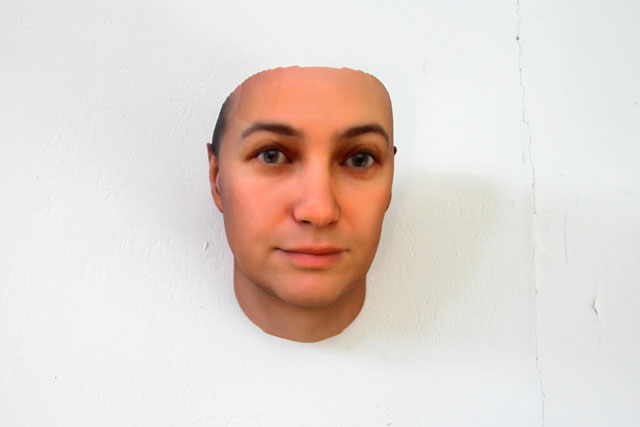
From this sequence, Dewey-Hagborg gathers information about the person’s ancestry, gender, eye color, propensity to be overweight and other traits related to facial morphology, such as the space between one’s eyes. “I have a list of about 40 or 50 different traits that I have either successfully analyzed or I am in the process of working on right now,” she says.
Dewey-Hagborg then enters these parameters into a computer program to create a 3D model of the person’s face.” Ancestry gives you most of the generic picture of what someone is going to tend to look like. Then, the other traits point towards modifications on that kind of generic portrait,” she explains. The artist ultimately sends a file of the 3D model to a 3D printer on the campus of her alma mater, New York University, so that it can be transformed into sculpture.
Researchers in Copenhagan and Perth used DNA found in the leg bones of the extinct moa bird to determine the half-life of DNA: 521 years.
By comparing the specimens’ ages and degrees of DNA degradation, the researchers calculated that DNA has a half-life of 521 years. That means that after 521 years, half of the bonds between nucleotides in the backbone of a sample would have broken; after another 521 years half of the remaining bonds would have gone; and so on.
The team predicts that even in a bone at an ideal preservation temperature of -5 ºC, effectively every bond would be destroyed after a maximum of 6.8 million years. The DNA would cease to be readable much earlier — perhaps after roughly 1.5 million years, when the remaining strands would be too short to give meaningful information.
That means no real-life Jurassic Park, folks.
In the last few years, scientists have discovered that before Neanderthals went extinct around 30,000 years ago, they interbred with modern humans. As a result, many humans alive today contain Neanderthal DNA in their genomes, typically between 1-4%.
Yesterday, a few of the editors at The Atlantic had their genes analyzed for Neanderthal DNA: Alexis Madrigal had 3.6%, Steve Clemons had 4.3%, and James Fallows had 5%. Personal genetic information company 23andMe added the ability to determine your Neanderthal DNA percentage a few months ago and it turns out 2.7% of my DNA is from Neanderthals, compared to 2.5% for the average 23andMe user.
If you have a 23andMe acct, you can check your percentage by logging in and going to “Ancestry Labs” in the sidebar.
This seems apocryphal but I’m gonna go with it anyway: Madonna has a cleanup team sweep her tour dressing rooms after shows for bits of hair, skin, and spit the singer might have left behind so that fans cannot get ahold of her DNA.
Concert promoter Alvaro Ramos, who is overseeing the Portuguese leg of Madonna’s MDNA tour, told Britain’s Daily Mirror: “We have to take extreme care, like I have never seen for any other artist.
“We cannot even look at the dressing room after it is ready, or even open the door.”
MDNA = Madonna’s DNA?
In 1981, Ray Towler was convicted of rape, kidnapping, and felonious assault of two young children and sentenced to life in prison. Twenty-nine years later, in 2010, DNA evidence proves he didn’t commit the crime and Towler is released from prison.
So many choices. Which car insurance. Which cereal. Which deodorant, toothpaste, toothbrush, soap, shampoo. Rows and rows of products. Varieties, sizes, colors. Which is cheaper? Which is better? What’s the best buy? Which gum to chew? When he went into prison there were, like, two kinds of chewing gum. Now there are a zillion. One of the small gifts he gives himself is trying all the gums. “I can spoil myself a little so long as I stay within my means,” he says. Papaya juice! Kiwi and strawberry nectar! Green tea! Arnold Palmer — he was a golfer when Towler went down. Now he is a drink, sweet and so incredibly thirst quenching.
He loves work. He got out May 5 and started working June 21. Hell, I’ve been vacationing for thirty years. He wears a smock and pushes a mail cart. He stops at all the cubicles, greets everyone with his friendly smile. Ray even loves commuting to work, especially now, in his new car, a black Ford Focus. He’s like a sixteen-year-old who can finally drive himself to school. It costs almost the same to park as it does to take the train.
File this one under “crying at work”.
The OpenPCR project is trying to raise $6,000 on Kickstarter to design and build a DNA Xerox machine that costs less than $400, thereby enabling DNA hacking in one’s garage.
In 1983, Kary Mullis first developed PCR, for which he later received a Nobel Prize. But the tool is still expensive, even though the technology is almost 30 years old. If computing grew at the same pace, we would all still be paying $2,000+ for a 1 MHz Apple II computer. Innovation in biotech needs a kick start!
PCR machines currently cost $4-10,000. (via modcult)
Today only, the usually $499 DNA test from 23andMe is only $99. Ship your spit off and in a few weeks, you’ll receive information about your ancestry, health risks, and so on.
DNA testing for $100! Stick that in your flying car’s tailpipe and smoke it!
Elizabeth Spiers explores her pre-adoption past, which these days includes DNA testing and pondering nature vs. nurture.
When I think about the differences [between me and my adoptive parents], I wonder if they’re personality traits I cultivated on my own or if they belong to someone else who passed them onto me. Things like a preference for morning or evening hours can often be genetic, and this is part of what I hope the DNA test will tell me.
I know someone who adopted a baby and they have never told her that she’s adopted and don’t plan to (she’s now in her 20s). When DNA testing becomes commonplace in another 5-15 years, I wonder how long that secret will last and what her reaction will be.
Poet Christian Bök wants to compose a poem and encode it into the DNA of the Deinococcus radiodurans bacteria — “the most radiation-resistant organism known”.
He wants to inject the DNA with a string of nucleotides that form a comprehensible poem, and he also wants the protein that the cell produces in response to form a second comprehensible poem.
AGGCGT GCCACC AAT
TCT TACC GATTT CT
CA CTCTAG ACC CTG
AGCCCA CGC GGTTCA
(via mr)
Scientists are saying that we can make ourselves a whoolly mammoth for as little as $10 million. All it takes is a mammoth genome, a lot of painstaking work, and much computing power.
If the genome of an extinct species can be reconstructed, biologists can work out the exact DNA differences with the genome of its nearest living relative. There are talks on how to modify the DNA in an elephant’s egg so that after each round of changes it would progressively resemble the DNA in a mammoth egg. The final-stage egg could then be brought to term in an elephant mother, and mammoths might once again roam the Siberian steppes.
The article also notes that if this works for the mammoth, it might also be possible to do the same for a Neanderthal. What an age we live in.
Watched America’s Stone Age Explorers on PBS this evening, a summary of recent findings about who the first Americans were, where they came from, and when they arrived. Recent genetic and archeological evidence suggests they arrived earlier than generally accepted and may have originated from Europe rather than Asia.





Socials & More