The four members of the Beatles, assisted by machine learning technology, come together one last time to record a song together, working off of a demo tape recorded by John Lennon in the 70s.
The long mythologised John Lennon demo was first worked on in February 1995 by Paul, George and Ringo as part of The Beatles Anthology project but it remained unfinished, partly because of the impossible technological challenges involved in working with the vocal John had recorded on tape in the 1970s. For years it looked like the song could never be completed.
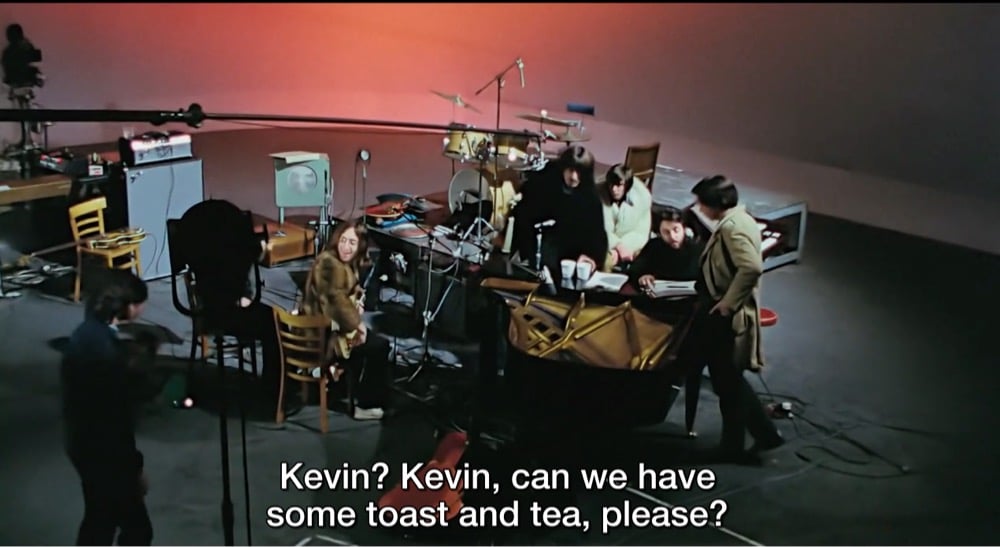
But in 2022 there was a stroke of serendipity. A software system developed by Peter Jackson and his team, used throughout the production of the documentary series Get Back, finally opened the way for the uncoupling of John’s vocal from his piano part. As a result, the original recording could be brought to life and worked on anew with contributions from all four Beatles.
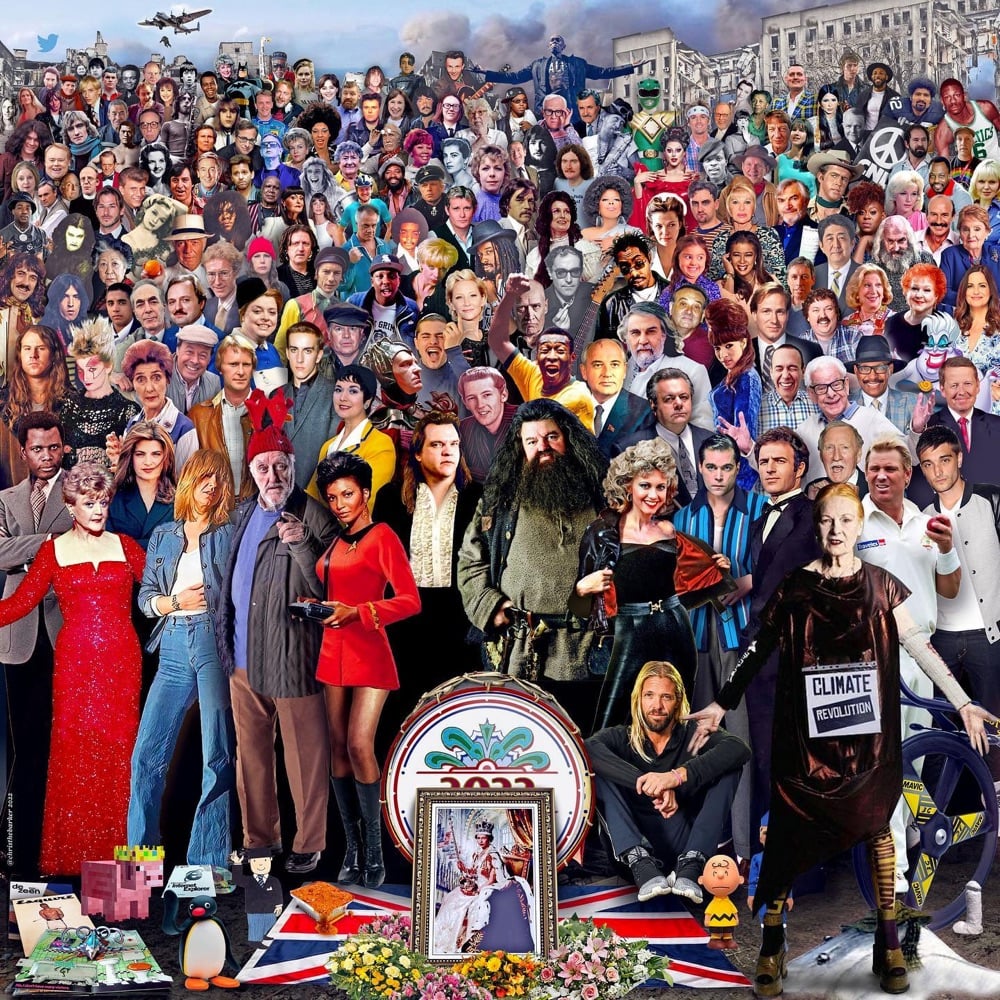
At the end of each year, art director Chris Barker collects celebrities who have died in the past 12 months into a Sgt. Pepper’s album cover collage — here’s 2022’s edition.
There doesn’t appear to be a complete listing of everyone pictured, but you can easily pick out Coolio, Gilbert Gottfried, Sidney Poitier, Angela Lansbury, Meatloaf, Nichelle Nichols, Pele, Mikhail Gorbachev, and Twitter.
Fueled by television, advertising, cable TV, and the internet, the post-war era saw an explosion of celebrity in America and the world. The average person today “knows of” so many more people than someone living in 1945 did, probably by a couple orders of magnitude. As Boomers and Gen X continue to age, annual displays like this of well-known people who have died will get larger and larger.
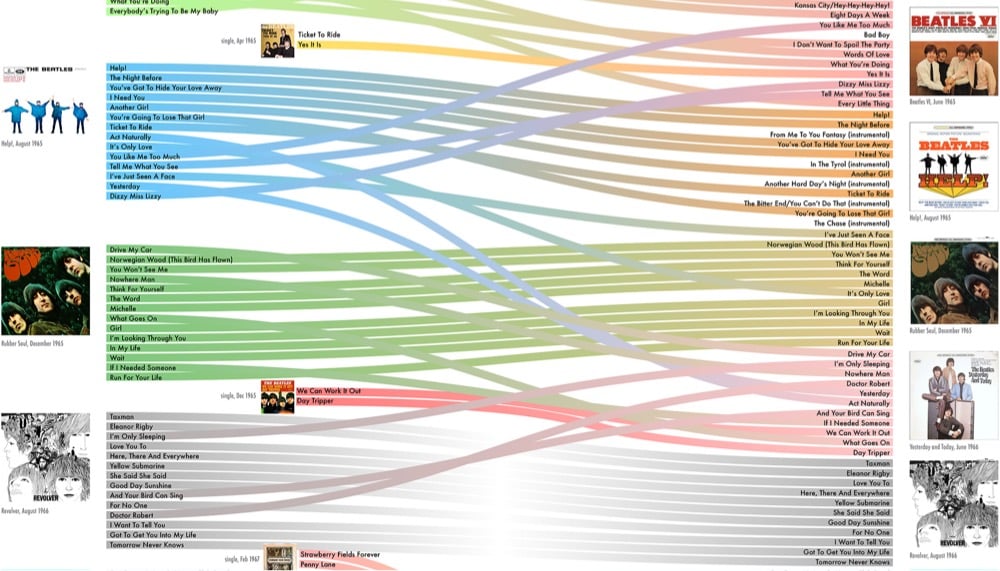
Throughout the relatively short recording career of The Beatles, and as late as 1967’s Magical Mystery Tour, the band’s albums released in the United States were, in some cases, quite different than those released in the UK. Jared Pike explains the differences in this comprehensive video:
Pike also made a chart of all the releases and which albums they appeared on, which you can download here. The image is too tall to include here, but here’s an excerpt that shows some of the reorganization that was done for American audiences:
I just looked on Spotify here in America and they’re using the UK versions of the albums (at least for Rubber Soul and Revolver). I wonder how long that’s been the case? According to Wikipedia, it looks like when the band’s albums were reissued on CD in 1987, the track listings were standardized to the UK/international release.
The first rule of improvisation (and brainstorming) is “yes… and”. When someone suggests an idea, plays a note, says a line, you accept it completely, then build on it. That’s how improvisational comedy or music flows. The moment someone says ‘no’, the flow is broken. It’s part of deferring judgement, where you strictly separate idea generation from idea selection.
As they slog through Don’t Let Me Down, George breaks the spell. Instead of building and accepting he leaps to judgement, saying “I think it’s awful.” Immediately, John and Paul lay down the rules: “Well, have you got anything?” “you’ve gotta come up with something better”.
Don’t judge, build.
I worked on a secret project recently (shhh…) where I really wanted to just say no but chose to do “yes… and” instead, which led my collaborator and I to a better solution. I love the improv rule, but it’s so hard for me to follow sometimes because my job is basically saying no to things all day.
6. One conversation at a time
One of the striking thing about the sessions is how polite everyone is. Perhaps it’s editing, but nobody speaks over anyone else. Everyone has a chance to be heard, which means people spend most of the time listening, rather than talking (apart from Paul, perhaps).
This is another lesson from musical and theatrical improvisation. The difference between a creative environment and a bunch of people shouting out ideas is the listening.
In the early 60s in Liverpool, inspired by going to see The Beatles at the legendary Cavern Club, four teenaged girls formed the Liverbirds, one of the first all-female rock bands. They toured Britain and gained their greatest fame in Hamburg, Germany, where they followed the Beatles by playing at the Star-Club. During their six-year existence, the band played with Jimi Hendrix, the Rolling Stones, and the Kinks. In this installment of Almost Famous, the group’s two remaining members detail the history of the band. What a great story.
If you’re even just a little bit interested in The Beatles, popular music, or making creative work, The Beatles: Get Back looks really good. Directed by Peter Jackson and utilizing dozens of hours of footage shot in 1969, this six-hour series documents the Beatles recording Let It Be, their final studio album release, and playing their infamous rooftop concert. The series premieres on Disney+ on November 25 and an accompanying book is out now.
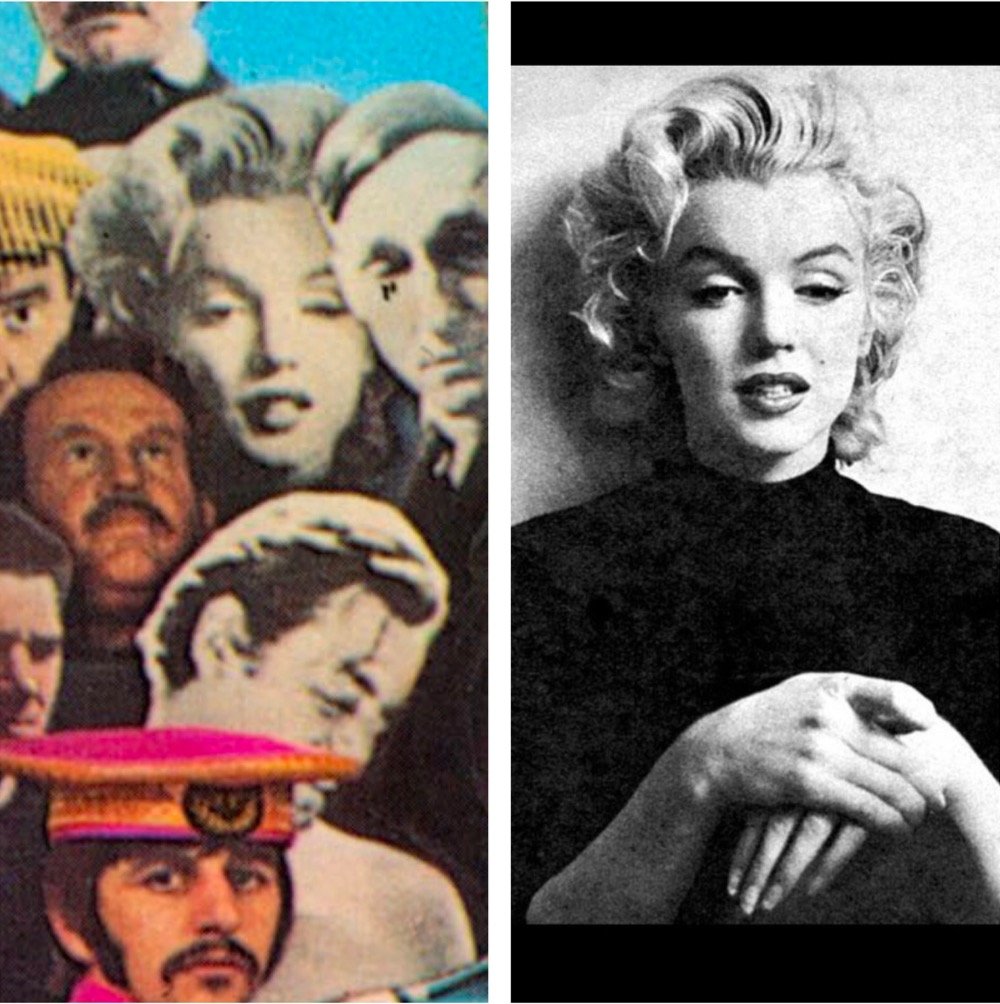
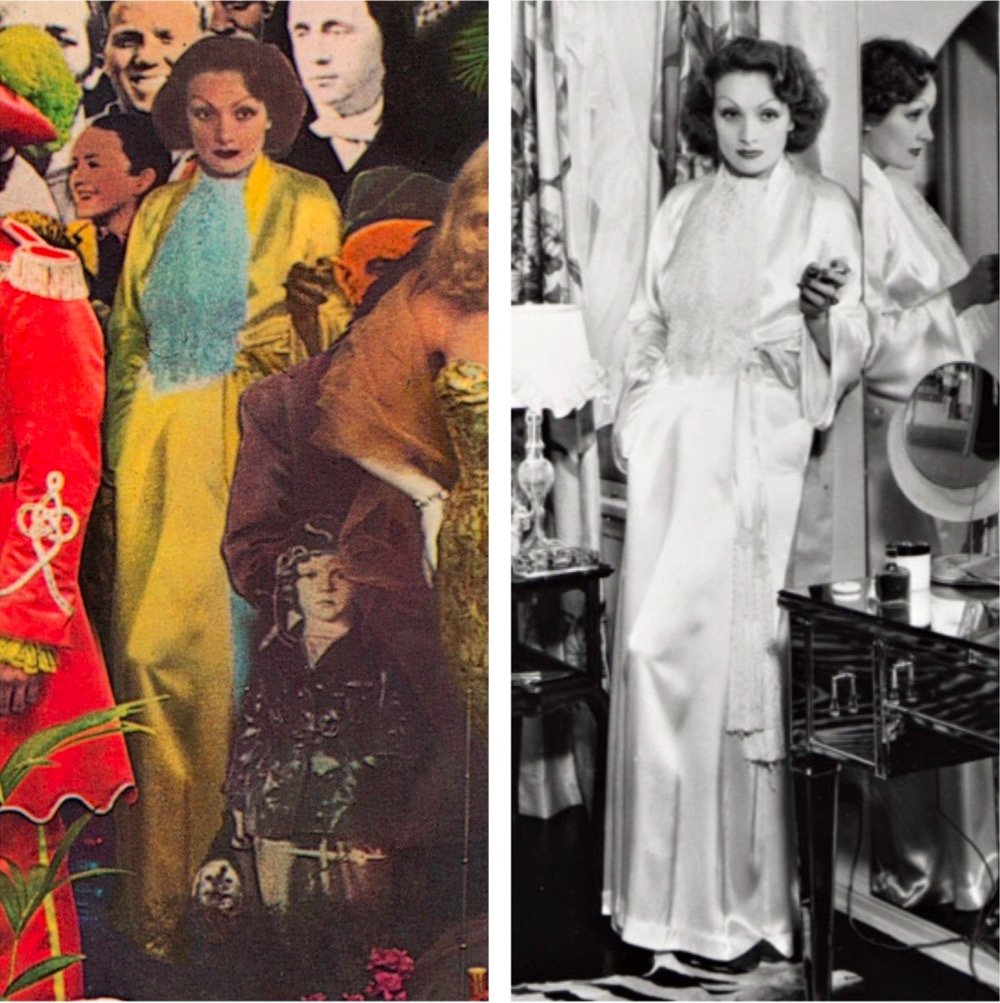
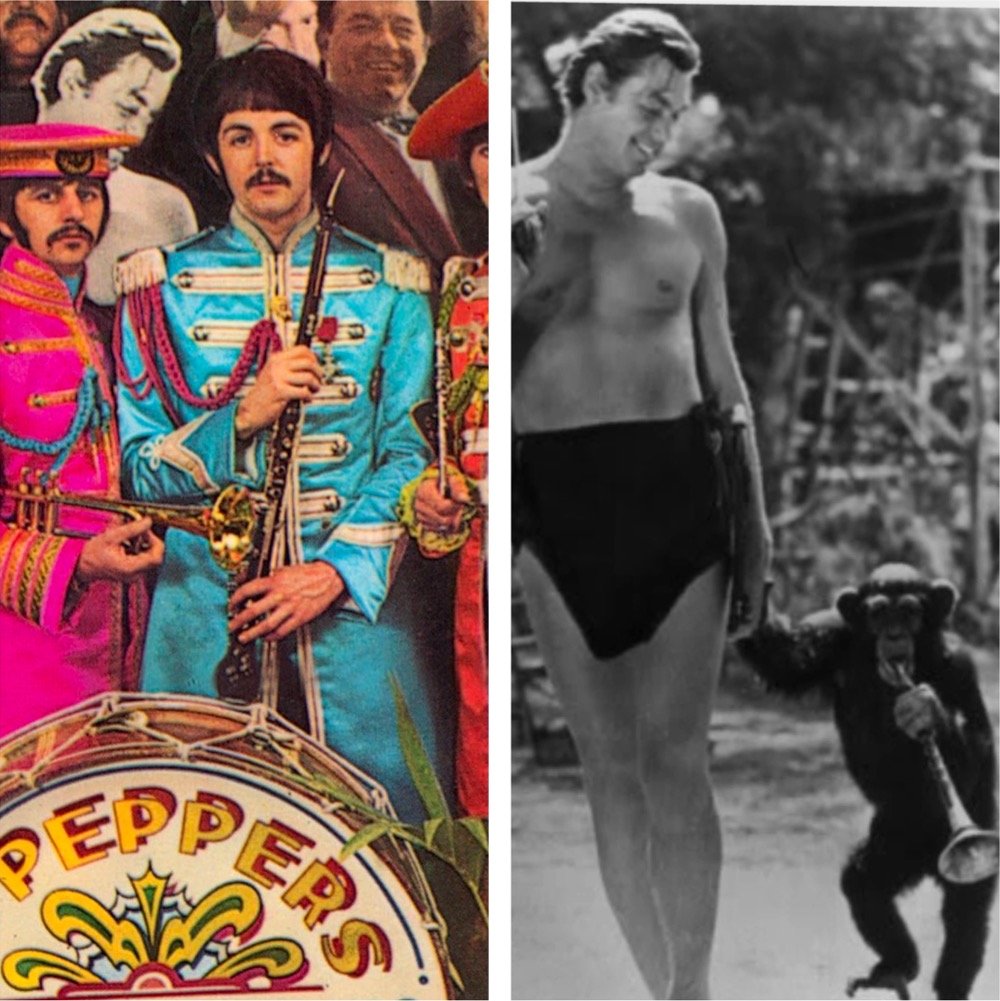
The iconic album cover for The Beatles’ Sgt. Pepper’s Lonely Hearts Club Band is a collage of images of dozens of people — mostly famous, mostly men — arranged as though they’re standing in a group behind the band. A list of the people depicted on the cover (including Marilyn Monroe, Edgar Allan Poe, Karl Marx, Shirley Temple, and Fred Astaire) can be found on Wikipedia but Chris Shaw went a step further and tracked down the exact source images for each one of people & objects shown.
The collage was designed by Peter Blake and his wife Jann Haworth, and the cut-outs were assembled in Michael Cooper’s London photographic studio. Michael and his team toiled hard to construct the ‘cast of extras’, using a mix of photos sourced from the BBC Hulton Picture Library, images from private collections, waxworks and personal artifacts, including a gnome owned by Ringo Starr.
You so rarely get to see the raw materials used for design objects, so this is a real treat. (via waxy)
The Beatles: Get Back, Peter Jackson’s documentary about the making of Let It Be, was delayed by the pandemic, so he and the studio have released a montage of about four minutes of the film as a sneak peek. The film, constructed from 55+ hours of largely unseen footage and 140 hours of audio recordings, seeks to portray the making of the band’s final studio album in a better light than previous accounts. The project has the support of Paul McCartney, Ringo Starr, Yoko Ono, and Olivia Harrison and will out in August 2021. (via ted gioia)
The streamer explained that “because of the wealth of tremendous footage Jackson has reviewed, which he has spent the past three years restoring and editing, ‘The Beatles: Get Back’ will be presented as three separate episodes.” The installments will roll out November 25-27 and be approximately two hours in length each.
A duo called Palette-Swap Ninja has produced a mashup of Star Wars and the entirety of the Beatles’ Sgt. Pepper’s Lonely Hearts Club Band album. Each song on the album is paired chronologically with a scene from the movie:
Princess Leia’s Stolen Death Star Plans (Sgt. Pepper’s Lonely Hearts Club Band)
Luke Is In The Desert (Lucy In The Sky With Diamonds)
Being From The Spaceport Of Mos Eisley (Being For The Benefit Of Mr Kite!)
The Samurai Guitarist recorded himself playing the Beatles’ Here Comes the Sun reeeeally slowly for 30 minutes and then sped the audio up by 20 times, which made his guitar sound like a violin. He explains how on Reddit.
Ok so my original plan was to rerecord the guitar normally when the video was done. I have a musical notation software that I plugged in everything exactly how I wanted to play it. I then added a metronome to trigger every 1/32nd note and set the tempo to 7 bpm, knowing that when sped up 20x that would be a nice tempo. It would also take 30 minutes or so which should be about the perfect time for a sunrise.
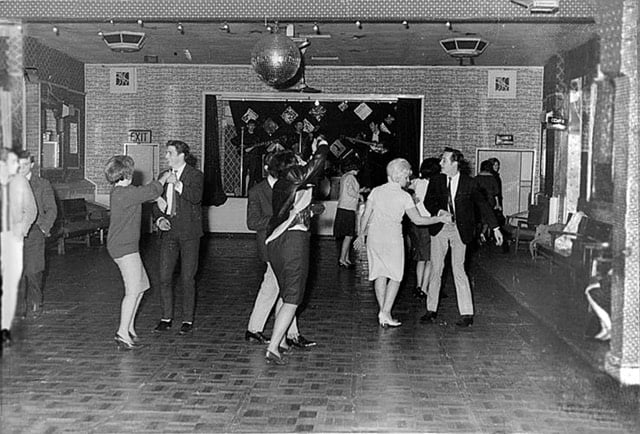
You’ve got to start somewhere, and for The Beatles, that somewhere included Palais Ballroom in Aldershot, England, where they played in front of only 18 people in 1961.
When the Beatles arrived after being driven nine hours from Liverpool by Leach’s friend Terry McCann, their posters were nowhere to be found, and they had to wait to be let into the venue.
That night, the Beatles played their usual covers of Chuck Berry and Jerry Lee Lewis to about 18 very bored people.
Did you know The Beatles have a YouTube channel? On which they have only posted three videos in the past year? Do you even know who The Beatles are? I mean, they aren’t on Spotify or any other streaming music service so maybe that won’t be an absurd question soon. After all, current and future generations will have a lot to say about the future popularity of the band and if they don’t hear the music, well…
For now, enjoy a live performance of Revolution from 1968. (Update: I have been informed by music nerds that only the vocals are live on this.)
Update: Legendary reporter Jimmy Breslin wrote a piece shortly after the shooting about the police officers that drove Lennon to the hospital that night.
As Moran started driving away, he heard people in the street shouting, “That’s John Lennon!”
Moran was driving with Bill Gamble. As they went through the streets to Roosevelt Hospital, Moran looked in the backseat and said, “Are you John Lennon?” The guy in the back nodded and groaned.
Back on Seventy-second Street, somebody told Palma, “Take the woman.” And a shaking woman, another victim’s wife, crumpled into the backseat as Palma started for Roosevelt Hospital. She said nothing to the two cops and they said nothing to her. Homicide is not a talking matter.
With A Little Help From My Fwends is The Flaming Lips full-length cover of The Beatles’ Sgt. Pepper’s Lonely Hearts Club Band. NPR has a first listen to it. ft. Foxygen, Miley Cyrus, Moby, Tegan And Sara, and others.
Last year’s pulverizing and strangely pretty The Terror was often punishingly uncompromising, but With A Little Help From My Fwends tackles its impossible task with a comparatively light touch. That lightness is clear from the title alone, and yet The Flaming Lips’ audaciously playful streak (required in order to cover Sgt. Pepper’s in the first place) still gets undercut with moments of abrasiveness, aggression and detours down strange side roads.
100 years ago, Charlie Chaplin put on some floppy shoes, oversized trousers, a bowler, a mustache and became The Tramp. Within a year or two, he was internationally famous and in two years, he was making $670,000/year, an unprecedented figure in those days.
“It was amazingly fast,” says David Robinson, a film critic who has written a definitive biography of Chaplin (His Life and Art) and is giving an already sold-out talk titled “100 Years of the Tramp” at the festival. “By mid-1914 he was already popular. By 1915 he was international. The speed with which it happened, without the modern media, is astonishing.”
Consider the following: At the end of 1963, virtually no one in America had heard of the Beatles. Yet on Feb. 9, 1964, they drew the largest TV audience in history — 73 million viewers — when they appeared on “The Ed Sullivan Show.” How could such a conquest have occurred so quickly? I once asked my friend Lenny Kaye that question, and he answered: “Everybody was ready for the ’60s to begin.” There’s some truth to that, but of course there’s much more to the story. The explosion of the Beatles in America was the result of combined forces — artistic, social and technological — as well as persistence, showbiz rivalries and more than a bit of luck. So how did it happen that the Beatles came out of nowhere to become the biggest cultural sensation ever, in six weeks?
This year, an iOS & Android game called Flappy Bird, that was originally released in 2013, suddenly rocketed to the top of the App Store bestseller list. (Seriously, look at how quickly it got popular.) The developer, Dong Nguyen, revealed in an interview with The Verge that the game was making $50,000 a day on ads. He’s since made the game unavailable for download.
On February 1st, reviews exploded to 800 in a single hour. 6,500 iTunes App Store reviews in a single day. February 1st is the day Dong Nguyen woke up, stretched, checked email, checked Twitter, checked iTunes, and witnessed millions of downloads happening.
Millions.
You can only imagine what that must have felt like.
This is the same app no one cared about for more than half a year. Just one month prior, it was a great day if Flappy Bird got 20 total reviews on the App Store. Up until January 9th, there had never been an hour in which Flappy Bird received even 10 reviews (most of the time it was under 5).
A: I own some vinyl and occasionally buy other albums, but nothing in multiples like the White Album.
Chang has taken 100 of those records, recorded the audio, and overlaid the resulting 100 tracks into one glorious track. Here’s Side 1 x 100 (Side 2 is available on vinyl only):
The albums, as it turns out, have also aged with some variety. Some played cleanly, others had scratches, noise from embedded dirt, or vinyl wear. And though the recordings are identical, variations in the pressings, and natural fluctuations in the speed of Mr. Chang’s analogue turntable, meant that the 100 recordings slowly moved out of sync, in the manner of an early Steve Reich piece: the opening of “Back in the U.S.S.R.” is entirely unified, but at the start of “Dear Prudence,” you hear the first line echoing several times, and by “While My Guitar Gently Weeps” the track is a nearly unrecognizeable roar.
Here are the Rolling Stones touring Ireland in 1965, messing around in what looks like a hotel room, playing a couple of Beatles tunes, I’ve Just Seen a Face and Eight Days a Week.
Jagger at least seems to be taking the piss more than honestly enjoying the music of his fellow British invasion personnel. (via dangerous minds)
Peter Dean is a big Beatles fan. And so he set out to reproduce exactly — from photographic evidence only — an old circus poster owned by John Lennon. In true Sgt. Pepper’s fashion, he had a little help from his friends.
This is a reproduction of the poster that inspired John Lennon to write the song Being for the Benefit of Mr. Kite!, which appeared on The Beatles’ 1967 album Sgt. Pepper’s Lonely Hearts Club Band. It is printed in a limited edition of 1,967.
Lennon bought the poster in an antiques shop and hung it in his music room. While writing for Sgt. Pepper one day, he drew inspiration from the quirky, old-fashioned language and set the words to music.
Peter Sellers did four different spoken word versions of The Beatles’ She Loves You: as Dr. Strangelove, with a Cockney accent, with an Irish accent, and with an upper crust English accent (my fave):
Academy Award-winning director Martin Scorsese traces Harrison’s live from his musical beginnings in Liverpool though his life as a musician, a seeker, a philanthropist and a filmmaker, weaving together interviews with Harrison and his closest friends, performances, home movies and photographs. Much of the material in the film has never been seen or heard before. The result is a rare glimpse into the mind and soul of one of the most talented artists of his generation and a profoundly intimate and affecting work of cinema.
A short documentary report from a thousand years into the future about The Beatles.
First-hand records are certainly scarce. There’s a lot we don’t know about The Beatles, but we do know that these four young men — John Lennon, Paul MacKenzie, Greg Hutchinson, and Scottie Pippen — were some of the finest musicians that ever existed. The Beatles rose to prominence when they travelled from their native Linverton to America to perform at Ed Sullivan’s annual Woodstock festival.
Possibly the worst idea in the world: a movie version of Lord of the Rings starring The Beatles (with Lennon as Gollum) and directed by Stanley Kubrick. According to Peter Jackson, this was a possibility but JRR said hells no.
According to Peter Jackson, who knows a little something about making Lord of the Rings movies, John Lennon was the Beatle most keen on LOTR back in the ’60s — and he wanted to play Gollum, while Paul McCartney would play Frodo, Ringo Starr would take on Sam and George Harrison would beard it up for Gandalf. And he approached a pre-2001 Stanley Kubrick to direct.
In his new series for Slate about creative partnerships, Joshua Shenk explores one of the most fruitful creative collaborations in history: that of John Lennon and Paul McCartney. Part three, about the break-up the Beatles, comes to a conclusion that’s different than some of the theories you may have heard previously.
Yet, looking for concrete divisions in their labor, though not irrelevant, can certainly seem myopic. It feels, from Davies’ account, as though the two men were bound by a thousand invisible strings.
Davies looked on at the partners before Yoko, before The White Album — “the tension album” Paul said. But tension had always been key to their work. The strings connecting them hardly dissolved, even in the times when the collaboration was adversarial, the kind of exchange that Andre Agassi described when he said that, if he hadn’t faced Pete Sampras, he’d have a better record, “but I’d be less.” Picking up on that incisive line, Michael Kimmelman wrote in his review of Agassi’s book Open that “rivalry … [is] the heart of sports, and, for athletes, no matter how bitter or fierce, something strangely akin to love: two vulnerable protagonists for a time lifted up not despite their differences but because of them.”
And:
This is nasty stuff. But the opposite of intimacy isn’t conflict. It’s indifference. The relationship between Paul and John had always been a tug of war — and that hardly stopped when they ceased to collaborate directly. Asked what he thought Paul would make of his first solo album, Lennon said, “I think it’ll probably scare him into doing something decent, and then he’ll scare me into doing something decent, like that.”
I’ve said it before: love and hate are the same emotion. (via @tcarmody)



Stay Connected