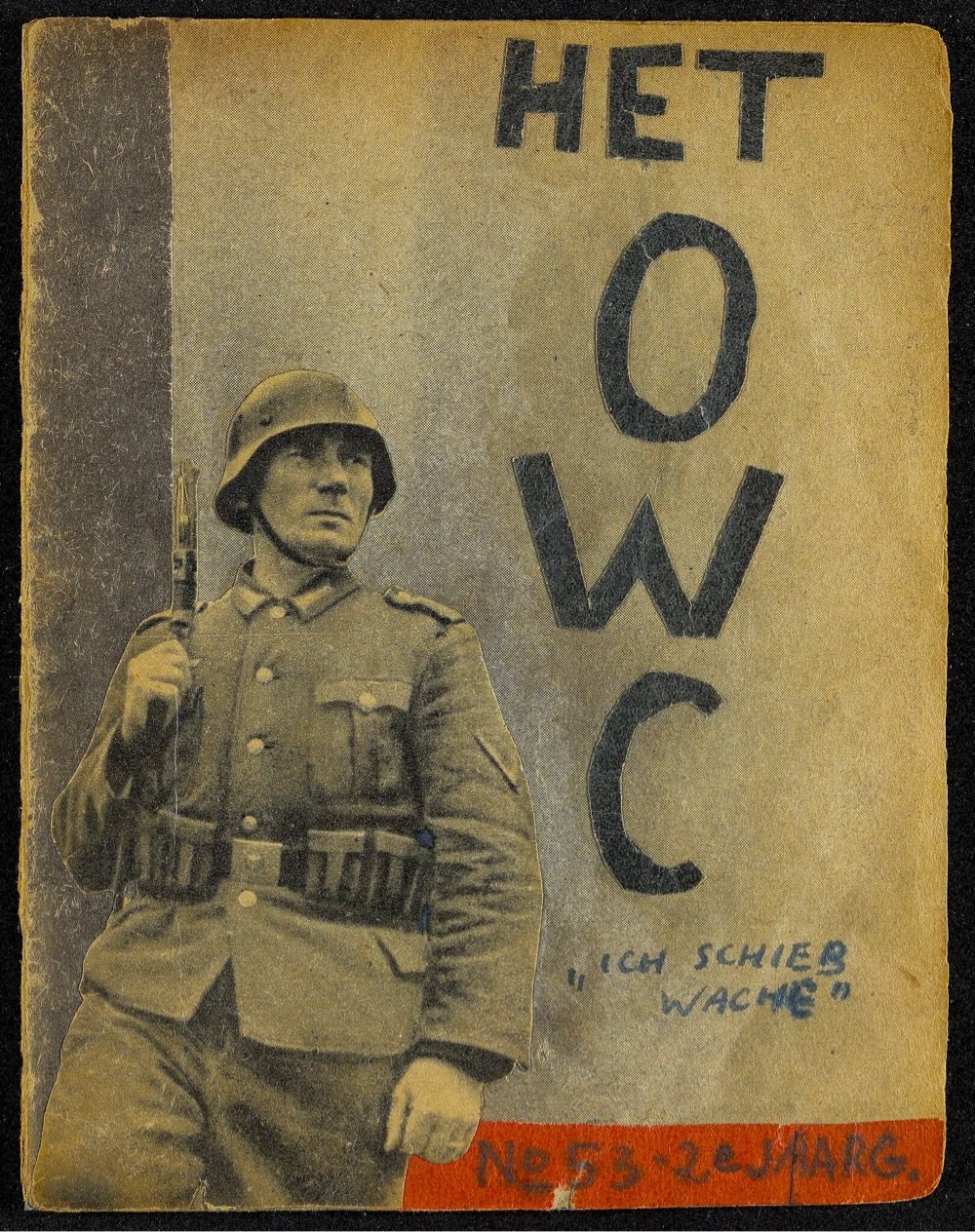
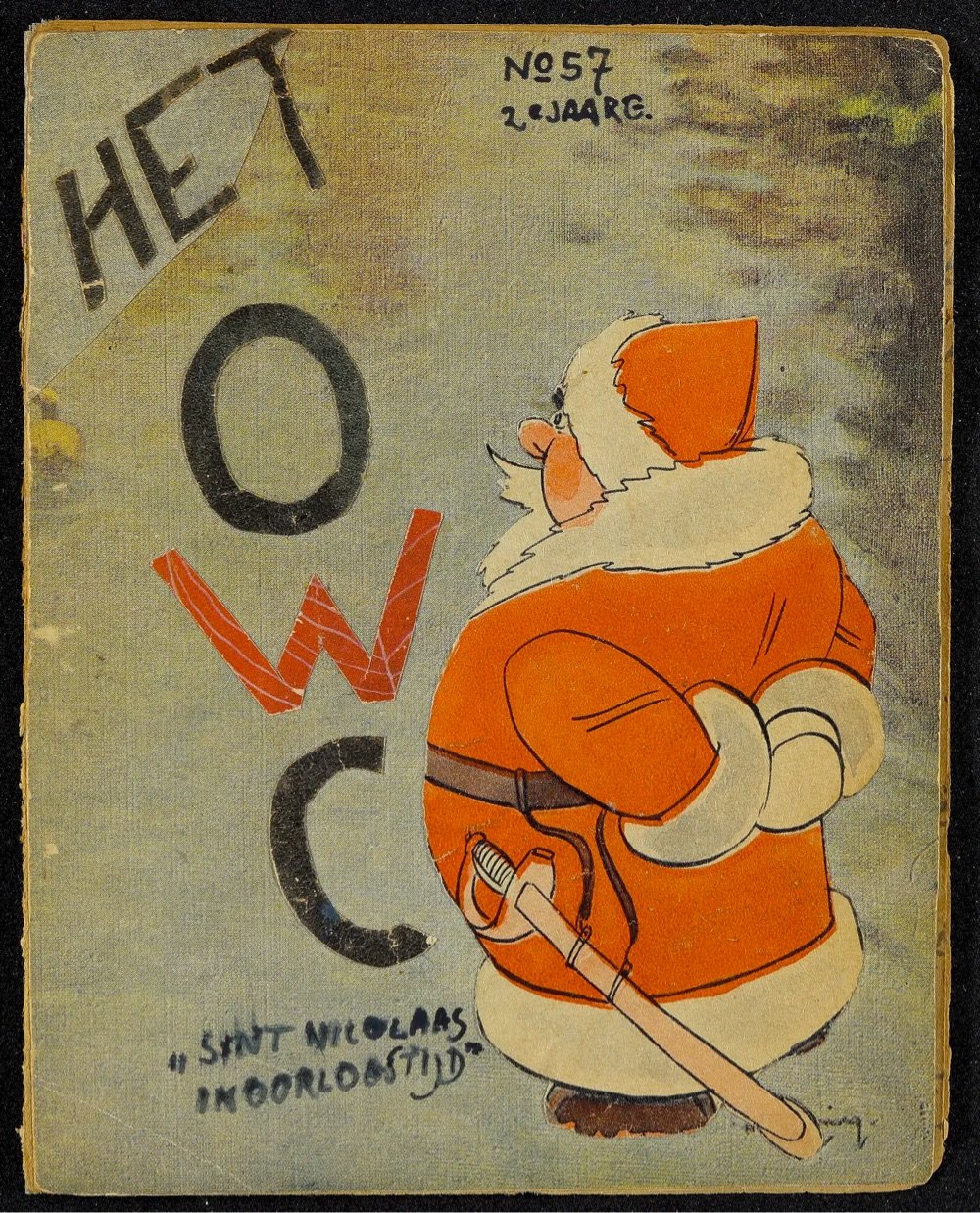
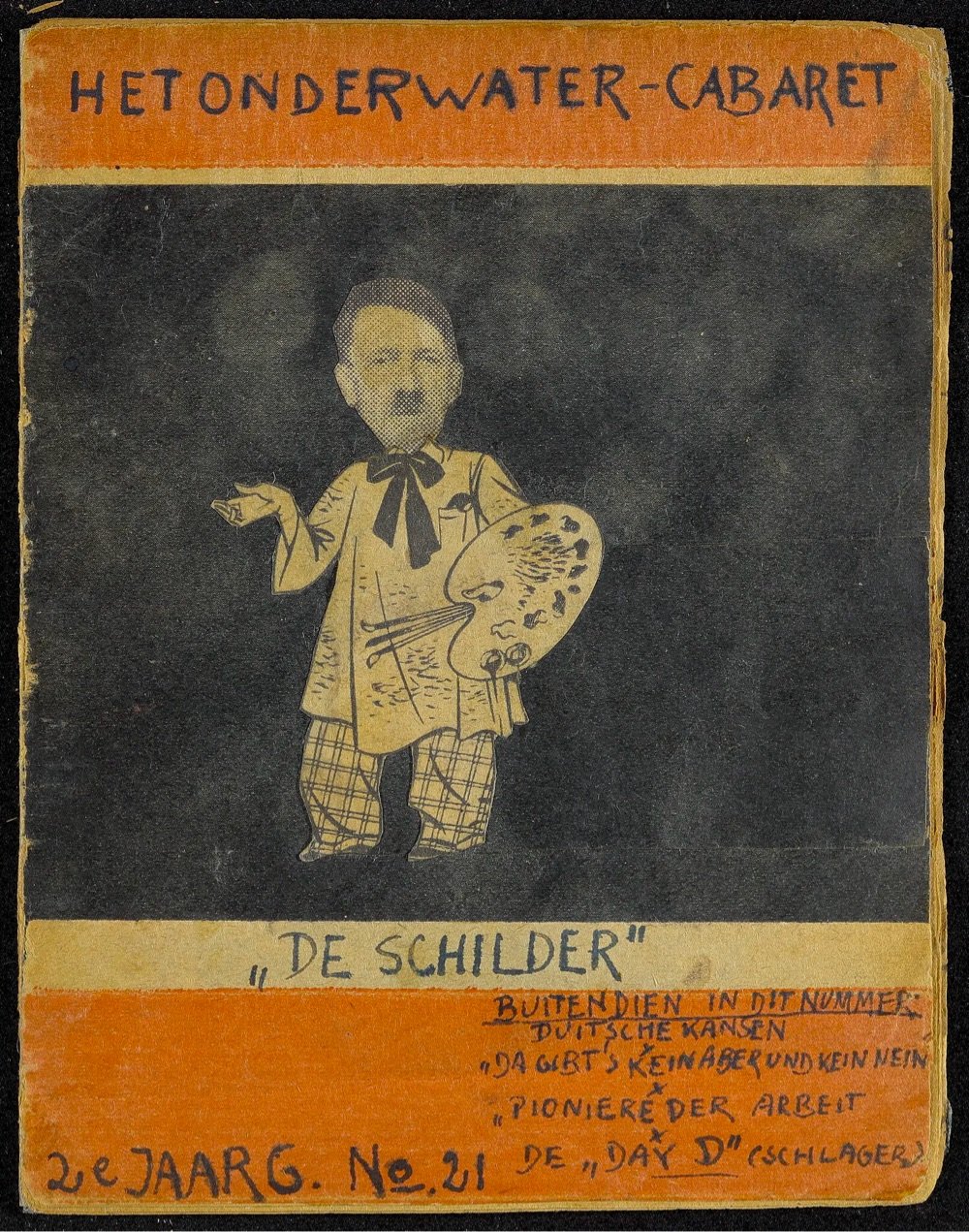
Each issue included original art, poetry and songs that often took aim at the Nazis and their Dutch collaborators. Bloch, writing in both German and Dutch, mocked Nazi propaganda, responded to war news and offered personal perspectives on wartime deprivations.
Each edition consisted of a single copy that was passed around to trusted readers and, incredibly, all 95 copies have survived to the present day.
Each edition of Bloch’s magazine consisted of just a single copy. But it may have been read by as many as 20 to 30 people, Groeneveld estimated.
“There was huge organization behind him, which included couriers, who brought food, but who could also bring the magazine out, to share with other people in the group who could be trusted,” Groeneveld said. “The magazines are very small, you can easily put one in your pocket or hide it in a book. He got them all back. They must have also returned them in some way.”
My ideal version of this film would have begun in the 1900s or ’10s, with flashes of Relativity and then the steps of Quantum Mechanics with Planck, Bohr, and Heisenberg. Quantum tunneling with Gamow and Gurney. The nuclear shell model with Maria Goeppert Mayer and J. Hans D. Jensen. Chadwick’s discovery of the neutron. Anderson’s positron unveiling. Hold the camera longer on Lawrence and his cyclotron. What’s going on there? (I mean, ya got Josh Hartnett’s pretty head, plaster it up!) Shoot in high-grade mega-IMAX-bokeh the oddly simple experimental setups, the beakers, the blips, the radiation tick-tick-ticks, the iterations, the step-by-step expansion of understanding the fabric of everything around us. Give us an hour of this, this arguably greatest moment of human insight. You can still call the film Oppenheimer. Let the man loom, weave him between it all as he makes his way through Europe, sets up at Berkeley, is selected to lead Los Alamos. Ramp up the Nazi threat. Show the diaspora of brilliance more clearly. Believe the audience is willing to sit through more than just “Is it a wave … or is it particle?” Oh! There is so much excitement, so much incredible science to be mined, and Nolan mined so little.
Mod and I both share a love for that masterpiece of a book and I would watch the hell out of an 10-part HBO series (in the vein of Chernobyl) based on it, American Prometheus, and John Hersey’s Hiroshima.
In one of the letters, the daughter of an incarceree tells how the $20,000, invested in her family’s home equity and compounded over time, ultimately enabled her to attend Yale. “The redress money my family received has always been a tailwind at my back, making each step of the way a tiny bit easier,” she wrote. Just as her family was able to build generational equity, she hoped that Black Americans, too, would have “the choice to invest in education, homeownership, or whatever else they know will benefit their families, and, through the additional choices that wealth provides, to be a little more free.”
In addition to money, acts of formal apology, an on-going acknowledgment of harm, and a public process can be important to those harmed:
A $20,000 check could not reestablish lost flower fields, nor could it resurrect a formerly proud and vibrant community. Still, the money, coupled with an official apology, helped alleviate the psychological anguish that many incarcerees endured. Lorraine Bannai, who worked on Fred Korematsu’s legal team alongside Don Tamaki, almost never talked with her parents about the incarceration. Yet, after receiving reparations, her mother confided that she had lived under a cloud of guilt for decades, and it had finally been lifted. “My reaction was: ‘You weren’t guilty of anything. How could you think that?’” Bannai told me. “But on reflection, of course she would think that. She was put behind barbed wire and imprisoned.”
Yamamoto, the law professor in Hawaii, stresses that the aims of reparations are not simply to compensate victims but to repair and heal their relationship with society at large. Kenniss Henry, a national co-chair of the National Coalition of Blacks for Reparations in America, told me that her own view of reparations has evolved over time. She sees value in processes such as community hearings and reports documenting a state’s history of harm. “It is necessary to have some form of direct payment, but reparations represent more than just a check,” she said.
In this short video from the BBC narrated by Helena Bonham Carter, activist and actor George Takei talks about his imprisonment in an American concentration camp during WWII because he was of Japanese descent.
I began school in Rohwer, a real school, in a black tar paper barrack. There was an American flag hanging at the front of the classroom and on the first morning, the teacher said, “We’re going begin every morning with the pledge of allegiance to the flag. I will teach it to you and you are to memorize that.” But I could see right outside my schoolhouse window the barbed wire fence and the sentry tower as I recited the words “with liberty and justice for all”. An innocent kid, too young to understand the stinging irony in those words.
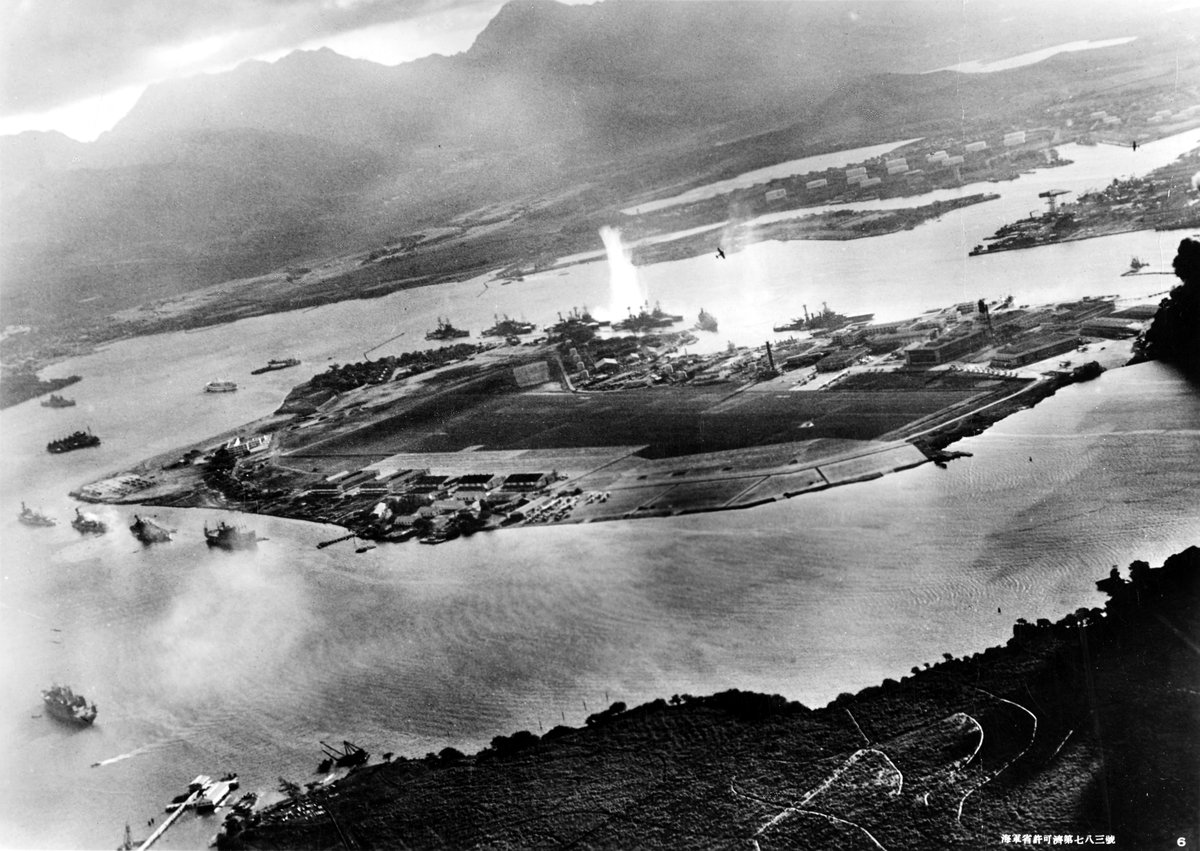
So, here’s something I didn’t really fully notice until after it was over: December 7, 2021 (Tuesday) was the 80th anniversary of the attack on Pearl Harbor. Usually, whole 10x number anniversaries of major world events are done to death. The 75th anniversary of Pearl Harbor (just five years ago) certainly was, so much so that the recent Pearl Harbor-related stories of most newspapers pull up mostly stories from that date. But the 80th? Not much at all.
This is anecdotal, but, I think, indicative: in my RSS feeds, which are filtered by me but pretty comprehensive, there’s just one news story about Pearl Harbor, and it’s not really about the anniversary, but about the US military ending its efforts to fully identify the dead in the wreckage. Then there’s one (bad) op-ed from the NYT that I won’t link to, and an essay by Joyce Johnson in the New York Review of Books. That’s it. No living memory or reprise of historicization in the newspapers, no passing thoughts in the week’s political blogs. It’s like the anniversary didn’t happen.
I won’t say whether this is a good thing or a bad thing, partly because I don’t know (you can make honest cases either way!) and partly because it’s not my job, but it seems worth noting that it is a thing that’s happening. No event, no matter how global, how deadly, or how significant in subsequent world affairs is so universally relevant that every anniversary is a platform for public memory.
Pick an event: the atom bomb detonation at Hiroshima, the assassination of JFK, the moon landing, 9/11. I will bet you that however elaborate their 50th or even 75th anniversaries might be, the 80th will be correspondingly muted. There will then be a spike of interest around the 100th, and then it will fade into semi-obscurity until the 150th or 200th anniversaries roll around.
That just seems to be how time works: once an event no longer defines the living memory of a significant portion of the population, it becomes an item of historic interest, and/or an item of trivia. Some dates may live in infamy, but none of them will live forever.
This animated documentary about how Israeli Mossad agent Zvi Aharoni tracked down and captured Nazi war criminal Adolf Eichmann in Argentina 15 years after WWII ended is really fantastic.
The rare film to win festival prizes as both a documentary & as an animation, Randall Christopher’s The Driver is Red is a stunning showcase for his minimalist pen and ink art and for his grand aim to increase public awareness of WWII history (which he perceives to be rapidly fading from the consciousness of younger generations). Should he succeed in that noble aim however, the reason will be that he has taken a potentially dry historical record and transformed it into an imaginative and unabashedly cracking spy thriller.
Told through the experience of Israeli Mossad agent Zvi Aharoni, the film documents the discovery and capture of Adolf Eichmann, the senior Nazi official largely responsible for organizing and executing the Holocaust. Hidden for 15 years half a world away, and living under an assumed identity, Eichmann is tracked down by Aharoni and the agent, with a small team in tow, must design and execute a strategy for Eichmann’s capture and extradition.
Colette is a remarkable short documentary that won the Oscar this year in the Documentary Short Subject category. You can watch the film online courtesy of The Guardian.
90-year-old Colette Marin-Catherine confronts her past by visiting the German concentration camp Mittelbau-Dora where her brother was killed. As a young girl, she fought Hitler’s Nazis as a member of the French Resistance. For 74 years, she has refused to step foot in Germany, but that changes when a young history student named Lucie enters her life. Prepared to re-open old wounds and revisit the terrors of that time, Marin-Catherine offers important lessons for us all.
Here’s an interview with the filmmakers. From our present historical distance, the horrific story and lessons of Nazism seem fairly straightforward. But as Colette shows, when you delve into the individual stories, the truth of people’s grief & experiences gets complicated. These stories are important to hear and to tell so we remember the real, human, feeling truth of how individual lives were damaged and wasted by the actions of the large and powerful.
These are the “what if” stories that ask us to imagine our world on a different path: what if a battle, election or assassination had gone the other way, or a pivotal person had never been born? Some of these stories involve time travel to make the change, but many alternate histories are simply imagined differences. What if the Nazis had not been beaten, as in the novel The Man in the High Castle, or what if the Soviets had landed a man on the Moon first, like in For All Mankind?
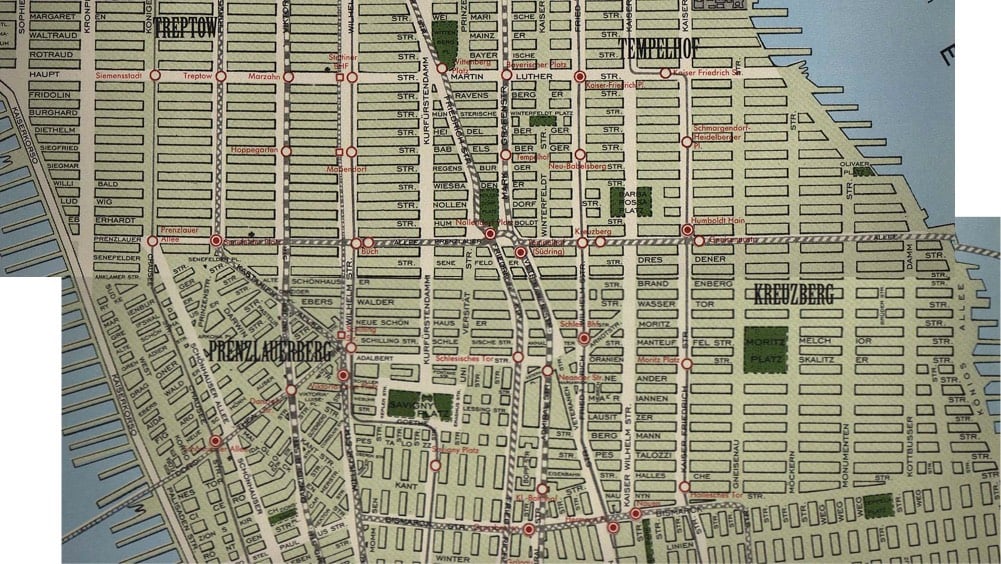
One of my favorite alternative history maps not covered by Arbesman is Melissa Gould’s Neu-York, a map of Manhattan after a hypothetical conquest of the United States by the Nazis in World War II (which I blogged about way back in 2003, when kottke.org had comments!)
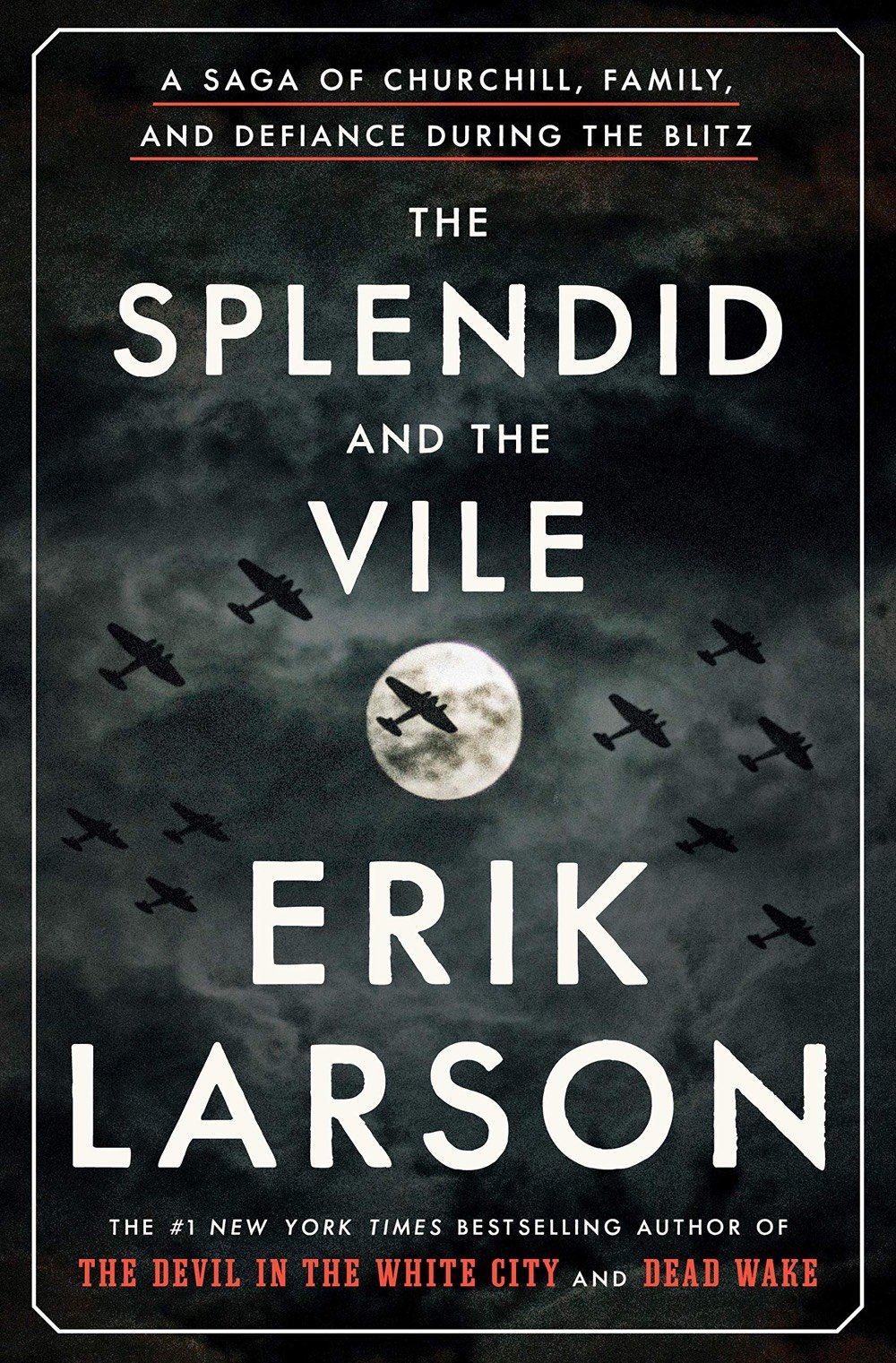
For me, Erik Larson is one of the best nonfiction storytellers around. I loved both The Devil in the White City (about the Chicago World’s Fair in 1893) and In the Garden of Beasts. So when his new book, The Splendid and the Vile, comes out in February, I’m gonna hop on it right away. As the subtitle says, the book is about Winston Churchill and Britain during the the Blitz.
In The Splendid and the Vile, Erik Larson shows, in cinematic detail, how Churchill taught the British people “the art of being fearless.” It is a story of political brinkmanship, but it’s also an intimate domestic drama, set against the backdrop of Churchill’s prime-ministerial country home, Chequers; his wartime retreat, Ditchley, where he and his entourage go when the moon is brightest and the bombing threat is highest; and of course 10 Downing Street in London.
Drawing on diaries, original archival documents, and once-secret intelligence reports — some released only recently — Larson provides a new lens on London’s darkest year through the day-to-day experience of Churchill and his family: his wife, Clementine; their youngest daughter, Mary, who chafes against her parents’ wartime protectiveness; their son, Randolph, and his beautiful, unhappy wife, Pamela; Pamela’s illicit lover, a dashing American emissary; and the advisers in Churchill’s “Secret Circle,” to whom he turns in the hardest moments.
Pigeons are more intelligent than we give them credit for, one of the few animals — along with great apes, dolphins and elephants — able to pass the mirror self-recognition test. If you mark a pigeon’s wing and let it look in a mirror it will try to remove the mark, realising that what it sees is a reflected image of its own body. Pigeons can recognise video footage of themselves shown with a five-second delay (three-year-old children find it difficult to comprehend a two-second delay). They are able to recognise individuals from photographs, and a neuroscientist at Keio University in Japan has trained them to distinguish between the paintings of Matisse and Picasso. ‘Modesty,’ Marianne Moore wrote, ‘cannot dull the lustre of the pigeon.’
Pigeons move through a human world. They stay close to the land, often flying at street level, below the height of the rooftops. Recent studies have suggested that they navigate using human structures as well as natural ones: they follow roads and canals, and have been observed going round roundabouts before taking the appropriate exit. They can fly extremely fast — up to 110 miles per hour — and with a following wind can cover 700 miles in a single uninterrupted flight (pigeons don’t like to fly at night but can be trained to do so). There are faster birds — peregrine falcons, the pigeon’s main predator, can reach 200 miles per hour on the stoop — but none can fly horizontally, under its own power, as quickly as a pigeon.
This bit, about the role of pigeons in developing the telecommunications networks of today, is terrific:
During the 19th and early 20th centuries they became important auxiliaries to the technological networks that were springing up across the world. Reuter’s News Agency was established in 1850 with a flock of 45 pigeons, which were used to cover a gap in the telegraph network between Brussels and Aachen, giving Paul Reuter a monopoly over all telegraph traffic between Belgium and Germany. The five sons of Mayer Amschel Rothschild used pigeons to stay in touch as they travelled around Europe consolidating their father’s banking dynasty. During the Siege of Paris in 1870, pigeons were taken out of the city by balloon and returned carrying thousands of letters stored on microfilm and sewn into their tail feathers.
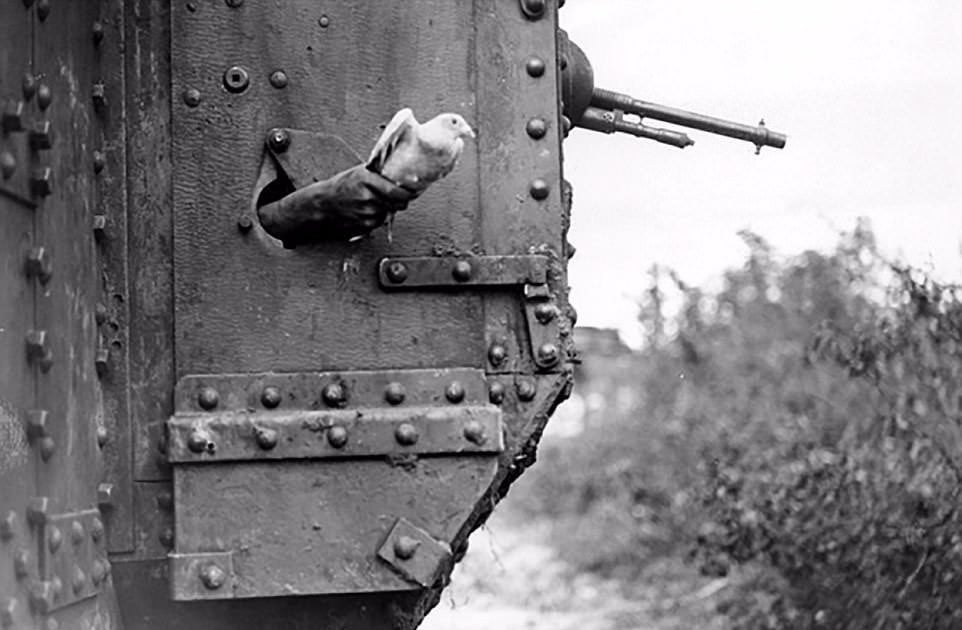
Between 1941 and 1944, British intelligence dropped sixteen thousand homing pigeons in an arc across Nazi-occupied Europe, from Bordeaux, France to Copenhagen, Denmark, as part of a spy operation code-named Columba. Returning to MI14, the secret government branch in charge of the “Special Pigeon Service,” the birds carried messages that offered a glimpse of life under the Germans in rural France, Holland, and Belgium. Written on tiny pieces of rice paper tucked into canisters and tied to the birds’ legs, these messages were sometimes comic, often tragic, and occasionally invaluable-reporting details of German troop movements and fortifications, new Nazi weapons, radar systems, and even the deployment of the feared V-1 and V-2 rockets used to terrorize London.
Starting when she was 21, Helen Fagin was imprisoned by the Nazis in the Radomsko and Warsaw ghettos in Poland. Her parents were sent to Treblinka and murdered there, but Fagin and her sister eventually managed to escape and, after a long journey around Europe, made it to the United States. Fagin has offered lengthy testimony about her experience of the Holocaust (for the USC Shoah Foundation and US Holocaust Memorial Museum), but in this short video, she reads a letter she wrote about how reading and stories gave a spark of hope to those under the Nazi boot in Warsaw.
Could you imagine a world without access to reading, to learning, to books?
At twenty-one, I was forced into Poland’s WWII ghetto, where being caught reading anything forbidden by the Nazis meant, at best, hard labor; at worst, death.
There, I conducted a clandestine school offering Jewish children a chance at the essential education denied them by their captors. But I soon came to feel that teaching these sensitive young souls Latin and mathematics was cheating them of something far more essential — what they needed wasn’t dry information but hope, the kind that comes from being transported into a dream-world of possibility.
One day, as if guessing my thoughts, one girl beseeched me: “Could you please tell us a book, please?”
I had spent the previous night reading Gone with the Wind — one of a few smuggled books circulated among trustworthy people via an underground channel, on their word of honor to read only at night, in secret. No one was allowed to keep a book longer than one night — that way, if reported, the book would have already changed hands by the time the searchers came.
The NY Times reports on the death of Johan van Hulst, who was principal at a Dutch teachers college during WWII and helped smuggle ~600 Jewish children to safety.
Mr. van Hulst is credited with helping to rescue as many as 600 children, yet he was haunted by what he could not do. With up to 100 children still in the nursery as it was about to be shut down that September, Mr. van Hulst was asked how many more he could smuggle out.
“That was the most difficult day of my life,” he told Yad Vashem, the Holocaust remembrance center in Jerusalem, which in 1972 named him one of the Righteous Among the Nations, a designation for non-Jews who rescued Jews. He is one of 5,595 Dutch people given the honor.
“You realize that you cannot possibly take all the children with you,” he said. “You know for a fact that the children you leave behind are going to die. I took 12 with me. Later on, I asked myself, ‘Why not 13?’”
van Hulst lived to 107. See also Nicholas Winton, who also saved hundreds of children from the Holocaust and died at 106.
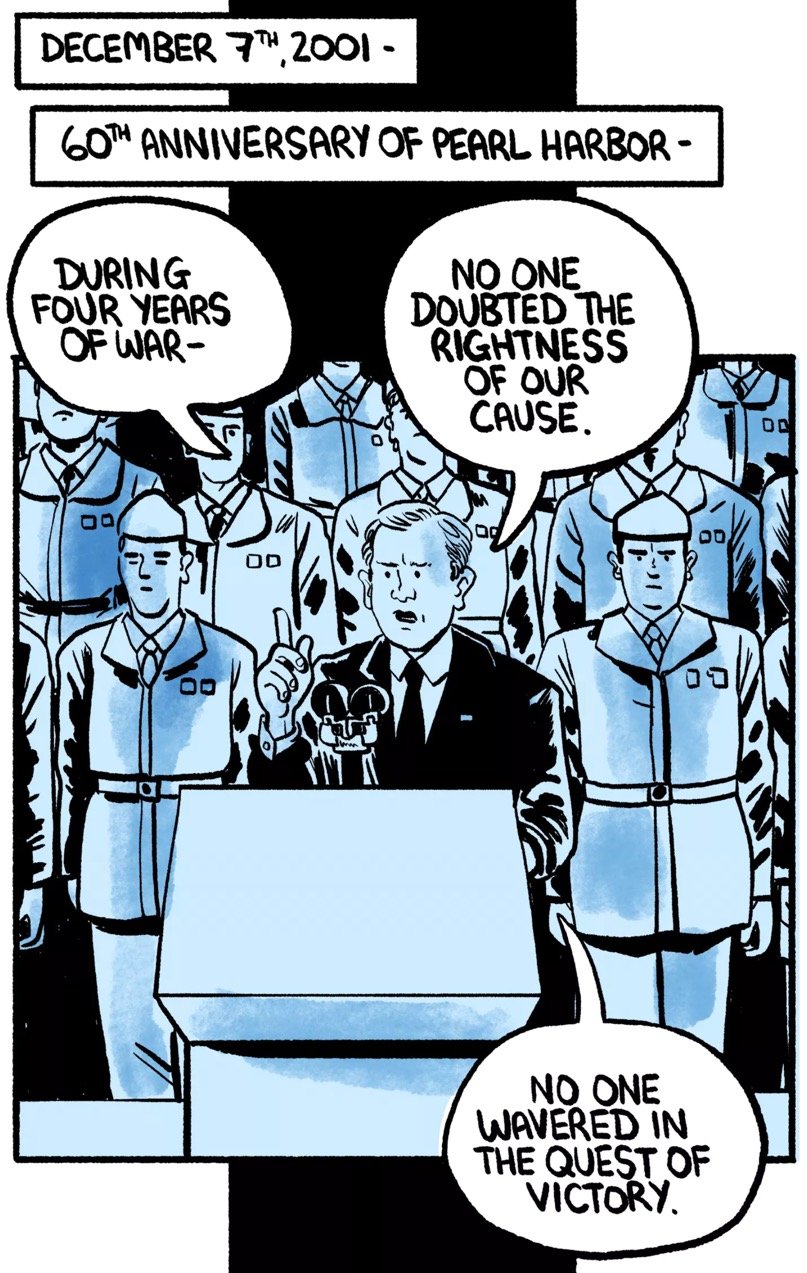
The Good War is a comic (graphic novella?) by Mike Dawson and Chris Hayes that argues that 90s nostalgia for World War II — Saving Private Ryan, Band of Brothers, Tom Brokaw’s The Greatest Generation — led the US to wrongly associate 9/11 with Pearl Harbor and the “War on Terror” with WWII, leading to all kinds of disastrous consequences.
On September 11, 2001, George W. Bush wrote the following impression in his diary: “The Pearl Harbor of the 21st century took place today.” He wasn’t alone in this assessment. In the days after the attacks, editorialists, pundits and citizens reached with impressive unanimity for this single historical precedent. The Sept. 12 New York Times alone contained 13 articles mentioning Pearl Harbor.
Five years after 9/11 we are still living with the legacy of this hastily drawn analogy. Whatever the natural similarities between December 7, 1941, and September 11, 2001, the association of the two has led us to convert—first in rhetoric, later in fact—a battle against a small band of clever, murderous fundamentalists into a worldwide war of epic scale.
As Hayes hints at in the essay, the Vietnam War might have been a better model for how Americas should have reacted to 9/11. (via daring fireball)
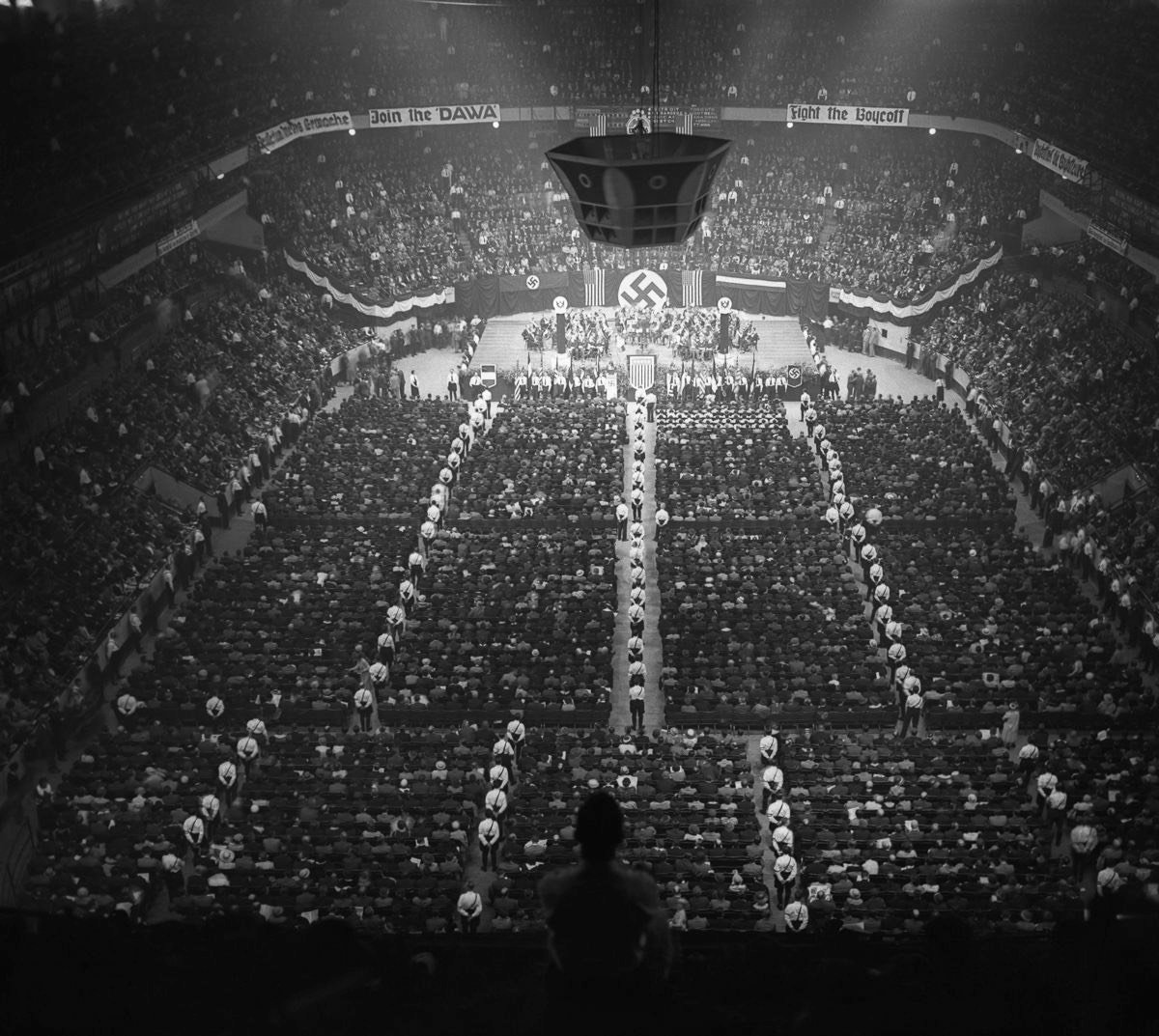
On February 20, 1939, a crowd of 20,000 gathered at Madison Square Garden for a “Pro-American” rally sponsored by the German American Bund, a pro-Nazi organization. I’d seen photos of the event, but I didn’t know there was film footage as well.
There is a moment during an on-stage scuffle involving a protestor (a Brooklyn man named Isadore Greenbaum), right around the 4:15 mark, when a young boy in the background rubs his hands and does a gleeful jig — I…I don’t even know what to say about how I felt watching that. After Greenbaum is spirited away, his clothes nearly ripped from his body, the crowd roars. As director Marshall Curry said in an interview about the film:
In the end, America pulled away from the cliff, but this rally is a reminder that things didn’t have to work out that way. If Roosevelt weren’t President, if Japan hadn’t attacked, is it possible we would have skated through without joining the war? And if Nazis hadn’t killed American soldiers, is it possible that their philosophy wouldn’t have become so taboo here?
Getting wind of a secret weapons project, she made it her mission to be on hand when the topic was discussed by the Germans, coaxing information through charm and guile.
“I teased them, taunted them, looked at them wide-eyed, insisted that they must be mad when they spoke of the astounding new weapon that flew over vast distances, much faster than any airplane,” she told The Washington Post in 1998. “I kept saying, ‘What you are telling me cannot be true!’ I must have said that 100 times.”
One officer, eager to convince her, let her look at drawings of the rockets.
Most of what she heard was incomprehensible. But, blessed with a near-photographic memory, she repeated it in detail to her recruiter, Georges Lamarque, at a safe house on the Left Bank.
In London, intelligence analysts, led by Reginald V. Jones, marveled at the quality of the information they were receiving from Paris, notably a startling document called the Wachtel Report. Delivered in September 1943, it identified the German officer in charge of the rocket program, Col. Max Wachtel; gave precise details about operations at the testing plant in Peenemünde, on the Baltic coast in Pomerania; and showed planned launch locations along the coast from Brittany to the Netherlands.
Relying on this information, the British organized several bombing raids against the plant, which delayed development of the V-2 and spared untold thousands of lives in London.
As punishment for her resistance, de Clarens was held by the Germans in camps until near the end of the war. Total hero. (thx, kathryn)
Richard Overton fought in the South Pacific in World War II, is 109 years old, still drives, sometimes drinks whiskey with breakfast, smokes 12 cigars a day (but doesn’t inhale), and still lives in the house he built himself in 1945. In this video from National Geographic, Overton talks about his military service, his faith, his long life, and soup. Overton’s short summary of World War II:
It wasn’t good, but we had to go.
I don’t really care to live to 100, but if I had Overton’s spirit and attitude, perhaps I’d consider it.
The most animated Richard ever got was when he told me a story about the enormous pecan tree in his front yard. It seemed like an ordinary tree to me, until he told me his dog planted it seventy years ago. They had a pecan tree in the back, and the dog would grab the nuts and bury them in the front yard. With glee, Richard told me how eventually the tree grew and now it’s so big it’s nearly pushing up the foundation of his house. He loved the absurdity of it — a dog planting a tree! He was laughing at it still, seven decades later.
And then there’s this, about another instance of The Great Span:
It’s fascinating to think that when Richard was born Theodore Roosevelt was president. Overton is the oldest living American veteran now, but when he was born, Henry L. Riggs was still alive. Riggs was a veteran of the Black Hawk War (1832) and he was born in 1812…and Conrad Heyer, the Revolutionary War veteran and the oldest and earliest person to be photographed (born in 1749) was still alive when Riggs was born. Three overlapping lives, that’s all it took to get back to before even the idea of founding the United States. Richard’s brother fought in the first World War. He told me he remembered seeing Civil War veterans around when he was a kid. Not many, but they were there. It was Texas — those men fought to keep his mother in slavery. How long ago all that horribleness seems. How recent it is at the same time.
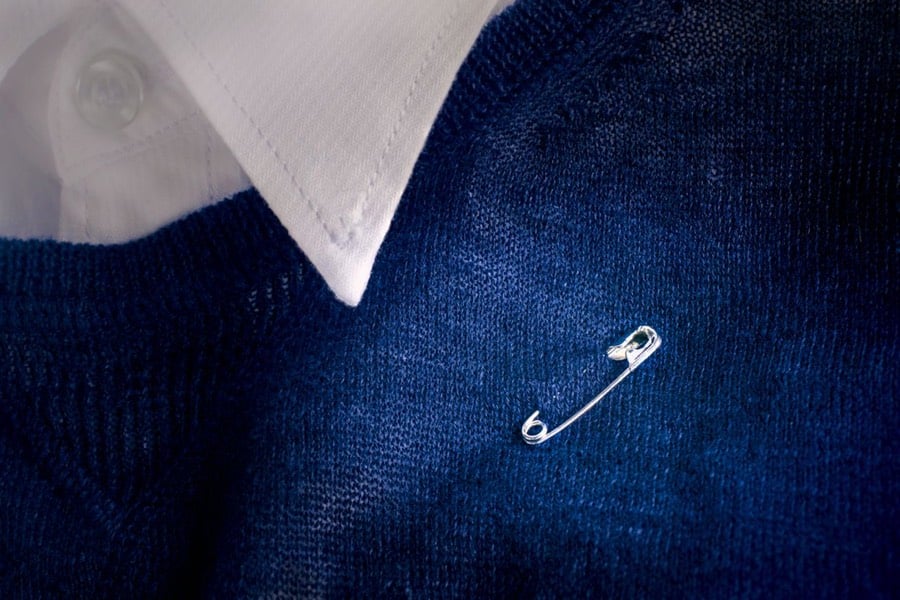
Post-Brexit, people in the UK started wearing safety pins to show their stance against racism and their solidarity with immigrants.
In response to the open environment of hatred, people across the U.K. are now wearing safety pins — and tweeting pictures of themselves wearing them — in an act of solidarity with immigrants.
We need a symbol like that in the United States now. These are vicious days in America. The deplorables are emboldened. The Washington Post reports that there have already been two attacks on Muslim women on college campuses. At San Diego State University, two men ranting about Trump and Muslims robbed a student wearing hijab.
I like this idea, that a subtle marker can denote a social safe space of sorts, a signal to someone who might feel uncomfortable that an ally is nearby. That’s not to say you can put a pin on your coat and *dust off your hands, job well done* but it may help. I’m going to try it.
The people of Norway also had to deal with German soldiers day in and day out for five years. By 1945, some 400,000 German troops were operating in Norway, controlling the population of about 4 million people.
It was in the autumn of 1940 when students at Oslo University started wearing paperclips on their lapels as a non-violent symbol of resistance, unity, and national pride.
Symbols related to the royal family and state had already been banned, and they wanted a clever way of displaying their rejection of the Nazi ideology. In addition to wearing a single paperclip, paperclip bracelets and other types of jewellery were fashioned as well, symbolically binding Norwegians together in the face of such adversity.
Of course, once the Nazis got wind of this, wearing paperclips became a crime. (via @ckrub)
wear safety pin to fool people into thinking you’re a safe space, trigger them
If I had to guess however, this behavior will be short lived and they’ll move on to some other genius scheme. I’m not taking my pin off. (via @_McFIy & @pattersar)
Update: There’s no safety pin emoji, but some people are adding the paperclip emoji to their Twitter usernames as a virtual world counterpart to the safety pin.
After World War II, the helmets of German soldiers were refashioned into colanders, pots, and other kitchen utensils. This video from the British Pathé archive shows how the repurposing happened.
During the German occupation of France, teenager Adolfo Kaminsky forged thousands of documents for Jews about to be deported to concentration camps. He worked at a shop that dyed clothes and a Jewish resistance cell recruited him because he knew how to remove ink stains, a skill that served him well in altering documents.
If you’re doubting whether you’ve done enough with your life, don’t compare yourself to Mr. Kaminsky. By his 19th birthday, he had helped save the lives of thousands of people by making false documents to get them into hiding or out of the country. He went on to forge papers for people in practically every major conflict of the mid-20th century.
Now 91, Mr. Kaminsky is a small man with a long white beard and tweed jacket, who shuffles around his neighborhood with a cane. He lives in a modest apartment for people with low incomes, not far from his former laboratory.
When I followed him around with a film crew one day, neighbors kept asking me who he was. I told them he was a hero of World War II, though his story goes on long after that.
During World War II, a group of scientists led by Werner Heisenberg worked on designing a nuclear weapon for Nazi Germany. They were, thankfully, unsuccessful. After the war, the Allies detained ten German scientists in England for six months. Hoping to learn about the German bomb program, they secretly taped the scientists’ conversations. In August 1945, the scientists were told about the US dropping a nuclear bomb on Japan. Here’s a transcript of the resulting reaction and conversation.
Shortly before dinner on the 6th August I informed Professor HAHN that an announcement had been made by the B.B.C. that an atomic bomb had been dropped. HAHN was completely shattered by the news and said that he felt personally responsible for the deaths of hundreds of thousands of people, as it was his original discovery which had made the bomb possible. He told me that he had originally contemplated suicide when he realized the terrible potentialities of his discovery and he felt that now these had been realized and he was to blame. With the help of considerable alcoholic stimulant he was calmed down and we went down to dinner where he announced the news to the assembled guests.
“Professor HAHN” is Otto Hahn, who co-discovered nuclear fission in Germany right before the war and won the 1944 Nobel Prize in Chemistry for it. The rest of the world may have gotten there eventually, but think of how different the war (and resulting Cold War period) would have been if Germany had sequestered their scientific progress a couple years earlier or if Hahn and Lise Meitner had made the discovery a year or two later.
WEIZSÄCKER: I think it’s dreadful of the Americans to have done it. I think it is madness on their part.
HEISENBERG: One can’t say that. One could equally well say “That’s the quickest way of ending the war.”
HAHN: That’s what consoles me.
HAHN: I was consoled when, I believe it was WEIZSÄCKER said that there was now this uranium - I found that in my institute too, this absorbing body which made the thing impossible consoled me because when they said at one time one could make bombs, I was shattered.
WEIZSÄCKER: I would say that, at the rate we were going, we would not have succeeded during this war.
HAHN: Yes.
WEIZSÄCKER: It is very cold comfort to think that one is personally in a position to do what other people would be able to do one day.
I particularly like Heisenberg’s distinction between between theoretical and applied science:
There is a great difference between discoveries and inventions. With discoveries one can always be skeptical and many surprises can take place. In the case of inventions, surprises can really only occur for people who have not had anything to do with it. It’s a bit odd after we have been working on it for five years.
In the 1930s, almost a decade before the nation’s young men would be shipped overseas to combat the foul stench of Hitler wafting across Europe, official and unofficial rallies for the Nazi party were held in Madison Square Garden.
Shortly after Adolf Hitler’s appointment as Chancellor of Germany in January 1933, the Nazis consolidated control over the country. Looking to cultivate power beyond the borders of Germany, Deputy Führer Rudolf Hess charged German-American immigrant Heinz Spanknobel with forming a strong Nazi organization in the United States.
Combining two small extant groups, Spanknobel formed Friends of New Germany in July 1933. Counting both German nationals and Americans of German descent among its membership, the Friends loudly advocated for the Nazi cause, storming the offices of New York’s largest German-language paper, countering Jewish boycotts of German businesses and holding swastika-strewn rallies in black-and-white uniforms.
A later group, which only disbanded at the end of 1941, were prominently pro-American and featured iconography of George Washington as “the first Fascist”. (I would have gone for “the Founding Fascist”…catchier.)
Christopher Nolan’s next film is a WWII action/thriller about the evacuation of Allied troops from Dunkirk, France in 1940. The film comes out in July 2017 and if that last scene in the teaser trailer is any indication of the overall film, I will be there.
Update: The first full trailer has dropped. Yeah, this looks good.
Saving Private Ryan has been praised for its graphic and intense depiction of World War II, particularly the Normandy landing scene. History Buffs recently analyzed the film for its historical accuracy. How well does the film reflect the events of the actual D-Day landing and aftermath?
The video takes a bit to get going but is really good when it does. For instance, did you know that the Allies used inflatable tanks and Jeeps to make Germany believe Allied forces had strongholds in places they did not? Look at them inflating the tanks and bouncing Jeeps around:
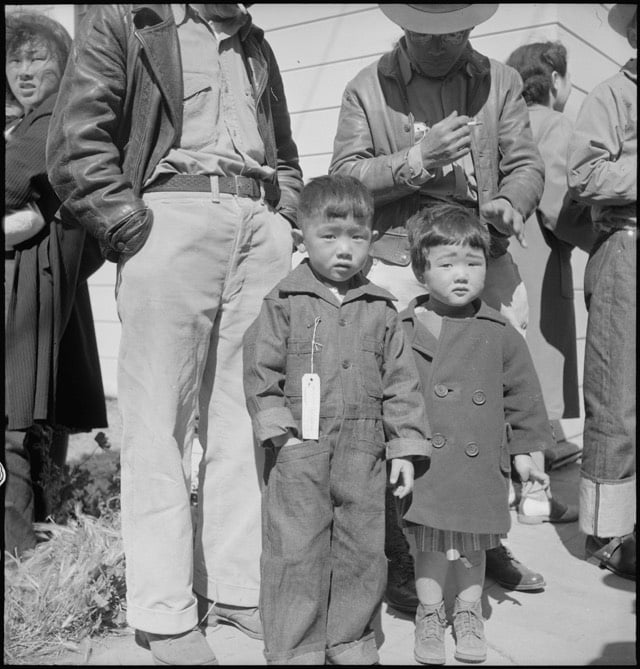
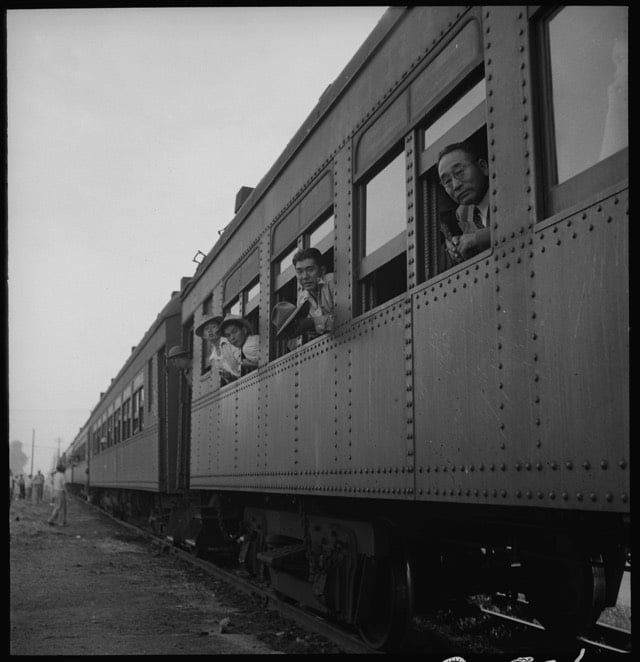
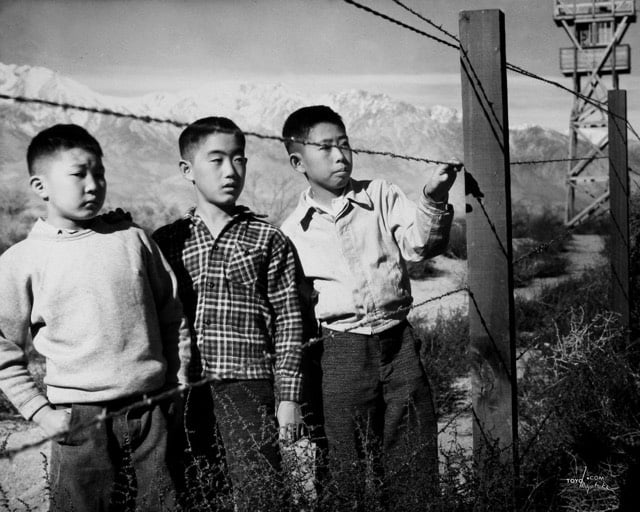
Famous for her forlorn images of Dust Bowl America, this pioneering female photographer was hired by the War Relocation Authority in 1942 to document the removal and imprisonment of Japanese Americans. Although her skill at candid portraiture was unparalleled, “Lange was an odd choice, given her leftist politics and strong sympathy for victims of racial discrimination,” writes scholar Megan Asaka. The position was a challenging one for Lange as well. “Appalled by the forced exile, she confided to a Quaker protestor that she was guilt stricken to be working for a federal government that could treat its citizens so unjustly.”
The WRA initially gave Lange little instruction about where and what to shoot, but controlled and censored her while she was at work. When documenting life inside the assembly centers and concentration camps, she was prohibited from taking shots of barbed wire and bayonets. Unable to tolerate this censorship and her own conflicted feelings about the work, Lange quit after just a few months of employment with the WRA.
Less ashamed at what they’d done and more worried about PR backlash, the government embargoed Lange’s photos until 1972.
If this all makes you think of some recent comments about Muslims from a certain Republican presidential candidate, history may not repeat itself, but it sure does rhyme.
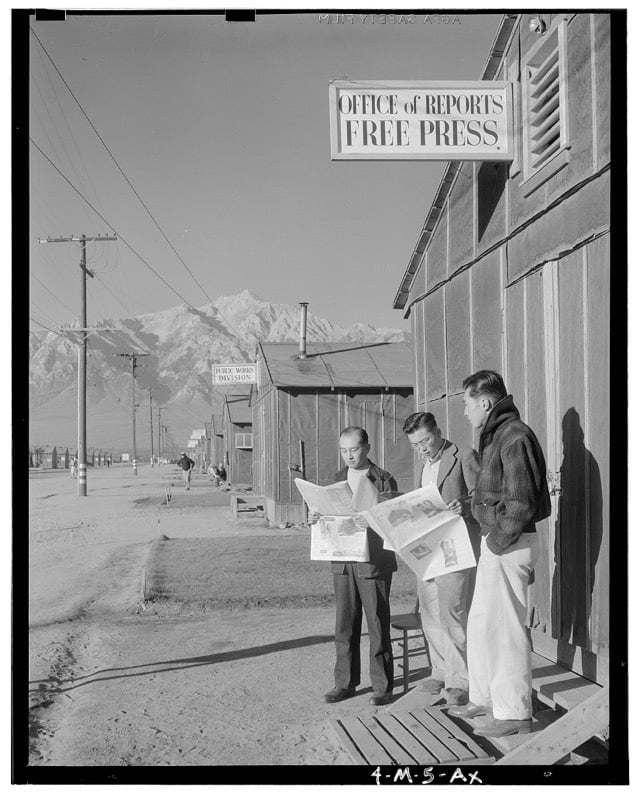
So did photographer Toyo Miyatake, who was among the prisoners at Manzanar.
The exclusion order forced Miyatake, his wife and four children, to the concentration camp at Manzanar. He was able to store his photographic equipment but managed to smuggle a camera lens and film plate holder into the camp against government orders. Miyatake told his son Archie that he felt it was his duty to document camp life. An Issei carpenter in camp constructed a box to house the lens, and Miyatake was able to get film into camp by way of a hardware salesman and former client. The photographer eventually asked camp director Ralph Merritt if he could set up a photo studio, and Merritt, who learned about Miyatake from Edward Weston, consented with the provision that Miyatake only load and set the camera, and a Caucasian assistant snap the shutter. Eventually, that restriction was lifted, and Miyatake was designated official camp photographer, and granted the freedom to take photos of everyday life at Manzanar.
Miyatake and Adams met at the camp and began a collaboration. Lange and Adams were friends — he printed Migrant Mother for her — and she was instrumental in convincing Adams to document Manzanar. But she was also critical of his detached approach:
In 1961, Lange said about Adams’s taking landscape pictures at the Manzanar Relocation Center: “It was shameful. That’s Ansel. He doesn’t have much sense about these things.”
In August of 1946, the New Yorker dedicated an entire issue to a piece called Hiroshima by John Hersey. As an introduction, the editors wrote:
TO OUR READERS. The New Yorker this week devotes its entire editorial space to an article on the almost complete obliteration of a city by one atomic bomb, and what happened to the people of that city. It does so in the conviction that few of us have yet comprehended the all but incredible destructive power of this weapon, and that everyone might well take time to consider the terrible implications of its use. The Editors.
For the 70th anniversary of the dropping of the bomb on Hiroshima, the New Yorker has digitized Hersey’s piece. The piece is quite long (30,000 words) so it can also be found in book form if that’s easier to read. Here’s the opening paragraph to get you going:
At exactly fifteen minutes past eight in the morning, on August 6, 1945, Japanese time, at the moment when the atomic bomb flashed above Hiroshima, Miss Toshiko Sasaki, a clerk in the personnel department of the East Asia Tin Works, had just sat down at her place in the plant office and was turning her head to speak to the girl at the next desk. At that same moment, Dr. Masakazu Fujii was settling down cross-legged to read the Osaka Asahi on the porch of his private hospital, overhanging one of the seven deltaic rivers which divide Hiroshima; Mrs. Hatsuyo Nakamura, a tailor’s widow, stood by the window of her kitchen, watching a neighbor tearing down his house because it lay in the path of an air-raid-defense fire lane; Father Wilhelm Kleinsorge, a German priest of the Society of Jesus, reclined in his underwear on a cot on the top floor of his order’s three-story mission house, reading a Jesuit magazine, Stimmen der Zeit; Dr. Terufumi Sasaki, a young member of the surgical staff of the city’s large, modern Red Cross Hospital, walked along one of the hospital corridors with a blood specimen for a Wassermann test in his hand; and the Reverend Mr. Kiyoshi Tanimoto, pastor of the Hiroshima Methodist Church, paused at the door of a rich man’s house in Koi, the city’s western suburb, and prepared to unload a handcart full of things he had evacuated from town in fear of the massive B-29 raid which everyone expected Hiroshima to suffer. A hundred thousand people were killed by the atomic bomb, and these six were among the survivors. They still wonder why they lived when so many others died. Each of them counts many small items of chance or volition — a step taken in time, a decision to go indoors, catching one streetcar instead of the next — that spared him. And now each knows that in the act of survival he lived a dozen lives and saw more death than he ever thought he would see. At the time, none of them knew anything.
Seven minutes of color film footage of Berlin in 1945, right after the end of World War II. Lots of bombed out buildings, soldiers, bicycles, rebuilding, and people going about their daily business.
Be sure to watch all the way to the end…there’s an incredible aerial shot of the Brandenburg Gate and the Unter den Linden that shows the scale of damage done to the city’s buildings. More of that aerial footage here. (via devour)
After the end of World War II in Europe, homosexual prisoners of liberated concentration camps were refused reparations and some were even thrown into jail without credit for their time served in the camps. From the United States Holocaust Memorial Museum:
After the war, homosexual concentration camp prisoners were not acknowledged as victims of Nazi persecution, and reparations were refused. Under the Allied Military Government of Germany, some homosexuals were forced to serve out their terms of imprisonment, regardless of the time spent in concentration camps. The 1935 version of Paragraph 175 remained in effect in the Federal Republic (West Germany) until 1969, so that well after liberation, homosexuals continued to fear arrest and incarceration.
After 1945, it was no longer a crime to be Jewish in Germany, but homosexuality was another matter. Paragraph 175 of the German Criminal Code had been on the books since 1871. An English translation of the earliest version read simply:
Unnatural fornication, whether between persons of the male sex or of humans with beasts, is to be punished by imprisonment; a sentence of loss of civil rights may also be passed.
In Germany, homosexuality was considered a crime worthy of up to five years of imprisonment until Paragraph 175 was voided in 1994.
Update: I missed this while writing the post: Paragraph 175 was amended in 1969 to limit enforcement to engaging in homosexual acts with minors (under 21 years). (thx, eric)
I have a lot to say about Free to Learn (it’s fascinating), but I wanted to share one of the most surprising and unsettling passages in the book. In a chapter on the role of play in social and emotional development, Gray discusses play that might be considered inappropriate, dangerous, or forbidden by adults: fighting, violent video games, climbing “too high”, etc. As part of the discussion, he shares some of what George Eisen uncovered while writing his book, Children and Play in the Holocaust.
In the ghettos, the first stage in concentration before prisoners were sent off to labor and extermination camps, parents tried desperately to divert their children’s attention from the horrors around them and to preserve some semblance of the innocent play the children had known before. They created makeshift playgrounds and tried to lead the children in traditional games. The adults themselves played in ways aimed at psychological escape from their grim situation, if they played at all. For example, one man traded a crust of bread for a chessboard, because by playing chess he could forget his hunger. But the children would have none of that. They played games designed to confront, not avoid, the horrors. They played games of war, of “blowing up bunkers,” of “slaughtering,” of “seizing the clothes of the dead,” and games of resistance. At Vilna, Jewish children played “Jews and Gestapomen,” in which the Jews would overpower their tormenters and beat them with their own rifles (sticks).
Even in the extermination camps, the children who were still healthy enough to move around played. In one camp they played a game called “tickling the corpse.” At Auschwitz-Birkenau they dared one another to touch the electric fence. They played “gas chamber,” a game in which they threw rocks into a pit and screamed the sounds of people dying. One game of their own devising was modeled after the camp’s daily roll call and was called klepsi-klepsi, a common term for stealing. One playmate was blindfolded; then one of the others would step forward and hit him hard on the face; and then, with blindfold removed, the one who had been hit had to guess, from facial expressions or other evidence, who had hit him. To survive at Auschwitz, one had to be an expert at bluffing — for example, about stealing bread or about knowing of someone’s escape or resistance plans. Klepsi-klepsi may have been practice for that skill.
Gray goes on to explain why this sort of play is so important:
In play, whether it is the idyllic play we most like to envision or the play described by Eisen, children bring the realities of their world into a fictional context, where it is safe to confront them, to experience them, and to practice ways of dealing with them. Some people fear that violent play creates violent adults, but in reality the opposite is true. Violence in the adult world leads children, quite properly, to play at violence. How else can they prepare themselves emotionally, intellectually, and physically for reality? It is wrong to think that somehow we can reform the world for the future by controlling children’s play and controlling what they learn. If we want to reform the world, we have to reform the world; children will follow suit. The children must, and will, prepare themselves for the real world to which they must adapt to survive.



Stay Connected