kottke.org posts about evolution
From Veritasium, a video about an experiment in evolution that’s been running continuously for more than 33 years.1 The LTEE (the E. coli long-term evolution experiment) was started with 12 identical bacterial populations in 1988 and as of early 2020, they have reached 73,500 generations (the equivalent of 1.5 to 2 million years in human generational terms). When you can fast-forward evolution while also preserving past generations (the bacteria can be easily frozen and reanimated), you can discover some surprising things about it.
The Atlantic’s Ed Yong is one of our great biology writers. He recently won a Pulitzer for his coverage of the COVID-19 pandemic, but it’s equally illuminating and much more fun to read him write about tapeworms or some other more benign form of life.
In this case, it’s about songbirds, which have two unusual things in common besides their love of song: they all evolved to detect and eat sugar in the form of sap and nectar [and did so in a way different from hummingbirds, who also love the sweet stuff], and they all did this in Australia, and from there spread out all over the world.
Songbirds probably evolved sweet perception about 30 million years ago, when Australia was much wetter. As the climate dried, the soils became poorer and the eucalyptus trees expanded. The forests abounded with new sources of sugar such as manna, which the songbirds were already primed to find and exploit. Perhaps the extra energy from these abundant calories allowed them to migrate over long distances and travel to other continents. Perhaps they could thrive in their new homes by finding flowers that were already baiting insects with nectar. “They are the most successful group of birds,” Eisthen told me. “You have to wonder how much of their success is due to this hidden talent, which allows them to invade new niches and feed on food sources that other animals are not exploiting.” …
Meanwhile, Sushma Reddy, an ornithologist at the University of Minnesota, points out that hummingbirds, songbirds, and parrots, three groups of birds with lots of nectar-eating species, “are also the same lineages that have convergently evolved vocal learning”—the ability to make new songs and sounds after listening to other individuals. Could these traits be related? Perhaps there’s a hidden connection between the sugary riches of Australia’s forests and the beautiful tunes that fill the air of every continent—between sweetness of palate and sweetness of voice.
Side note: Ed mentions in a parenthetical here that “fans of the board game Wingspan and its Oceania expansion will be familiar with the importance of nectar to Australian birds.” I, in fact, was not familiar with the board game Wingspan or any expansions thereof, so I looked it up:
You are bird enthusiasts—researchers, bird watchers, ornithologists, and collectors—seeking to discover and attract the best birds to your network of wildlife preserves. Each bird extends a chain of powerful combinations in one of your habitats (actions). These habitats focus on several key aspects of growth:
- Gain food tokens via custom dice in a birdfeeder dice tower
- Lay eggs using egg miniatures in a variety of colors
- Draw from hundreds of unique bird cards and play them
The winner is the player with the most points after 4 rounds.
Also, apparently it’s a card-based game, but is also available for computers via Steam. The more you know!
Obviously, there are trees. But speaking phylogenetically, trees aren’t a thing. Some things that are trees evolved from things that are not trees and other things that are trees evolved into things that aren’t trees. Confused? This might clear things up.
“Trees” are not a coherent phylogenetic category. On the evolutionary tree of plants, trees are regularly interspersed with things that are absolutely, 100% not trees. This means that, for instance, either:
The common ancestor of a maple and a mulberry tree was not a tree.
The common ancestor of a stinging nettle and a strawberry plant was a tree.
And this is true for most trees or non-trees that you can think of.
See also there’s no such thing as a vegetable and there’s no such thing as a fish.
What would the evolutionary tree of salmon, lungfish, and cows be? The answer, it appears at first glance, is simple. Salmon and lungfish, being fish, would cluster nicely together on one branch, and very non-fishy cows would be off on a separate branch. Right? Wrong. Contrary to what you might expect, what you see above is their evolutionary tree. Working up from the root, the lineage that leads to salmon branches off first. Keep tracing up the tree, and you’ll see that the lineage from which the salmon branched off eventually branches into two new lineages: the one leading to lungfish and the other leading to cows. In other words, a cow and a lungfish are more closely related to one another than either is to salmon.
(via @smorewithface)
This handsome looking character is called the monkey slug caterpillar and its appearance has evolved to resemble a tarantula, which affords it protection from predators. This video was captured in the Ecuadorian rain forest by David Weiller; it’s a great example of mimicry. From Wikipedia:
In evolutionary biology, mimicry is an evolved resemblance between an organism and another object, often an organism of another species. Mimicry may evolve between different species, or between individuals of the same species. Often, mimicry functions to protect a species from predators, making it an antipredator adaptation. Mimicry evolves if a receiver (such as a predator) perceives the similarity between a mimic (the organism that has a resemblance) and a model (the organism it resembles) and as a result changes its behaviour in a way that provides a selective advantage to the mimic.
(via colossal)
Sometimes it doesn’t feel like cats are particularly domesticated, but as this PBS video explains, humans have actually domesticated cats two separate times, once in southwest Asia ~10,000 years ago and in Egypt ~3500 years ago. They were probably tamed by being around human settlements for the source of food. This is the commensal pathway to domestication, one of the three major pathways followed by most domesticated animals.
The commensal pathway was traveled by vertebrates that fed on refuse around human habitats or by animals that preyed on other animals drawn to human camps. Those animals established a commensal relationship with humans in which the animals benefited but the humans received no harm but little benefit. Those animals that were most capable of taking advantage of the resources associated with human camps would have been the tamer, less aggressive individuals with shorter fight or flight distances. Later, these animals developed closer social or economic bonds with humans that led to a domestic relationship.
Dogs were probably domesticated through this pathway as well — see Neil deGrasse Tyson’s explanation from Cosmos of how wolves evolved into dogs.
And I love any post about cats because it’s an excuse to revisit one of my favorite short talks ever, in which Kevin Slavin suggests that cats have had a hand in domesticating humans for the purpose of sharing funny cat videos online, thus spreading pro-cat propaganda across the globe.
From the American Museum of Natural History in NYC, an animated timeline of human evolution, from when hominins first show up in the fossil record in Africa some seven million years ago to the appearance of Homo sapiens about 200,000 years ago. You can see artifacts and fossil remains of many of the hominins at the museum in the Hall of Human Origins. I haven’t been there in awhile…might be time for a visit.
I got this from Open Culture, where Colin Marshall goes into more detail:
And though hominins may have walked upright, they also climbed trees, but eventually lost the grasping feet needed to do so. Later they compensated with the very human-like development of making and using stone tools. Two million years ago, the well-known Homo erectus, with their large brains, long legs, and dextrous hands, made the famous migration out of Africa.
We know that by 1.2 million years thereafter Homo erectus’ brains had grown larger still, fueled by new cooking techniques. Only about 200,000 years ago do we, Homo sapiens, enter the picture, but not long after, we interbreed with the various hominin species already in existence as we spread outward to fill “every geographic niche” of the Earth.
The last bit of the video was unexpectedly sobering:
Homo sapiens were highly adaptable, quickly filling nearly every geographic niche. Other hominins went extinct. Climate pressures and competition with Homo sapiens may have wiped them out.
If we don’t change our ways soon, one way to look at the recent history of life on Earth is that modern humans came along 200,000 years ago and systematically conquered and killed the all of the animals on the planet larger than an ant. Not such a great deal for anything but people.
The YouTube channel Primer is running a series on evolution and how it works. Topics include mutations, selfish genes, and altruism in natural selection. The most popular video of the series is this one on the simulation of natural selection:
In it, you can see how different environments cause groups to tend towards certain traits (size, speed, sensing ability) based on food availability, with random mutation and reproduction in the mix as well. Seeing the populations’ traits change in realtime as the generations pass is a powerful way to make sense of a complex concept.
In an essay adapted from his forthcoming book, The Goodness Paradox: The Strange Relationship Between Virtue and Violence in Human Evolution, anthropologist Richard Wrangham says that before humans domesticated dogs, cows, and pigs, we domesticated ourselves.
No other mammal has the brainpower to organize capital punishment. When language became sufficiently sophisticated, our ancestors’ ability to conspire led not only to a more peaceful species but also to a new kind of hierarchy. No longer would human groups be ruled by the physical force of an individual. The emergence of capital punishment meant that henceforth, anyone aspiring to be an alpha couldn’t get away with just being a fighter. He had to be a politician, too.
The result of generations of such selective pressure is that human beings are best understood as an animal species that has been domesticated — like dogs, horses or chickens. Recent archaeological evidence suggests that humans became increasingly docile and less reactively aggressive around the time of becoming Homo sapiens, a process that started about 300,000 years ago.
Markers of domestication show up in the fossil records of domesticated animals and they are present in human fossils too:
Dr. Leach listed four characteristics of the bones of domesticated animals: They mainly have smaller bodies than their wild ancestors; their faces tend to be shorter and don’t project as far forward; the differences between males and females are less highly developed; and they tend to have smaller brain cavities (and thus brains). As it turns out, all of these changes appear in human fossils. Even our brain size fits the pattern: While the human brain grew steadily over the last two million years, that trajectory took a sudden turn about 30,000 years ago, when brains started to become smaller.
The essay is from the WSJ and might be paywalled…here’s an article from Big Think early last year that goes over some of the same material. I couldn’t find a definitive paper that Wrangham has written on the topic…feel free to browse through his published papers on Google Scholar.
In her book The Sixth Extinction, Elizabeth Kolbert warns that we are in the midst of the Earth’s sixth mass extinction of life, this time caused by humans.
Over the last half a billion years, there have been five mass extinctions, when the diversity of life on earth suddenly and dramatically contracted. Scientists around the world are currently monitoring the sixth extinction, predicted to be the most devastating extinction event since the asteroid impact that wiped out the dinosaurs. This time around, the cataclysm is us.
This is a mainstream view of humanity’s effect on the Earth flora and fauna…for evidence, you don’t need to look any further than all of the large mammal species that have gone extinct or are endangered because of human activity.
A more controversial take is offered by Chris Thomas in his recent book, Inheritors of the Earth: How Nature Is Thriving in an Age of Extinction. Thomas allows that there’s a “mini mass extinction” happening, but he also argues that the extreme evolutionary pressure brought by our increasing dominance of our planet’s ecosystems will result in a “sixth mass genesis”, a dramatic increase in the Earth’s biodiversity.
Human cities and mass agriculture have created new places for enterprising animals and plants to live, and our activities have stimulated evolutionary change in virtually every population of living species. Most remarkably, Thomas shows, humans may well have raised the rate at which new species are formed to the highest level in the history of our planet.
Drawing on the success stories of diverse species, from the ochre-colored comma butterfly to the New Zealand pukeko, Thomas overturns the accepted story of declining biodiversity on Earth. In so doing, he questions why we resist new forms of life, and why we see ourselves as unnatural. Ultimately, he suggests that if life on Earth can recover from the asteroid that killed off the dinosaurs, it can survive the onslaughts of the technological age.
Vox’s Ferris Jabr recently interviewed Thomas about his views. When asked about the “sixth mass genesis”, Thomas answered:
The history of life on Earth is a history of extinctions and ecological failures, but it is also a story of formation of new forms and spread of those new forms around the world. The net result has been a gain in diversity. In the human era we are seeing great losses, but we are also seeing all these biological gains of new animals and plants spreading around the world, new hybrids coming into existence. I am not saying there is yet a balance between the two. I accept the losses, but it is also scientifically, and in terms of our human attitudes to nature, extremely interesting to contemplate the gains simultaneously.
If the processes that are going on at the moment continue for a very long time, it is my expectation that the number of species on Earth will grow enormously. We are moving species of existing animals and plants back and forth across the world, so that they are all arriving in new geographic regions. We know when species have done this in the ancient past, they have turned into new species in those different regions. If you fast-forward a million years or a few million years, all of these introduced species that leave surviving descendants will have turned into new species. And that is going to generate many more species. We have effectively created a massive species generator.
That certainly does put an interesting spin on extinction and invasive species.
A massive genetic study led by Hakhamanesh Mostafavi, an evolutionary biologist at Columbia, suggests that evolution is weeding out certain genetic mutations in humans that shorten people’s lives.
Mostafavi and his colleagues tested more than 8 million common mutations, and found two that seemed to become less prevalent with age. A variant of the APOE gene, which is strongly linked to Alzheimer’s disease, was rarely found in women over 70. And a mutation in the CHRNA3 gene associated with heavy smoking in men petered out in the population starting in middle age. People without these mutations have a survival edge and are more likely to live longer, the researchers suggest.
This is not, by itself, evidence of evolution at work. In evolutionary terms, having a long life isn’t as important as having a reproductively fruitful one, with many children who survive into adulthood and birth their own offspring. So harmful mutations that exert their effects after reproductive age could be expected to be ‘neutral’ in the eyes of evolution, and not selected against.
But if that were the case, there would be plenty of such mutations still kicking around in the genome, the authors argue. That such a large study found only two strongly suggests that evolution is “weeding” them out, says Mostafavi, and that others have probably already been purged from the population by natural selection.
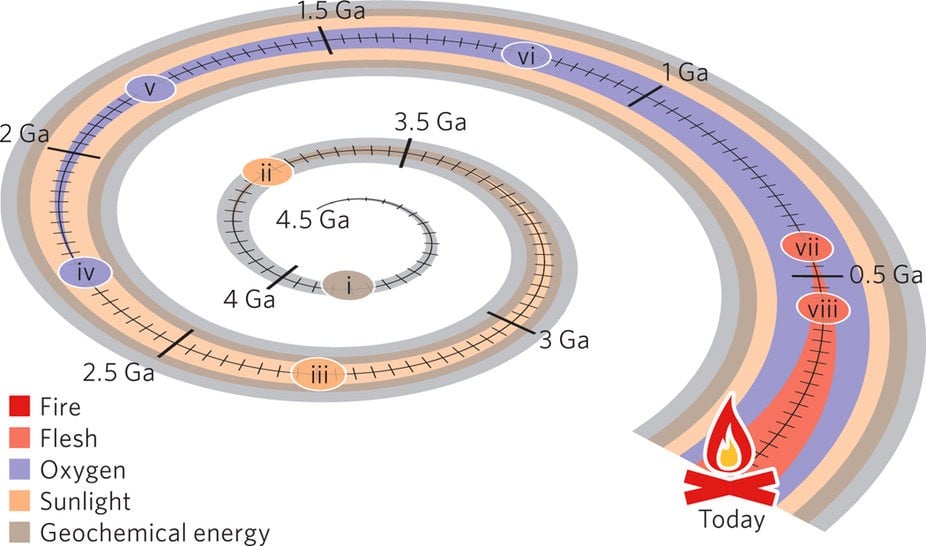
Since life first formed on Earth billions of years ago, the ability of organisms to use more powerful and efficient energy sources has been key in driving the diversity and complexity of life. According to this provocative piece in Nature by Olivia Judson, the history of life on Earth can be divided into five energetic epochs characterized by the following energy sources: geochemical energy, sunlight, oxygen, flesh and fire.
The first two were present at the start, but oxygen, flesh and fire are all consequences of evolutionary events. Since no category of energy source has disappeared, this has, over time, resulted in an expanding realm of the sources of energy available to living organisms and a concomitant increase in the diversity and complexity of ecosystems. These energy expansions have also mediated the transformation of key aspects of the planetary environment, which have in turn mediated the future course of evolutionary change. Using energy as a lens thus illuminates patterns in the entwined histories of life and Earth, and may also provide a framework for considering the potential trajectories of life-planet systems elsewhere.
Organisms formed on Earth and changed the planet, which led to the formation of new organisms more suited to the new environment. For instance, when a type of bacteria evolved to turn sunshine into oxygen, it completely changed the planet.
In the absence of a biotic source of oxygen, trace quantities of the gas can be generated abiotically: water molecules can be split by sunlight or radioactive decay. However, these abiotic processes are much less efficient than their biotic equivalent. Had cyanobacteria, or something like them, never evolved, oxygen would never have built up in the atmosphere of the Earth.
But build up it did. Between 2.45 and 2.32 Ga, significant quantities of oxygen began to accumulate in the air, an episode known as the Great Oxidation Event. Before the Great Oxidation, atmospheric oxygen levels were less than 10^-5 of the present atmospheric level of ~21%. By ~2 Ga, they had risen to perhaps 0.1-1% of the present atmospheric level. Although the subsequent history of oxygen is complex and many details are uncertain, Earth’s atmosphere has contained an appreciable level of the gas ever since. (Full oxygenation of the oceans, however, would not happen until around 1.8 billion years after the Great Oxidation.)
The original piece in Nature is fairly readable for a science journal, but this summary in The Atlantic is worth a look if you’re short on time or attention. (via @CharlesCMann)
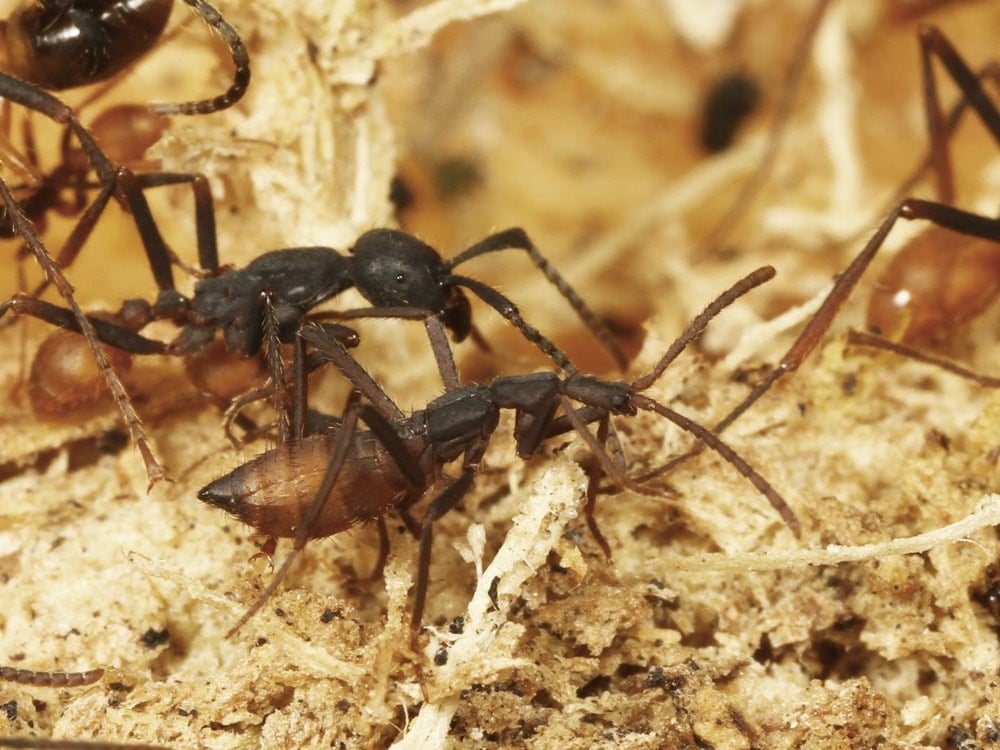
Rove beetles have evolved the ability to look and smell enough like army ants that they can live amongst them. Until it’s dinner time.
The impostors look and smell like army ants, march with the ants, and even groom the ants. But far from being altruistic nest-mates, these creatures are parasitic beetles, engaged in a game of deception. Through dramatic changes in body shape, behavior, and pheromone chemistry, the beetles gain their hostile hosts’ acceptance, duping the ants so they can feast on the colony brood.
As you can see in the photo above, the resemblance is strong…the beetle is in the foreground with the larger headed ant behind.
But that’s not even the most amazing part. A recent discovery has shown that rove beetles have evolved this capability at least a dozen separate times, suggesting that certain evolutionary possibilities are more likely than other in the presence of strong environmental factors and traits.
The ant-mimicking beetles all belong to the Staphylinidae, or rove beetles, but don’t mistake them for close relatives: the last common ancestor of the beetles in the study lived 105 million years ago, at about the time that humans split from mice. “What’s exceptional is that this convergent system is evolutionarily ancient,” says Parker. Although most other convergent systems, such as Darwin’s finches, three-spined stickleback, and African lake cichlid fish, are a few million years old at most, this newly discovered example extends back into the Early Cretaceous.
Given this great age, Parker and his co-author Munetoshi Maruyama of the Kyushu University Museum argue that their finding challenges Stephen J. Gould’s hypothesis that if time could be rewound and evolution allowed to replay again, very different forms of life would emerge. “The tape of life has been extremely predictable whenever rove beetles and army ants have come together,” says Parker. “It begs the question: why has evolution followed this path so many times?”
(via @stewartbrand)
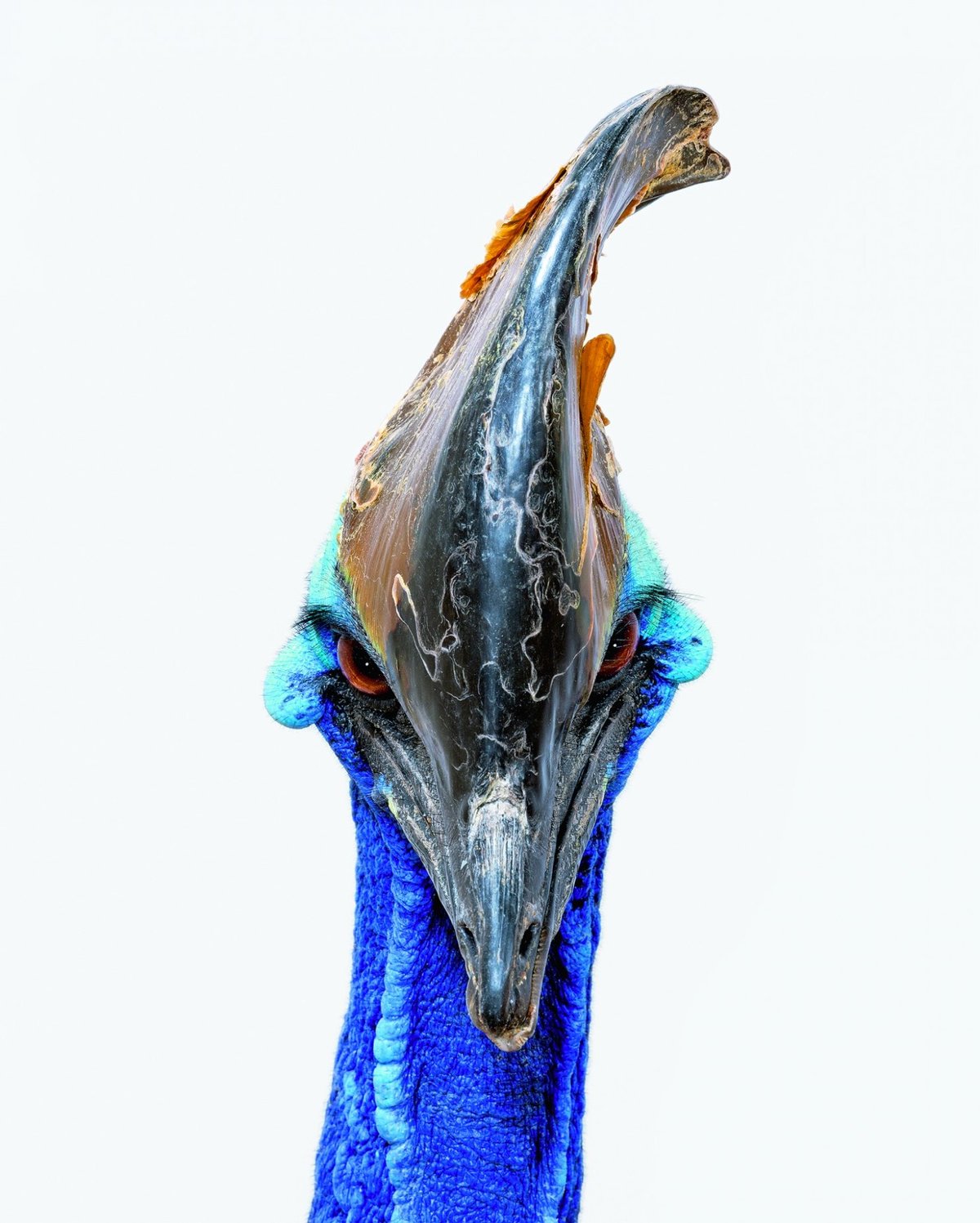
For his new book, Evolution: A Visual Record, photographer Robert Clark has collected dozens of images that show the varying ways in which plants and animals have adapted to their changing surroundings.
Evidence of evolution is everywhere. Through 200 revelatory images, award-winning photographer Robert Clark makes one of the most important foundations of science clear and exciting to everyone. Evolution: A Visual Record transports readers from the near-mystical (human ancestors) to the historic (the famous ‘finches’ Darwin collected on the Galapagos Islands that spurred his theory); the recently understood (the link between dinosaurs and modern birds) to the simply astonishing.
The photo above is of a southern cassowary, a flightless bird that is particularly dinosaur-esque in stature and appearance.
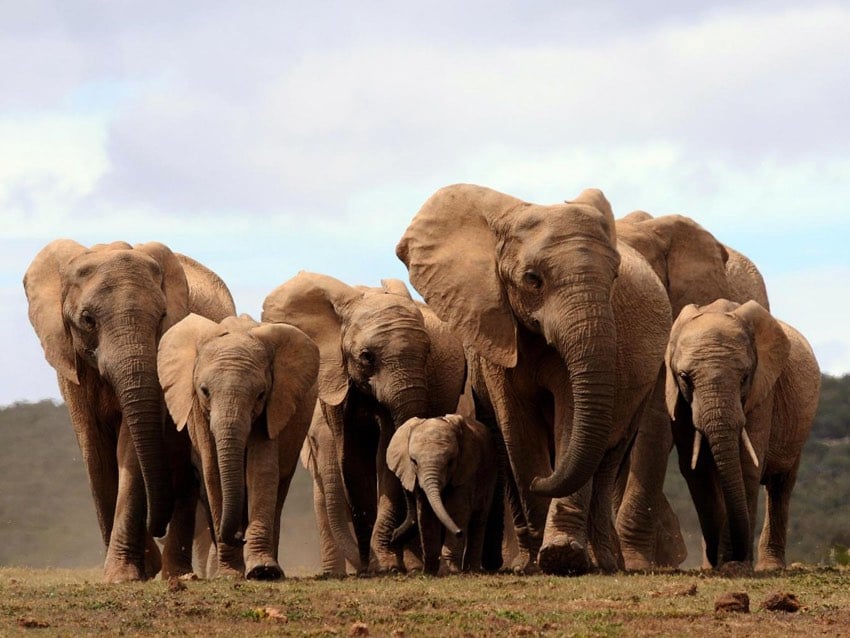
Poachers in Africa in search of the biggest ivory tusks have altered the gene pool of African elephants in the process.
In Gorongosa National Park in Mozambique, 90 per cent of elephants were slaughtered between 1977 and 1992, during the country’s civil war. Dr Poole said that because poachers disproportionately targeted tusked animals, almost half the females over 35 years of age have no tusks, and although poaching is now under control and the population is recovering well, they are passing the tuskless gene down to their daughters: 30 per cent of female elephants born since the end of the war also do not have tusks.
“Females who are tuskless are more likely to produce tuskless offspring,” she said.
(via mr)
Update: Vox has an interesting look at the growing trend of tuskless elephants.
Jerry Coyne, University of Chicago professor and author of Why Evolution is True, shares the results of a recent paper called Detection of human adaptation during the past 2000 years. In the study, DNA sequencing was used to find human genes that have changed so quickly in the past 2000 years that the authors conclude natural selection must be responsible.
Now, however, we can, by DNA sequencing, look at DNA directly, and with some fancy statistical footwork, get an idea of which genes have changed in frequency so fast that they must have been due to positive natural selection. That’s the subject of a new paper in Science by Yair Field et al. (reference and free download below). The authors conclude that several traits, including lactose tolerance, hair and eye color, and parts of the immune system, as well as height, have evolved within the last 2,000 years.
Other genes that might have changed during that period include those for infant head circumference, insulin levels, birth weight, and female hip size.
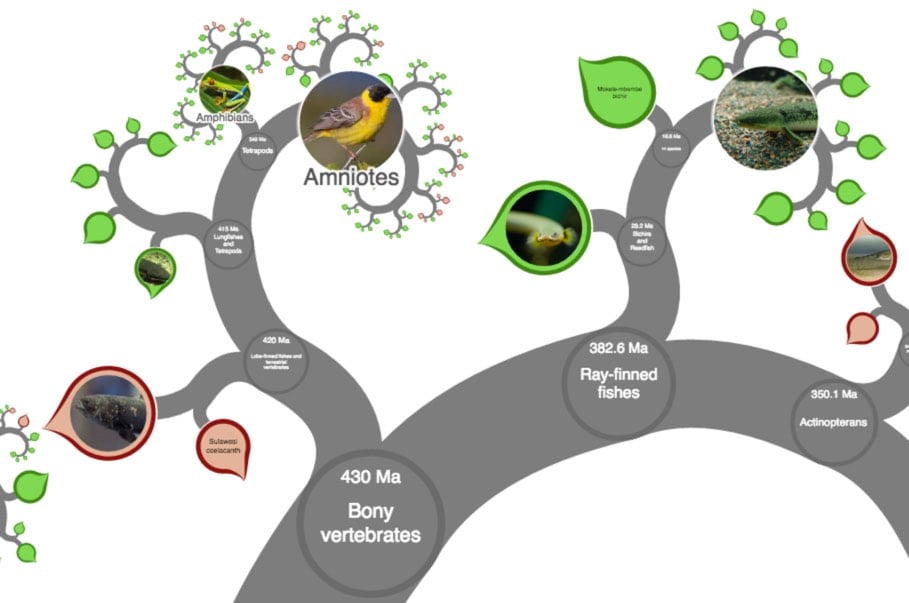
OneZoom is an interactive zoomable map of “the evolutionary relationships between the species on our planet”, aka tree of life. Browsing around is fun, but you’ll want to use the search function to find specific groups and animals, like mammals, humans, and mushrooms. The scale of this is amazing…there are dozens of levels of zoom. (via @pomeranian99)
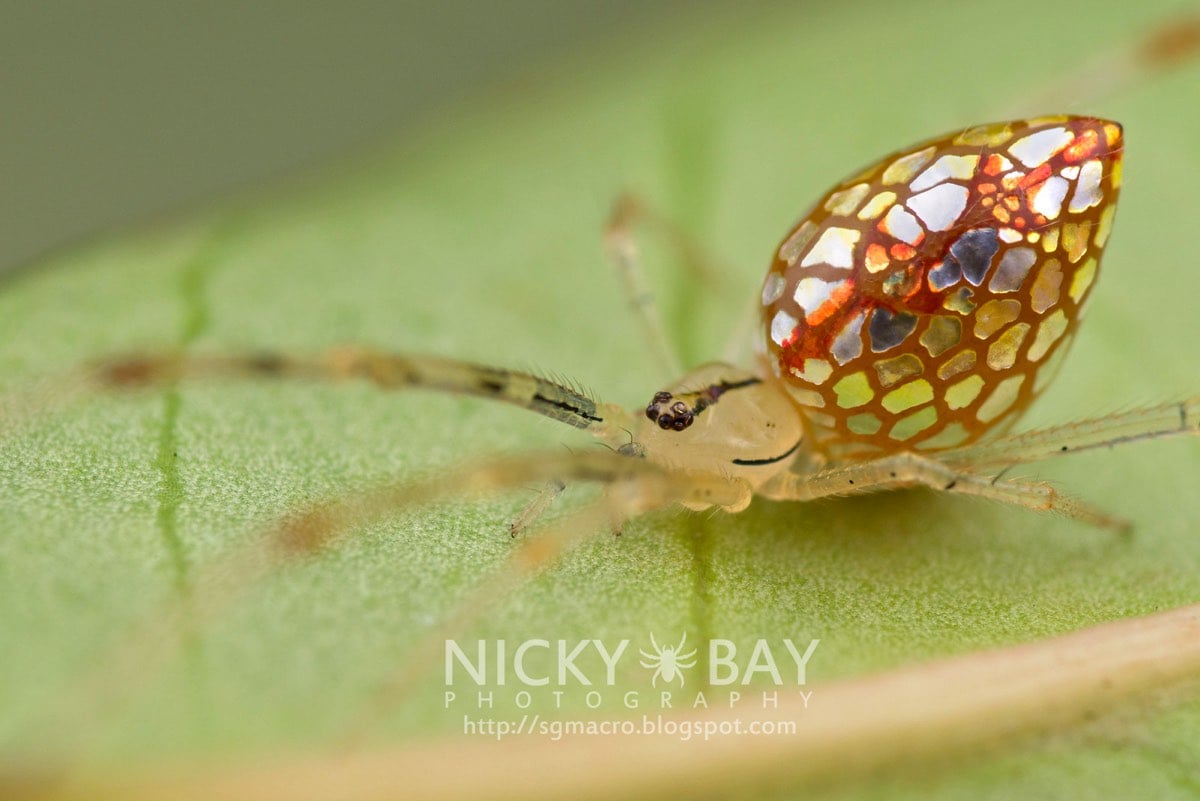
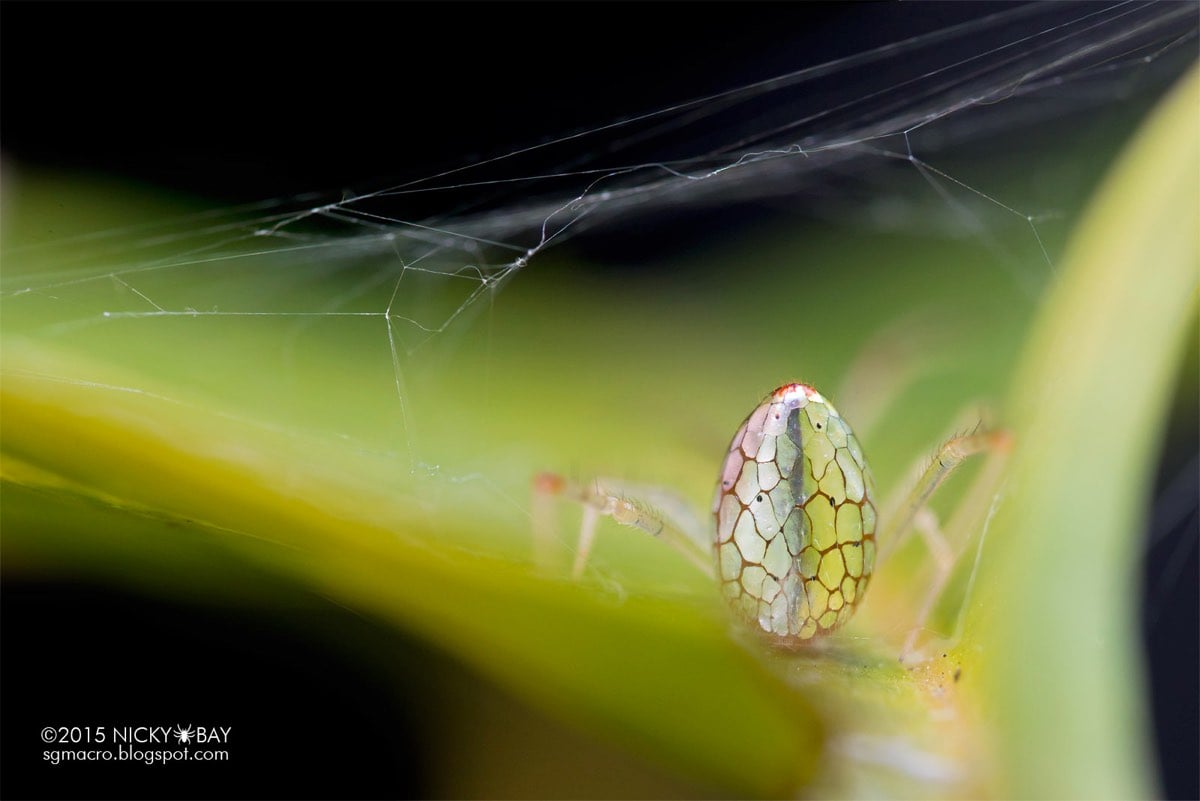
Photographer Nicky Bay has been documenting an arachnid he calls the mirror spider for past few years. He’s noticed that when the spider feels threatened, it can shift the mirrored plates on its abdomen to reveal itself and make itself look bigger, like a cloaked Klingon ship uncloaking for battle.
For several years, I have been observing the odd behavior of the Mirror Spider (Thwaitesia sp.) where the “silver-plates” on the abdomen seem to shrink when the spider is agitated (or perhaps threatened), revealing the actual abdomen. At rest, the silver plates expand and the spaces between the plates close up to become an almost uniform reflective surface.
Many animals have evolved the ability to camouflage themselves and I’d speculate that is what’s happened to the mirror spider. The mirrored surface reflects the spider’s surroundings and turns it somewhat invisible to potential predators. The mirror system is more complex than an abdomen matching the green of a particular plant, but is also more adaptive — the mirror works equally well on green leaves, brown branches, and black soil. (via colossal)
Update: I misread Bay’s explanation of the spider’s response to threats and have corrected it above. I previously stated “that when the spider feels threatened, it can shift the mirrored plates on its abdomen to make itself appear more reflective”, which is exactly wrong. (via @RLHeppner/status/780921795335581696)
Meet the lichen katydid. Hailing from the forests of Central and South America, this insect has evolved over the millennia to blend in amazingly well with the lichens that populate the forest. Video by David Weiller.
Researchers at Harvard have come up with a novel way of studying how bacteria evolve to become drug resistant. They set up a large petri dish about the same shape as a football field with no antibiotics in the end zones and increasingly higher doses of antibiotics toward the center. They placed some bacteria in both end zones and filmed the results as the bacteria worked its way toward the center of the field, evolving drug resistance as it went. Ed Yong explains:
What you’re seeing in the movie is a vivid depiction of a very real problem. Disease-causing bacteria and other microbes are increasingly evolving to resist our drugs; by 2050, these impervious infections could potentially kill ten million people a year. The problem of drug-resistant infections is terrifying but also abstract; by their nature, microbes are invisible to the naked eye, and the process by which they defy our drugs is even harder to visualise.
But now you can: just watch that video again. You’re seeing evolution in action. You’re watching living things facing down new challenges, dying, competing, thriving, invading, and adapting — all in a two-minute movie.
Watch the video…it’s wild. What’s most interesting — or scary as hell — is that once the drug resistance gets going, it builds up a pretty good momentum. There’s a pause at the first boundary as the evolutionary process blindly hammers away at the problem, but after the bacteria “learn” drug resistance, the further barriers are breached much more quickly, even before the previous zones are fully populated.

In his new book The Kingdom of Speech, Tom Wolfe argues that speech and not evolution is responsible for the many achievements of humans. Wolfe, the author of The Right Stuff and The Electric Kool-Aid Acid Test, went on NPR the other day to talk about the book. This comment about Darwin’s view of speech stuck out (emphasis mine):
He could not figure out what it was. He assumed, because of his theory, that everything evolved from animals. And didn’t even include it in his theory, language, until he decided that it came from our imitation of the cries of birds. And I think it’s misleading to say that human beings evolved from animals — actually, nobody knows whether they did or not. There are very few physical signs, aside from the general resemblance of apes and humans. The big evolution, if you want to call it that, is that this one species, Homo sapiens, came up with this ingenious trick, which is language.
It’s one thing to say that speech did not evolve from the utterances of previous animals and was instead invented by humans, but it’s quite another to assert that humans did not evolve from animals at all.1 Gonna be fun to sit back and watch the controversy roil on this one. (via @JossFong who said “lazy saturday, just listening to @NPR when ….. WHAT”)
There are some things that humans don’t need to survive anymore still hanging around on our bodies, including unnecessary arm muscles and vestigial tail bones.
From It’s OK To Be Smart, a 12-part series explaining evolution.
From the landmark science series Cosmos, Carl Sagan narrates the evolution of humans from the first cells billions of years ago.
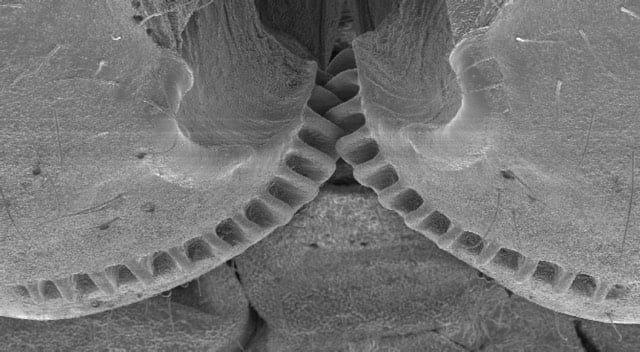
Scientists have discovered that an insect has evolved something like a gearbox to coordinate its leg movements while jumping. That’s right, nature invented mechanical gears before man got around to it.
The gears in the Issus hind-leg bear remarkable engineering resemblance to those found on every bicycle and inside every car gear-box.
Each gear tooth has a rounded corner at the point it connects to the gear strip; a feature identical to man-made gears such as bike gears — essentially a shock-absorbing mechanism to stop teeth from shearing off.
The gear teeth on the opposing hind-legs lock together like those in a car gear-box, ensuring almost complete synchronicity in leg movement — the legs always move within 30 ‘microseconds’ of each other, with one microsecond equal to a millionth of a second.
This is critical for the powerful jumps that are this insect’s primary mode of transport, as even minuscule discrepancies in synchronisation between the velocities of its legs at the point of propulsion would result in “yaw rotation” — causing the Issus to spin hopelessly out of control.
“This precise synchronisation would be impossible to achieve through a nervous system, as neural impulses would take far too long for the extraordinarily tight coordination required,” said lead author Professor Malcolm Burrows, from Cambridge’s Department of Zoology.
Up until very recently, humans were thought to be the only animals who made and used stone tools, an era in human development that began roughly 3.3 million years ago. But according to this piece at the BBC, some chimpanzees and monkeys in various places around the globe have been using primitive stone tools for hundreds or even thousands of years.
Boesch and his colleagues had previously studied modern chimpanzee stone tool culture in the region. This research revealed that the chimpanzees have an idiosyncratic way of choosing and using their tools.
For instance, chimpanzees will often deliberately opt for particularly large and heavy stone hammers, between 1kg and 9kg, while humans prefer to use stones that weigh 1kg or less. Many of the 4300-year-old stone tools weighed more than 1kg, suggesting they were used by chimpanzees.
Chimpanzees also use their stone tools to crack open certain types of nuts that humans don’t eat. Starch residues on some of the ancient tools came from these nuts.
Together, these findings led to an obvious conclusion: chimpanzees have been using stone tools in the rainforests of Ivory Coast for at least 4300 years.
Because of climate change and other activities caused by humans (invasive species, habitat loss), hybridization of species is resulting in things like super-sized coyotes, pizzly bears (grizzly/polar bear hybrids), and other animals that may not be ideally suited to survive.
Some scientists and conservationists see the coywolf as a nightmare of the Anthropocene — a poster child of mongrelization as plants and animals reshuffle in response to habitat loss, climate change and invasive species. Golden-winged warblers increasingly cross with blue-winged warblers in the U.S. Northeast and eastern Canada. Southern flying squirrels hybridize with northern flying squirrels as the southern species presses northward in Ontario. Polar bears mate with grizzlies in the Canadian Arctic along the Beaufort Sea to produce “pizzly bears.”
All of this interbreeding upsets the conventional notion of species as discrete, inviolable entities. Moreover, some scientists and conservationists warn that hybridization will degrade biodiversity as unusual species are lost to genetic homogenization.
Partly scientists fear hybrids will be less fit than organisms that have evolved in place over eons. And often that is true, but the problem solves itself over time as hybrids lose out in the competitive race for survival.
James Krupa teaches a mandatory biology class at the University of Kentucky and some students have a difficult time because Krupa refuses to shy away from evolution.
Rarely do I have a Kentucky student who learned about human evolution in high school biology. Those who did usually attended high schools in large urban centers like Louisville or Lexington. Given how easily it can provoke parents, the teaching of human evolution is a rarity in high school, so much so in Kentucky that it startled me when I first arrived.
The story of our evolutionary history captivates many of my students, while infuriating some. During one lecture, a student stood up in the back row and shouted the length of the auditorium that Darwin denounced evolution on his deathbed — a myth intentionally spread by creationists. The student then made it known that everything I was teaching was a lie and stomped out of the auditorium, slamming the door behind him. A few years later during the same lecture, another student also shouted out from the back row that I was lying. She said that no transitional fossil forms had ever been found — despite my having shared images of many transitional forms during the semester. Many of her fellow students were shocked by her combativeness, particularly when she stormed out, also slamming the door behind her. Most semesters, a significant number of students abruptly leave as soon as they realize the topic is human evolution.
I personally don’t understand the compatibility of evolutionary biology and Christianity Krupa emphasizes in his class, but I guess it helps to meet people halfway?
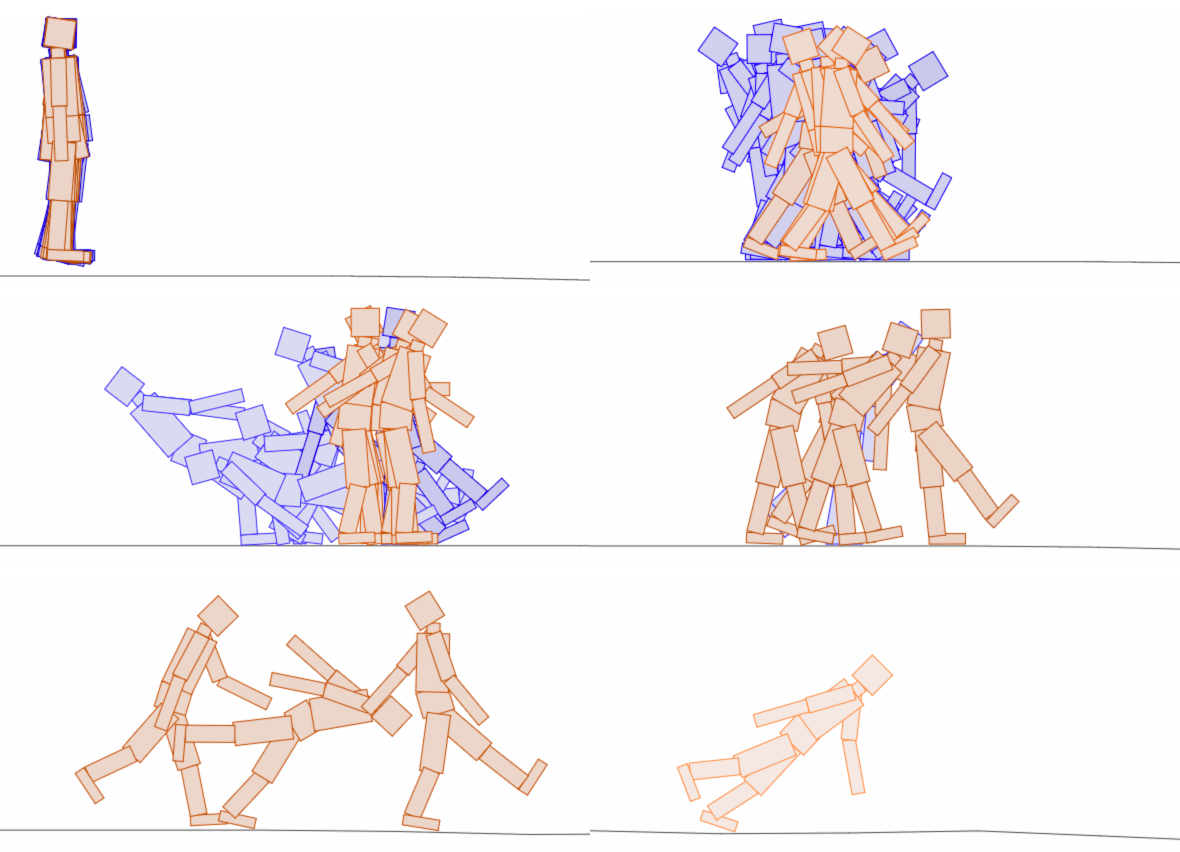
This simulator evolves increasingly effective walking creatures through genetic algorithms. After each round, the winners are sent through to the next round and copied by the rest of the competitors, with mutations introduced. At first, the pace of improvement is swift — two orders of magnitude within 100 generations — but slows pretty dramatically after that. (via @nickrichter)
Every year, evolutionary biologist and professor David Barash gives his students The Talk about how evolution and religion do and do not get along.
It’s irresponsible to teach biology without evolution, and yet many students worry about reconciling their beliefs with evolutionary science. Just as many Americans don’t grasp the fact that evolution is not merely a “theory,” but the underpinning of all biological science, a substantial minority of my students are troubled to discover that their beliefs conflict with the course material.
Until recently, I had pretty much ignored such discomfort, assuming that it was their problem, not mine. Teaching biology without evolution would be like teaching chemistry without molecules, or physics without mass and energy. But instead of students’ growing more comfortable with the tension between evolution and religion over time, the opposite seems to have happened. Thus, The Talk.
This is the sort of thing Barash talks about:
The more we know of evolution, the more unavoidable is the conclusion that living things, including human beings, are produced by a natural, totally amoral process, with no indication of a benevolent, controlling creator.
(via @TomJunod)
This was one of my favorite scenes the film…Russell Crowe’s Noah telling his children the creation story, which ends up being half supernatural and half evolution.
Worth watching for the special effects alone.
Older posts





Socials & More