


Harry Kane is this year’s men’s winner of the Ballon d’Or. 100% the right choice — he had the best season of anyone. Like, almost ever.

Advertise here with Carbon Ads
This site is made possible by member support. 💞
Big thanks to Arcustech for hosting the site and offering amazing tech support.
When you buy through links on kottke.org, I may earn an affiliate commission. Thanks for supporting the site!
kottke.org. home of fine hypertext products since 1998.
Beloved by 86.47% of the web.

A poignant short documentary about a mother who only knows her son is alive by the new graffiti tags he leaves around town. Eventually, she started tagging back…

From Charles Mann, a quick history of porcelain, which is basically what his pricey induction stovetop is made from. (Fun fact: I went to grad school for ceramic engineering before dropping out after a semester to teach myself web design.)

KDO Rolodex a list of kindred spirits, friends, open web enthusiasts, role models, fellow travelers, and collaborators


refresh
see full listRussian and East European Posters


Princeton houses a large digital collection of posters from Russia and Eastern Europe, almost 5000 total item spanning 101 years (1904-2004). This album on Flickr contains nearly 1500 Russian & Soviet posters from 1917-1991 — not sure how much overlap there is between the two.
Ten of the most bizarre films and their posters, as chosen by Eternal Family. I linked to Eternal Family recently and this is a good guide to some of their weirdest stuff.

How Tree Rings Challenged the Myth of American Wilderness. “When one revisits colonial accounts of North America, one finds a striking amount of evidence that Native Americans set fire to the landscape.”

NASA’s Perseverance Sets Off-World Record for Total Distance Driven
According to NASA, the Perseverance rover has driven just over 28 miles on the surface of Mars, making it the vehicle that has driven the farthest distance outside of Earth.
On Oct. 11, the rover’s odometer reached 28.10 miles (45.22 kilometers), eclipsing the record of 28.06 miles (45.16 kilometers) set by NASA’s Opportunity rover, which explored Mars from 2004 to 2018. Perseverance reached the mark on the 2,006th Martian day, or sol, of its mission, covering in five and a half years a distance that took Opportunity almost 15.
For a vehicle whose top speed is 0.1 mph and which stops all the time to do science, 28 miles is quite a distance. The route video is fun to watch…it resembles a dog’s path, sniffing out its favorite spots and doubling back along familiar routes.
BTW, the Guinness World Record for the number of miles driven by one vehicle on Earth is 3,039,122 miles. (And the guy kept driving it after the record was recorded…he reached 3,260,257 miles before he died.)
Simon Willison: “Battle Drones is heavily vibe coded — I’ve reviewed almost none of the code, and it’s built in a language (TypeScript) that I’ve hardly used myself.” There’s a French steampunk version too.

This exhibition of ukiyo-e (woodblock prints) by Utagawa Hiroshige at the Tokyo National Museum was great. Awesome to see these prints in person.

Winners of the Wildlife Photographer of the Year 2026


London’s Natural History Museum has announced the winners of the 2026 Wildlife Photographer of the Year, a competition that has been going since 1965. You can see a gallery of all the winners on the competition website (and also places like The Guardian and The Atlantic.)
Photos above by Kutub Uddin, Amelie Davis, Michał Michalski, James Lewin, and Alexis Tinker-Tsavalas.
How to Install an App on Your Commodore 64. “Oh, don’t worry, you’ll just need to type in the code for that program. There’s an article explaining what MLX is, which you can read really quickly on page 93, and then you’ll find the code for it on page 94.”

The Tiny Computers app lets you play with old computers on the iPhone Duo. Ten machines included: “Macintosh, Commodore 64, IBM PC, Amiga 500, Windows 95, ThinkPad, iMac G3, iBook G3, PowerBook G4 and Windows XP.” XP even crashes sometimes. Love this.
The One Question I Can’t Stand at Restaurants. “The idea of a restaurant I’d never been to using a dossier on me to decide, say, where I should sit, what I was likely to order, even whether I should be given a reservation at all, gave me chills.”

“US households are paying 62% more for drinking water than they did a decade ago — outpacing inflation, grocery prices and household incomes.”

Open Thread #Potato
Seems like it’s a good time for an open thread. I cannot remember what number we’re up to, so it’s “Potato”. I just had french fries for lunch and ate the longest french fry I have ever seen.1 I should have taken a photo, but I was in consumption mode and not attention mode. My apologies for the oversight.
Anyhoo, I’ve been working on the site a lot this week (did you see Prometheus?)2 and have some cool stuff coming up. But I need to take a tiny step back to do some life admin and email3 today, so the site will be a little slower than usual. A fall summer Friday, if you will.
What’s going on in your world? I know the onset of dark & cold in the northern hemisphere makes life challenging for some of you this time of year; I hope you’re hanging in there. I’ve been thinking about what home means, taking long baths, walking a lot, and reading three books, listening to one book, and watching two TV shows, trying to keep everything straight.
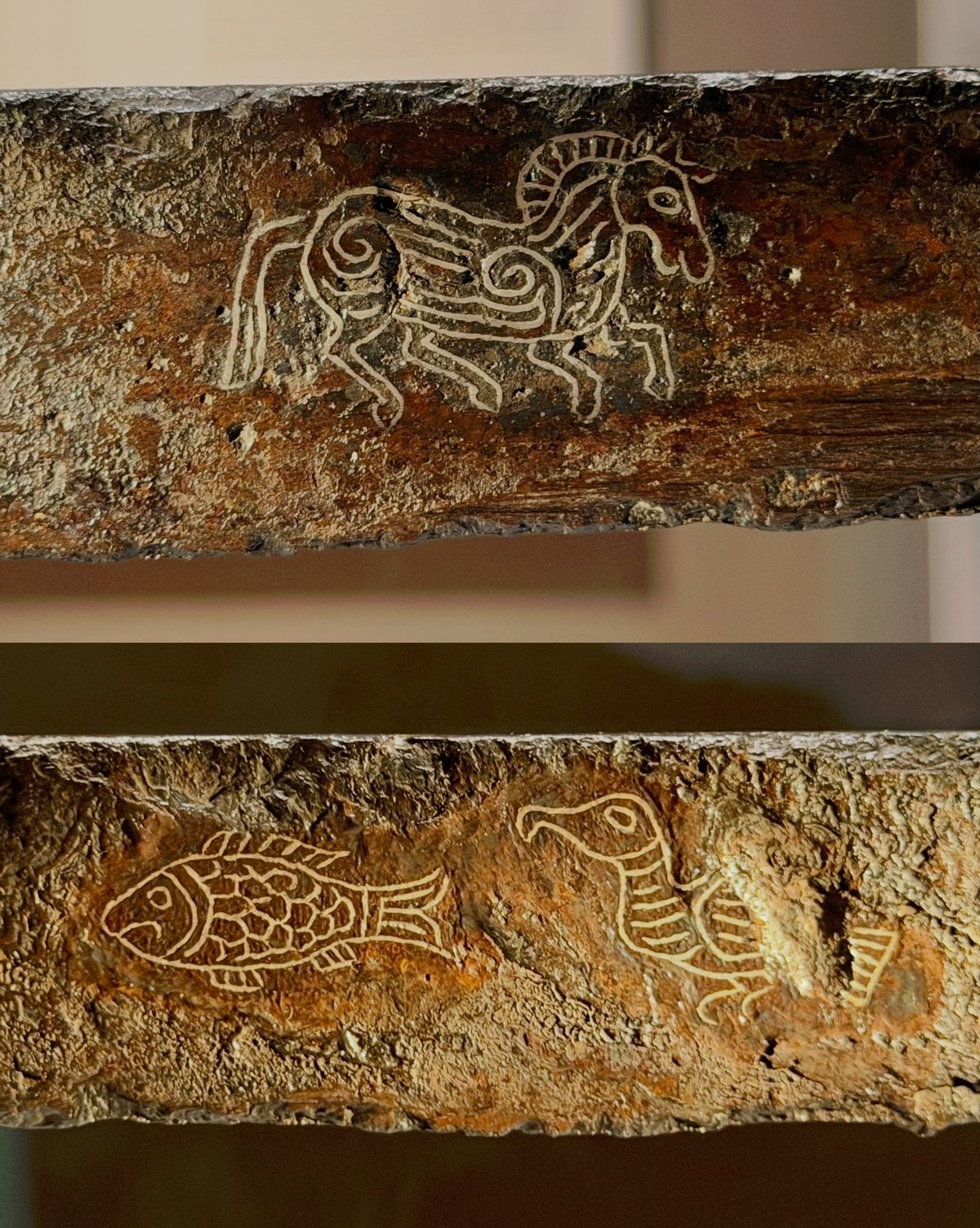
And here’s a couple of photos I took of some really cool engravings on a sword at the Tokyo National Museum.
How many individual french fries do you think you’ve seen/eaten in your life? 10,000? 100,000? 1M? (This is a good Fermi problem.) ↩
Oh, and have you noticed that typos have been much better recently? I built a spellchecker for my post editor, so I’ve been able to more easily spot them. (Cue incident of Muphry’s Law in this post…) ↩
If you’ve emailed me in the past ~3-4 months and have not gotten a reply, I apologize. I have been preoccupied with other things (moving, Tokyo, website) and my inbox has become a nightmare (I’m getting 10-20 additional emails per day with people writing in with their new projects, most of them written by AI (You posted X so I thought I’d send you Y. I’m proud of this project. Free, no signup, no tracking, no ads. Etc. Etc.) It’s like spam but sort of not?) I’ve been largely ignoring it and it’s time I get more of a handle on it. ↩
“an interesting linguistics find! so I’m reading this text from 1908 and it keeps referencing ‘hp’ in the context of ‘not being at full hp’ ‘applying your full hp to a task’ etc.” But it’s not hit/health points…

The Flipbook of the Rings
For more than a year, marshalled by animator Andy Bailey, more than 1000 artists collaborated to create a hand-drawn, shot-for-shot, animated, flipbook version of Peter Jackson’s The Lord of the Rings: The Fellowship of the Ring. The entire three hours. 120,000 individually drawn pages. A couple of months ago, they released the first 11 minutes:
It’s pretty amazing. It doesn’t include the audio or music from the movie, but I bet you could mute the sound on this and simultaneously play the actual movie for the sound. Here’s an earlier sneak peek at some of the scenes:
This artist wrote about their participation in the project; they contributed 108 drawings that amounted to roughly 10 seconds of animation (and took 30-40 hours to do):
The first clip I claimed was a pretty iconic scene from the beginning of the movie. I chose to render it in pencil as it’s night time and I felt black and white would be more dramatic. As I worked through the frames, I did worry that the subtle variances in shading would make the clip look disjointed, but I think it adds a cool movement to the scene. There is that rough, quirky imperfection to hand drawing. You can see the final result with comparison below (digitized and compiled by Andy).
Here’s a clip of that scene:
I can’t wait to see the finished product — I hope they’re able to release it online.
An archive of Omni magazine (1978-1995), courtesy of the Internet Archive. “Omni was a science and science fiction magazine published in the US and the UK. It contained articles on science, parapsychology, and short works of science fiction and fantasy.”

Railpass simulates a train ride in your browser window using real video footage. Choose from trains from around the world or add some weather to the mix. Sound on for the best ride.

This Is What It’s Like to Spend Your Life in Prison. “None of us want to be defined solely by the person we were in our youth, or by the worst thing we ever did. The men serving life without parole feel the same way.”
The Winners of the 2026 International Pano Awards
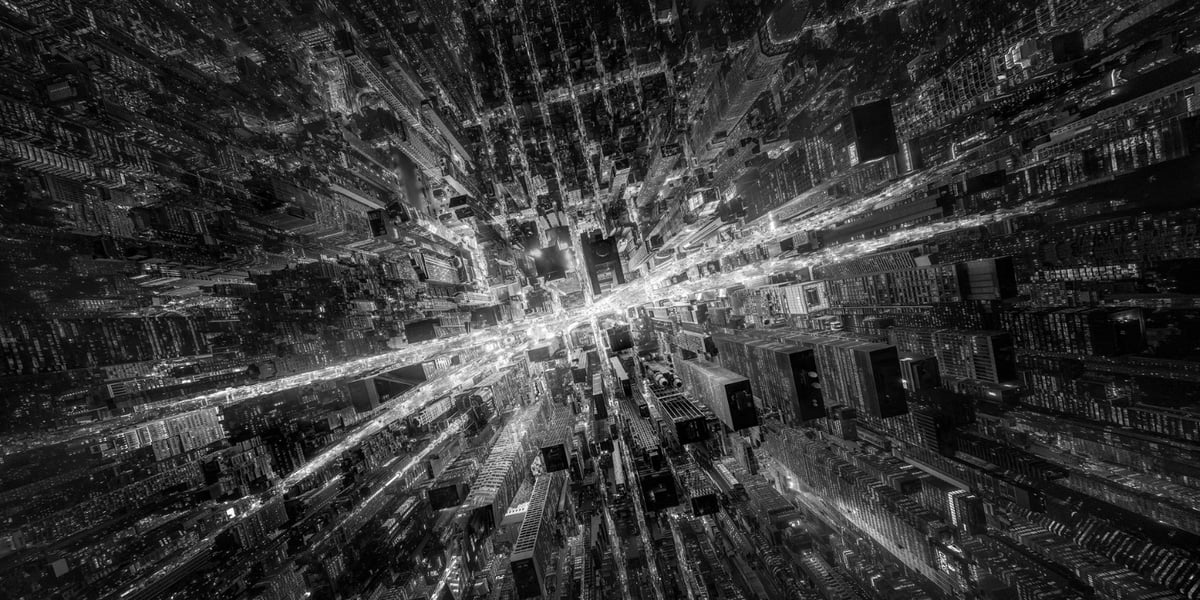




The winners of the 2026 Epson International Pano awards were announced recently, featuring some of the best panoramic photography in the world. Alan Taylor at the Atlantic shared some of his favorites and I shared some of mine above. Starting at the top, photos by Xuecheng Liu, Shimon Perlstein, Tomás Sánchez Ruiz, Preeti & Prashant Chacko, and Daniel Viñé Garcia.
P.S. In case you were wondering about the aspect ratio of panoramic images: according to the submission rules, the image’s longest side needs to be at least twice the length as the shortest side.
“Scientists have made a breakthrough toward the mind-bending goal of creating computers made of brains by demonstrating that human neural tissue can classify letters of the Braille alphabet.”

The title of this video is The Fastest Downhill Run Ever. I don’t know if that is true, but oh my god does it look dangerous to go this fast on a mountain bike through the streets of Genoa. (It looks slightly less nuts in the non-POV, but not by much.)
Meet Prometheus, a Gift Link Search Engine
Sometime in the past few years, media sites like Bloomberg, The Economist, The Atlantic, Defector, Talking Points Memo, and the NY Times started offering a way for subscribers to share paywalled articles with friends and followers. These are commonly referred to as gift links.
Thousands of gift links are shared on websites and social media daily. Some helpful aggregated feeds and hashtags are available, but finding specific information can be difficult. Whenever possible here on KDO, I link to paywalled articles with gift links. To help in that endeavor, I’ve built a gift link discovery tool called Prometheus.
Prometheus collects gift links to paywalled news articles shared by subscribers — from the New York Times, the Washington Post, the Atlantic, and more. Links are gathered from Bluesky, Mastodon, and the web throughout the day, and you can search by keyword & URL and filter by publication.
Right now, Prometheus is only available to active kottke.org members while I’m testing and refining it — it’s definitely a beta tool rn. If you’re a member, check it out and let me know if you’ve got any feedback or notice any rough edges.
An informed public is the foundation of a healthy society — and while paywalls aren’t the only challenge here, they also aren’t helping. Big thanks to everyone sharing their gift links online and to these media companies for enabling their subscribers to share their journalism with others.
“A SpudCell can grow, copy its DNA, divide in two, and start its cell cycle all over again. But this cell is made by people, created from lifeless ingredients.” Um, what?

Bastardica is “a foundry for bastard web fonts. Mix, stretch and/or squish them.” E.g. Nervous Sans: “Arial is stacked five times, pseudo-randomly twitching out of line.” I quite like Impacter.

How did life on Earth arise? Three of the biggest inflection points were ~4 billion years ago when life first emerged, ~2 billion years ago when eukaryotic cells appeared, and ~580 million years ago when life got big.

NYC’s Fastest Bike Messenger (1985)
For CBS News in 1985, Charles Kuralt profiled bike messenger David Leopold.
I don’t go slow. I don’t stop for red lights. I go against traffic. I disobey every traffic law there is.
Great street footage of NYC from 40 years ago. You might think that Leopold ended up as a stain on the pavement. In 2010, CBS News did a follow-up on him:
See also Leopold on David Letterman from 1985.
The Library Is Closed. Feel Free to Come In. “In communities where workspaces are scarce, libraries are welcoming visitors outside of staffed hours. All they need is a library card.”

Tiny People in a Big World is like a birdwatching guide, but for people-watching. “I made this campaign to produce a book that will help you notice and appreciate the tiny people who pass through your big world.”


Ambient Earth
Ambient Earth is a 7.5-hour, real-time, 4K, remastered video of the orbital view from the International Space Station. Seán Doran took almost 49,000 images from 27 time-lapse sequences captured from the ISS by astronaut Butch Wilmore, repaired, remastered, and interpolated them into this incredible video.
Perspective is lost when the world speeds by. The scale and beauty of our home planet is truly appreciated when observed on an epic 7.5 hour journey from The International Space Station. This ambitious 4k compilation, crafted through months of meticulous restoration, invites you to slow down and experience Earth in real time just as astronauts do.
The video is accompanied by ambient audio recorded on the station by Chris Hadfield. This would be great for a screensaver, but after poking around for a bit, it doesn’t seem like there’s a good way to set a YT video as a screensaver on MacOS (without downloading it or having it be a livestream).
“Japan launched a $578 million mission Monday on a five-year expedition to land on the largest moon of Mars and retrieve samples for return to Earth.”

Find the Place You Love. Then Move There. “The reward from moving just because you want to is hard to defend logically. Some people will think you are crazy…”

I remember this 90s TV commercial for 93.7 The Edge, a Minnesota alternative radio station, very well. It features very non-alternative old people reciting lyrics like “bow down before the one you serve” and “Winona’s got herself a big brown beaver”.
Why Do Some Places Just Feel Right?
Gregory Wieber does these engaging, info-rich videos on tech history — I posted his HyperCard Changed Everything video back in the spring. For one of his latest videos, Wieber goes through a short history of Christopher Alexander’s landmark book, A Pattern Language (Bookshop), which anyone interested in building anything should at least have paged through once in their life,1 and how his work inspired not only object oriented programming and the invention of wikis, but also SimCity and The Sims.
The Timeless Way of Building is shorter, less dense, and perhaps a better introduction to Alexander’s ideas about patterns. ↩
New book from James Gleick about the history of the telephone. “It gave us the party line, the busy signal, dial tones, wiretapping, the late-night DJ, and the booty call. It magnified the possibilities of government, of business, of friendship, of love.”

“Astronomers for the first time have identified a green star, documenting a dense stellar remnant called a white dwarf that became a ghostly shade of chartreuse after ingesting rocky debris from planets that once had orbited it.”

The Best Monopoly Strategy, Tested on 300 Million Games
Perfect Play ran over 300 million games of Monopoly to determine the best strategy and the most common mistakes players make.
I turned eight classic Monopoly strategies into computer players and made them play 312,898,560 games against each other. At a table of four, the best one won 43% of its games. The worst one won 3%.
The gap doesn’t come from one clever trick. It comes from four common mistakes: being picky about what you buy, saving your cash, stopping at three houses, and refusing to trade. Then I let the computer tune every habit at once, to see how far a carefully tuned player can go and which color set is really worth fighting for.
P.S. I don’t actually play Monopoly anymore — it is the world’s most maddening game (along with Sorry) and I childishly refer to it as “Monotony” — and an aside about 3 minutes into the video is why: “roughly one game in six never ends”. Exactly! And you want me to haggle? For fun? No thank you. I imagine there are folks whose idea of a good time is visiting used car dealerships for funsies when they don’t need a car, but I am not one of them.
Protestors Criticized For Looting Businesses Without Forming Private Equity Firm First. “It’s disgusting to put workers at risk by looting. You do it by chipping away at their health benefits and eventually laying them off.”

Using an LLM’s “superhuman ability to parse through galactic quantities of data”, a very amateur astronomer has found a possible exoplanet candidate. MIT is going to point their satellite at the candidate planet to collect more data soon.

How Japanese Dried Bonito Is Made
This workshop founded in 1882 still makes dried bonito like they did back in the Edo period.
How katsuobushi — Japanese dried bonito, said to be the world’s hardest food — is made in Nishi-Izu, Japan. Inside Kanesa Katsuobushi Shoten, a workshop founded in 1882, 5th-generation craftsman Yasuhisa Serizawa still uses the 200-year-old “tebiyama” hand-fired smoke-drying method that only a few workshops in Japan preserve. Watch fresh bonito being filleted and boiled for 90 minutes, smoke-dried more than 10 times over a hand-tended wood fire, repaired with bonito paste, fermented with koji mold and sun-dried for months — over half a year until the fish becomes as hard as wood and shines like a jewel. From fresh catch to katsuobushi.
Check out Kanesa Katsuobushi Shoten’s website for more info; here’s what they say about the tebiyama drying/smoking method (Google translation):
This method of making dried bonito flakes has been used in the Tago district of West Izu for a long time, and its history is said to date back about 300 years (to the Edo period). It involves digging a vertical hole about 2 meters deep, burning firewood (raw wood from Izu: oak, sawtooth oak, cherry, etc.) from the bottom of the hole, and smoking and drying the dried bonito flakes with the high temperature of an open flame. This method is called the Tebiyama-shiki smoking method. It is the oldest existing smoking method, and only a few bonito flake manufacturers in the country continue to use this method to make dried bonito flakes, so it is said to be a legendary method. The Tebiyama-shiki smoking method is said to produce dried bonito flakes with a rich flavor because the surface of the bonito is smoked all at once with the high temperature of an open flame, locking in the umami.
(thx, caroline)
Brewster Kahle argues against news sites blocking the Internet Archive from archiving their sites. “Impeding the Wayback Machine’s preservation work will not prevent powerful AI companies from gathering training data.”

NPR’s Planet Money recently did a show on tariff refunds and interviewed Panic’s Cabel Sasser about how they decided to refund their Playdate-buying customers for the tariffs surcharge they paid.

Do you believe in life after death? This is a great interactive piece by Alvin Chang about people’s beliefs about the existence of an afterlife and how those beliefs change over the course of our lifetimes.

A Tiny 24 FPS E-Ink Game Boy Emulator
This is really impressive: a software engineer got a Game Boy emulator running at 30 fps on a tiny e-ink screen.
If you’re familiar with e-paper, you know that they normally refresh much slower (2-3 times a second), not nearly quick enough to play even a simple video game. This guy wrote his own display driver that got the refresh rate up to 30 times per second. From the transcript of the video explaining how e-paper works and how he hacked the display to make it play games:
Unlike conventional displays like LCD or OLED, ePaper stores its image physically using charged black and white pigment particles. By changing the electric field, the display moves the pigments towards or away from the surface, which in the end gives us black- or white-looking pixel. And usually a sequence of several electrical pulses called a waveform is needed to move the pigment back and forth, before finally driving it towards the new image. This helps produce a clean result without leaving too much of the previous image behind. But this takes a lot of time.
The project is open source — you can get the plans and code on GitHub. This engineer was inspired by Wenting Zhang’s e-paper Game Boy emulator:
Zhang has also made a color e-ink display that runs at 60 fps. Very cool. (via yanko design)
A 24-minute video tour of the Krasner and Pollock: Past Continuous exhibition at the Met. I hope I make it to NYC to see this before it closes in January.
Towers of Babble is a game that mashes up word games and tower defense games. “Nouns make buildings and other parts of speech make modifiers that you can add to a building to improve its stats.”

Hyperland, a Prescient 1990 TV Show by Douglas Adams
I’d never heard of this before: in 1990, the BBC aired a program created by and starring Douglas Adams called Hyperland. It begins with a frustrated Adams throwing his TV out (too linear, too non-interactive) and Tom Baker (from Doctor Who) popping up as an intelligent interactive agent that promises to “do your every slightest bidding, to fetch and carry for you, to work tirelessly and selflessly on your behalf, always ready, always willing, no job too small or too menial”.
Circumventing the limitations of ‘linear’ broadcast TV, the 50-minute programme imagines a new world in which an AI software ‘agent’ - brought to life here by Doctor Who favourite Tom Baker - helps the user (played by Adams) to find and access material of interest in a global world of hyperlinked information - text, images, audio and video.
Pop-up ‘micons’ (moving icons) conveniently link to interviews with leading technologists of the era (among them Ted Nelson, Robert Winter, Robert Abel, Kristina Hooper, Fabrice Forin and Steve Gano).
Some of this stuff has dated badly - few visions of the future get everything right! - but the programme is nevertheless of considerable historical importance.
Incredibly, at about the time Hyperland was being broadcast, a young CERN computer scientist by the name of Tim Berners-Lee was beavering away on URLs and HTTP, the foundations of what would become the World Wide Web.
Even Adams, who foresaw so much, didn’t anticipate the impact the Web - and the Internet that conveys its data globally - would have on civilisation. Needless to say, the enticing infoworld envisaged in Hyperland was a public-service one of education, art, literature (including nods to Adams’ own works!) and entertainment. There’s no advertising, hacking, cybercrime, information theft, social-media addicts, unaccountable corporate domination or drug-like dependence on the smartphones that Adams himself predicted.
And Tom Baker’s enthusiastic agent isn’t forever popping up to try and sell you something…
The YouTube version above is missing a segment, but you can watch (and download) the whole program on the Internet Archive, a project that fits the vision of the future imagined by techno-utopians like Adams.
I’m imagining what 16-year-old Jason would have made of this (or HyperCard or hypertext had he had any clue that they existed until 4-5 years later) — his brain probably would have exploded.
Lane 8 has released his Fall 2026 Mixtape, 4 hours, recorded live at SF’s Castro Theatre. This one’s going straight into the earholes. Soundcloud, YouTube, and elsewhere.
Socials & More