



A Pandemic Strikes Business Town
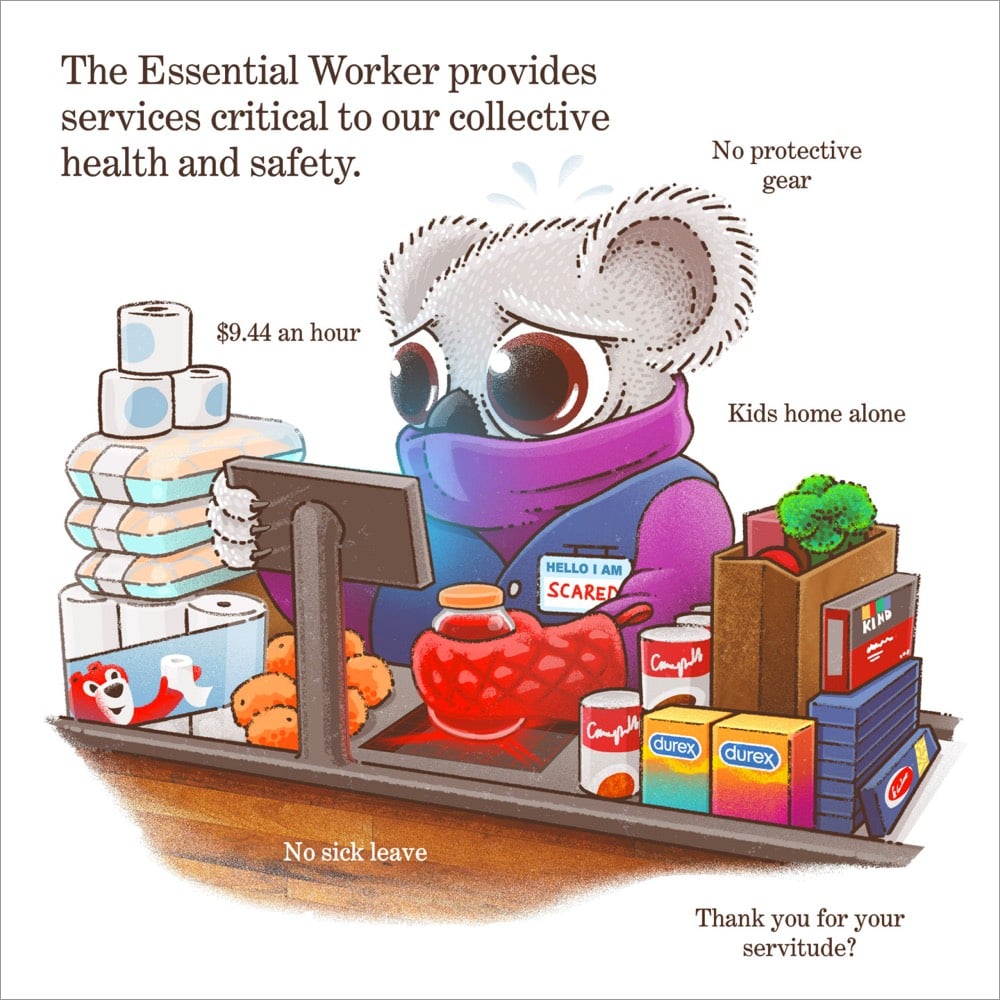
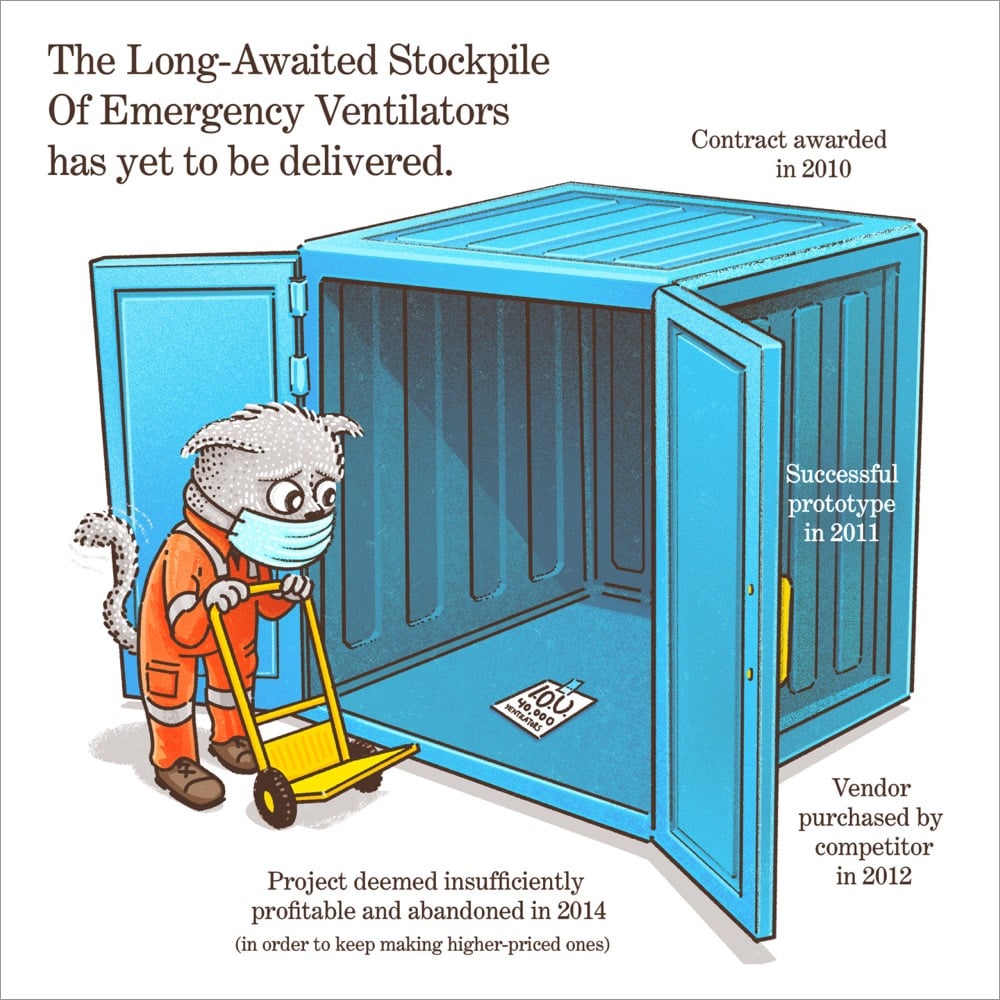
I featured Business Town, an ultra-capitalist spoof of Richard Scarry’s Busy Busy Town, on this site a few years ago. Their last few entries have focused on the pandemic and they are devastatingly spot on.
(via waxy)

This site is made possible by member support. ❤️
Big thanks to Arcustech for hosting the site and offering amazing tech support.
When you buy through links on kottke.org, I may earn an affiliate commission. Thanks for supporting the site!
kottke.org. home of fine hypertext products since 1998.
I featured Business Town, an ultra-capitalist spoof of Richard Scarry’s Busy Busy Town, on this site a few years ago. Their last few entries have focused on the pandemic and they are devastatingly spot on.
(via waxy)
In 2014, Ruben Bolling created an updated version of Richard Scarry’s Busytown (as seen in What Do People Do All Day? and Busy, Busy Town) populated with workers with job descriptions like climate change denier, content aggregator, and rage pundit. At Topic, Bolling has updated the activities of Busytown residents for 2018.
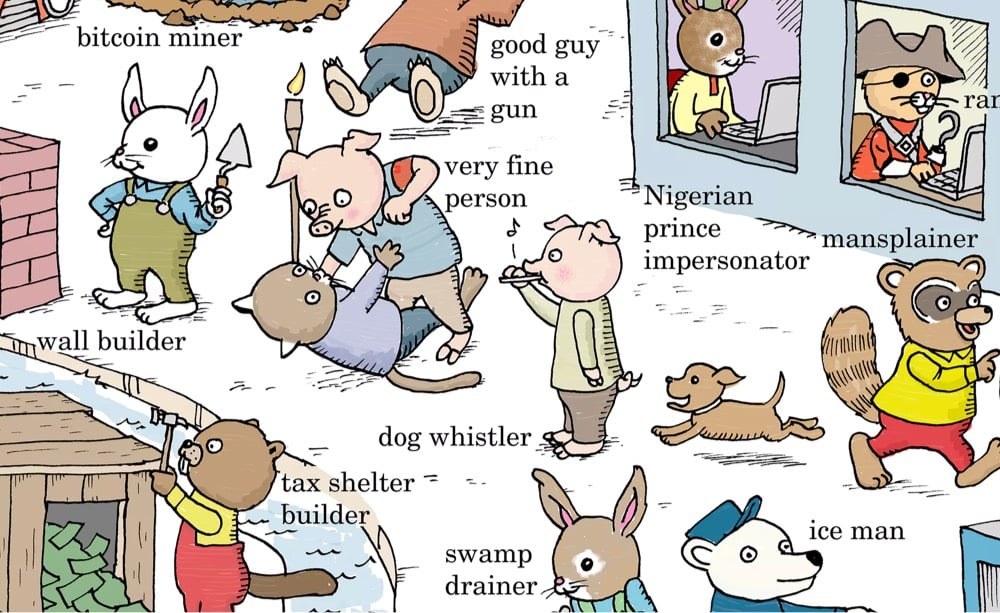
Busytown 2018 residents include gig economy worker, fake news troll, good guy with a gun, and swamp drainer. Still no Goldbug though…I thought he showed up just about everywhere? (via david jacobs)
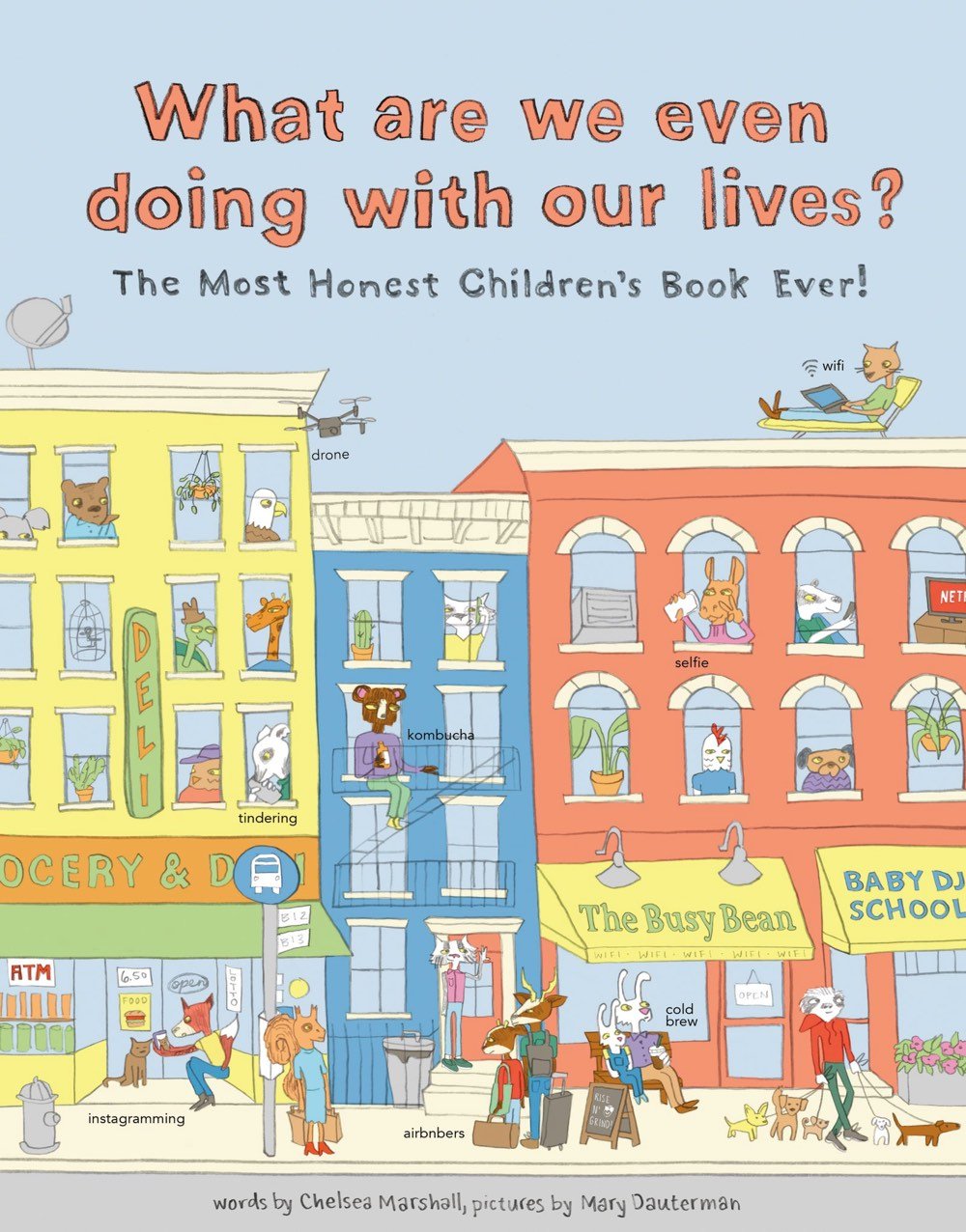
Chelsea Marshall and Mary Dauterman are coming out with a satirical children’s book called What Are We Even Doing With Our Lives?. It’s Richard Scarry’s Busy, Busy Town crossed with HBO’s Silicon Valley.
Welcome to “Digi Valley,” the epitome of twenty-first-century urban life! The animal-people who call it home do cool things: life coach, cat landlord, baby DJ teacher, app developer, iPhone photographer, new media consultant, beauty blogger, and, of course, freelancer. On the street, in the coffee shop, at the farmer’s market, or the local vegan cafe, you’ll meet new friends like Frances and Sadie, Freelance Frank, Realtor Rick, and Bethany the Beauty Blogger as they bike, drive, bus, hoverboard, and Uber their way around town-or just sit and enjoy a latte while doing important things on their devices.
This is good, but surely this book owes a debt to the prior art of Ruben Bolling and Business Business Town?
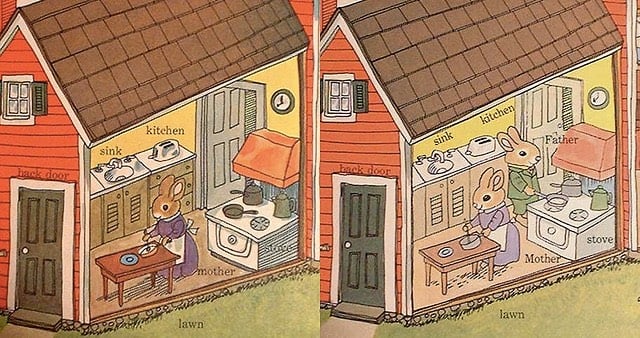
In a photo set on Flickr, Alan Taylor compares the 1963 and 1991 editions of Richard Scarry’s Best Word Book Ever and notes many changes to make it more progressive and inclusive, particularly with regard to gender roles. For instance, in this one, Mother is joined by Father in the kitchen:
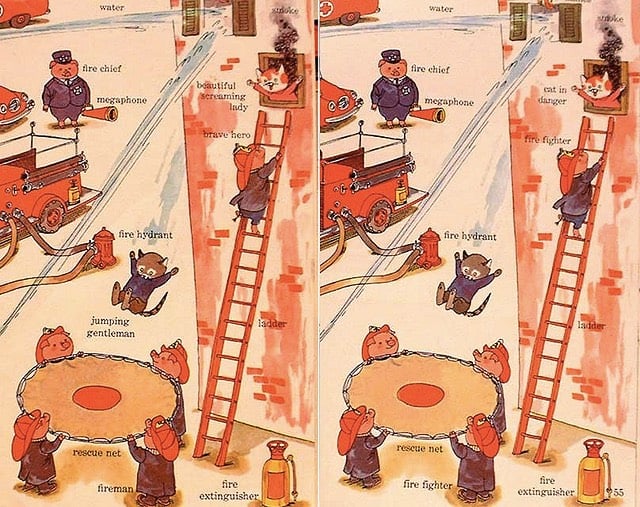
And in this one, “beautiful screaming lady” becomes “cat in danger”:
(via fusion)
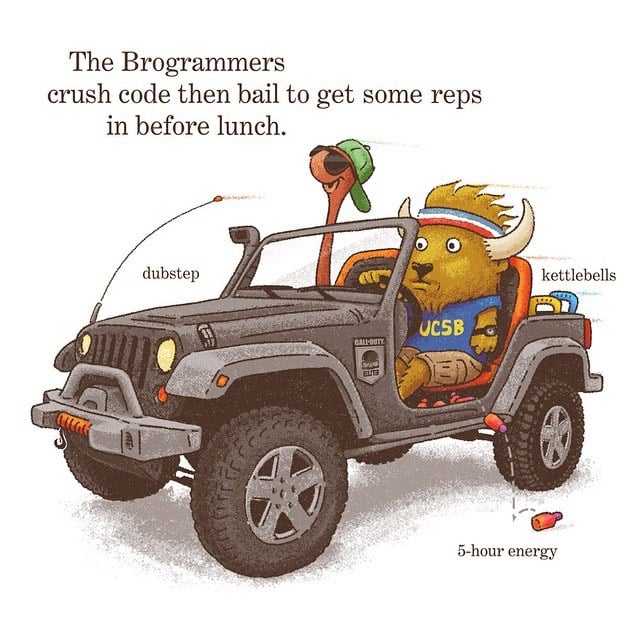

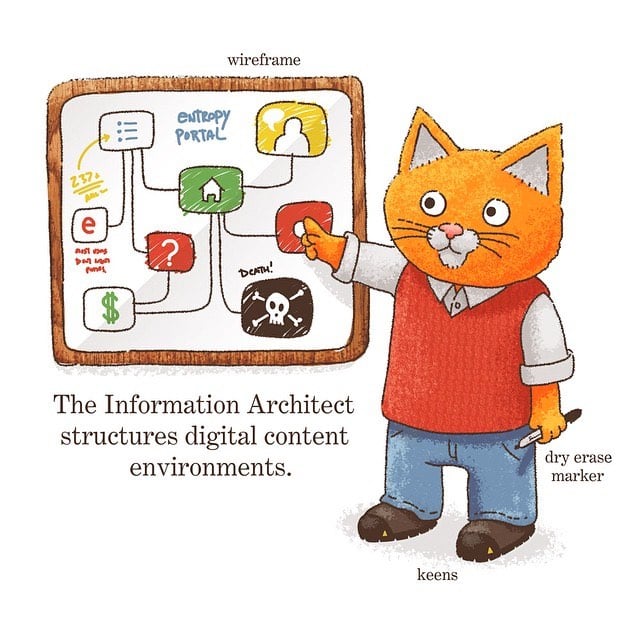
What if the Busy Busy Town Richard Scarry wrote about was Silicon Valley circa 2015? Meet the fine citizens of Business Town. Great stuff, but did someone forget to credit Ruben Bolling’s comic strip Richard Scarry’s 21st Century Busy Town Jobs for the inspiration?
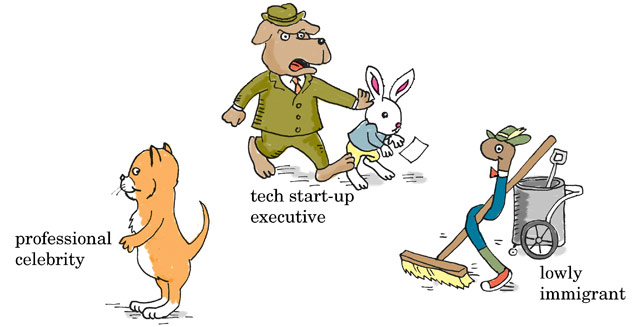
Oh, this is great. The butchers, farmers, doctors, and children’s book librarians of Richard Scarry’s original Busy, Busy Town give way to the non-lending officer, one-percenter service provider, fart-sound app maker, and lowly immigrant in Tom the Dancing Bug’s 21st century Busy Town.
As a writer, designer, and, hell, as a human being, I value simplicity over most other considerations. But I also have a soft spot for dense hyper-detailed illustrations in the style of Mattias Adolfsson.
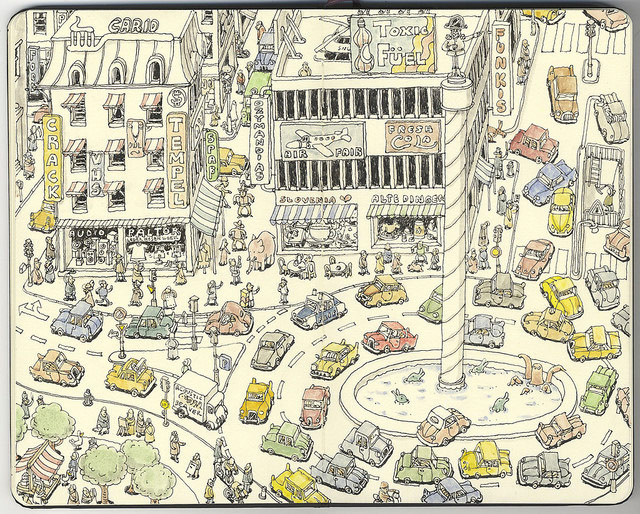
Many more examples of Adolfsson’s work is on Flickr. Reminds me of a pair of books I love reading with the kids: Mark Alan Stamaty’s Who Needs Donuts? and Cars and Trucks and Things That Go by Richard Scarry. The illustrations in these books are nearly infinite; the kids and I have read Cars and Trucks probably more than 70 times and almost every time through, we find something new.
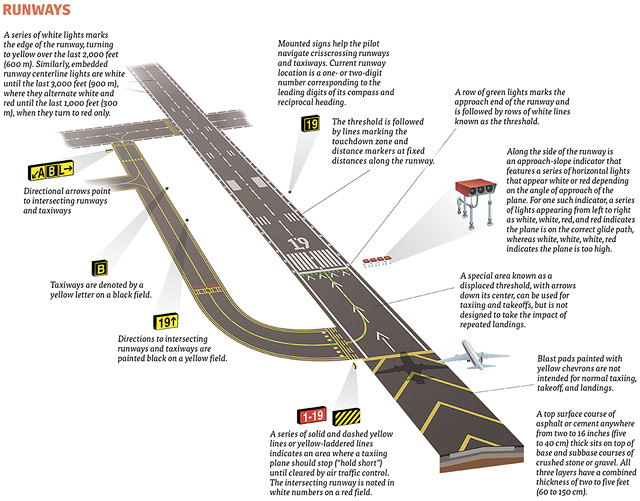
Kate Ascher, author of the great The Works: Anatomy of a City, has a new book out about transportation. The Way to Go explores how global transportation works, from how car engines work to the ocean routes travelled by huge cargo ships. Slate has an excerpt.
Focusing on the machines that underpin our lives, Ascher’s The Way to Go also introduces the systems that keep those machines in business — the emergency communication networks that connect ships at sea, the automated tolling mechanisms that maintain the flow of highway traffic, the air control network that keeps planes from colliding in the sky. Equally fascinating are the technologies behind these complex systems: baggage tag readers that make sure people’s bags go where they need to; automated streetlights that adjust their timing based on traffic flow; GPS devices that pinpoint where we are on earth at any second. Together these technologies move more people farther, faster, and more cheaply than at any other time in history.
Ordered. The kids are going to love this one…it’s like a more grown-up version of Richard Scarry’s Cars and Trucks and Things That Go.
From a planning and transportation professional, a deconstruction of Busytown, the fictional town that features in many of Richard Scarry’s children’s books, including What Do People Do All Day?, Busy, Busy Town, and my personal favorite, Cars and Trucks and Things That Go.
Scarry moved to Switzerland in 1968, and if nothing else, Swiss architecture permeates the old town center of What Do People Do All Day. The Town Hall of Busytown on the cover is nothing if not Tudor. There is a small gate through which a small car is driving. Something to note about the vehicles in Busytown is that they are all just the right size for the number of passengers they carry. The Bus on the cover is full, with a hanger-on. The taxi holds one driver in the front and one passenger in the rear. The police officer (Seargant Murphy) is riding a motorcycle. When he has a passenger, the motorcycle always has a sidecar. Similarly, each window in town has someone in it, sometimes more than one person. Of course, this is a busy town, so the activity makes sense. The cover of this includes the grocery store, butcher, and baker (no supermarkets in 1968 Busytown), one block in front of Town Hall. One thing to note about the Butcher is that he is a pig, and clearly butchering sausages.
The self-slaughter and cannibalism of the pigs is documented in Merlin Mann’s Scarry Pigs in Peril Flickr set.
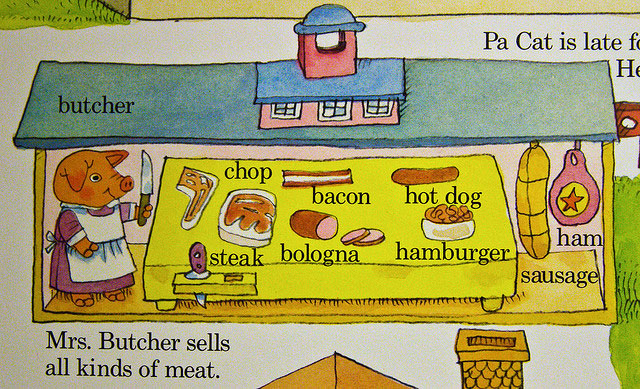
See also this examination of What Do People Do All Day?:
Nonetheless, Busytown is a place that works. Literally, in that it appears to enjoy full employment, and also in the sense that it has few obvious social problems. The police force, consisting of Sergeant Murphy, Policeman Louie and their chief, is charged with ‘keeping things safe and peaceful’ and ‘protecting the townspeople from harm’, which appears to largely consist of directing traffic, ticketing hoons and apprehending the town’s notorious thief, Gorilla Banana [sic].
Now of course one could opine that it’s in fact diffuse surveillance and self-surveillance that keep such remarkable order. All those open windows and doors, all that neighbourly cheerfulness, have a slightly sinister edge to them, if you’re inclined to look for it, as do the lengths that some of the citizens will go to in order to promote proper behaviour amongst children.
(via @inthefade)
Update: And here’s another installment of the Busytown police blotter.
Traffic officer reported busiest traffic jam ever at intersection of Main and Hippopotamus. Gridlock started when a peanut car stalled in the intersection and the elderly cricket driver was unable to restart the vehicle. Officer and several drivers assisted the elderly cricket in moving his vehicle to the side of the road, where it was then struck by an alligator car driven by a female rabbit. Officer reported smelling alcohol in the female rabbit’s breath and placed her in handcuffs until backup arrived. Officers then cleared the jam with the aid of two tow trucks.
(thx, elaine)
An examination of Richard Scarry’s What Do People Do All Day, one of my favorite books to read with Ollie.
However I am just as impressed but the extent in which Scarry’s work has in fact not dated very much at all. While the book covers an almost bafflingly broad range of occupations and includes sections on the extraction and transformation of raw materials, there is one notable omission: large-scale manufacturing. And without industry, from a Western perspective the book seems in fact almost presciently current. Some of the jobs the author describes have evolved, very few of them have all but disappeared (you can’t easily bump into a blacksmith, much less one who sells tractors); the texture of our cities has changed and those little shops have given way to larger chain stores; but by and large we still do the things that occupy Scarry’s anthropomorphic menagerie: we fix the sewers and serve the meals and cut down the trees and drive the trucks and cultivate the land and so forth. It’s almost as if Scarry made a conscious effort to draw only the jobs that could not be outsourced overseas, and had thus future-proofed the book for his domestic audience.
(via bobulate)
Stay Connected