kottke.org posts about Netflix
For years now, the people have wanted only one thing: for Daniel Craig’s chicken-fried detective Benoit Blanc to feature in a Muppet movie (with Craig as the only human). Earlier this year, Netflix picked up the streaming rights for Sesame Street. That partnership has borne some unexpected fruit: Forks Out: A Benoit Blanc Sesame Street Mystery.
In the video, detective Beignet Blanc arrives to investigate who ate Cookie Monster’s triple berry pie.
I have arrived to this Street of Sesame on a sunny day turned cloudy. We have a culinary culprit in our oven mitts. And to solve this confectionary conundrum, we must look right in front of our googly eyes at Cookie Monster.
The whole thing is delightful. See also Nerdist’s Rainbow Connection: A Benoit Blanc Mystery.
The food documentary series Chef’s Table returns with chefs & culinary experts from Italy, China, Cambodia, and the US who all work in the medium of the noodle. Here’s the trailer for Chef’s Table: Noodles:
The four main chefs profiled are Peppe Guida, Guirong Wei, Nite Yun, and Evan Funke. Now streaming on Netflix.
In this short video, YouTuber Paul E.T. shows how you can make a Netflix-style true crime documentary about anything. Even stolen toast. The equipment needs are pretty minimal - a good camera, a couple of lenses, some lighting, and a decent mic. The magic is in the editing. (via my son’s insistence that I click on this while browsing YouTube on the TV last night)
A new three-part nature series premiered today on Netflix: Life in Color with David Attenborough.
Animals can use color for all kinds of different reasons — whether to win a mate or beat a rival, to warn off an enemy or to hide from one. To understand how these colors work, we need to see them from an animal’s perspective. With new cameras developed especially for this series, now we can.
Netflix was founded in 1997 as a DVD rental service. At the time, Blockbuster Video was a multi-billion dollar video rental behemoth, growing to over 9000 stores as recently as 2004. In 2000, Netflix offered to sell to Blockbuster for $50 million — Blockbuster declined. By 2011, Blockbuster was bankrupt and down to 2400 stores while Netflix had gone public and their streaming business was exploding. Today, Netflix has a market cap of $223 billion, is a member of the S&P 100, and will soon start showing The Last Blockbuster, a documentary about the very last Blockbuster video rental store in the world. Absolutely savage victory lap.
For the fourth season of Netflix’s drama on Queen Elizabeth and the British monarchy, The Crown moves into the 1980s. The first full trailer features two women who largely defined Britain in that decade: Margaret Thatcher (played by Gillian Anderson) and Lady Diana Spencer, later Princess Diana (played by Emma Corrin). As a fan of the first three seasons of the show and You’re Wrong About’s multi-part series on Princess Diana, I am very much looking forward to this.
Now streaming on Netflix, David Attenborough: A Life on Our Planet, a documentary about the 94-year-old broadcaster, naturalist, and international treasure.
In this unique feature documentary, titled David Attenborough: A Life On Our Planet, the celebrated naturalist reflects upon both the defining moments of his lifetime and the devastating changes he has seen. Coming to Netflix October 4 2020, the film addresses some of the biggest challenges facing life on our planet, providing a snapshot of global nature loss in a single lifetime. With it comes a powerful message of hope for future generations as Attenborough reveals the solutions to help save our planet from disaster.
In the trailer (embedded above), Attenborough says “I had the most extraordinary life. It’s only now that I appreciate how extraordinary.” In saying that, he’s speaking not only as a living legend whose long career in television and science has brought him nearly universal acclaim, but also as someone who can look back and see how recognizably and thoroughly the Earth has changed during his lifetime. The depletion of animal populations, the changing climate, the shifting habitats — he’s witnessed firsthand how much humans have fucked up the planet. We should listen to his testimony and suggestions for fixing what he calls “our greatest mistake”. I hope it’s not too late.
Wow! Hrishikesh Hirway’s Song Exploder podcast is now a Netflix series! (For those who have never listened, Song Exploder features musicians telling the stories of how their songs were created.) Check out the trailer above, featuring song explosions by Alicia Keys, Lin-Manuel Miranda, R.E.M., and Ty Dolla $ign.
Hirway says on Twitter:
I still don’t fully believe it but @SongExploder, a podcast I started in my bedroom!, is going to be a @netflix series.
If anyone at Netflix wants to talk about kottke.org becoming a series, let me know!! It can be about literally anything and everything. (Hey, we’ll call it “Anything and Everything”! The wheels are already in motion…)
From Netflix, Challenger: The Final Flight is a four-part documentary series about the 1986 Challenger Space Shuttle disaster.
Incorporating never-before-seen interviews and rare archival material, this series offers an in-depth look at one of the most diverse crews NASA assembled, including high school teacher Christa McAuliffe, who was selected to be the first private citizen in space.
The series debuts on Netflix on Sept 16.
This is a teaser trailer for season four of The Crown that really lives up to its name. We know that Gillian Anderson is playing Margaret Thatcher (!!) and Princess Diana makes her first appearance in the series (played by newcomer Emma Corrin), but we don’t really get to see either of them clearly in the trailer. Which is frustrating but definitely gets me excited for its premiere on November 15th.
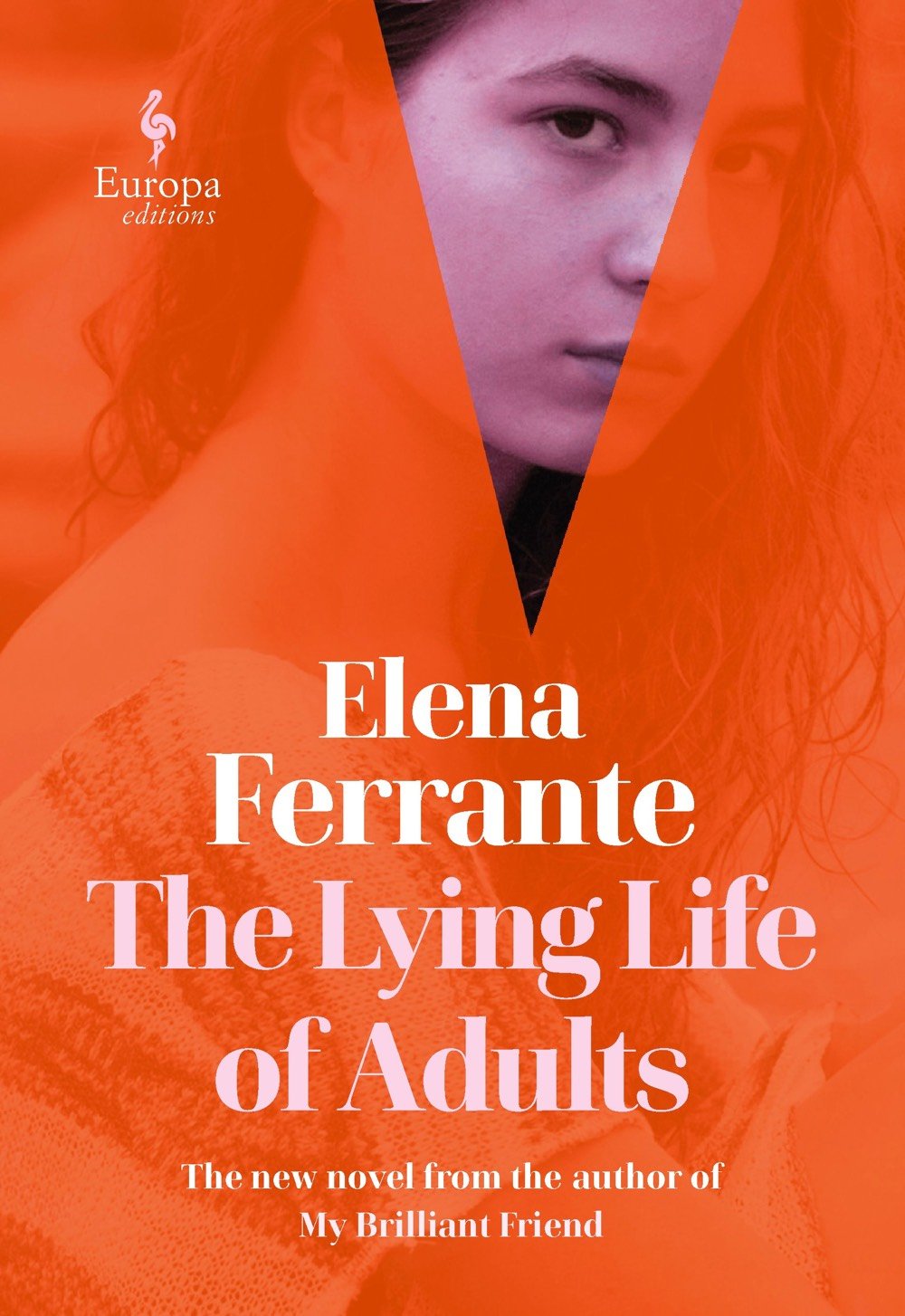
The English translation of Elena Ferrante’s latest novel, The Lying Life of Adults, is due out at the beginning of September and is available for preorder (Kindle). Here’s the synopsis:
Giovanna’s pretty face is changing, turning ugly, at least so her father thinks. Giovanna, he says, looks more like her Aunt Vittoria every day. But can it be true? Is she really changing? Is she turning into her Aunt Vittoria, a woman she hardly knows but whom her mother and father clearly despise? Surely there is a mirror somewhere in which she can see herself as she truly is.
Giovanna is searching for her reflection in two kindred cities that fear and detest one another: Naples of the heights, which assumes a mask of refinement, and Naples of the depths, a place of excess and vulgarity. She moves from one to the other in search of the truth, but neither city seems to offer answers or escape.
The Guardian and the Washington Post have reviews of the Italian version of the book. And Netflix has already announced that they’re producing a TV series based on the novel; here’s a short teaser:
The series is being made by the same folks responsible for HBO’s My Brilliant Friend series (based on Ferrante’s Neapolitan novels), which has been outstanding in its two seasons so far.
Netflix has put When They See Us, Ava DuVernay’s 4-episode mini-series about the Central Park Five, in front of their paywall for free viewing. Here’s the trailer:
The 2013 Ken Burns documentary The Central Park Five is available to watch on the PBS site and also on Amazon.
As previously noted, DuVernay’s 13th and Selma are also both available to watch online for free.
In the Before Times, Netflix let teachers stream their programming in the classroom. With schools not in sessions due to the Covid-19 pandemic, Netflix has decided to put some of their educational programming on YouTube for free (full playlist here). For instance, they’ve put all 8 episodes of David Attenborough’s nature series Our Planet online in their entirety. Here’s the first episode:
The Our Planet website also has tons of educational information for schools and kids.
13th is a feature-length documentary by Ava DuVernay about how racial inequality in America drives our high incarceration rates:
13th is currently rated 97% on Rotten Tomatoes and NY Times reviewer Manohla Dargis called it “powerful, infuriating and at times overwhelming”. Here’s a discussion guide.
Eight full episodes of the first season of Abstract: The Art of Design are also available on YouTube (discussion guide). Here’s the episode featuring illustrator Christoph Niemann:
Several episodes of Vox’s series Explained are included, like this one on the racial wealth gap:
Also included are The White Helmets & Period. End of Sentence. (which each won an Oscar for Best Documentary Short Subject) as well as Knock Down The House, the documentary on the 2018 Congressional campaigns of four women (including Alexandria Ocasio-Cortez). See the full list of included shows and the full playlist on YouTube.
With the Wuhan coronavirus in the news, this is a timely release from Netflix: Pandemic is a 6-part series on the inevitable worldwide disease outbreak and what’s being done to stop it, or at least to mitigate its effects.
Here’s the trailer for a five-episode Netflix series called The Devil Next Door.
The series is about John Demjanjuk, who was living in the US when he was accused of being “Ivan the Terrible”, a particularly brutal guard at the Treblinka death camp.
Born in Ukraine, John (Iwan) Demjanjuk was the defendant in four different court proceedings relating to crimes that he committed while serving as a collaborator of the Nazi regime.
Investigations of Demjanjuk’s Holocaust-era past began in 1975. Proceedings in the United States twice stripped him of his American citizenship, ordered him deported once, and extradited him from the United States twice to stand trial on criminal charges, once to Israel and once to Germany. His trial in Germany, which ended in May 2011, may be the last time that an accused Nazi-era war criminal stands trial. If so, it would mark the culmination of a 65-year period of prosecutions that began with the International Military Tribunal at Nuremberg in 1945.
Some facts of Demjanjuk’s past are not in dispute. He was born in March 1920 in Dobovi Makharyntsi, a village in Vinnitsa Oblast of what was then Soviet Ukraine. Conscripted into the Soviet army, he was captured by German troops at the battle of Kerch in May 1942. Demjanjuk immigrated to the United States in 1952 and became a naturalized US citizen in 1958. He settled in Seven Hills, Ohio, a suburb of Cleveland, and worked for many years in a Ford auto plant.
The Devil Next Door premieres November 4.
Abstract: The Art of Design is back for a second season on Netflix beginning September 25. The folks featured this time around are artist Olafur Eliasson, architect & designer Neri Oxman, type designer Jonathan Hoefler (whose company provides the fonts for kottke.org), costume designer Ruth E Carter (did the costumes for Do the Right Thing and Black Panther), Ian Spalter (former head of design at Instagram), and toy designer Cas Holman.
I’ve always liked the concept of serendipity, even more since being involved in the early days of coworking, where we used the term “accelerated serendipity” quite a bit. The idea that, through the creation of a welcoming space and a diversified and thriving community, you could accelerate (or concentrate) “the occurrence and development of events by chance in a happy or beneficial way.” (Oxford English Dictionary)
So it’s probably a mix of Baader-Meinhof effect and well, serendipity, that these two articles grabbed my attention. In The Serendipity Engine, Gianfranco Chicco explains that he quit his job and will use the time to purposefully built up serendipity, seek fields he knows little about, learn new things, read an eclectic mix of books, be open to meeting strangers, visit new cities, etc. “Slowing down and renewing the commitment to a series of personal rituals.”
The Serendipity Engine works just like an internal combustion engine and, like with a high performance muscle car, you need to feed it with the right kind of propellant. In this analogy, the fuel is made of different activities, skills, and conversations. In my case I select them so that they are deliberately out of or tangential to my current professional domain. The engine also requires maintenance and fine tuning via iterations and changes to the activities or skills I become involved with.
He also connects his engine vision with Steven B. Johnson’s use of the concept of the adjacent possible, describing how different elements and ideas can be combined in various ways to create new elements and ideas.
The Serendipity Engine operates in a similar way, adding new stimulus into my life allow new and unexpected things to emerge.
Dan Cohen on the other hand, realized that he’s missing serendipity in the redesign of The New York Times app. Between the algorithmic “For you” tab and the pseudo old-school but very siloed “Sections,” he feels that he can’t bump into something new, he’s either presented with typecasted suggestions or enclosed in sections that don’t flow together, drawing you in from one to the next, like actual old-school paper newspapers did. For the sake of engagement, the NYT forfeits serendipity.
The engagement of For You—which joins the countless For Yous that now dominate our online media landscape—is the enemy of serendipity, which is the chance encounter that leads to a longer, richer interaction with a topic or idea. […]
Engagement isn’t a form of serendipity through algorithmically personalized feeds; it’s the repeated satisfaction of Present You with your myopically current loves and interests, at the expense of Future You, who will want new curiosities, hobbies, and experiences.
In a related idea, Kyle Chayka mourns some cancelled Netflix shows which were never presented to him because viewers are only shown a supposedly algorithmic homepage on Netflix (and elsewhere). In reality, that selection is corrupted by the business incentives of the company, pushing some shows to us, independent of our interests.
Sometimes there’s an algorithmic mismatch: your recommendations don’t line up with your actual desires or they match them too late for you to participate in the Cultural Moment. It induces a dysphoria or a feeling of misunderstanding—you don’t see yourself in the mirror that Netflix shows you.
One way to interpret all of this is that, even though we are supposed to be well served by algorithms, we end up not only missing some randomness, but we even have to actively seek it, busting our bubbles and building our own versions of Chicco’s engine. Or, as Chayka says below—and likely one of the reasons you are reading this blog:
Often we have to turn to other sources to get a good enough guide, however. Journalists, critics, and human curators are still good at telling us what we like, and have less incentive to follow the finances of the company delivering the content to us.
—
Found in the engine article; did you know that the word serendipity comes from the the Persian story of The Three Princes of Serendip? And that Serendip is one of the old names of Sri Lanka?
In one of his recent media diet* posts, Jason mentioned Russian Doll.
Russian Doll. Groundhog Day adjacent. Natasha Lyonne is mesmerizing. (B+)
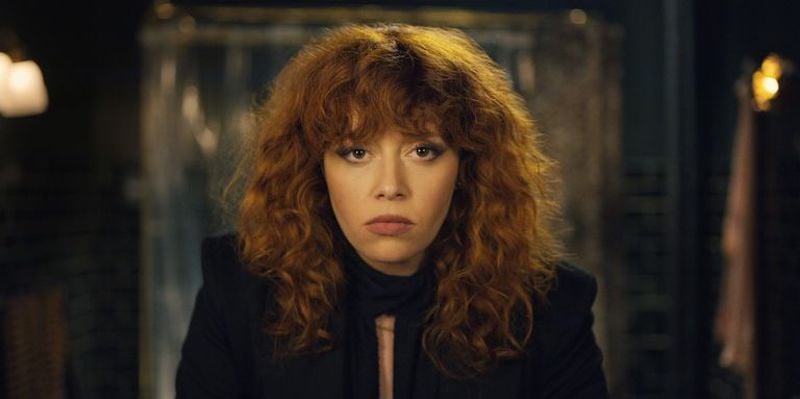
Natasha Lyonne is quite mesmerizing in Russian Doll, and both Greta Lee and Chloe Sevigny give layered performances around her curly bangs and gruff but sensitive delivery. But the Groundhog Day comparison sells it short.
Russian Doll is all at once a New York story, a story of rediscovery, of addiction, of healing, of trauma, and of how visually stunning a vivid palate can be on the small screen. The full season was utterly captivating on many levels, and deserves more recognition than just being good episodic television. The soundtrack is note-perfect as well, though Love’s “Alone Again Or” will forever stand in my mind as part of this scene in Bottle Rocket. (The best Wes Anderson film. Fight me.)
I lived by Lyonne’s tidbit of advice via The Cut for a couple cold weeks in March, but really it’s always applicable for introverts.
This is all to say, please watch Russian Doll if you haven’t already, and let’s discuss. Find me on Twitter.
Kashmir Hill is a remarkable and inventive reporter. She came up with a great concept called “Goodbye Big Five”: one by one, she’d try to cut out the biggest digital companies in the world from her life (Amazon, Apple, Facebook, Google, and Microsoft). She started with the toughest: Amazon.
Amazon is not just an online store—that’s not even the hardest thing to cut out of my life. Its global empire also includes Amazon Web Services (AWS), the vast server network that provides the backbone for much of the internet, as well as Twitch.tv, the broadcasting behemoth that is the backbone of the online gaming industry, and Whole Foods, the organic backbone of the yuppie diet.
Keeping myself from walking into a Whole Foods is easy enough, but I also want to stop using any of Amazon’s digital services, from Amazon.com (and its damn app) to any other websites or apps that use AWS to host their content. To do that, I enlist the help of a technologist, Dhruv Mehrotra, who built me a custom VPN through which to route my internet requests. The VPN blocks any traffic to or from an IP address controlled by Amazon. I connect my computers and my phone to the VPN at all times, as well as all the connected devices in my home; it’s supposed to weed out every single digital thing that Amazon touches.
How’d it work? Well, things got rough.
On the second morning of the block, I hear my daughter in the living room with my husband screaming “Alessa, Alessa!” They forgot that the voice of the Amazon Echo, Alexa, has been banished from the house. The block is especially tough on my one-year-old daughter, Ellev, both because the Echo provides the sole source of music in our household and because Ellev is obsessed with three movies (Coco, Monsters Inc., and The Incredibles), all of which we usually watch either through Netflix or through videos purchased via Amazon.
Ellev is not happy about my experiment particularly because my long-winded explanations about why she can’t listen to “E-I-E-I-O” or watch “Incwedibles” make zero sense to her. The low point of the week is when she cries for the Incredibles for a solid five minutes one afternoon, though I manage to distract her, eventually, with puzzle pieces.
It’s not just entertainment, though; a good deal of fundamental communications tools run on AWS, including Signal and Slack. Hill soon discovers, though, that there are some benefits to being less online.
My husband and I break our habit of watching shows on Netflix at the end of the day, opting to read instead or indulge our newfound obsession with cribbage, a card game I had assumed was boring until I started playing it. Also, since we mostly use Signal to text each other, I find myself sending him fewer texts and instead talk to him about things IRL.
We also wean our daughter from much of her screen time, which means quality time playing with her or taking her to a playground rather than giving her a “movie treat.” I go running outside rather than doing my three miles on a treadmill watching Netflix. In general, having access to fewer parts of the internet makes me use technology less, which is increasingly my goal in life.
Less internet also means less surveillance—from coworkers (via Slack and other tools) and from Amazon itself, which could be mining the sheer amount of data it manages for insights into consumer and commercial usage, both individually and in the aggregate. In short, Hill concludes, Amazon’s indispensability is itself tremendously troubling.
It looks like Netflix has sifted through their data and determined subscribers cannot get enough of the Planet Earth and Blue Planet nature series, so they’re making their own. With David Attenborough. The teaser trailer for Our Planet borrows heavily from Planet Earth (fonts & music are similar) but is light on the details, aside from the launch date: April 5, 2019.
Update: The full trailer is out, which I’ve embedded above. Here’s the previous teaser trailer:
The Our Planet series will consist of 8 episodes filmed across 50 countries. April 5 is soooon!
David Letterman is returning to TV with a Netflix series called My Next Guest Needs No Introduction. There will be six 60-minute shows in the series and he’ll interview only one guest per show. The guests will be George Clooney, Malala Yousafzai, Jay-Z, Tina Fey, Howard Stern and President Barack Obama. The Obama show is first up on January 12, with an additional show following each month after that.
This is a big departure from how Netflix normally releases shows. Usually they put all the episodes of a series out there at once. Is this the first instance of them releasing episodes one at a time?
My other big question: do any of his guests play the drums?
Update: This isn’t the first time Netflix has episodes of a show one-at-a-time: Chelsea Handler’s show and Riverdale have also been released that way.
Oh, and here’s the story behind “Are those your drums?” (thx @t_w_t, @ShaneMBailey, @inayali)
Update: Here’s a short clip from Letterman’s interview of Obama; they’re discussing Obama dancing onstage with Prince.
Abstract is an upcoming documentary series from Netflix that explores the art of design. Each of the eight episodes profiles a designer at the top of their discipline: photographer Platon, graphic designer Paula Scher, stage designer Es Devlin, illustrator Christoph Niemann, architect Bjarke Ingels, shoe designer Tinker Hatfield, interior designer Ilse Crawford, and automotive designer Ralph Gilles.
Step inside the minds of the most innovative designers in a variety of disciplines and learn how design impacts every aspect of life.
Looks like a Chef’s Table for design. All episodes will be available February 10.
The trailer for the third season of Charlie Brooker’s excellent Black Mirror just dropped. If you haven’t seen the first two seasons, I’d recommend catching yourself up. And did I spy Mackenzie Davis and Kelly Macdonald in the trailer? I did, I did. The new season starts October 21 on Netflix.
Over at Vulture, Kathryn VanArendonk ranked 36 Netflix original series from worst to best. It’s not a spoiler to say that Orange is the New Black is #1 (I haven’t seen it yet and guessed that it would be right at the top). Personally, I would rank Stranger Things and Kimmy Schmidt lower and Narcos, Making a Murderer, and Chef’s Table higher.
6. Narcos. An appealing, gripping, smart drama. The first episodes of Narcos sweep across decades and spend way too much time waving the exposition wand, but it somehow makes those tropes feel confident rather than tiresome. Yes, the story of Pablo Escobar covers well-trod Difficult Man territory, but Wagner Moura’s performance is charismatic and layered, and Narcos’ deadpan tone is a bracing way to frame Escobar’s often gruesome life.
What’s interesting is that Amazon’s best original show (Transparent), several of HBO’s original series, and at least 2 AMC shows are better than anything on this list (aside from possibly OITNB).
Christopher Guest (Waiting for Guffman, Best in Show) is coming out with a new mockumentary for Netflix about a competition to determine the best sports mascot.
Earlier this month, Netflix debuted a number of slow TV shows on their service, including shows about knitting and firewood, which were very popular in Norway. Here’s the complete roster:
National Firewood Evening
National Firewood Morning
National Firewood Night
National Knitting Evening
National Knitting Morning
National Knitting Night
Northern Passage
Northern Railway
Salmon Fishing
The Telemark Canal
Train Ride Bergen to Oslo
Update: Looks like a few of these programs, most notably Northern Passage and Northern Railway, are not the complete end-to-end shows that were originally broadcast. So, FYI.
Also, these shows are getting terrible ratings on Netflix. Aside from the two shorter shows mentioned above, each show has a rating of only one star. (Further update: Netflix’s ratings are personalized, which means those ratings are specific to me. Others might see 4 or 5 stars. thx, @Rudien)
Like many of you, I have been watching Stranger Things on Netflix. My 80s movie fixations tilted towards the War Games/Explorers/Goonies end of the spectrum rather than the supernatural/horror/Steven King end so I’m not obsessed, but I am definitely enjoying it. You can watch the first 8 minutes of the show to judge for yourself.
But I love the opening credits, especially the music. (Both remind me of the opening credits for Halt and Catch Fire.) The title song was composed by Kyle Dixon and Michael Stein, members of Austin synth band Survive. Someone did a 10-minute extended version of the song and put it up on Soundcloud:
Currently on repeat for the last hour with no sign of stopping. You may also be interested in a pair of playlists featuring music from the show:
What else? Here’s a deep dive into the font used for the opening credits (which was also used for the Choose Your Own Adventure books back in the 80s). Alissa Walker wrote about the free-range children on display in ST, something that also grabbed my attention. When I was a kid, I rode my bike everywhere. On summer weekends, I typically ate breakfast at my house and was gone until dinnertime. My parents had no clue where I was or what I was up to…and none of my classmates’ parents did either.
Update: Garrett Shane Bryant made a 50-track playlist of songs that sound like the score of the show. Outstanding. (via @dozens)
Update: From the NY Times, The ‘Stranger Things’ School of Parenting.
Still, “Stranger Things” is a reminder of a kind of unstructured childhood wandering that — because of all the cellphones, the fear of child molesters, a move toward more involved parenting or a combination of all three — seems less possible than it once was.
The show’s references to beloved films of the ’80s have been much remarked upon, but “Stranger Things” also calls to mind all those books and TV shows — from “The Chronicles of Narnia” to “Muppet Babies” — where parents are either absent or pushed into the background.
These stories let children imagine breaking the rules, but they also allow them to picture themselves solving mysteries or hunting down monsters all on their own. Often it’s only when the parents aren’t watching that a child can become a hero.
(via @CognoscoCuro)
Update: The official soundtrack for the show is available on iTunes. It’s the score though, not the classic 80s tunes.
Update: Vox spoke to a creative director at Imaginary Forces about their process for designing the opening titles.
Update: And the score is now available on Spotify. This is my working music for the day.
Update: Dixon and Stein talked about how the music for the show came about.
Narcos season 2 starts on Netflix on September 2. Oh, how I missed that stare! Wagner Moura is fantastic.
If you’re looking to avoid the family or ocean or grilled meats or fireworks, there are some seriously good movies that have been added to Netflix in the US just in time for the long holiday weekend:
Mean Girls
Beverly Hills Cop
Gladiator
Back to the Future (I II & III)
Deliverance
Lethal Weapon
The Sting
And The Big Short arrives on July 6.
Amazon is now offering the ability to subscribe to Prime and Prime Video monthly rather than just yearly. Prime Video is $8.99/mo (Netflix is going up to $9.99/mo soon) and the full Prime offering is $10.99/mo. A year of Prime is still $99.
In Prime Video, Amazon has built a worthy competitor to Netflix. And it actually might be better at this point. The stable of impressive Netflix originals aside (which Amazon is also doing *cough* Transparent *cough* best show in years), Amazon allows you to rent/buy digital movies not available for free streaming1, provides discounts for subscriptions to Showtime and Starz, and (if you opt for the full Prime) offers free shipping on most stuff in the store (as well as other benefits.) I sub to both services, but if I had to make a choice right now, I’d probably stick with Amazon.
Older posts


Socials & More