kottke.org posts about food

Restaurant rankings vs. ratingsMay 22 2013

Interesting piece about how the shift in influence from the Michelin Guide to the World's 50 Best Restaurants list has changed the approach of elite restaurants.

Just look at Eleven Madison Park, a restaurant that has over the past few years steadily risen the ranks of the World's 50 Best list (it's currently ranked No. 5). As recently as four years ago, it was just an expertly run restaurant, specializing in luxe ingredients, disarmingly warm service, and lovely meals. It got as many stars as it could from every venue that gave them out, but as a New Yorker story last September made clear, to get a high ranking on the World's 50 Best list, the restaurant had to do something different, so they moved from a standard menu to a "grid" menu in 2010 that was designed to offer diners a greater sense of control over their meals. It ranked 50th on the 2010 list, 24th on the 2011 list, and 10th when the 2012 list was announced in April of that year. In July 2012, the restaurant announced they'd be switching formats yet again, this time to a single tasting menu focused on New York terroir. (Some theatrical service elements that accompanied the meal -- long explanations of dish inspiration, for example -- got a negative reaction and have been more or less excised.) Did any of these changes make the restaurant "better"? Having eaten there a number of times over the years, this author would say that it's not really any better or worse -- it was and still is operating at the highest possible level a restaurant can. But it doesn't matter if the changes made the restaurant better: Every time the restaurant switched up its format, it got plenty of accompanying media coverage that let judges know they needed to return to see what was going on.

(via @Gachatz)

You should be eating more SpamMay 22 2013

For Slate, Anna Weaver argues that Spam aligns quite well with current food trends in America and should be eaten more.

Consider that Spam contains not only ham (meat from the hind leg of the pig) but also pork shoulder. Today, pork shoulder is beloved by chefs and home cooks, but when Spam first hit the shelves, it was an underutilized and underappreciated cut. Hormel took that underrated meat and transformed it into a salty, meaty treat. "It's a centuries-old idea," says Hawaiian chef Alan Wong, who pays homage to Spam in his eponymous Honolulu restaurant. "You get all your trimmings and you turn them into sausage or a meatloaf or pate or a terrine." I've never seen a meat-eater turn up his nose at sausage or pate -- what rational basis is there, then, for eschewing their all-American cousin?

See also fast food as molecular gastronomy.

David Chang cooks space food for Chris HadfieldMay 17 2013

Momofuku's David Chang cooks up some gourmet space food for celeb astronaut Chris Hadfield.

Unfortunately, it doesn't work out so well. Who knew that gravity was so useful? But stay for the best part of the whole thing...right at the end, Hadfield feeds himself asparagus like a fish.

Slow motion video of kids trying new foodsMay 10 2013

Perfect for a slow Friday afternoon. Have a good weekend everyone.

NYC's broken food cart systemMay 07 2013

Adam Davidson on the asinine and broken food truck/cart system in NYC. This short paragraph not only explains what's wrong with the food cart biz in NYC but also with American politics in general:

Economically speaking, the problem is a standard one, known as the J-curve, which represents a downslope on a graph followed by a steep rise. Some sensible changes to the current food-vendor system may have long-term benefits for everyone, but the immediate impact could spell short-term losses for those who now profit from the system. A small group of New Yorkers -- particularly owners of commissaries and physical restaurants -- are highly motivated to lobby politicians not to change things. And most of the potential beneficiaries don't realize they're missing out. Many of the rest of us would love to have more varied food trucks, but we don't care enough to pressure the City Council.

(via @tylercowen)

Throwed rollsMay 02 2013

In Lambert's Cafe in Sikeston, MO, they just throw your bread to you from across the restaurant.

Non-Newtonian noodlesMay 01 2013

You've heard of oobleck, yeah? It's a non-Newtonian fluid made of corn starch and water that doesn't act like a normal fluid. Like, for instance, you can run on top of it:

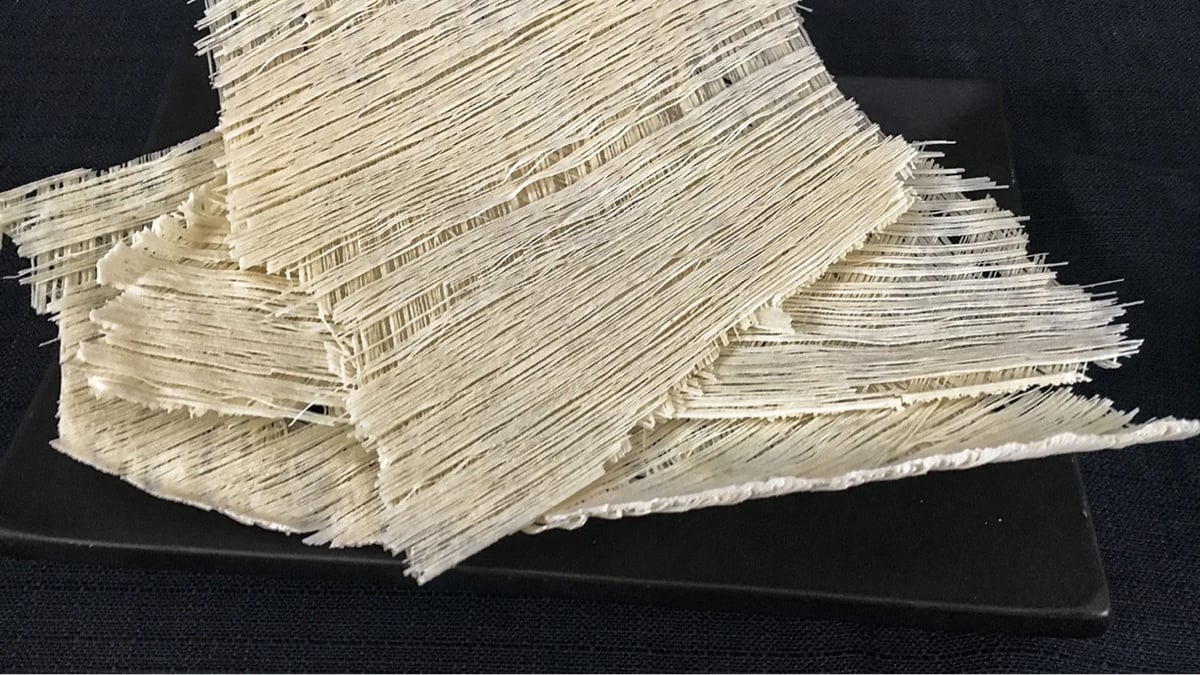
Cooking Issues ran across a video of a cook preparing noodles made from a non-Newtonian batter. Watch as the batter solidifies when he slaps more batter into the sieve and then drains out of the bottom.

Love the technique here. See also the noodle-making robot, power of noodles, Korean honey candy, and, my favorite, flatbread tossing:

(via @Ianmurren)

How animals eat their foodApr 10 2013

This video would be a lot better without the first 15 seconds (sippy cups? talking? who cares?) but the rest of it is pants-wettingly amazing.

Now vs. then: how potato chips are madeApr 09 2013

NPR's Planet Money talked to Ed Herr of Herr Foods about how potato chip manufacturing has changed since 1946, when the company was housed in a barn on his family's land.

Herr estimates that if they currently made chips the way they did back in the 1940s, they'd cost about $25 a bag.

Healthy fast food?Apr 04 2013

Mark Bittman explores the world of healthy fast food and discovers that's slowly becoming a thing.

Good Fast Food doesn't need to be vegan or even vegetarian; it just ought to be real, whole food. The best word to describe a wise contemporary diet is flexitarian, which is nothing more than intelligent omnivorism. There are probably millions of people who now eat this way, including me. My own style, which has worked for me for six years, is to eat a vegan diet before 6 p.m. and then allow myself pretty much whatever I want for dinner. This flexibility avoids junk and emphasizes plants, and Lyfe Kitchen, which offers both "chickin" and chicken -- plus beans, vegetables and grains in their whole forms (all for under 600 calories per dish) -- comes closest to this ideal. But the menu offers too much, the service raises prices too high and speed is going to be an issue. My advice would be to skip the service and the wine, make a limited menu with big flavors and a few treats and keep it as cheap as you can. Of course, there are huge players who could do this almost instantaneously. But the best thing they seem able to come up with is the McWrap or the fresco menu.

Bees still dying at a fantastic rateApr 01 2013

Despite progress in recent years on causes and cures, colony collapse disorder has wreaked havoc on honeybee colonies across the country.

A mysterious malady that has been killing honeybees en masse for several years appears to have expanded drastically in the last year, commercial beekeepers say, wiping out 40 percent or even 50 percent of the hives needed to pollinate many of the nation's fruits and vegetables.

Which is like, yeah, big whoop, it's just bees, right? Except that:

The Agriculture Department says a quarter of the American diet, from apples to cherries to watermelons to onions, depends on pollination by honeybees.

How climate change could affect coffeeMar 29 2013

Earlier in the week I posted about how climate change is affecting wine. Turns out that coffee is in trouble as well.

But in recent years, keeping the world's coffee drinkers supplied has become increasingly difficult: The spread of a deadly fungus that has been linked to global warming and rising global temperatures in the tropical countries where coffee grows has researchers scrambling to create new varieties of coffee plants that can keep pace with these new threats without reducing quality.

While coffee researchers can do little to prevent climate change, they're hard at work to keep up as Earth braces for temperature increases of several degrees over the next several decades.

"Coffee is the canary in the coal mine for climate change," says Ric Rhinehart, executive director of the Specialty Coffee Association of America. "If you can't think about the long term risk for planetary impacts, think about the short term risk for your coffee. Know that a day without coffee is potentially around the corner."

(via nextdraft)

Man caught with 21 tons of stolen cheeseMar 29 2013

Veniamin Konstantinovich Balika recently used false paperwork to load his 18 wheeler with 42,000 pounds of Muenster cheese worth about $200K. Balika's plan was to sell the cheese to retailers on the east coast.

"There's a black market for everything," said Sissman. "We've seen everything stolen. We've found stolen beer, stolen food, stolen machine parts, but this is the first time, we've found stolen cheese.

I wanted the opinion of an industry professional so I reached out to Aaron Foster, Head Buyer at Murray's Cheese Shop.

I've seen a lot of people wondering how the culprit was planning to unload 40,000 lbs of cheese without raising suspicion. Is there such a thing as a cheddar fence? In my opinion, it really wouldn't be that hard. While the larger retailers and chains -- and, of course, Murray's -- have all become much more conscious of food safety and food security, there remains plenty of retailers who would jump at the chance to buy their product for pennies on the dollar, no questions asked. Literally as I wrote this, I received a vague email with the subject "RE: Special sale - Mega aged WI Cheddar". I'll pass, thanks. Groceries, specialty shops, and bodegas that work with perishables need every edge they can get to scrape by. Think about that next time you order your egg and cheese from the corner store.

And then I couldn't help but find out more about stolen cheese. Cheese theft isn't actually that uncommon. In fact, cheese is the most stolen food item of all with up to 4% of all cheese stolen at some point in it's journey from maker to mouth. A cursory Google search turned up trunks full of stolen cheese in Michigan, 52-year old naked library denizens arrested with knives and stolen cheese, stolen government cheese in 1983(!), stolen cheese spread all over a Hy-Vee men's room, video of brazen cheese wheel thieves, "the crushing authoritarianism of the Crown of England," a cheese thief in Brooklyn, and a shoplifting celebrity chef. (thx, drew)

The Image ToasterMar 19 2013

There's prior art, but this image toaster is still pretty cool.

Toastagram? Toastr? I foresee BERG putting out a smaller version of this, perhaps printing out the day's news on a small-crumb cocktail bread; they'll call it Little Toaster. (via sly oyster)

Early McDonald's menusMar 18 2013

McDonald's started out as McDonald's Bar-B-Q in San Bernardino, CA in 1940. Here's a copy of the menu from that time:

original McDonald's menu

The drive-in BBQ restaurant was a great success:

The restaurant had carhops serving guests and would often see 125 cars crowding the lot on weekends. They quickly saw their annual sales topping $200,000 on a regular basis.

But competitors opened similar restaurants and they were selling more hamburgers than barbequed ham so the McDonald brothers closed their place for three months to retool. They reopened as plain old McDonald's, serving cheap fare (like hamburgers) quickly. This is what an early version of the menu looked like:

original McDonald's menu

The original McDonald's served potato chips and pie, which were swapped out for french fries and milkshakes after the first year; that photo must have been taken sometime after the switch. Ray Kroc got involved in 1955 and opened the first McDonald's franchise east of the Mississippi in Des Plaines, Illinois:

Kroc's first Mcdonalds

The version of the menu currently going around (on Reddit; I found it here) looks like it's from the Kroc era, the arches having been introduced in 1953, shortly before he got involved:

original McDonald's menu

It's interesting to compare these early McDonald's menus to the current menus of places like In-N-Out Burger and Five Guys, especially in comparison with the sprawling McDonald's menu of today:

In N Out Menu

After reading all these menus, you're probably getting hungry. So here's how to make a hamburger that tastes like an original McDonald's hamburger from 1948 (as well as recipes for a bunch of other McDonald's menu items, from McNuggets to the McRib to the dipping sauces). Enjoy!

How our food gets to the tableMar 11 2013

This is a clip from Samsara, a 2011 film directed by Ron Fricke, who was the director of photography for Koyaanisqatsi. The chicken picker machine hoovering up chickens and depositing them into drawers is one of the most dystopian things I've ever seen.

The whole film doesn't look this depressing, but this short clip really gives full visual meaning to the mass production of food. (via @colossal)

Shake Shack coming to JFK airportMar 07 2013

Danny Meyer's Union Square Hospitality is opening two Shake Shacks and a Blue Smoke in Delta's new Terminal 4 at JFK airport.

No one knows how to make a can of CokeMar 05 2013

In the spirit of I, Pencil, here's how a can of Coke makes its way from the bauxite mines of Australia and the forests of Sri Lanka to your local grocery store shelf.

Coca-Cola is made from a syrup produced by the Coca-Cola Company of Atlanta. The main ingredient in the formula used in the United States is a type of sugar substitute called high-fructose corn syrup 55, so named because it is 55 per cent fructose or "fruit sugar", and 42 per cent glucose or "simple sugar" -- the same ratio of fructose to glucose as natural honey. HFCS is made by grinding wet corn until it becomes cornstarch. The cornstarch is mixed with an enzyme secreted by a rod-shaped bacterium called Bacillus and an enzyme secreted by a mold called Aspergillus. This process creates the glucose. A third enzyme, also derived from bacteria, is then used to turn some of the glucose into fructose.

Reminder: The Mind of a ChefMar 04 2013

In case you missed it a few months ago on PBS, the excellent The Mind of a Chef is out in downloadable form on iTunes and at Amazon. The first episode is available for free on the PBS site for try-before-you-buy purposes.

The science of addictive junk foodFeb 22 2013

Michael Moss is a Pulitzer-winning investigative journalist for the NY Times and he's written a book called Salt Sugar Fat.

From a Pulitzer Prize-winning investigative reporter at The New York Times comes the explosive story of the rise of the processed food industry and its link to the emerging obesity epidemic. Michael Moss reveals how companies use salt, sugar, and fat to addict us and, more important, how we can fight back.

Every year, the average American eats thirty-three pounds of cheese (triple what we ate in 1970) and seventy pounds of sugar (about twenty-two teaspoons a day). We ingest 8,500 milligrams of salt a day, double the recommended amount, and almost none of that comes from the shakers on our table. It comes from processed food. It's no wonder, then, that one in three adults, and one in five kids, is clinically obese. It's no wonder that twenty-six million Americans have diabetes, the processed food industry in the U.S. accounts for $1 trillion a year in sales, and the total economic cost of this health crisis is approaching $300 billion a year.

Moss researched the book for four years, interviewing hundreds of current and former processed-food industry employees and reviewing thousands of pages of industry memos. This weekend's NY Times Magazine has a lengthy excerpt from the book that's well worth a read.

Eventually, a line of the [Lunchables] trays, appropriately called Maxed Out, was released that had as many as nine grams of saturated fat, or nearly an entire day's recommended maximum for kids, with up to two-thirds of the max for sodium and 13 teaspoons of sugar.

When I asked Geoffrey Bible, former C.E.O. of Philip Morris, about this shift toward more salt, sugar and fat in meals for kids, he smiled and noted that even in its earliest incarnation, Lunchables was held up for criticism. "One article said something like, 'If you take Lunchables apart, the most healthy item in it is the napkin.' "

Well, they did have a good bit of fat, I offered. "You bet," he said. "Plus cookies."

The prevailing attitude among the company's food managers - through the 1990s, at least, before obesity became a more pressing concern - was one of supply and demand. "People could point to these things and say, 'They've got too much sugar, they've got too much salt,' " Bible said. "Well, that's what the consumer wants, and we're not putting a gun to their head to eat it. That's what they want. If we give them less, they'll buy less, and the competitor will get our market. So you're sort of trapped." (Bible would later press Kraft to reconsider its reliance on salt, sugar and fat.)

And this is classic processed food as molecular gastronomy right here:

I brought him two shopping bags filled with a variety of chips to taste. He zeroed right in on the Cheetos. "This," Witherly said, "is one of the most marvelously constructed foods on the planet, in terms of pure pleasure." He ticked off a dozen attributes of the Cheetos that make the brain say more. But the one he focused on most was the puff's uncanny ability to melt in the mouth. "It's called vanishing caloric density," Witherly said. "If something melts down quickly, your brain thinks that there's no calories in it... you can just keep eating it forever."

(via @bryce)

Hilarious fake Guy Fieri menuFeb 20 2013

Some enterprising genius has registered the domain for Guy Fieri's (famously panned) restaurant in Times Square and put up a fake menu chock full of hilarious foodstuffs. For instance, the Hobo Lobo Bordello Slam Jam Appetizer:

We take 38 oz of super-saddened, Cheez-gutted wolf meat, lambast it with honey pickle wasabi and pile drive it into an Ed Hardy-designed bucket. Sprayed with Axe and finished with a demiglaze of thick & funky Mushroom Dribblins.

Also, "Add a Cinnabon and two more Cinnabons $4.95". Also, "superbanged". Also, "ranch hose".

Update: Copy for parts of the menu were crowdsourced from Twitter. Which doesn't make it any less funny...just that the person who made it is not an "enterprising genius". (via everyone)

The secret language of sommeliersFeb 19 2013

For the NY Times, Ben Schott compiles an extensive list of wine-related jargon.

WHALE . PLAYER . BALLER . DEEP OCEAN
A serious drinker who will regularly DROP more than $1,000 on a single bottle. When on a furious spending spree, a WHALE is said to be DROPPING THE HAMMER. BIG WALES -- or EXTRA BIG BALLERS (E.B.B.) -- can spend more than $100,000 on wine during a meal.

Schott expanded on this list in a companion blog post:

But, vocabulary aside, the central thing I learned from these talented people is that if you are dining in a restaurant which employs a Sommelier, you should never, ever order your own wine.

If you know little or nothing about wine, they will guide you to a bottle far more interesting and suited to your food than you could possibly pluck from the list.

And if you are a wine aficionado, you will not know more than the Somm about their list - or what they are hiding off-list in the cellar.

See also What Restaurants Know (About You)

The tree with the apple tattooFeb 18 2013

On Edible Geography, Nicola Twilley looks at what used to be a common process in Japan but is now only done on a boutique basis: apple tattooing.

apple_tattoo.jpg

As they are finally exposed to the elements for the final few weeks before harvest, the most perfect of these already perfect apples are then decorated with a sticker that blocks sunlight to stencil an image onto the fruit. This "fruit mark" might be the Japanese kanji for "good health," as Susan Brown mentioned. Others have brand logos (most notably that of Apple, the company), and some, according to Stevens, are "negatives with pictures. One Japanese pop star put his picture on apples to give his entourage for presents."

The marked fruit of the Montreuillois first won renown at the 1894 Saint Petersburg exhibition, where they presented the czar of Russia with an apple stenciled with his own portrait. King Leopold of Belgium, Edward VII of England, and Teddy Roosevelt received similar fruits.

(via @stewart)

Coca-Cola's algorithmic orange juiceFeb 06 2013

Complicated Orange

Simply Orange juice is actually not all that simple. The taste of the the Coca-Cola-owned brand is governed by a complex algorithm that allows for the 600+ juice flavors to be tweaked throughout the year to ensure consistency. I liked The Atlantic Wire's take on the news:

The explanation behind Coke's complicated new orange juice scheme is nothing short of ironic. Basically, all of their customers are realizing the soda is really bad for you, so demand is shifting to healthy -- or at least healthy-seeming -- alternatives like juice. Coke also figured out that people are willing to pay 25 percent more for juice that's not processed, that is, not made from concentrate. Enter Simply Orange. It is indeed just oranges, but boy have those oranges been through hell and back.

This is like White Zombie's More Human Than Human except More Orange Juice Than Orange Juice.

Note: Illustration by Chris Piascik...prints & more are available.

Update: I updated the post above to point to Businessweek's original report on Coke's OJ business.

The updated Big Mac indexFeb 04 2013

For their Big Mac index (a way to look at currency exchange using global Big Mac pricing) this year, the Economist has released an interactive tool for exploring the data.

The Big Mac index was invented by The Economist in 1986 as a lighthearted guide to whether currencies are at their "correct" level. It is based on the theory of purchasing-power parity (PPP), the notion that in the long run exchange rates should move towards the rate that would equalise the prices of an identical basket of goods and services (in this case, a burger) in any two countries. For example, the average price of a Big Mac in America at the start of 2013 was $4.37; in China it was only $2.57 at market exchange rates. So the "raw" Big Mac index says that the yuan was undervalued by 41% at that time.

They're also made the data set available in .xls format for at-home analysis.

Perennial Plate's A Day in India Feb 01 2013

The Perennial Plate videos always make me jealous, and this beautiful cut of a "day" in India is no exception. This is gorgeous and you should watch it on full screen.

What can hospitals learn from The Cheesecake Factory?Jan 25 2013

From back in August, Atul Gawande visits a Cheesecake Factory and wonders if the combination of "quality control, cost control, and innovation" achieved by chain restaurants can offer lessons to hospitals and other health care organizations.

The company's target last year was at least 97.5-per-cent efficiency: the managers aimed at throwing away no more than 2.5 per cent of the groceries they bought, without running out. This seemed to me an absurd target. Achieving it would require knowing in advance almost exactly how many customers would be coming in and what they were going to want, then insuring that the cooks didn't spill or toss or waste anything. Yet this is precisely what the organization has learned to do. The chain-restaurant industry has produced a field of computer analytics known as "guest forecasting."

"We have forecasting models based on historical data-the trend of the past six weeks and also the trend of the previous year," Gordon told me. "The predictability of the business has become astounding." The company has even learned how to make adjustments for the weather or for scheduled events like playoff games that keep people at home.

A computer program known as Net Chef showed Luz that for this one restaurant food costs accounted for 28.73 per cent of expenses the previous week. It also showed exactly how many chicken breasts were ordered that week ($1,614 worth), the volume sold, the volume on hand, and how much of last week's order had been wasted (three dollars' worth). Chain production requires control, and they'd figured out how to achieve it on a mass scale.

As a doctor, I found such control alien-possibly from a hostile planet. We don't have patient forecasting in my office, push-button waste monitoring, or such stringent, hour-by-hour oversight of the work we do, and we don't want to. I asked Luz if he had ever thought about the contrast when he went to see a doctor. We were standing amid the bustle of the kitchen, and the look on his face shifted before he answered.

"I have," he said. His mother was seventy-eight. She had early Alzheimer's disease, and required a caretaker at home. Getting her adequate medical care was, he said, a constant battle.

This piece was on several best-of-the-year longreads lists and deservedly so. But the Factory's 3000-calorie plate of pasta will probably not help the state of American health care.

The corner store gourmetJan 24 2013

Speaking of haute fast food, Jessica Saia creates the finest in bodega-to-table cuisine with the likes of Fritos and SPAM.

Bodega To Table

Seared Spam with Tostitos queso-dip mashed potatoes and canned green beans. Topped with a Flamin' Hot Cheetos and Corn Nut salsa verde.

I want that into my mouth. Look at the sear marks on that SPAM! (via @mmpackeatwrite)

Cheese fire in Norway tunnel burns for 5 daysJan 23 2013

Cheese Fire

A truck carrying 27 tons of brunost, a Norwegian brown cheese, caught fire in a tunnel in Narvik on Thursday and burned with gooey rage until Monday. Closed during the fire, because who likes driving through tunnels of flame, the tunnel will take about a week to repair.

"This high concentration of fat and sugar is almost like petrol if it gets hot enough," said Viggo Berg, a policeman.

Brown cheese is made from whey, contains up to 30 percent fat and has a caramel taste.

"I didn't know that brown cheese burns so well," said Kjell Bjoern Vinje at the Norwegian Public Roads Administration.

He added that in his 15 years in the administration, this was the first time cheese had caught fire on Norwegian roads.

(via @aaron_foster)

Note: Illustration by Chris Piascik...prints & more are available.

Let's build a massive meta McDonald's in Times SquareJan 23 2013

Writing for The Awl, Jeb Boniakowski shares his vision for a massive McDonald's complex in Times Square that serves food from McDonald's restaurants from around the world, offers discontinued food items (McLean Deluxe anyone?), and contains a food lab not unlike David Chang's Momofuku test kitchen.

The central attraction of the ground floor level is a huge mega-menu that lists every item from every McDonald's in the world, because this McDonald's serves ALL of them. There would probably have to be touch screen gadgets to help you navigate the menu. There would have to be whole screens just dedicated to the soda possibilities. A concierge would offer suggestions. Celebrities on the iPad menus would have their own "meals" combining favorites from home ("Manu Ginobili says 'Try the medialunas!'") with different stuff for a unique combination ONLY available at McWorld. You could get the India-specific Chicken Mexican Wrap ("A traditional Mexican soft flat bread that envelops crispy golden brown chicken encrusted with a Mexican Cajun coating, and a salad mix of iceberg lettuce, carrot, red cabbage and celery, served with eggless mayonnaise, tangy Mexican Salsa sauce and cheddar cheese." Wherever possible, the menu items' descriptions should reflect local English style). Maybe a bowl of Malaysian McDonald's Chicken Porridge or The McArabia Grilled Kofta, available in Pakistan and parts of the Middle East. You should watch this McArabia ad for the Middle Eastern-flavored remix of the "I'm Lovin' It" song if for nothing else.

And I loved his take on fast food as molecular gastronomy:

How much difference really is there between McDonald's super-processed food and molecular gastronomy? I used to know this guy who was a great chef, like his restaurant was in the Relais & Châteaux association and everything, and he'd always talk about how there were intense flavors in McDonald's food that he didn't know how to make. I've often thought that a lot of what makes crazy restaurant food taste crazy is the solemn appreciation you lend to it. If you put a Cheeto on a big white plate in a formal restaurant and serve it with chopsticks and say something like "It is a cornmeal quenelle, extruded at a high speed, and so the extrusion heats the cornmeal 'polenta' and flash-cooks it, trapping air and giving it a crispy texture with a striking lightness. It is then dusted with an 'umami powder' glutamate and evaporated-dairy-solids blend." People would go just nuts for that. I mean even a Coca-Cola is a pretty crazy taste.

I love both mass-produced processed foods and the cooking of chefs like Grant Achatz & Ferran Adrià. Why is the former so maligned while the latter gets accolades when they're the same thing? (And simultaneously not the same thing at all, but you get my gist.) Cheetos are amazing. Oscar Meyer bologna is amazing. Hot Potato Cold Potato is amazing. Quarter Pounders with Cheese are amazing. Adrià's olives are amazing. Coca-Cola is amazing. (Warhol: " A Coke is a Coke and no amount of money can get you a better Coke than the one the bum on the corner is drinking.") WD50's Everything Bagel is amazing. Cheerios are amazing. All have unique flavors that don't exist in nature -- you've got to take food apart and put it back together in a different way to find those new tastes.

Some of these fancy chefs even have an appreciation of mass produced processed foods. Eric Ripert of the 4-star Le Berdardin visited McDonald's and Burger King to research a new burger for one of his restaurants. (Ripert also uses processed Swiss cheese as a baseline flavor at Le Bernardin.) David Chang loves instant ramen and named his restaurants after its inventor. Ferran Adrià had his own flavor of Lay's potato chips in Spain. Thomas Keller loves In-N-Out burgers. Grant Achatz eats Little Caesars pizza.

Huge chicken egg cracked to reveal AN ENTIRE OTHER EGGJan 19 2013

One of Sean Wilson's chicken laid a huge egg and when he cracked it open, it contained another egg.

Not even a hoax! As the curator of the egg collection at London's Natural History Museum explains, the double egg is rare but real and results from a fully formed egg being pushed back into the ovary, where another egg forms around it. Here's another double egg and a report of a Texan double egg. (via colossal)

Our Global Kitchen exhibition at AMNHJan 18 2013

This looks interesting: Our Global Kitchen: Food, Nature, Culture exhibition at the American Museum of Natural History in NYC.

In the new exhibition Our Global Kitchen: Food, Nature, Culture, the American Museum of Natural History explores the complex and intricate food system that brings what we eat from farm to fork. In sections devoted to growing, transporting, cooking, eating, tasting, and celebrating, the exhibition illuminates the myriad ways that food is produced and moved throughout the world. With opportunities to taste seasonal treats in the working kitchen, cook a virtual meal, see rare artifacts from the Museum's collection, and peek into the dining rooms of famous figures throughout history, visitors will examine the intersection of food, nature, culture, health, and history -- and consider some of the most challenging issues of our time.

The exhibition is on from November 17, 2012 to August 11, 2013.

The 20 most influential beers of all timeJan 18 2013

Martyn Cornell took issue with First We Feast's list of the 20 most influential beers of all time and came up with his own list.

I mean, Bear Republic Hop Rod Rye is more influential in the history of beer than Bass Pale Ale or Barclay Perkins porter? Don't make me weep. Allagash White trumps Hoegaarden and Schneider Weisse? (You may not like Hoegaarden or Schneider Weisse, but I hope you won't try to deny their influence.) Gueuze, Saison and Kolsch are such important styles they deserve a representative each in a "most influential beers of all time" list, while IPA and porter are left out? I don't think so. And the same goes for Schneider Aventinus: where are the hordes of Weissebockalikes? Sam Adams Utopias has influenced who, exactly? "Generic lager"? I see where you're coming from, in that much of what has happened over the past 40 years in the beer world is a reaction against generic lager, but still ... And I love London Pride, but it's not even the third most influential beer that Fuller's brews.

I like arguments about beer way more than drinking beer.

You know who else got profiled in the New Yorker?Jan 17 2013

That's right, Adolf Hitler. Janet Flanner profiled him in three consecutive issues in 1936. Part one begins like so:

Dictator of a nation devoted to splendid sausages, cigars, beer, and babies, Adolf Hitler is a vegetarian, teetotaler, nonsmoker, and celibate. He was a small-boned baby and was tubercular in his teens. He says that as a youth he was already considered an eccentric. In the war, he was wounded twice and almost blinded by mustard gas. Like many partial invalids, he has compensated for his debilities by developing a violent will and exercising strong opinions. Limited by physical temperament, trained in poverty, organically costive, he has become the dietetic survivor of his poor health. He swallows gruel for breakfast, is fond of oatmeal, digests milk and onion soup, declines meat, which even as an undernourished youth he avoided, never touches fish, has given up macaroni as fattening, eats one piece of bread at a meal, favors vegetables, greens, and salads, drinks lemonade, likes tea and cake, and loves a raw apple. Alcohol and nicotine are beyond him, since they heighten the exciting intoxication his faulty assimilation already assures.

Sadly, access is subscriber-only. (You know who else kept information from people!? Etc.)

Fred Armisen hosts This American Life as Ira GlassJan 14 2013

This week's episode of This American Life is about doppelgangers, so they decided to have SNL's Fred Armisen come on the show and co-host it as Ira Glass.

Fred Armisen worked up an imitation of Ira and put it into a skit on Saturday Night Live a couple years ago. But when they rehearsed it with an audience, there was not a roar of recognition; it seemed like Ira might not be famous enough to be mocked on network TV. So today Armisen finally gets a go as Ira's doppelganger in our studios by co-hosting the entire show.

The first story on the show is about artificial calamari, aka hog rectum.

Ben Calhoun tells a story of physical resemblance -- not of a person, but of food. A while ago, a farmer walked through a pork processing plant in Oklahoma with a friend who managed it. He came across boxes stacked on the floor with labels that said "artificial calamari." So he asked his friend "What's artificial calamari?" "Bung," his friend replied. "Hog rectum." Have you or I eaten bung dressed up as seafood? Ben investigated.

An essential guide to dim sumJan 01 2013

From the latest issue of Lucky Peach, a guide on what and how to order at a dim sum restaurant.

Regular patrons of North American dim sum restaurants will find most, if not all, of the selections pictured here familiar. Newcomers should find the illustrations-which have been grouped by their method of preparation and general type -- helpful in identifying some of the more typical offerings. This arrangement will provide even first-time visitors to dim sum restaurants with access to field identification in a clear and rational array.

The first half of the Field Guide introduces steamed items; the second covers fried, baked, and sweet offerings. These general divisions have then been subdivided according to each dim sum's predominant physical characteristics.

Tyler Cowen is a cheap dateDec 26 2012

For the Financial Times' Lunch with the FT series, editor John McDermott sits down with Tyler Cowen at an inexpensive Ethiopian restaurant located in a strip mall. Lots of interesting little tidbits throughout.

Cowen is walking-talking-tweeting evidence for his theory. Why, then, apart from an early surge in the 1990s, hasn't the internet led to more measurable economic gains? "My view of the internet is that it is way overrated in what it's done to date but considerably underrated in what it will do." He notes that it took decades for earlier major inventions to have institutions built around them, such as roads for cars and grids for electricity. "If you're an optimist about what has come before, you tend to be a pessimist about what's on the way."

Where does all the wine come from in Game of Thrones?Dec 12 2012

You need predictable and changing seasons to grow grapes and the Game of Thrones world features long unpredictable seasons...so where does all that wine come from?

The seasons in George RR Martin's medieval fantasy are a random, unpredictable mess. They could last anywhere from a few months to a decade and there's no way to forecast them. As the story opens, the characters are near the end of a long, ten-year summer. They also worry about the coming winter, which will cause mass starvation if it also lasts years on end. This wonky climate is an irreplaceable part of Game of Thrones. Westeros would not be remotely the same without it.

But grapevines have a life cycle that depends on regular seasons. In winter, grapevines are dormant. Come spring they sprout leaves. As summer begins, they flower and tiny little grapes appear. Throughout the summer the grapes fill up with water, sugar and acid. The grapes are finally ready for picking in early autumn, then go back to sleep in winter. This cycle is why wineries can rely on a yearly grape yield. Obviously, in Westeros, something must be different about how grapes work.

(via bb)

Climate change and the end of pastaDec 12 2012

The supposed debate among scientists over climate change has melted faster than the polar ice caps. National Science Board member James Lawrence Powell looked at all the related peer-reviewed scientific papers over the last several years. Twenty-four of those articles rejected the notion of climate change. Out of 14,000.

So let this be clear: There is no scientific controversy over this. Climate change denial is purely, 100 percent made-up political and corporate-sponsored crap.

It's still easy for many of us to ignore the issue of climate change, but every now and then a headline makes us take notice. This one did it for me: The End of Pasta.

But if humans want to keep eating pasta, we will have to take much more aggressive action against global warming. Pasta is made from wheat, and a large, growing body of scientific studies and real-world observations suggest that wheat will be hit especially hard as temperatures rise and storms and drought intensify in the years ahead.

A ProPublica Investigation: Poisoning the Well: How the feds let industry pollute the nation's underground water supply.

Federal officials have given energy and mining companies permission to pollute aquifers in more than 1,500 places across the country, releasing toxic material into underground reservoirs that help supply more than half of the nation's drinking water.

In many cases, the Environmental Protection Agency has granted these so-called aquifer exemptions in Western states now stricken by drought and increasingly desperate for water.

Novak Djokovic buys all the donkey cheese in the worldDec 10 2012

While you ponder what that might be a euphemism for, I'll just tell you that in actual fact tennis player Novak Djokovic has purchased the entire 2013 supply of cheese made from donkey milk. Only £800 per kilo.

Wimbledon winner and world No 1 Novak, 25, wants the donkey's milk cheese to supply a new chain of restaurants in his Serbian homeland. The delicacy, known as pule, is made in Zasavica, Serbia, and is described as similar to Spanish manchego. Donkey milk is said to be very healthy for humans as it has anti-allergen properties and is low fat.

(via @tylercowen)

How to hack ChipotleDec 07 2012

This article on getting the most out of your burrito-scarfing experience at Chipotle by William Hudson at Thought Catalog was better than I thought it could be.

1/2 meat + 1/2 meat = 3/2 meat. Forgetting is natural, like Chipotle meat, so let me remind you that when you add fractions you only add the top part, when the bottom part is the same number. Therefore, when you're asked what type of meat, and you say "half chicken and half steak", it should equal one serving of meat. But it never does. Because a scoop of meat is kinda just a scoop of meat, and nobody in Chipotle management has yet introduced new "half" scoops with which to more precisely address this perfectly legal request. So use it. IMPORTANT: Unlike with the beans, you should make your position on the half meats clear from the beginning, otherwise they charge you for "extra meat."

These options should all have names like the In-N-Out secret menu items: the Blinko, the Meat and a Half, the Jimmy Stewart's Bathtub, etc. (via digg)

Tuna farming in JapanDec 01 2012

Bluefin tuna are being caught faster than they can reproduce, which is terrible news for bluefin tuna and people who like to eat them (but seriously for the tuna). These fish are awesome, and I didn't know farming tuna was possible, but it is, with a few caveats. Bluefin in captivity don't procreate unless they're shot with a hormone-tipped spear gun (really). Also, the fish the bluefin are fed still have to come from somewhere, so calling farm raised fish sustainable is something of a misnomer. More sustainable though. I loved this video from Perennial Plate looking at a Japanese tuna farmer. The farmer seems so happy (but does not consider himself a conservationist).

You also ought to spend some time looking at the Perennial Plate back catalog of videos. Lots of gems in there. (via The Atlantic)

How to drink Scotch WhiskyNov 29 2012

Richard Paterson, Whyte & Mackay's master whisky blender, shows us the proper way to enjoy Scotch. It gets a little messy.

Here's another video from the same guy in which he demonstrates what to do when a bartender hands you a Scotch on the rocks. (via the new yorker)

Watch The Mind of a Chef online for freeNov 27 2012

Friendly reminder: ten episodes of Anthony Bourdain and David Chang's Mind of a Chef are available to view for free on the PBS website. I am through two episodes so far and it's my favorite cooking/food show since The Naked Chef.1 Here's the first episode, all about ramen:

[I removed the embed because it was autoplaying for some unlucky people. You can watch the first episode here.]

The first four episodes will be taken down after Friday so act now.

[1] No joke, those first couple seasons of Oliver's show were really good. It's not the original Iron Chef or anything, but still.

Mini cheeseburger kit takes the "fast" and "food" out of fast foodNov 21 2012

While I'm not sure I'd call it food, what this kit produces is apparently edible. According to the YouTube notes:

No artificial colours. No preservatives. 96 calories.

...Yum

(thx @chrisoverzero)

Sixteen-part PBS travel/food show with David ChangNov 10 2012

How had I not heard about this before now? The Mind of a Chef is a PBS consisting of sixteen half-hour shows that follows David Chang through his world of food. As far as I can tell, this series is basically the TV version of Lucky Peach. Episode one is about ramen:

In the series premiere, David dissects the roots of his passion for ramen dishes and tsukemen on a trip to Japan. Learn the history of this famous noodle as David visits a ramen factory, has a bowl of the original tsukemen, and examines how alkalinity makes noodles chewier and less prone to dissolving in broth.

Check out an excerpt here, in which Chang reveals how he used to eat instant ramen noodles right out of the bag with the pork flavor powder sprinkled on top. The series starts this weekend...check your local listings, as they say. (via ny times)

Stay small or go big?Nov 09 2012

Emeril Lagasse made an appearance on Treme on Sunday. I watched a clip of his scene a few days ago and have been thinking about it on and off ever since. In the scene written by Anthony Bourdain, Emeril takes a fellow chef to the building that used to house Uglesich's, a small-but-beloved New Orleans restaurant that closed back in 2005. The chef is having misgivings about expanding her business, particularly about all the non-cooking things you have to do, and Emeril explains that the way the owners of Uglesich's did it was one way forward:

You see, they kept it small, just one spot, just a few tables. There'd be a line around the corner by 10 am. You see, they made a choice. Anthony and Gail made a choice to stay on Baronne Street and keep their hands on what they were serving. They cooked, everyday they cooked, until they could cook no more.

But there's also another way to approach your business:

The other choice is that you can build something big but keep it the way that you wanna keep it. Take those ideas and try to execute them to the highest level. You got a lotta people around you, right? You're the captain of the ship. Or what I should say is that you're the ship. And all these people that look up to you and wanna be around you, they're living in the ship. And they're saying, "Oh, the ship is doing good. Oh, the ship is going to some interesting places. Oh, this ship isn't going down just like all the other fucking ships I've been on." [...] You've got a chance to do your restaurant and to take care of these people. Just do it.

kottke.org has always been a one-person thing. Sure, Aaron posts here regularly now and I have guest editors on occasion, but for the most part, I keep my ass in the chair and my hands on what I am serving. I've always resisted attempts at expanding the site because, I have reasoned, that would mean that the site wouldn't be exactly what I wanted it to be. And people come here for exactly what I want it to be. Doing the site with other people involved has always seemed unnatural. It would be selling out...that's how I've thought about it, as opposed to blowing up.

But Emeril's "until they could cook no more" and "you're the ship"...that got to me. I am a ship. I don't have employees but I have a family that relies on the income from my business and someday, when I am unable to do this work or people stop reading blogs or all online advertising moves to Facebook or Twitter, what happens then? Don't I owe it to myself and to them to build something that's going to last beyond my interest and ability to sit in a chair finding interesting things for people to look at? Or is it enough to just work by yourself and produce the best work you can?

Or can you do both? John Gruber's Daring Fireball remains a one-man operation...as far as I know, he's never even had an intern. I don't have any inside knowledge of DF's finances, but from the RSS sponsorship rate and the rate for sponsoring Gruber's podcast, my conservative estimate is that DF grosses around $650,000 per year. And with a single employee/owner and relatively low expenses, a large amount of that is profit. So maybe that route is possible?

I don't have any answers to these questions, but man, it's got me thinking. Emeril got me thinking...who saw that coming? Bam!

Guy Fieri gets burnt in fiery reviewOct 24 2012

Joshua David Stein takes Guy Fieri deep in a biting review of the ridiculous fat-food huckster's new restaurant in Times Square.

It would be disingenuous to claim that Times Square represents anything but a regurgitation of the American dream, monetized, metastasized, made blindingly bright by light-emitting diodes and shoved back down the gullets of those souls unlucky enough to have mistakenly stumbled into the red zone, or worse, like moths to the incinerating flame, have actively sought it out. To deride Mr. Fieri for opening his restaurant there as if he'd taken a dump in the Louvre is silly. He pooped on a pile of bright shiny poop, Jeff Koonsian poop, Guy Debordian poop. But public defecation is still a crime in New York City (Health Code Section 153.09), and his offenses rest not in their location but in their very nature.

Mr. Fieri not only serves truly horrible-tasting food, an awkward origami of clashing aleatory flavors, but he serves this punishing food emulsified with a bombastic recasting of deep-fried American myth. Mr. Fieri's most egregious transgression isn't what he puts into his fellow citizens' stomachs, it's how the cynical slop interfaces with what he puts into their minds.

The sushi of Jiro's dreams will run you $20/minuteOct 10 2012

Sukiyabashi Jiro is a 3-star Michelin restaurant in Tokyo that many say serves the best sushi in the world. The chef/owner, 86-year-old Jiro Ono, was the subject of last year's excellent Jiro Dreams of Sushi documentary film.

Adam Goldberg of A Life Worth Eating ate at Sukiyabashi Jiro yesterday. The meal was 21 courses, about US$380 per person (according the web site, excluding drinks), and lasted only 19 minutes. That's more than a course a minute and, Goldberg estimates, around $20 per person per minute. And apparently totally worth it.

Jiro's sushi

Goldberg has photos of each course up on Flickr and his site has a write-up of his 2009 meal.

Three slices of tuna came next, akami, chu-toro, and oo-toro increasing from lean, to medium fatty, to extremely fatty cuts. The akami (lean toro) was the most tender slice of tuna I've ever tasted that did not contain noticeable marbelization. The tuna was marinated in soy sauce for several minutes before service, perhaps contributing to this unique texture. The medium fatty tuna had an interesting mix of crunch and fat, while the fatty tuna just completely melted in my mouth. My friend with whom I shared this meal began to tear (I kid you not).

Lest you think Goldberg's meal was an anomaly, this is a typical meal at Sukiyabashi Jiro. Dave Arnold wrote about his experience earlier this year:

The sushi courses came out at a rate of one per minute. 19 courses in 19 minutes. No ordering, no real talking -- just making sushi and eating sushi. After the sushi is done you are motioned to leave the sushi bar and sit at a booth where you are served your melon. We took that melon at a leisurely 10 minute pace, leaving us with a bill of over $300 per person for just under 30 minutes time. Nastassia and Mark thought the pace was absurd and unpleasant. They felt obliged to keep up with Jiro's pace. I didn't feel obliged, but kept up anyway. I didn't mind the speed. I could have easily eaten even faster, but I'm an inhuman eating machine -- or so I'm told. At the end of the meal, Jiro went outside the restaurant and stood guard at the entrance, waiting to bid us formal adieu. This made Nastassia even more nervous about rushing to get out. Not me. At over 10 dollars a minute I have no problem letting an 86 year old man stand and wait for me to finish my melon if he wants to.

(via ★kathryn)

How wine corks are madeOct 09 2012

My son thinks corks grow on trees...not sure whether to pop his bubble on this or not.

How Corks Are Made

It all starts in the forest. Cork oaks are harvested every nine years, once they reach maturity. It doesn't harm the tree, and the cork bark regrows. Most cork forests are in Portugal and Spain.

A video pronunciation guide to ScotchOct 04 2012

Actor & Scotsman Brian Cox pronounces the names of different kinds of Scotch, including Bruichladdich, Laphroaig, An Cnoc, Auchentoshan, and Lagavulin.

Of course, this is how you really pronounce Laphroaig, courtesy of Pronunciation Manual.

(via @benhammersley)

Farmer eaten by his own hogsOct 02 2012

A 70 year-old Oregon farmer was eaten by his hogs after somehow being overcome by them during feeding time. An initial search of the pig pen resulted in only the farmer's dentures being found, and coroners were still trying to determine the cause of death, though it seems obvious. (via ★pieratt)

Joe Biden will be right over to take your orderSep 26 2012

Hilarious New Yorker piece by Bill Barol imagining Vice President Joe Biden as a waiter in a restaurant.

Our fish special is halibut with a mango-avocado salsa and Yukon Gold potatoes, and it's market-priced at sixteen-ninety-five. Sounds like a lot of money, right? Sounds like "Hey, Joe, that's a piece of fish and a little topping there, and some potatoes." "Bidaydas," my great-grandmother from County Louth would have called 'em. You know what I'm talking about. Just simple, basic, sitting-around-the-kitchen-table-on-a-Tuesday-night food. Nothin' fancy, right? But, folks, that's not the whole story. If you believe that, you're not... getting... the whole... story. Because lemme tell you about these Yukon Gold potatoes. These Yukon Gold potatoes are brushed with extra-virgin olive oil and hand-sprinkled with pink Himalayan sea salt, and then José, our prep guy. . . . Well. Lemme tell you about José. (He pauses, looks down, clears his throat.)

I get... I get emotional talking about José. This is a guy who -- José gets here at ten in the morning. Every morning, rain or shine. Takes the bus here. Has to transfer twice. Literally gets off one bus and onto another. Twice. Never complains. Rain, snow, it's hailin' out there.... The guy literally does not complain. Never. Never heard it. José walks in, hangs his coat on a hook, big smile on his face, says hello to everybody -- Sal the dishwasher, Angie the sous-chef, Frank, Donna, Pat.... And then do you know what he does? Do you know what José does? I'll tell you what he does, and folks, folks, this is the point I want to make. With his own hands, he sprinkles fresh house-grown rosemary on those potatoes (raises voice to a thundering crescendo), and they are golden brown on the outside and soft on the inside and they are delicious! They are delicious! They are delicious!

(via @tadfriend)

Buttermilk's time to shineSep 18 2012

Julia Moskin reports that the production of real buttermilk is on the rise in the US.

"My buttermilk has pieces of butter floating in it, which it's probably not supposed to," said Ms. St. Clair, who has a herd of eight Jersey cows at her farm (called Animal Farm and located in the town of Orwell, Vt.), and makes butter and buttermilk for the chef Thomas Keller's restaurants. "But it certainly tastes good that way."

She, Mr. Patry and a few other dedicated dairy producers here and in the South have just begun to bring old-school buttermilk to greenmarkets and groceries, as small-scale bottling operations become more affordable.

Their efforts fit neatly into several culinary trends: working with traditional agricultural products, and embracing the once-rejected byproducts and odd bits of favored ingredients. Buttermilk even manages to represent both the American South and Scandinavia, two of the liveliest influences in food today.

Ambitious chefs all over are suddenly wallowing in buttermilk. In New York City alone, Roberto Mirarchi is saucing earthy sweet potatoes with tangy buttermilk at Blanca; Wylie Dufresne of WD-50 glazes sweetbreads with nasturtium-infused buttermilk; and the young gun Matthew Lightner strains the stuff till thick and uses it to fill crisp-fried sunchoke skins at Atera.

The resurgence of real buttermilk is great news; you can't make the world's best pancakes without it.

The most beautiful McDonald's in the USASep 14 2012

When Ronald McDonald bought a run-down house that dated back to 1795 with the intention of tearing it down to put up a hamburger restaurant, the citizens of New Hyde Park successfully got the house landmarked. Instead of cutting their losses, McDonald's renovated the house into the nation's classiest fast food joint.

Pretty Mcdonalds

An epic tour of American sandwichesSep 04 2012

Serious Eats put together an extensive guide to the regional sandwich cuisine of the US that covers everything from the universally available sloppy joe and grilled cheese to the spiedie, the hot brown, and the dutch crunch.

An international edition is also available (gyro! banh mi! bocadillo! chip butty!).

Chinese noodle-making robotAug 24 2012

Many of the food robots I've featured on the site look like machines. Not so this Chinese noodle -making robot:

Silvery, pulsing eyes...it looks like something out of a Tom Baker-era Doctor Who serial. Fantastic. (via @leesnelgrove)

The Healthcare FactoryAug 06 2012

The Cheesecake Factory has a hundred and sixty restaurants that each feature more than three hundred menu items that are served up to cool eighty million customers a year. Whether you're a fan of the Cheesecake Factory or not, there's no denying that -- like many major chains that enjoy the benefits of scale -- their product is consistent, the prices remain under control, and their efficiency is impressive. The New Yorker's always excellent Atul Gawande wonders: What can hospitals learn about quality from the Cheesecake Factory?

The invention of lunchJul 27 2012

Nicola Twilley of Edible Geography interviews Laura Shapiro and Rebecca Federman, curators of the NYPL's Lunch Hour NYC exhibition, about how lunch became a meal and what the city had to do with it.

Sliced wrapped bread first appeared in 1930, and that became the sandwich standard right away. They had the slicing technology before then, but they didn't have the wrapping technology and the two had to go together.

Before sliced bread, the lunch literature is full of advice on social distinctions and the thickness of bread in sandwiches. You slice it very thick and you leave the crusts on if you're giving them to workers, but for ladies, it should be extremely, extremely thin. Women's magazines actually published directions on how to get your bread slices thin enough for a ladies lunch. You butter the cut side of the loaf first, and then slice as close to the butter as you possibly can.

A brief history of sliced breadJul 23 2012

We often describe inventions as being the best thing since sliced bread, but most of us don't know much about that particular slice of history. Otto Rohwedder created the first commercial bread-slicer and the Chillicothe Baking Company put it to use in 1928. A local reporter explained that, "one realizes instantly that here is a refinement that will receive a hearty and permanent welcome." Here's a brief history of sliced bread.

Rubber bands explode watermelonJul 11 2012

If you put enough rubber bands around a watermelon, it will explode.

(via serious eats)

Andy Warhol eating a hamburgerJul 10 2012

This is a five-minute video of Andy Warhol eating a Burger King hamburger accompanied by Heinz ketchup.

The scene is part of a film done by Jorgen Leth called 66 scenes from america.

Leth had his assistant buy some burgers and directly advised him to buy some in halfway neutral packaging as Leth was afraid that Warhol might reject some brands (Warhol always had an obsession with some of his favorite brands).

So Andy Warhol finally did arrive at the studio, of course along with his bodyguards, and when he saw the selection of burgers the assistant had brought he asked "Where is the McDonald's?" and Leth -- slightly in panic -- was immediately like "I thought you would maybe not like to identify..." and Warhol answered "no that is the most beautiful". Leth offered to let his assistant quickly run to McDonald's but Warhol refused like "No, never mind, I will take the Burger King."

(via bon appetit)

The fall and rise of the baguetteJul 05 2012

The baguette is one of the foods most commonly associated with France, so it's surprising that for a long time, the French baguette was uncommonly bad. Samuel Fromartz travelled to Paris to apprentice with a baker and discovered how the baguette got its groove back.

"For years I had watched the sensorial quality of French bread palpably deteriorate," he told me. The decline first set in, he said, when bakers switched from levain to commercial yeast in order to shorten the bread-making process. Yeast could work as an acceptable substitute for levain, but instead of relying on minute amounts of yeast and letting the dough ferment over 24 hours- as Delmontel does with his baguettes-bakers added more yeast and cut the rise period to as little as one hour, "suppressing the first fermentation that is the source of all taste," Kaplan said.

The situation worsened in the 1950s, when bakers started using intensive kneading machines that satisfied consumer desire for an ever-whiter crumb. They started sprinkling in additives such as vitamin C to spike fermentation, and heaps of salt to mask the absence of flavor. In short, while pursuing the promises of modernity-efficiency, speed, and whiter bread-what French bakers lost was the one indispensable ingredient: time.

"For me, bread was a crucial dimension of what the French proudly call their 'cultural exception,'" or national identity, said Kaplan. "They did not seem to be aware that they were putting it in grave peril." By the 1980s, the French ate less and less bread. Boulangeries folded; those that remained competed with supermarkets, which baked frozen baguettes and sold them as loss leaders.

The business of engineering healthier foodsJul 05 2012

Corby Kummer investigates how breakfast cereals are made and how the big food companies are working to make them healthier. As he discovers, it's a tricky business.

The area of experimentation that most caught my interest uses enzymes to break down whole grains and cereals into easier-to-digest powders that can be sneaked into foods like cake mixes and light breads in which whole grains would be unpalatably heavy, and into foods where you'd never expect to find them: soups, sauces, puddings and creamy fillings that already have starch in some form. "Why not whole-grains starch?" asked Monica Fischer, head of the food science and technology department. Breaking down the grains can also create sweetness, which raises the possibility of substituting whole grains for sugar in certain products. I saw packages of two Peruvian cereal drinks: Ecco and Nesquik, both marked "con cereales Andinos" (containing Andean cereals), including corn, quinoa and amaranth. Those and other grains from affiliates in South America and Abidjan, Ivory Coast, are being studied to understand how and whether they can be extruded into pasta and noodles and used in place of northern European wheat.

Because the research is basic, Nestle doesn't know yet which of its hundreds of food businesses will apply its findings-the actual testing of products takes place in 300 "application groups" around the world. But Nestle already buys locally grown grains in the U.S. and Canada and will likely increase the percentage. Not long from now we might find Stouffer's turkey tetrazzini with whole grains in both the noodles and the sauce; one of those cereal drinks on a local supermarket shelf; amaranth in a health drink; and more fiber and whole grains in Purina pet food, a big part of Nestle business. (Nestle won't talk about its future marketing plans.) Or whole-grain Kit Kats, which Nestle has already marketed in England. Or Buitoni quinoa fusilli, which the rising number of gluten-intolerant people will certainly welcome. But will Ecuadoreans?

The research I saw at the world's largest and sixth-largest food companies will, of course, come at a price. Processing, even to restore a food's natural ingredients or not remove them in the first place, always adds to a food's cost. Another potential threat of the new food research is that these products could co-opt traditional markets, like the ones for quinoa and amaranth, and begin to erase native foods, which can be made for a fraction of the cost and have been shown for millennia to be healthful and practical. And there are plenty of other costs I'm leaving out: the treatment of labor, the environmental costs of packaging and transport, the general destruction of small businesses as large corporations grab local markets with lower prices and often bad-for-you food, deceptive claims and advertising, the checkered political history of all these companies.

Foie gras fans stuffing themselves ahead of California banJun 29 2012

Some Californians are shoving foie gras down their throats so fast they look like stuffed geese. As of Sunday, that food is outlawed.

Despite the prospect of a $1,000-per-day fine, a few of Lefebvre's chef peers are rumored to be stashing away foie gras to quietly serve to favored customers, he said, and some have considered charging a fee to prepare foie gras brought in by patrons. Lefebvre won't sell any of the product, but plans to "investigate" his options.

What happens when you crack an egg 60 feet under water?Jun 28 2012

This. This is what happens to an egg 60 feet under water.

This is gonna revolutionize poaching eggs! (via ★adamkuban)

Secrets of the Best ChefsJun 25 2012

Adam Roberts, aka The Amateur Gourmet, has a new book coming out in the fall called Secrets of the Best Chefs. For the book, Roberts traveled the US cooking with some of the country's best chefs, including Marco Canora, Alice Waters, Anita Lo, and José Andres.

The culmination of that journey is a cookbook filled with lessons, tips, and tricks from the most admired chefs in America, including how to properly dress a salad, bake a no-fail piecrust, make light and airy pasta, and stir-fry in a wok, plus how to improve your knife skills, eliminate wasteful food practices, and create recipes of your very own. Most important, Roberts has adapted 150 of the chefs' signature recipes into totally doable dishes for the home cook. Now anyone can learn to cook like a pro!

Adam, maybe it's time to upgrade yourself to the Semi-Pro Gourmet?

Info visualization of the Dominos pizza supply chain from farm to apartmentJun 20 2012

This is a long zoom look at how pizza gets delivered to hungry people. It starts by looking at the routes taken by a Dominos delivery person during a typical night and slowly zooms out to reveal the pizza giant's national supply chain.

Embark with Kwon on a trip that begins with a pizza delivery route in New York City, then goes across the country to California's Central Valley, where nearly 50 percent of America's fruits, nuts and vegetables are grown, and into the heartland for an aerial look at our farmlands.

Behind the scenes at a McDonald's food photo shootJun 19 2012

Why does McDonald's food look so much better in the ads than at the restaurant? Watch as the director of marketing for McDonald's Canada buys a Quarter Pounder at McDonald's and compares that to a burger prepared by a food stylist and retouched in post by an image editor.

Short answer: the burger at the restaurant is optimized for eating and the photo burger is optimized for looking delicious. (via ★interesting)

Hebrew National kosher hot dogs not actually kosher?Jun 19 2012

On the label of most Hebrew National meat products, the company (which is actually now a division of ConAgra) proclaims that, "We answer to a higher authority." In the short run, that higher authority will be a civil court where ConAgra will defend itself against claims that its hot dogs are not actually kosher at all. Next we'll find out that Ballpark Franks don't really plump when you cook 'em.

Who designed the Kikkoman soy sauce bottle?Jun 15 2012

Soy Sauce Bottle

The iconic bottle was designed by Kenji Ekuan and his team at GK Design.

It took three years for Ekuan and his team to arrive at the dispenser's transparent teardrop shape. More than 100 prototypes were tested in the making of its innovative, dripless spout (based on a teapot's, but inverted). The design proved to be an ideal ambassador. With its imperial red cap and industrial materials (glass and plastic), it helped timeless Japanese design values -- elegance, simplicity and supreme functionality -- infiltrate kitchens around the world.

Strong swimmersJun 15 2012

Here's a weird story, and let's not bury the lede: Cooked squid retain the ability to implant spermatophores in your mouth. We all know how eating raw squid runs this risk, but a recently published report ("Penetration of the oral mucosa by parasite-like sperm bags of squid: a case report in a Korean woman.") details the first known case of spermatophores from cooked squid implanting. Read this post on Squid a Day for a much more nuanced explanation of what exactly a spermatophore is.

In order not to leave calamari connoisseurs unduly freaked out, I should clarify two points. First, most Western squid preparations remove the internal organs and serve only the muscle, so there's no danger of accidentally ingesting spermatophores. Second, it's perfectly fine to handle spermatophores--just don't put them in your mouth. The skin on your hands, and most of the rest of your body, is much too thick to get stuck. I've probably had hundreds of spermatophores ejaculate on my fingers and never felt a sting.

This is Friday Squid Blogging material for sure.

Squids and octopi are not the same creature, and cephalopodian purists will disdain, but for the purpose of this post let's agree that, especially to the layblogger, they share certain similar characteristics. Please allow an octopus link to follow a squid link. Here's a little explainer about how octopus camouflage works. Be sure to watch the video. (via @neilhimself)

Cheese flipping robotsJun 14 2012

In the vast cheese warehouses of Europe, robots are employed to flip the cheeses as they age. Here's a Gruyere flipper:

Food trucks in Paris and they going gorillasJun 04 2012

The food truck trend has invaded Paris, where young people use the phrase "très Brooklyn" to denote food that combines "informality, creativity and quality".

On a bright morning last month at the Marché St.-Honoré, a weekly market in an elegant residential section of Paris, several sleekly dressed women struggled to lift the thick burgers to their mouths gracefully. (In French restaurants, and sometimes even fast-food joints, burgers are eaten with utensils, not hands.) A few brave souls were trying to eat tacos with a knife and fork. "C'est pas trop épicé," said one, encouraging a tentative friend -- "It's not too spicy," high praise from the chile-fearing French.

Street food itself isn't new to France. At outdoor markets like this one, there is often a truck selling snacks like pizza, crepes or spicy Moroccan merguez sausages, cooked on griddles and stuffed into baguettes.

But the idea of street food made by chefs, using restaurant-grade ingredients, technique and technology, is very new indeed.

NYC wants to ban large sugary drinksMay 31 2012

Not content to ban cigarettes, educate the public on calorie counts, and grade the city's restaurants, the Bloomberg administration wants to ban the sale of large sugary drinks.

The proposed ban would affect virtually the entire menu of popular sugary drinks found in delis, fast-food franchises and even sports arenas, from energy drinks to pre-sweetened iced teas. The sale of any cup or bottle of sweetened drink larger than 16 fluid ounces -- about the size of a medium coffee, and smaller than a common soda bottle -- would be prohibited under the first-in-the-nation plan, which could take effect as soon as next March.

The measure would not apply to diet sodas, fruit juices, dairy-based drinks like milkshakes, or alcoholic beverages; it would not extend to beverages sold in grocery or convenience stores.

Over my dead fat diabetic body!

Cause of Pine Mouth still unknownMay 30 2012

According to a recent study, the cause of Pine Mouth (where eating pine nuts can make food taste horrible for days afterwards) is still unknown. The full text of the study is behind a paywall but The Awl has a short summary of the findings.

Now, a new publication by the Journal of Agricultural & Food Chemistry finds esteemed scientists literally throwing up their hands. They learned a lot about pine nuts and their composition! But nothing useful.

cc: Megnut.

Prime Burger, a classic Manhattan eatery, closed last weekMay 29 2012

Earlier in the year I shared a lovely short film about Prime Burger, a midtown Manhattan institution.

For many of the guys that work here, the restaurant is like a second home -- some of them have been slinging burgers, making shakes, and waiting on customers at this location for decades. Opened in 1938, the place hasn't been altered since the early '60s, and it looks all the better for it.

Sadly, as of Saturday, Prime Burger is no more, booted out by the new ownership of their building.

Prime Burger, the 74-year-old coffee shop and restaurant, run for 36 years by the DiMiceli family, is closing. And though Michael DiMiceli spoke hopefully on Friday of finding a new space in which to reinstall Prime Burger's futuristic "Jetsons"-era d'ecor, the family has scarcely had time yet to look or to strike a deal. The small building in which Prime Burger is a tenant was sold recently, and the new owners sent the restaurant packing.

Whiskey on the rocks. Literally!May 22 2012

Sipping Stones are small stones that you put into your drink instead of ice. Gives new meaning to "on the rocks"!!! LOL LMAO ROFLCOPTER, etc.

When enjoying a premium spirit, why tarnish the taste with water? Providing a slight chill protects the taste without drowning the quality.

Sipping Stones are made of all natural soapstone, which is non-porous and won't impart any taste or flavor. Generally Regarded As Safe (GRAS) by the FDA soapstone is comprised of talc, which will not react to water, alcohol, or other drinks. When used with care, Sipping Stones will not scratch your glassware.

You can get nine of them for $15 from Amazon. Has anyone used these? Are they any good?

The NY Times' first restaurant criticMay 18 2012

Craig Claiborne was the NY Times' first dedicated restaurant critic, providing an example that was soon followed by newspapers everywhere in the US.

Some American writers had nibbled at the idea of professional restaurant criticism before this, including Claiborne, who had written one-off reviews of major new restaurants for The Times. But his first "Directory to Dining," 50 years ago this month, marks the day when the country pulled up a chair and began to chow down. Within a few years, nearly every major newspaper had to have a Craig Claiborne of its own. Reading the critics, eating what they had recommended, and then bragging or complaining about it would become a national pastime.

As the current caretaker of the house that Claiborne built, I lack objectivity on this subject. Still, I believe that without professional critics like him and others to point out what was new and delicious, chefs would not be smiling at us from magazine covers, subway ads and billboards. They would not be invited to the White House, except perhaps for job interviews. Claiborne and his successors told Americans that restaurants mattered. That was an eccentric opinion a half-century ago. It's not anymore.

A few years ago, I wrote about the first restaurant review to appear in the Times in 1859...it's still one of my favorite posts.

The history of the tacoMay 17 2012

In this Smithsonian interview, University of Minnesota history professor Jeffrey Pilcher drops serious knowledge on the history of tacos. Among other bits of taco trivia, Pilcher, author of the forthcoming book Planet Taco: A Global History of Mexican Food, roughly disabuses us of the lie spread by Glen Bell (of Taco Bell) that Bell invented the hard shell.

What made the fast-food taco possible?
The fast-food taco is a product of something called the "taco shell," a tortilla that has been pre-fried into that characteristic U-shape. If you read Glen Bell's authorized biography, he says he invented the taco shell in the 1950s, and that it was his technological breakthrough. Mexicans were cooking tacos to order -- fresh -- and Glen Bell, by making then ahead, was able to serve them faster. But when I went into the U.S. patent office records, I found the original patents for making taco shells were awarded in the 1940s to Mexican restaurateurs, not to Glen Bell.

Pilcher's other books include editing The Oxford Handbook of Food History, and writing The Sausage Rebellion: Public Health, Private Enterprise, and Meat in Mexico City, 1890-1917 and Que vivan los tamales! Food and the Making of Mexican Identity. The Sausage Rebellion indeed.

A history of buttermilkMay 11 2012

Turns out that "real" buttermilk, aka the byproduct of making butter, hasn't been common for almost a century...today it's been almost entirely replaced by cultured buttermilk.

So how did that buttermilk, the original buttermilk, turn into the thick, sour, yogurty beverage I sampled at Threadgill's? The confusion surrounding this drink dates back to the 18th century or before. Until the age of refrigeration, milk soured quickly in the kitchen, and most butter ended up being made from the slightly spoiled stuff. As a result, some historical sources use the word buttermilk in the Laura Ingalls Wilder sense, to describe the byproduct of butter-making; others use it to describe butter-making's standard ingredient at the time-milk that had gone sour from sitting around too long. To make matters more confusing, the butter-byproduct kind of buttermilk could be either "sour," if you started out with the off milk that was itself sometimes called buttermilk, or "sweet," if you started out with fresh cream (like Laura's mom did). So, prior to the 20th century, buttermilk could refer to at least three different categories of beverage: regular old milk that had gone sour; the sour byproduct of churning sour milk or cream into butter; and the "sweet" byproduct of churning fresh milk or cream into butter.

We occasionally get the real stuff for making the world's best pancakes and it definitely makes a difference.

If rock bands were sandwichesMay 10 2012

At McSweeney's, John Peck whips up some bandwiches.

Bjork: Sliced narwhal, mustard, whole wheat bread.

Grateful Dead: Lemon verbena sorbet, peanut butter, clarified hemp butter, deep-fried brownie bites, M&Ms, stale focaccia.

Sex Pistols: Deep-fried Frank Sinatra LP, Russian mustard, spackle, tacks, stale rye bread.

John Cage: Silence, warmth, indirect sunlight, the memory of lettuce, the idea of bread.

The Jimi Hendrix Experience: Bacon-double cheeseburger, mescaline pesto, sourdough bread.

Salts of the earthMay 09 2012

From Food52, a round-up of ten different kinds of salt you might run across in recipes, including table salt, fleur de sel, and Himalayan salt.

Hand-mined from ancient sea salt deposits from the Khewra Salt Mine in Pakistan, Himalayan salt is rich in minerals and believed to be one of the purest salts available -- hence its frequent use in spa treatments. It ranges in color from pure white to shades of pink and deep red. Hand cut into slabs, Himalayan salt is frequently used as a surface for serving food. Due to their ability to hold a specific temperature for an extended period of time, these slabs can be used for anything from serving cold ice cream to cooking fish, meats, and vegetables. Himalayan salt can also be used as a cooking or finishing salt. Or use it to rim the edge of a glass for a warm-weather cocktail.

The truth about caramelized onionsMay 02 2012

Tom Scocca wonders why recipe writers don't tell the truth about how long caramelizing onions really takes.

Onions do not caramelize in five or 10 minutes. They never have, they never will-yet recipe writers have never stopped pretending that they will. I went on Twitter and said so, rudely, using CAPS LOCK. A chorus of frustrated cooks responded in kind ("That's on some bullshit. You want caramelized onions? Stir for 45 minutes").

As long as I've been cooking, I've been reading various versions of this lie, over and over. Here's Madhur Jaffrey, from her otherwise reliable Indian Cooking, explaining how to do the onions for rogan josh: "Stir and fry for about 5 minutes or until the onions turn a medium-brown colour." The Boston Globe, on preparing pearl onions for coq au vin: "Add the onions and cook, stirring often, for 5 minutes or until golden." The Washington Post, on potato-green bean soup: "Add the onion and cook for 8 to 10 minutes, stirring occasionally, until golden brown."

Where to eat in NYC?Apr 30 2012

Dozens of books have been written on this topic but for the less obsessive visitor to NYC, Serious Eats' Carey Jones has written an excellent guide to where to eat when you come to NYC. The guide is arranged along a number of different vectors like "on the cheap", "I'll go anywhere", and "five-star chefs, three-star prices". Here's the "with kids" section:

It's sad but true that plenty of New York restaurants will raise an eyebrow if you bring in the kids. But plenty won't! Consider spacious, friendly Coppelia downtown (Latin fare) or Kefi uptown (Greek) for great food that's inexpensive for a sit-down spot and has enough simpler options that there will be something for picky eaters. The next morning, take the kids to Doughnut Plant (if you're willing to sacrifice the notion of a balanced breakfast) for all sorts of flavors they'll stare at wide-eyed. PB-loving kids will love Peanut Butter and Company for lunch, where they can get their favorite sandwich in a dozen ways. Other good options include Shake Shack for burgers or Bark for hot dogs, if you're out in Park Slope.

If you need a snack uptown, the gigantic chocolate chip cookies at Levain should do the trick (take note: these are big enough to share). Kefi's a logical choice nearby for dinner, but if you find yourself downtown, consider Mario Batali's Otto, where parents will appreciate the sophistication and kids will love the huge plates of pasta. (Try to make a reservation as waits can be long, which might not be good with tired kids.)

If there was a "Jason shortlist" category, I would include Ssam Bar, Shake Shack, Gramercy Tavern, Marea, Per Se, Mendy's (chix salad sandwich), Katz's, Ma Peche, Spotted Pig, Fedora, Joseph Leonard, Parm, Despana, Xi'an Famous Foods, Colicchio and Sons, Tia Pol, The Modern Bar Room, Pastis, Patsy's, Morandi, Murray's Cheese Shop, Hill Country Chix, Grey Dog, Nice Green Bo, Peter Luger, Keen's, Artisinal, Bouchon Bakery, Burger Joint, and The Beagle. Ok, not such a short list and I'm sure I forgot some of my favorites. (via @anildash)

Restaurant mental health code violationsApr 23 2012

Paul Simms lists various violations of a hypothetical restaurant mental health code. A couple of favorites:

Solo diner blows out table candle to avoid accidentally setting his newspaper on fire, only to have it relit repeatedly by busboy.

Member of all-white waitstaff barks at member of all-Hispanic busboy staff in way that makes customers feel like those who just stood by and watched in Vichy France.

Arsenic and old poultryApr 05 2012

Nicholas Kristof on factory farmed chicken...farmers load the birds up with caffeine, Tylenol, Benadryl, Prozac, and arsenic. Yes, arsenic. The poison.

Poultry-growing literature has recommended Benadryl to reduce anxiety among chickens, apparently because stressed chickens have tougher meat and grow more slowly. Tylenol and Prozac presumably serve the same purpose.

Researchers found that most feather-meal samples contained caffeine. It turns out that chickens are sometimes fed coffee pulp and green tea powder to keep them awake so that they can spend more time eating. (Is that why they need the Benadryl, to calm them down?)

And yet foie gras is the big problem. Right. Sadly, I imagine that hogs aren't treated any differently.

Update: The National Chicken Council has released a statement about this study.

Chickens in the United States produced for meat are not given "arsenic" as an additive in chicken feed, or any of the other compounds mentioned in this study. Some flocks used to be given feed that contained a product called Roxarsone, which is a molecule that includes organic (carbon-rich, pentavalent) arsenic - not the inorganic, trivalent form that is considered a poison. This product was removed from the market last year, it is no longer manufactured and it is no longer used in raising chickens in the United States. Regardless, as the study's authors point out: "There's no evidence that such low levels of arsenic harm either chickens or the people eating them."

In fact, organic arsenic is a naturally occurring element in our environment that is widely distributed within the earth's crust. It is not surprising that in this study arsenic was detected on bird's feathers because it is naturally present in the air, soil and water.

I'll just quickly note a couple of things about this. This bit -- "the top priority for America's chicken farmers and processors is to raise healthy, top quality birds" -- is pretty hilarious. But it's the National Chicken Council...what are they gonna say? Also note they did not specifically deny giving chickens caffeine and the active ingredients in Prozac, Tylenol, and Benadryl.

Cheese made with "gecko technology"Mar 30 2012

If I hadn't seen it on the official Emmentaler web site, I would have thought this video about cheese producers using geckos to produce better cheese was fake.

Pesky flies buzzing around our cows cause them stress. And this affects the quality of the milk. Which is why we quite simply put a gecko on our cows which gets rid of all these pesky flies -- by eating them. The result is milk that is smoother, and cheese that is smoother too.

(thx, urs)

Update: sigh This is likely an early April Fools joke or whatever. INTERNET, I THOUGHT WE HAD AGREED THAT APRIL FOOLS IS STUPID AND FOR STUPID PEOPLE AND EVEN IF THAT IS NOT THE CASE TO CONFINE THE STUPIDITY TO ONE DAY, APRIL FIRST, AND NOT DO ANYTHING BEFOREHAND. God, I hate April Fools Day. Fuck you.

Benton's Smokey Mountain Country HamsMar 27 2012

Allan Benton makes ham, some of the most delicious ham you'll ever taste. In a pair of documentaries, Benton talks about his approach to life, business, and ham. The first is short, just a couple of minutes, and offers a taste of Benton's daily schedule:

And this one is a more straightforward documentary look at Benton and his philosophy of ham.

Benton was interviewed by Esquire in 2009:

It's not the dollar that motivates me so much as the compliment.

and profiled by Gourmet in 2006, in which Benton takes a trip to some of the NYC restaurants using his products:

David Chang of Momofuku, the iconoclastic ramen and small plates bar, is a stalwart. He has been using Allan's bacon and ham since January 2005. When Allan and Sharon arrive, Chang beams. He genuflects. He stands tall by the stove and dishes a soup of cockles in a ham broth. He whisks a ham-skin-scented dashi into a pan of yellow grits, then tops them with a poached egg, crescents of ruby shrimp, and a thatch of crisp chopped bacon. And as Allan and Sharon fold their napkins, Chang exits the galley kitchen and joins them at the counter.

Allan, who has the countenance and intellect of a presidentialera Jimmy Carter, ducks his head and grins. He snags an afterthought of bacon with his chopsticks and drags it through a puddle of yolk. "I had no idea what you were doing with my bacon and ham," he says, his face twisting upward, the corners of his mouth gone vertical. "This is amazing, just amazing, especially for a purebred Tennessee hillbilly."

I get the Benton's ham every time I go to Ssam Bar. You can order hams and bacon from Benton's web site, which, with its odd URL (bentonscountryhams2.com) and default page title ("Network Solutions E-Commerce Web Site - Home"), is just as delightfully old timey as the rotary telephone in Benton's office.

Former NY Times food critic has goutMar 26 2012

Frank Bruni, who was the food critic at the NY Times for five years, was recently diagnosed with gout. Since his diagnosis, he's had to cut back on much of his previous food and drink favorites.

You never really quite appreciate just what a cornucopia of food alternatives exists -- just how many culinary directions you can set off in -- until a few are cut off and you're forced to re-route yourself. That's a lesson that people with celiac disease and with diabetes have learned. It's what vegetarians have long asserted. And it's what gout is teaching me. In diet books, the word "substitution" comes across as some pathetic euphemism for "sacrifice" and "compromise," a positive-spin noun born of negative circumstances. But substitution is indeed a plausible course, and not necessarily a punitive one. At breakfast, oatmeal thickened with a heaping tablespoon of peanut butter can provide the same wicked indulgence that pork sausage does. At dinnertime, chicken prepared with care and ingenuity can go a long way toward replacing lamb, and the right kind of omelet can be wholly satisfying.

Dubstep sounds like a broken Frosty machineMar 12 2012

After Wendy's tweeted that "Dubstep sounds like a broken Frosty machine", illustrator Chris Piascik made this:

Wendy's Dubstep

It took me a few seconds to notice the Skrillex-ification of Wendy. Awesome. Prints are available or you can get it on a t-shirt. (via @unlikelywords)

How to make an Old FashionedFeb 22 2012

Cocktail enthusiast Martin Doudoroff explains how to make an Old Fashioned without using any of the "various bad ideas" (e.g. "There is no slice of orange in an Old Fashioned") that have crept in over the years.

Sugar (and the scant water it is dissolved in) mellows the spirit of the drink. Not much is required, just a little, as the quality of today's spirits is so much higher than it typically was when the Old Fashioned was born. A little splash of simple syrup generally suffices. Gum syrup, rich simple syrup, demerara syrup, brown sugar syrup, sugar cane syrup (the variety filtered of molasses solids) all are great choices. Agave syrup or other neutral diet-sensitive sweeteners may suffice.

Honey, maple syrup, molasses or other strongly-flavored sweeteners do not belong in an Old Fashioned, which is not to say you cannot or should not create nice variations on the Old Fashioned with them.

(via ★kathryn)

Shake Shack gets the NY Times treatmentFeb 21 2012

The Shake Shack gets a lukewarm one-star review from Pete Wells at the NY Times...the main problem was consistency.

How the burger could change lives I never divined, but on occasion it was magnificent, as beefy and flavorful as the outer quarter-inch of a Peter Luger porterhouse.

More often, though, the meat was cooked to the color of wet newsprint, inside and out, and salted so meekly that eating it was as satisfying as hearing a friend talk about a burger his cousin ate.

Even when the burgers were great, they could be great in one of two distinct ways. In the classic Shake Shack patty, a tower of ground beef is flattened against a searing griddle with a metal press and made to stay there, spitting and hissing, until one surface turns all brown and crunchy. A patty handled this way takes command of a Shackburger, standing up to its tangy sauce, its crisp lettuce, its wheels of plum tomato.

Sometimes, though, the grill cook hadn't had the energy needed for smashing and searing. Instead the patty was tall, soft and melting, so pink inside that its juices began to soak the bun at the first bite. Good as this version was, it was anomalous.

The Shack Burger is still my favorite hamburger and sitting in Madison Square Park eating one on a warm night with friends -- hell, even waiting in line for 45 minutes catching up -- is one of my favorite NYC activities.

Historic explosions depicted in cauliflowerFeb 03 2012

I love these cauliflower explosions done by Brock Davis...you can find them in his Food Stuff set on Flickr. Here's the Challenger explosion in cauliflower:

Cauliflower Space Shuttle

(via @josephholmes)

Short Errol Morris film about competitive eatingFeb 03 2012

The NY Times has a short documentary film by Errol Morris on El Wingador, a five-time winner of the Wing Bowl. My favorite line from the film, uttered by an off-camera Morris:

Wait a second. That's cannibalism!

Though his several wins came early on in the competition's history, El Wingador is still competing in the Wing Bowl. In the 2012 competition, held today, El Wingador came in third while Takeru Kobayashi completely demolished the competition in his first attempt, eating 337 wings in the process.

The view from an old time burger jointFeb 02 2012

From the This Must Be the Place series, a lovely short film about the Prime Burger Restaurant in midtown Manhattan. The restaurant opened in 1938 and one of the servers, Artie, has been there since 1952.

For many of the guys that work here, the restaurant is like a second home -- some of them have been slinging burgers, making shakes, and waiting on customers at this location for decades. Opened in 1938, the place hasn't been altered since the early '60s, and it looks all the better for it. Here the waiters and workers of Prime Burger discuss their views on their chosen profession, and the unique nature of the place itself.

(via @daveg)

Update: Over at Serious Eats, Ed Levine gives some advice on how to order properly at Prime Burger.

So why the need to order right? Because to keep up with the fast food chains, the DiMicelis started par-broiling their burgers. Par-broiling produces a less juicy burger. So when you order at Prime Burger specify you want your burger ($5.25 for a hamburger, $5.95 for a cheeseburger) made from scratch, and that you're willing to wait the extra few minutes.

Chinese Oreos are tube-shapedJan 30 2012

Well some of them are. The plain old American Oreo didn't sell so well in China, so Kraft had to rethink everything about the cookie.

It turns out that if you didn't grow up with Oreos and develop an emotional attachment to the cookie, it can be a weird-tasting little thing. And this started a whole process in the Chinese division of Kraft of rethinking what the essence of an Oreo really is.

Key terms in this article include "the essence of Oreoness" and "Twist, Lick, Dunk".

The whisky and water trickJan 18 2012

I don't know if the nudie playing cards are absolutely essential, but this trick is pretty neat.

(via @itscolossal)

Powers of Ten...with foodJan 13 2012

Micro-Macro is a Powers of Ten-style video in which the various scales are depicted with food.

(via ★glass)

Ingenious lemon juice sprayerJan 12 2012

When life gives you lemons, turn them into spray bottles. This nifty little attachment lets you do just that.

Lemon sprayer

Why did lard fall out of favor?Jan 10 2012

The Planet Money podcast explores why lard fell out of favor for cooking and baking. Upton Sinclair and Crisco each take some of the blame. (thx, jim)

Eight sure-fire weight loss tipsJan 03 2012

From New Scientist, a list of eight different ways to lose weight that actually work. Because science!

If your idea of a holiday workout is lifting glasses of beer late into the night, then it's not just the extra calories you need to worry about. Randy Nelson and his team at Ohio State University in Columbus found that mice exposed to light at night weighed 10 per cent more at the end of the eight-week study than mice that had experienced a standard light/dark cycle, even though they ate the same total number of calories and did the same amount of exercise.

(via @daveg)

Foie gras without gavageDec 23 2011

On last week's This American Life podcast, chef Dan Barber shared the story of Eduardo Sousa, who is producing foie gras in Spain by natural means (i.e. not through force-feeding). Barber also gave a talk about this at Taste3 a few years ago.

How the potato changed the worldDec 06 2011

In recent years, authors have claimed that many seemingly boring things have changed the world but a particularly strong case can be made for the potato and Charles C. Mann makes it.

The effects of this transformation were so striking that any general history of Europe without an entry in its index for S. tuberosum should be ignored. Hunger was a familiar presence in 17th- and 18th-century Europe. Cities were provisioned reasonably well in most years, their granaries carefully monitored, but country people teetered on a precipice. France, the historian Fernand Braudel once calculated, had 40 nationwide famines between 1500 and 1800, more than one per decade. This appalling figure is an underestimate, he wrote, "because it omits the hundreds and hundreds of local famines." France was not exceptional; England had 17 national and big regional famines between 1523 and 1623. The continent simply could not reliably feed itself.

The potato changed all that. Every year, many farmers left fallow as much as half of their grain land, to rest the soil and fight weeds (which were plowed under in summer). Now smallholders could grow potatoes on the fallow land, controlling weeds by hoeing. Because potatoes were so productive, the effective result, in terms of calories, was to double Europe's food supply.

Mann talks more about the potato in his excellent 1493: Uncovering the New World Columbus Created.

How to ripen a bananaDec 05 2011

Over at Edible Geography, Nicola Twilley documents the banana ripening process at a facility in the Bronx.

During our visit, Paul Rosenblatt told us that he aims to ripen fruit in five days at 62 degrees, but, to schedule fruit readiness in accordance with supply and demand, he can push a room in four days at 64 degrees, or extend the process to seven days at 58 degrees.

"The energy coming off a box of ripening bananas could heat a small apartment," Rosenblatt explains, which means that heavy-duty refrigeration is required to keep each room temperature-controlled to within a half a degree. In the past, Banana Distributors of New York has even experimented with heating parts of the building on captured heat from the ripening process.

To add to the complexity, customers can choose from different degrees of ripeness, ranging from 1 (all green) to 7 (all yellow with brown sugar spots). Banana Distributors of New York proudly promise that they have "Every Color, Every Day," although Rosenblatt gets nervous if he has more than 2000 boxes of any particular shade.

I, CheeseburgerDec 05 2011

In thinking about making meals completely from scratch, Waldo Jaquith realizes that making a simple cheeseburger would have been nearly impossible before the twentieth century.

Tomatoes are in season in the late summer. Lettuce is in season in in the fall. Mammals are slaughtered in early winter. The process of making such a burger would take nearly a year, and would inherently involve omitting some core cheeseburger ingredients. It would be wildly expensive-requiring a trio of cows-and demand many acres of land. There's just no sense in it.

A cheeseburger cannot exist outside of a highly developed, post-agrarian society. It requires a complex interaction between a handful of vendors-in all likelihood, a couple of dozen-and the ability to ship ingredients vast distances while keeping them fresh.

(via stellar)

Grimaldi's is moving...and Grimaldi is moving in?Nov 28 2011

Famed pizzeria Grimaldi's is being forced out of their space under the Brooklyn Bridge and is moving up the block...without their coveted coal oven. But now comes word that Patsy Grimaldi, former owner of Grimaldi's, is moving into the old space with a new restaurant called Juliana's. If I recall correctly, about half of the Grimaldi's menu is devoted to a telling of the Patsy's/Grimaldi's feud...looks like they're gonna need another page or two.

Lorem ipsum on French wine labelNov 28 2011

Oof...a wine by Roland Tissier has lorem ipsum on the label.

Wine lorem ipsum

(via stellar)

Acidic candyNov 17 2011

Sour candy is sour because of the acidity level. The Minnesota Dental Association has compiled a chart listing several popular sour candies, all of which are acidic enough to cause tooth enamel loss and some of which are almost as acidic as battery acid! Here's part of the chart:

Sour Candy Acid

(via mlkshk)

Update: I meant to add that the ph scale is logarithmic (like the Richter scale) so that a pH of 3.0 is 10 times more acidic than a pH of 4.0. That means that even the pH 1.6 & 1.8 candies on the list aren't quite battery acid, but it also means that a pH 2.0 candy has 100x more acidity than is required to cause enamel loss, not just 2x.

Match booze to your musicNov 16 2011

Drinkify matches up the music you're listening to with a suggested drink. According to the site, Daft Punk pairs best with 6 oz. Bombay Sapphire Gin served neat, Philip Glass should be accompanied by a bottle of red wine, The Clash goes with 1 oz. cocaine + 1 oz. grenadine served in a highball, and you can probably guess what you drink while listening to Snoop Dogg:

Snoop Drinkify

(via coudal)

The first Next cookbookNov 15 2011

Now that the folks at Next Restaurant are done with their initial menu (Paris, 1906), they're giving it all away in a cookbook available exclusively for iBooks. And they're going to do the same thing for each of their menus.

Next is a restaurant like no other. Every season the menu and service explore an entirely different cuisine. Buying a ticket is the only way to get in... and the entire season sold out in a few hours. The inaugural menu took diners back to Paris: 1906, Escoffier at the Ritz for a multi-course pre fixe dinner that was described by the New York Times as "Belle Epoque dishes largely unseen on American tables for generations."

Ok, someone needs to do this: 1. Open a restaurant (in New York, say) that features old menus from Next every three months using the Next cookbooks to plan menus. 2. Call it Previous. 3. Profit!

McRibonomicsNov 09 2011

This is likely the best piece you'll read about the economics of the McRib and McDonald's motivation in its periodic reintroduction.

At this volume, and with the impermanence of the sandwich, it only makes sense for McDonald's to treat the sandwich as a sort of arbitrage strategy: at both ends of the product pipeline, you have a good being traded at such large volume that we might as well forget that one end of the pipeline is hogs and corn and the other end is a sandwich. McDonald's likely doesn't think in these terms, and neither should you.

Oh and speaking of pipelines:

And for its part, the McRib makes a mockery of this whole terribly labor-intensive system of barbecue, turning it into a capital-intensive one. The patty is assembled by machinery probably babysat by some lone sadsack, and it is shipped to distribution centers by black-beauty-addicted truckers, to be shipped again to franchises by different truckers, to be assembled at the point of sale by someone who McDonald's corporate hopes can soon be replaced by a robot, and paid for using some form of electronic payment that will eventually render the cashier obsolete.

There is no skilled labor involved anywhere along the McRib's Dickensian journey from hog to tray, and certainly no regional variety, except for the binary sort -- Yes, the McRib is available/No, it is not -- that McDonald's uses to promote the product. And while it hasn't replaced barbecue, it does make a mockery of it.

(via @joeljohnson)

Honey launderingNov 09 2011

Recent tests conducted by Food Safety News show that about 75% of the honey sold in US grocery stores isn't officially honey.

The results show that the pollen frequently has been filtered out of products labeled "honey." The removal of these microscopic particles from deep within a flower would make the nectar flunk the quality standards set by most of the world's food safety agencies.

The food safety divisions of the World Health Organization, the European Commission and dozens of others also have ruled that without pollen there is no way to determine whether the honey came from legitimate and safe sources.

In the U.S., the Food and Drug Administration says that any product that's been ultra-filtered and no longer contains pollen isn't honey. However, the FDA isn't checking honey sold here to see if it contains pollen.

It's that last sentence that really pisses me off...the FDA and USDA are pathetic jokes.

Anyway, there is speculation that the pollen removal is masking the use of unregulated, uninspected, and illegally imported Chinese honey.

Eric Wenger, director of quality services for Golden Heritage Foods, the nation's third largest packer, said his company takes every precaution not to buy laundered Chinese honey.

"We are well aware of the tricks being used by some brokers to sell honey that originated in China and laundering it in a second country by filtering out the pollen and other adulterants," said Wenger, whose firm markets 55 million pounds of honey annually under its Busy Bee brand, store brands, club stores and food service.

"The brokers know that if there's an absence of all pollen in the raw honey we won't buy it, we won't touch it, because without pollen we have no way to verify its origin."

Vintage foodOct 26 2011

James Kendall's wife's 90-year-old grandmother recently cleaned out her pantry and Kendall documented some of the ancient foodstuffs lurking within.

Vintage food

(via @lomokev)

Cheese or font?Oct 13 2011

You're given a name and you have to guess if it's a cheese or a font. This might be the most difficult game I've ever played. (thx, @ziggy444)

Food Rules (illustrated by Maira Kalman)Oct 12 2011

A version of Food Rules by Michael Pollan illustrated by Maira Kalman? Hell yeah!

Michael Pollan and Maira Kalman come together to create an enhanced Food Rules for hardcover, now beautifully illustrated and with even more food wisdom.

Michael Pollan's definitive compendium, Food Rules, is here brought to colorful life with the addition of Maira Kalman's beloved illustrations.

This brilliant pairing is rooted in Pollan's and Kalman's shared appreciation for eating's pleasures, and their understanding that eating doesn't have to be so complicated. Written with the clarity, concision, and wit that is Michael Pollan's trademark, this indispensable handbook lays out a set of straightforward, memorable rules for eating wisely. Kalman's paintings remind us that there is delight in learning to eat well.

Out soon: the Serious Eats bookOct 07 2011

Ed Levine and the crew over at Serious Eats are coming out with a book that attempts to distill the last five years of the web site into book form. Serious Eats: A Comprehensive Guide to Making and Eating Delicious Food Wherever You Are comes out in early November.

Ed Levine, whom Ruth Reichl calls the "missionary of the delicious," and his SeriousEats.com editors present their unique take on iconic foods made and served around the country. From house-cured, hand-cut corned beef sandwiches at Jake's in Milwaukee to fried-to-order doughnuts at Shipley's Do-Nuts in Houston; from fresh clam pizza at Zuppardi's Pizzeria in West Haven, Connecticut, to Green Eggs and Ham at Huckleberry Bakery and Caf'e in Los Angeles, Serious Eats is a veritable map of some of the best food they have eaten nationwide.

Covering fast food, family-run restaurants, food trucks, and four-star dining establishments, all with zero snobbery, there is plenty here for every food lover, from coast to coast and everywhere in between. Featuring 400 of the Serious Eats team's greatest food finds and 50 all-new recipes, this is your must-read manual for the pursuit of a tasty life.

You'll learn not only where to go for the best grub, but also how to make the food you crave right in your own kitchen, with original recipes including Neapolitan Pizza (and dough), the Ultimate Sliders (which were invented in Kansas), Caramel Sticky Buns, Southern Fried Chicken, the classic Reuben, and Triple-Chocolate Adult Brownies. You'll also hone your Serious Eater skills with tips that include signs of deliciousness, regional style guides (think pizza or barbecue), and Ed's hypotheses-ranging from the Cuban sandwich theory to the Pizza Cognition Theory-on what makes a perfect bite.

Primed to shopSep 16 2011

Using Whole Foods as an example, Martin Lindstrom shows how retail stores use subtle tactics to get people to buy more than they might have otherwise.

Speaking of fruit, you may think a banana is just a banana, but it's not. Dole and other banana growers have turned the creation of a banana into a science, in part to manipulate perceptions of freshness. In fact, they've issued a banana guide to greengrocers, illustrating the various color stages a banana can attain during its life cycle. Each color represents the sales potential for the banana in question. For example, sales records show that bananas with Pantone color 13-0858 (otherwise known as Vibrant Yellow) are less likely to sell than bananas with Pantone color 12-0752 (also called Buttercup), which is one grade warmer, visually, and seems to imply a riper, fresher fruit. Companies like Dole have analyzed the sales effects of all varieties of color and, as a result, plant their crops under conditions most ideal to creating the right 'color.'

(via @daveg)

Fun food factsSep 13 2011

From the current issue of Lapham's Quarterly, a collection of facts and anecdotes about food. I can't pick a favorite, so here are three:

Paul Newman's character amazingly eats fifty hard-boiled eggs in one hour in Cool Hand Luke. Sixty-five hard-boiled eggs eaten in sixty minutes and forty seconds is the actual world record, held by Sonya Thomas.

As to why he didn't drink water, an inebriated W. C. Fields purportedly responded, "Fish fuck in it."

"As if I swallowed a baby," said William Makepeace Thackeray about eating his first oyster.

(via @claytoncubitt)

An Economist Gets LunchSep 07 2011

A forthcoming book from Tyler Cowen: An Economist Gets Lunch: New Rules for Everyday Foodies. No description yet, but if you're a regular reader of Marginal Revolution (the Food and Drink stuff in particular), you can probably figure out what it'll entail.

kottke.org

Front page
About + contact
Site archives

Subscribe

Follow kottke.org on Twitter

Follow kottke.org on Tumblr

Like kottke.org on Facebook

Subscribe to the RSS feed

Advertisement

Ads by The Deck

Support kottke.org shop at Amazon

And more at Amazon.com

Looking for work?

More listings on the Job Board


Enginehosting

Hosting provided EngineHosting