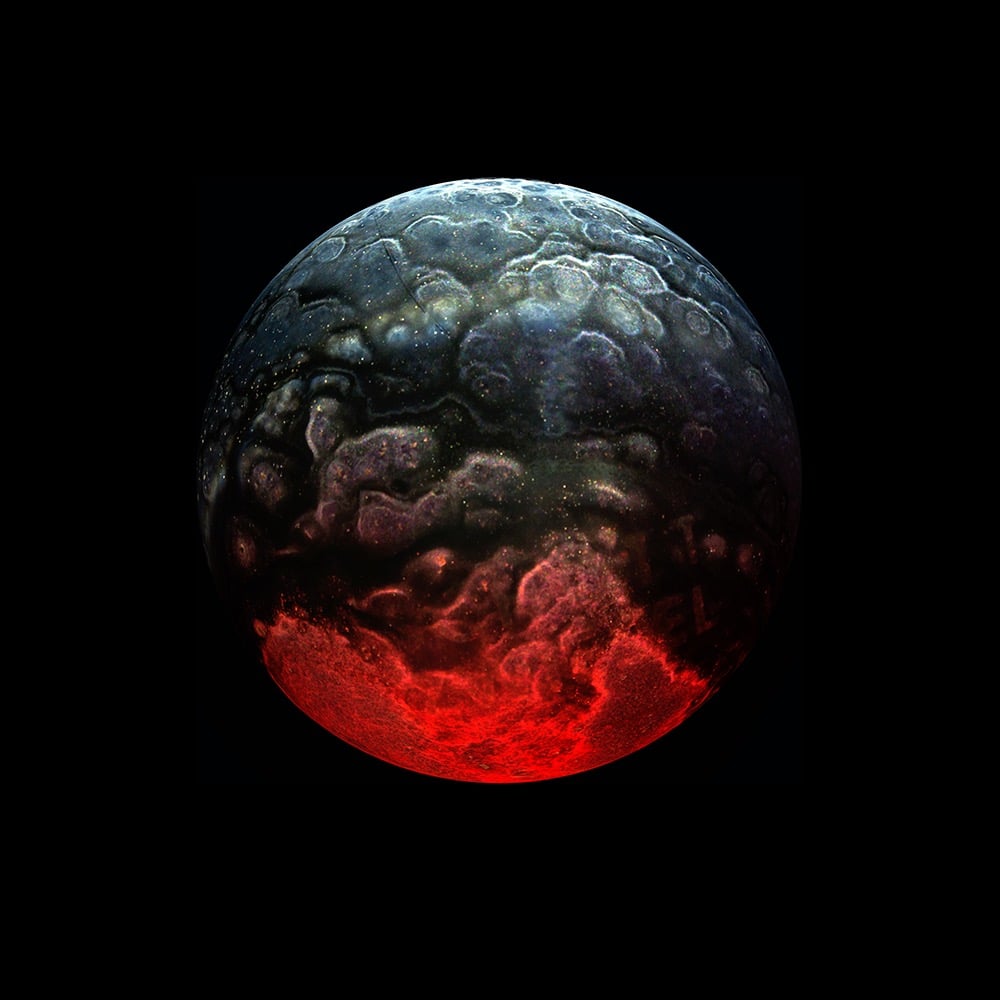
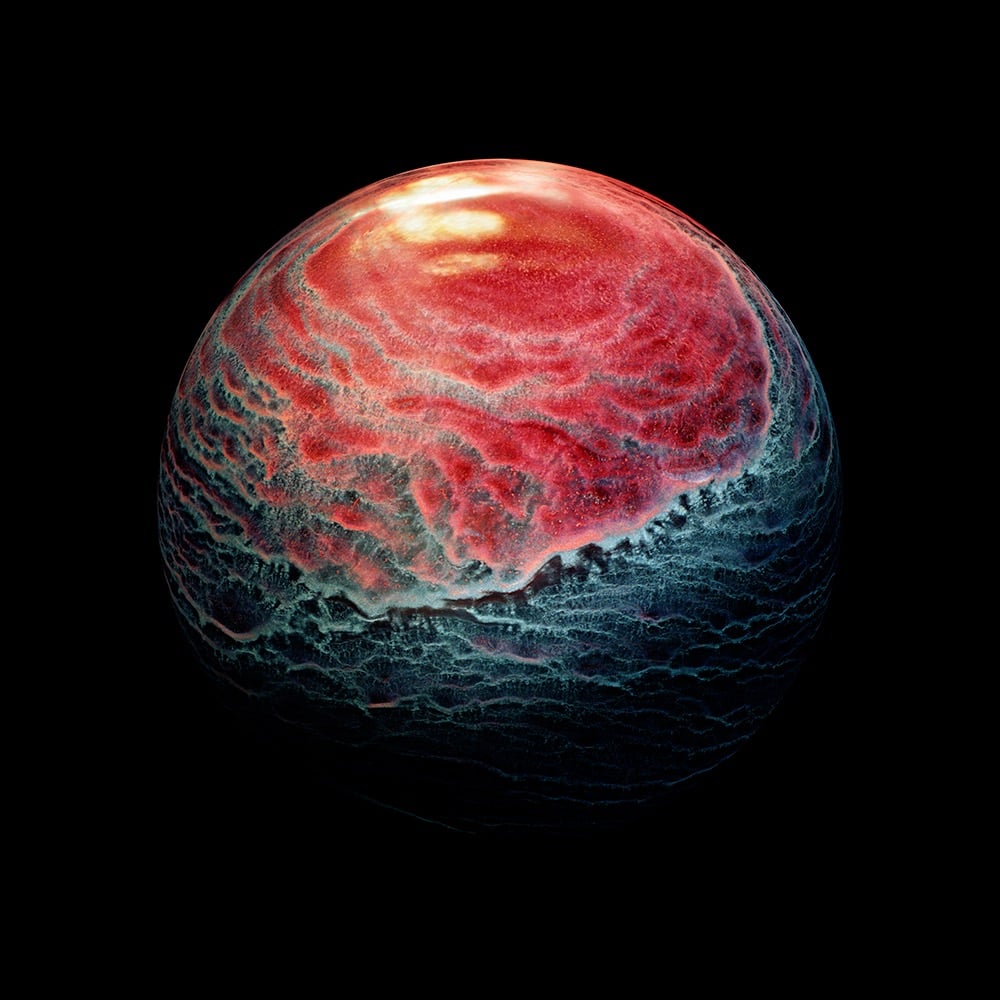
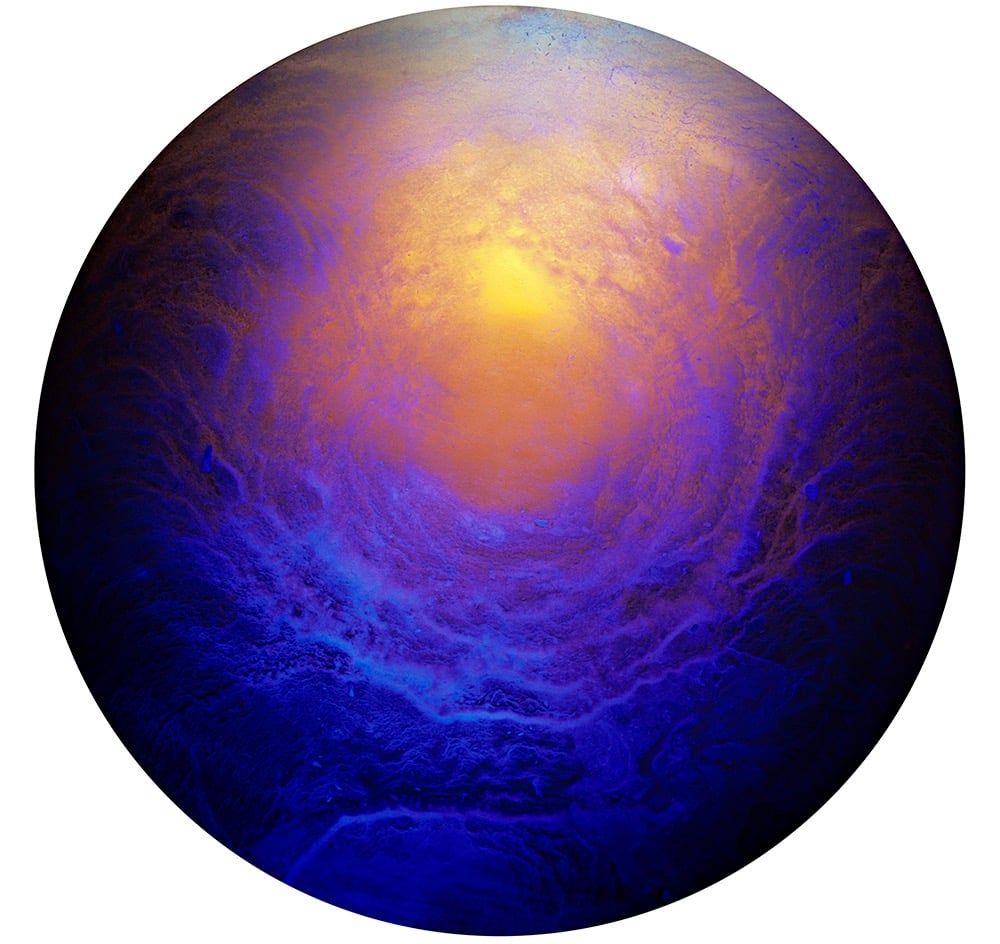
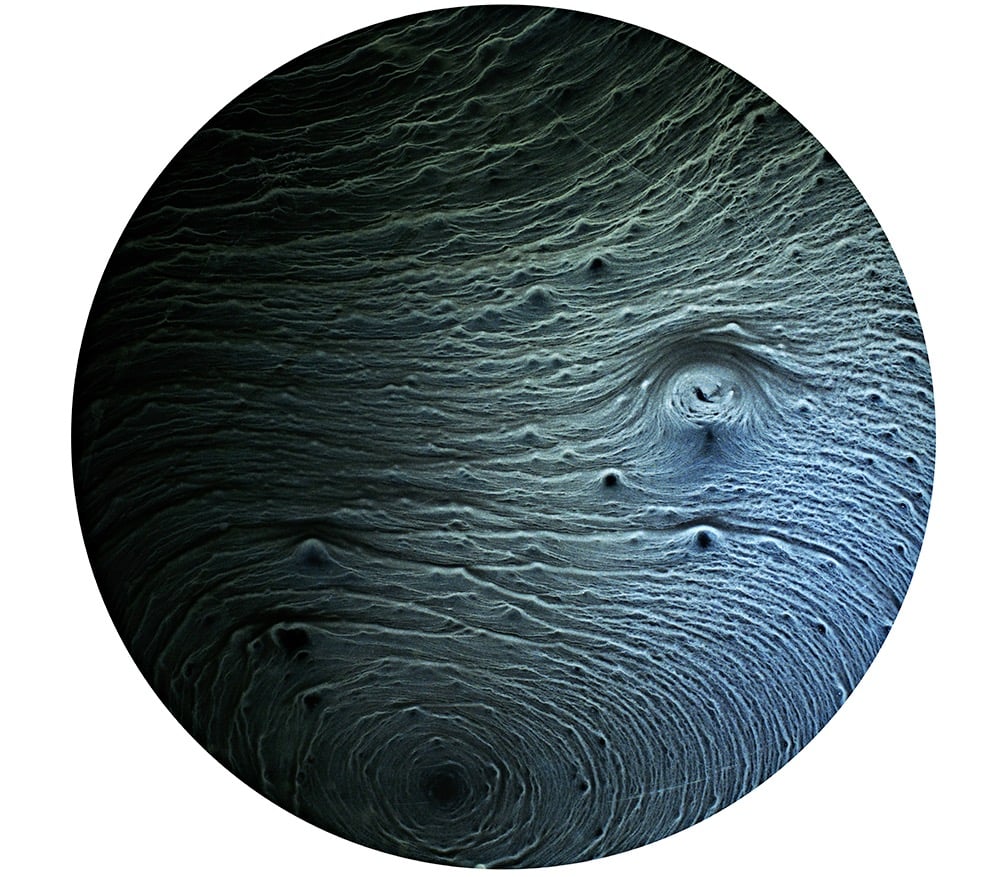
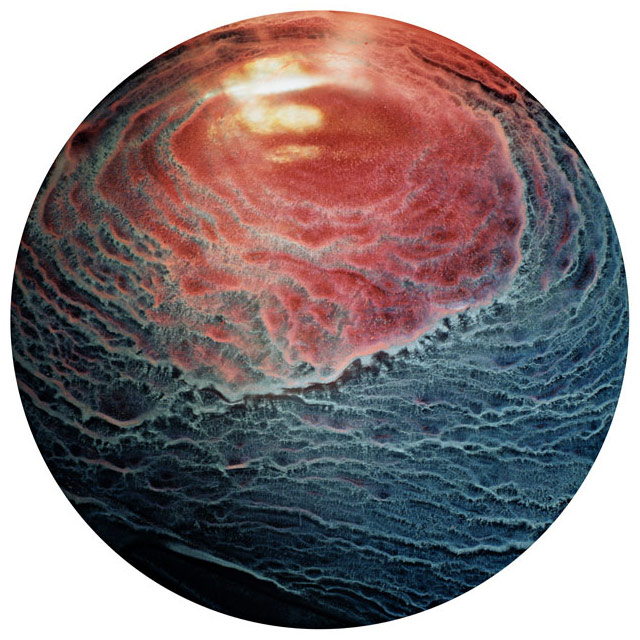
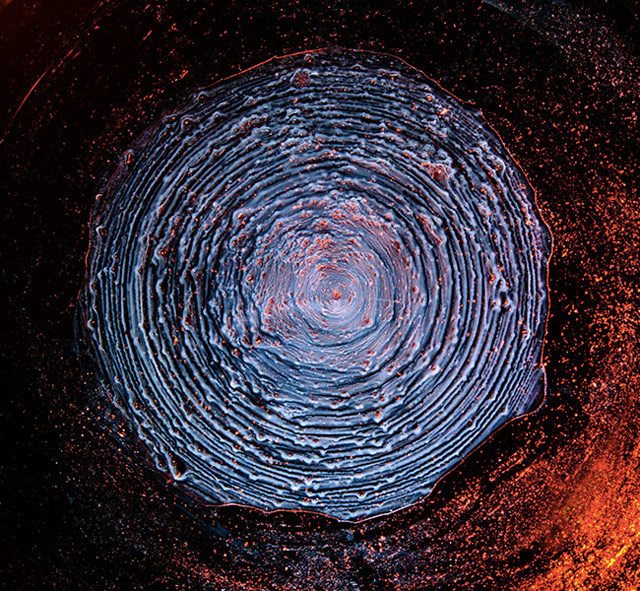
For his series Vanishing Spirits: The Dried Remains of Single Malt Scotch, photographer Ernie Buttons photographed the creatively lit bottoms of glasses emptied of their single malt Scotch whisky. The results look like alien worlds.
This piece on alcohol and the human fixation on it is interesting throughout — and/because it includes the sentence: “For an illustration of what followed, I direct you to the film Dazed and Confused.”
But even presuming that this story of natural selection is right, it doesn’t explain why, 10 million years later, I like wine so much. “It should puzzle us more than it does,” Edward Slingerland writes in his wide-ranging and provocative new book, Drunk: How We Sipped, Danced, and Stumbled Our Way to Civilization, “that one of the greatest foci of human ingenuity and concentrated effort over the past millennia has been the problem of how to get drunk.” The damage done by alcohol is profound: impaired cognition and motor skills, belligerence, injury, and vulnerability to all sorts of predation in the short run; damaged livers and brains, dysfunction, addiction, and early death as years of heavy drinking pile up. As the importance of alcohol as a caloric stopgap diminished, why didn’t evolution eventually lead us away from drinking-say, by favoring genotypes associated with hating alcohol’s taste? That it didn’t suggests that alcohol’s harms were, over the long haul, outweighed by some serious advantages.
Versions of this idea have recently bubbled up at academic conferences and in scholarly journals and anthologies (largely to the credit of the British anthropologist Robin Dunbar). Drunk helpfully synthesizes the literature, then underlines its most radical implication: Humans aren’t merely built to get buzzed-getting buzzed helped humans build civilization. Slingerland is not unmindful of alcohol’s dark side, and his exploration of when and why its harms outweigh its benefits will unsettle some American drinkers. Still, he describes the book as “a holistic defense of alcohol.” And he announces, early on, that “it might actually be good for us to tie one on now and then.”
But hard liquor and solitary drinking changed the game.
Southern Europe’s healthy drinking culture is hardly news, but its attributes are striking enough to bear revisiting: Despite widespread consumption of alcohol, Italy has some of the lowest rates of alcoholism in the world. Its residents drink mostly wine and beer, and almost exclusively over meals with other people. When liquor is consumed, it’s usually in small quantities, either right before or after a meal. Alcohol is seen as a food, not a drug. Drinking to get drunk is discouraged, as is drinking alone. The way Italians drink today may not be quite the way premodern people drank, but it likewise accentuates alcohol’s benefits and helps limit its harms. It is also, Slingerland told me, about as far as you can get from the way many people drink in the United States.
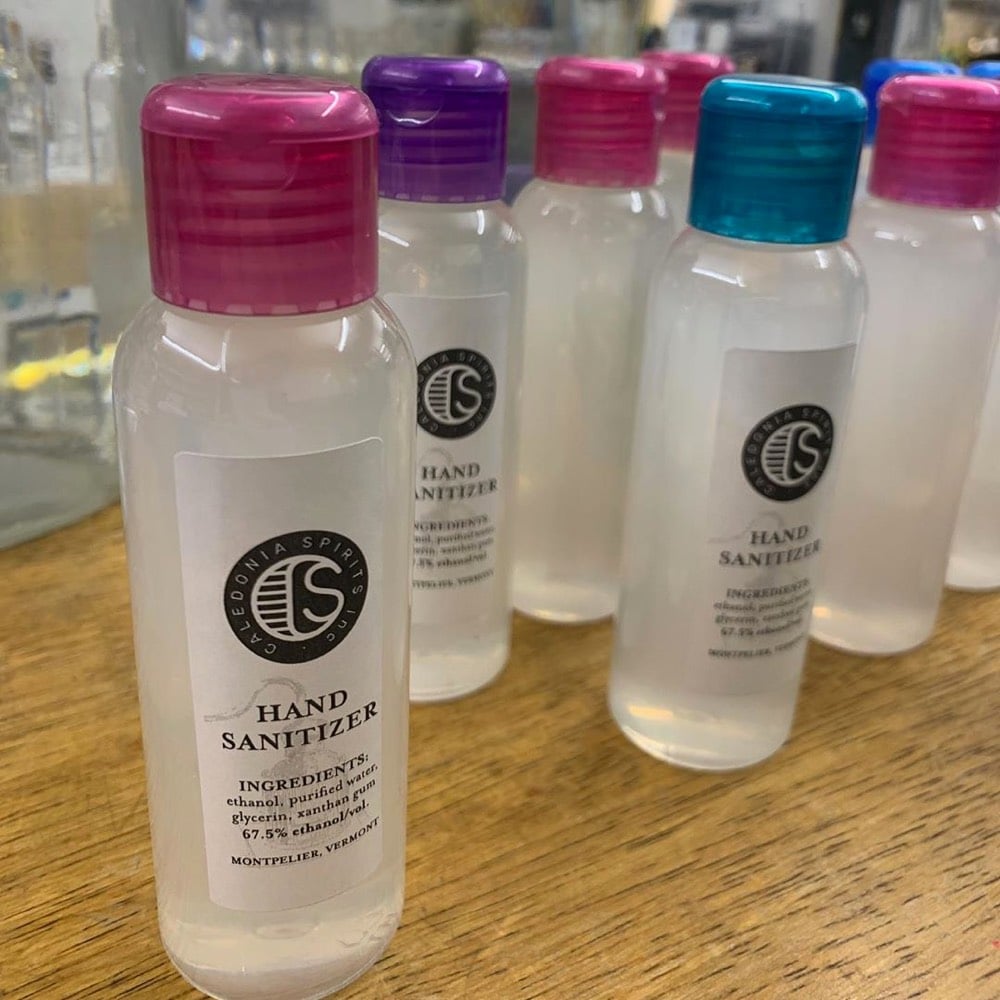
Hand sanitizer, a necessary tool in the fight against the COVID-19 pandemic, has been difficult to come by in stores the past few weeks (or months, depending on your location). Last night, I read in a local email newsletter here in Vermont that Mad River Distillers is producing hand sanitizer and giving it away for free to local residents. They’ve set up two pick-up stations for today — it’s BYOB and limited to 6oz per person. Earlier this week, workers at Barr Hill’s closed distillery made hand sanitizer and distributed it to local food shelves. Green Mountain Distillers and Smuggler’s Notch Distillery have also begun producing hand sanitizer.
Basic recipes include aloe vera for moisturizing; distilleries will also add the botanicals or flavorings from their signature spirits as a twist. Portland, Ore.-based Shine Distillery & Grill isn’t treating its formula like a trade secret. “I have fielded some calls from Seattle and suggested they contact their local distilleries to tell them what we are doing,” says general manager Ryan Ruelos. “Because any distillery can do it.”
The one thing they cannot do, though, is sell their sanitizers: Sales of distilled spirits are strictly regulated by the government and could jeopardize business licenses. Instead, distilleries are giving them away to customers who come through their doors. In some cases, such as at Psychopomp Microdistillery in Bristol, England, donations from customers who take the sanitizer are being given to charity.
Around the world, alcohol is often used in toasts that relate to health: the Irish “sláinte” (health), the Mexican Spanish “salud” (to health), the Russian “vashe zdorov’ye” (to your health), the Persian “be salamati” (good health), and the Hindi “achchee sehat” (good health). These distillery-produced hand sanitizers are a toast of health from them to us, and I am very grateful for it.
At Metropolitan State College of Denver, Milkman was instrumental in developing the idea that people were getting addicted to changes in brain chemistry. Kids who were “active confronters” were after a rush — they’d get it by stealing hubcaps and radios and later cars, or through stimulant drugs. Alcohol also alters brain chemistry, of course. It’s a sedative but it sedates the brain’s control first, which can remove inhibitions and, in limited doses, reduce anxiety.
“People can get addicted to drink, cars, money, sex, calories, cocaine — whatever,” says Milkman. “The idea of behavioural addiction became our trademark.”
This idea spawned another: “Why not orchestrate a social movement around natural highs: around people getting high on their own brain chemistry — because it seems obvious to me that people want to change their consciousness — without the deleterious effects of drugs?”
BTW, this is a somewhat controversial view but it has always made sense to me for those with mild addictions or depression. Speaking strictly for myself, I’ve found that when healthier alternatives are available to me (spending time with family & friends, exercise, exploring, reading a good book), I spend a lot less time mindlessly doing things that give me the same sort of brain buzz but which I don’t consider positive or worthwhile (drinking alcohol, watching TV, eating poorly, and especially reloading Instagram over and over again like a lab rat slapping that lever to get more cocaine).
But back to Iceland. By giving teens access to more healthy activities, getting parents more involved in their children’s lives, implementing curfews, and administering annual surveys, the country has made great strides over the past two decades:
Today, Iceland tops the European table for the cleanest-living teens. The percentage of 15- and 16-year-olds who had been drunk in the previous month plummeted from 42 per cent in 1998 to 5 per cent in 2016. The percentage who have ever used cannabis is down from 17 per cent to 7 per cent. Those smoking cigarettes every day fell from 23 per cent to just 3 per cent.
The way the country has achieved this turnaround has been both radical and evidence-based, but it has relied a lot on what might be termed enforced common sense. “This is the most remarkably intense and profound study of stress in the lives of teenagers that I have ever seen,” says Milkman. “I’m just so impressed by how well it is working.”
Young did a follow-up last year about the expansion of the program into other areas of the world.
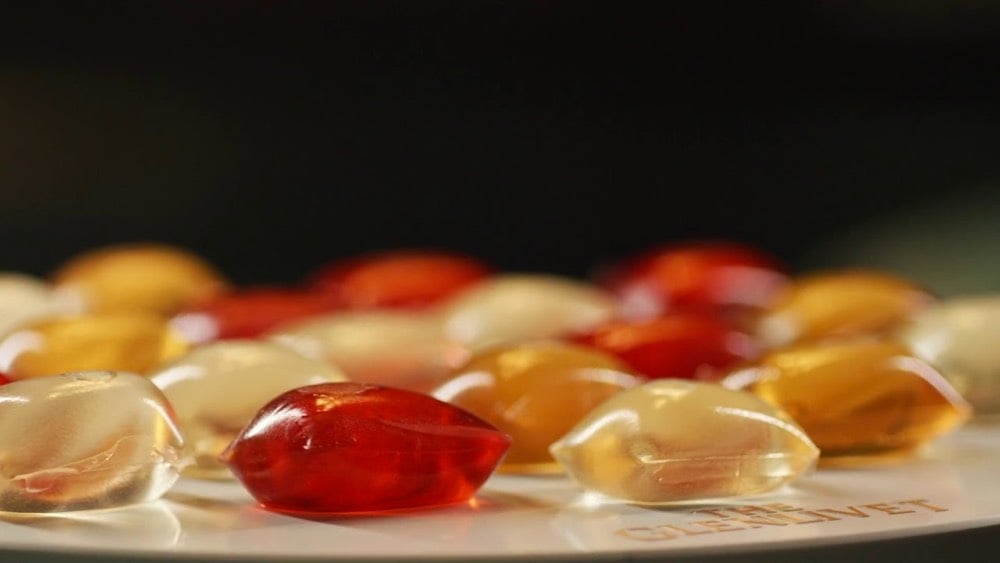
Last week we saw two absolutely incredible product introductions, and I’m having trouble picking a favorite. First, there were Glenlivet’s cocktail capsules that immediately reminded the entire internet of Tide Pods.
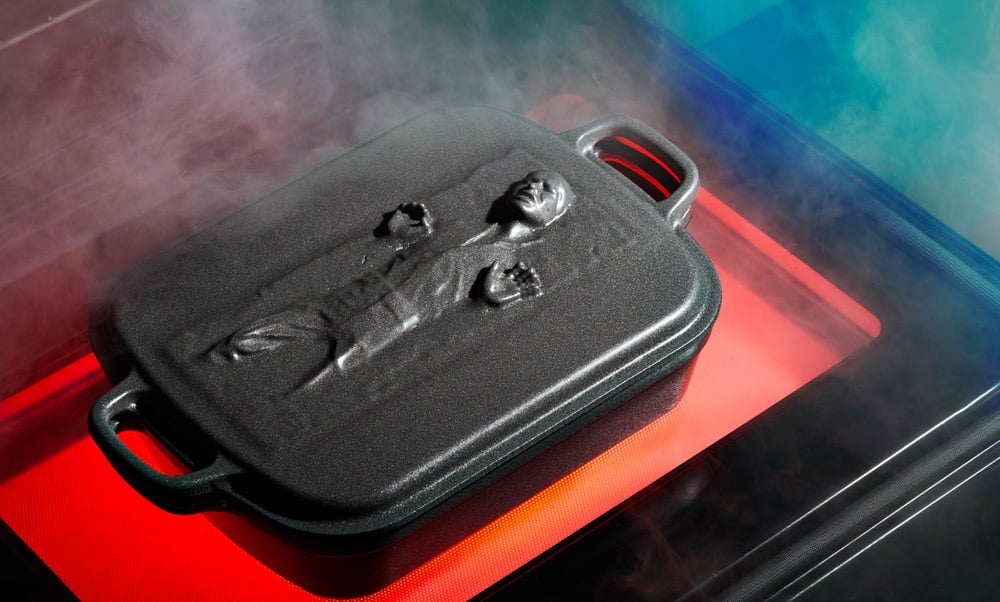
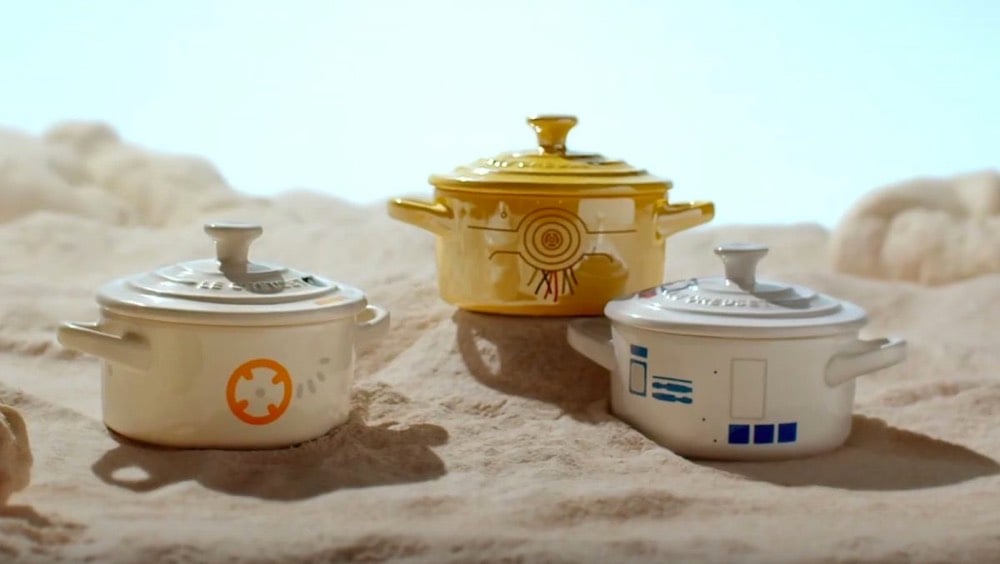
And then there was Le Creuset’s Star Wars collection of cookware, including a Darth Vader dutch oven, R2-D2 cooker, a Han Solo in carbonite roasting pan, and a “hand-painted, special-edition Tatooine™ Round Dutch Oven, inspired by the desert planet with captivating binary sunsets”.
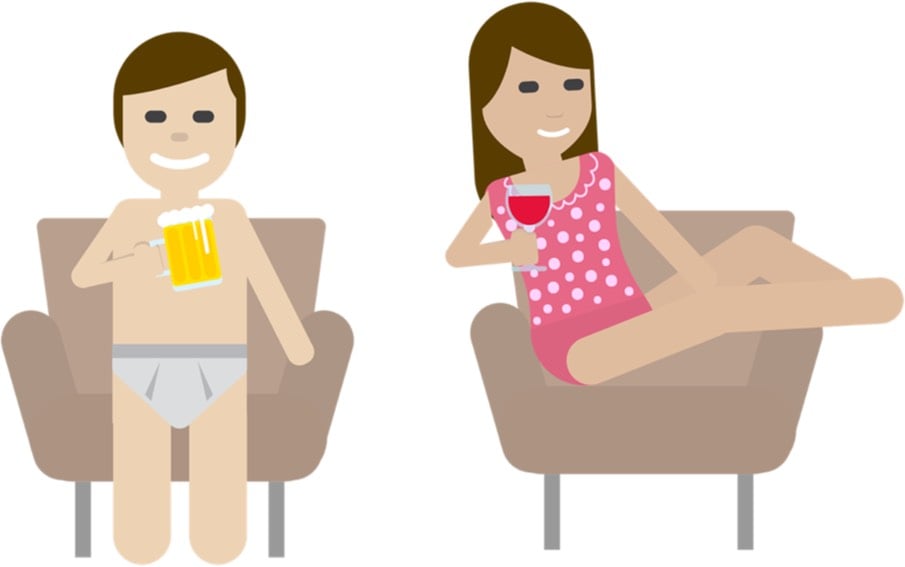
You’ve likely heard of hygge, the Danish word for a special feeling of coziness that’s been productized on Instagram and elsewhere to within an inch of its charming life. The Finns have a slightly different take on the good life called kalsarikännit, which roughly translates to “pantsdrunk” in English. A promotional site from the Finnish government defines it as “the feeling when you are going to get drunk home alone in your underwear — with no intention of going out”. They made the emoji above to illustrate pantsdrunkenness.1
When it comes to happiness rankings, Finland always scores near the top. Many Finnish phenomena set the bar high: the best education system, gender equality, a flourishing welfare state, sisu or bull-headed pluck. Behind all of these accomplishments lies a Finnish ability to stay calm, healthy and content in a riptide of endless tasks and temptations. The ability comes from the practice of “kalsarikanni” translated as pantsdrunk.
Peel off your clothes down to your underwear. Place savory or sweet snacks within reach alongside your bed or sofa. Make sure your television remote control is nearby along with any and all devices to access social media. Open your preferred alcohol. Your journey toward inner strength, higher quality of life, and peace of mind has begun.
Kalsarikännit isn’t as photogenic as hygge but there is some evidence of it on Instagram. As Rantanen explains, this lack of performance is part of the point:
“Pantsdrunk” doesn’t demand that you deny yourself the little things that make you happy or that you spend a fortune on Instagrammable Scandi furniture and load your house with more altar candles than a Catholic church. Affordability is its hallmark, offering a realistic remedy to everyday stress. Which is why this lifestyle choice is the antithesis of posing and pretence: one does not post atmospheric images on Instagram whilst pantsdrunk. Pantsdrunk is real. It’s about letting go and being yourself, no affectation and no performance.
I have been off alcohol lately, but kalsarikännit is usually one of my favorite forms of relaxation, particularly after a hard week.
That’s right, the Finnish government made emoji of people getting pantsdrunk. Americans are suuuuuper uptight.↩
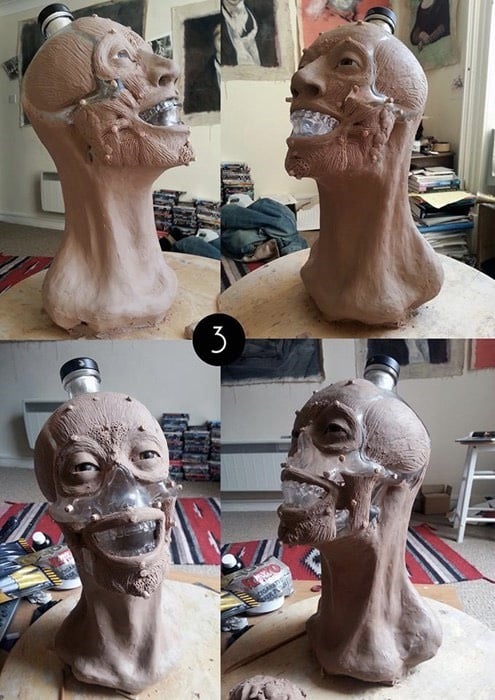
You know the vodka that comes in the Crystal Skull head?1 A forensic scientist used facial reconstruction techniques to give the skull a face.
Fun fact: immediately before I went onstage at Webstock, I drank at shot of Crystal Skull vodka. Funner fact: I also took some Vicodin (left over from a dental procedure), which typically mellows me out. Neither did a damn thing to calm my nerves. ¯\_(ツ)_/¯ ↩
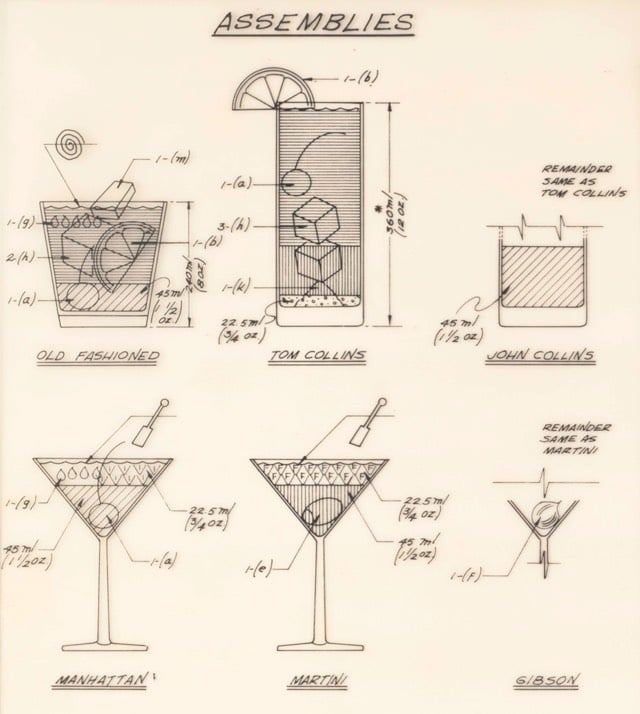
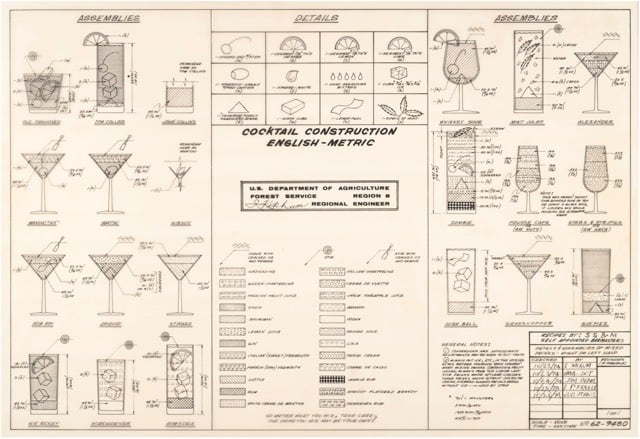
This is…weird. The National Archives contains a Cocktail Construction Chart made in an architectural style, for some reason, by the US Forest Service in 1974.
If it does, royalties might be due to the family of late Forest Service Region 8 Engineer Cleve “Red” Ketcham, who passed away in 2005 but has since been commemorated in the National Museum of Forest Service History. It’s Ketcham’s signature scribbled in the center of the chart, and according to Sharon Phillips, a longtime Program Management Analyst for Region 8 (which covers Virginia, Georgia, Florida, Oklahoma and Puerto Rico, though Ketcham worked out of its Atlanta office), who conferred with her engineering department, there’s little doubt Ketcham concocted the chart in question. “They’re assuming he’s the one, because the drawing has a date of 1974, and he was working our office from 1974-1980,” she said. And in case there’d be any curiosity as to whether someone else composed the chart and Ketcham merely signed off on it for disbursement, Phillips clarified that, “He’s the author of the chart. I wouldn’t say he passed it along to the staff, because at that time, he probably did that as maybe a joke, something he did for fun. It probably got mixed up with some legitimate stuff and ended up in the Archives.”
I contacted the librarian at the Forest History Society and found similar information. An archivist pulled a staff directory from the Atlanta office (aka “Region 8”) from 1975 and found three names that correlate with those on the document: David E. Ketcham & Cleve C. Ketcham (but not Ketchum, as on the document) and Robert B. Johns (presumably aka the Bob Johns in the lower right hand corner). Not sure if the two Ketchams were related or why the spellings of Cleve’s actual last name and the last name of the signature on the chart are different.
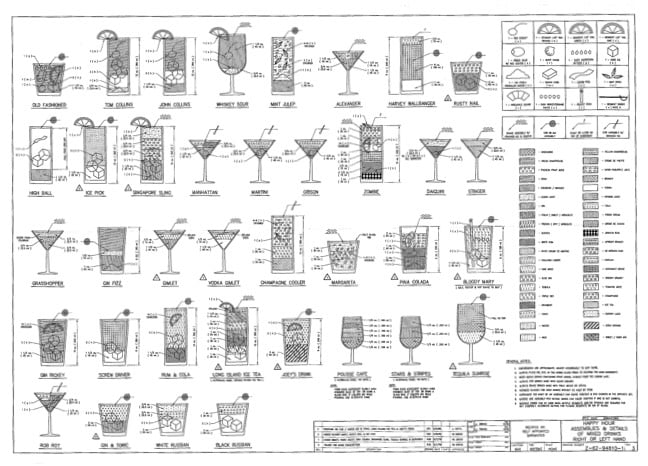
However, in the past few days, I’ve run across several similar charts, most notably The Engineer’s Guide to Drinks.1 Information on this chart is difficult to come by, but various commenters at Flowing Data and elsewhere remember the chart being used in the 1970s by a company called Calcomp to demonstrate their pen plotter.
As you can see, the Forest Service document and this one share a very similar visual language — for instance, the five drops for Angostura bitters, the three-leaf mint sprig, and the lemon peel. And I haven’t checked every single one, but the shading employed for the liquids appear to match exactly.
So which chart came first? The Forest Service chart has a date of 1974 and The Engineer’s Guide to Drinks is dated 1978. But in this post, Autodesk Technologist Shaan Hurley says the Engineer’s Guide dates to 1972. I emailed Hurley to ask about the date, but he couldn’t point to a definite source, which is not uncommon when you’re dealing with this sort of thing. It’s like finding some initials next to “85” scratched into the cement on a sidewalk: you’re pretty sure that someone did that in 1985 but you’d have a tough time proving it.
FWIW, if I had to guess where this chart originated, I’d say that the Calcomp plotter demo got out there somehow (maybe at a trade show or published in an industry magazine) and every engineer took a crack at their own version, like an early internet meme. Cleve Ketcham drew his by hand while others probably used the CAD software running on their workplace mainframes or minicomputers.
Anyway, if anyone has any further information about where these CAD-style cocktail instructions originated, let me know. (thx, @john_overholt & tre)
Gear Patrol visited 12 whiskey distilleries (including Buffalo Trace, Maker’s Mark, and Jim Beam) to find out how bourbon is made.
Cool. Some of that I knew, and some I didn’t. My favorite detail is how the placement of the barrel in the aging room can affect the flavor of the bourbon within. Just like cheese. (via digg)
Curious as to how these patterns were formed by some kinds of whiskey but not others, Button reached out to an engineering professor at Princeton.
Dr. Stone’s group found that the key difference in whisky is that unlike coffee, it consists of two liquids — water and ethyl alcohol. The alcohol evaporates more quickly, and as the fraction of water increases, the surface tension of the droplet changes, an effect first noticed in the 19th century by an Italian scientist, Carlo Marangoni. That, in turn, generates complex flows that contribute to the patterns Mr. Button photographed.
“Here, they actually looked at what happens when you change the fluids that are drying,” said Dr. Yunker, who is soon heading to the Georgia Institute of Technology as a physics professor, “and they found some very neat effects.” (That would be neat in the usual sense of “cool and intriguing” and not as in “I’ll have my whisky neat.”)
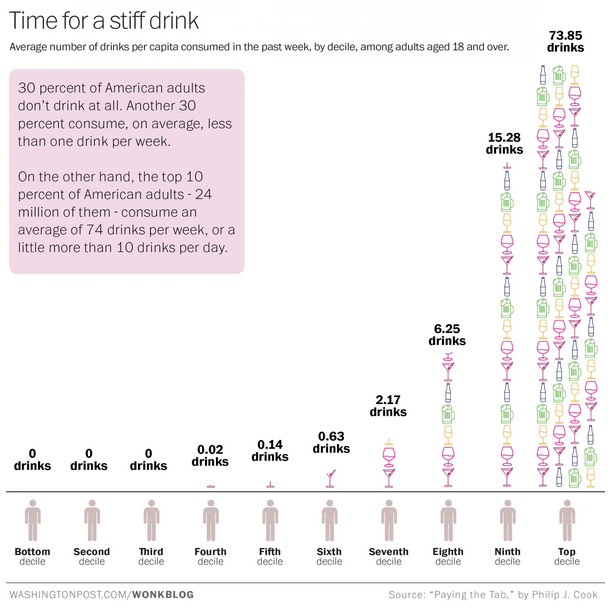
30% of Americans don’t drink any alcohol during a typical week. On the other end of the scale, ten percent of Americans consume more than 10 drinks every single day. More from Wonkblog.
I double-checked these figures with Cook, just to make sure I wasn’t reading them wrong. “I agree that it’s hard to imagine consuming 10 drinks a day,” he told me. But, “there are a remarkable number of people who drink a couple of six packs a day, or a pint of whiskey.”
As Cook notes in his book, the top 10 percent of drinkers account for well over half of the alcohol consumed in any given year. On the other hand, people in the bottom three deciles don’t drink at all, and even the median consumption among those who do drink is just three beverages per week.
This is shocking to me. I wonder what the distribution is within the top 10%…there must be people in the top 1% who drink, what, 30 drinks per day? Is that even possible day after day without very serious consequences? (via mr)
The source for this figure is “Paying the Tab,” by Phillip J. Cook, which was published in 2007. If we look at the section where he arrives at this calculation, and go to the footnote, we find that he used data from 2001-2002 from NESARC, the National Institute on Alcohol Abuse and Alcoholism, which had a representative sample of 43,093 adults over the age of 18. But following this footnote, we find that Cook corrected these data for under-reporting by multiplying the number of drinks each respondent claimed they had drunk by 1.97 in order to comport with the previous year’s sales data for alcohol in the US. Why? It turns out that alcohol sales in the US in 2000 were double what NESARC’s respondents — a nationally representative sample, remember — claimed to have drunk.
Additionally, the statement I made above — “ten percent of Americans consume more than 10 drinks every single day” — is not true, even if the data is correct. Instead, it is accurate to say that top 10% consumes an average of 10 drinks daily…some individuals may drink 4/day and some 18/day. Looks like it’s time for a reread of How to Lie with Statistics and A Mathematician Reads the Newspaper. (via @harryh & @gfilpus)
You can buy some old-ass rum, which, after being distilled from molasses or sugar cane, has sat around in barrels for long periods of time, for relatively small sums of money: El Dorado 15 is, as you might expect, made with a blend of rums that have sat in a barrel for at least fifteen years. Is it slightly sweet and rounded with a “full nose packed with dark coffee, candied orange, almonds, dark chocolate, pepper and rich vanilla.” It is only thirty-six dollars. Barbancourt 15 is kind of soft and woody and fruity and other things you might say about a bourbon, but instead of corn it’s like molasses. It’s about forty bucks. Ron Zacapa 23, which is a blend of rums between six and twenty three years old, is probably the first rum that made a lot of people go, “Oh, rum isn’t just that stuff that goes in a daiquiri or a mojito or that made me vomit pieces of my intestines into a urinal while I was wearing a silver crown.” Here are some tasting notes for it: “Nose full or apricots, citrus fruits, vanilla, cocoa and bourbon.”
Jim Koch is the co-founder and chairman of The Boston Beer Company, brewer of the Sam Adams beers. Part of his job is to drink professionally and he does so without getting completely sloshed. What’s his secret? Eating a packet of dry yeast before tying one on.
You see, what [expert brewer] Owades knew was that active dry yeast has an enzyme in it called alcohol dehydrogenases (ADH). Roughly put, ADH is able to break alcohol molecules down into their constituent parts of carbon, hydrogen, and oxygen. Which is the same thing that happens when your body metabolizes alcohol in its liver. Owades realized if you also have that enzyme in your stomach when the alcohol first hits it, the ADH will begin breaking it down before it gets into your bloodstream and, thus, your brain.
“And it will mitigate - not eliminate - but mitigate the effects of alcohol!” Koch told me.
Could have used this tip last night. Does this mean no hangovers as well?
Update: I got two kinds of feedback about this post:
1) What’s the fun in drinking alcohol if you’re not getting drunk? (Good point.)
2) Yeast doesn’t really work. What does seem to work is Pepcid AC and Zantac. From Shenglong on Hacker News:
Again, I’m not a chemist or a doctor, but from my preliminary internet research and anecdotal testing (though I have quite a few different data points), Famotadine (OTC) [Pepcid], and higher levels of APO-Ranitidine (can be prescription) [Zantac] seems to slow the rate of ethanol -> acetaldehyde, balancing out the drunkness effect more, and giving you more time to process the acetaldehyde -> acetic acid. I typically go from maxing out at 2 drinks / 3 hour period, to about 11 drinks / 3 hour period on Ranitidine, given favorable conditions. I’ve had lower levels of success with Famotadine.
And it goes without saying, I don’t recommend trying any of this at home. At the local bar on the other hand Nope, not there either. (thx, @natebirdman)
This year’s allocation of Pappy Van Winkle’s cult bourbon was recently released. There’s never enough supply to meet demand, which means two things: lines rivaling iPhone release day queues and high resale prices.
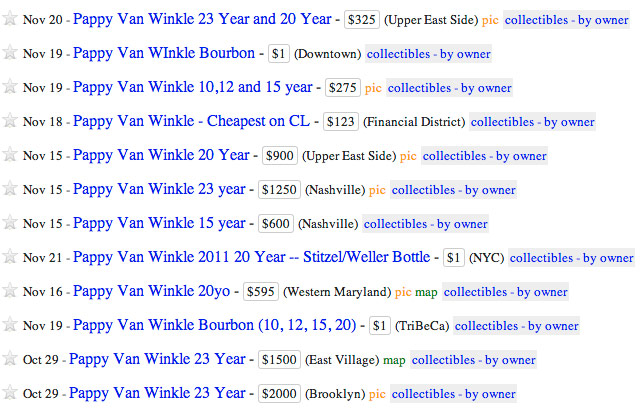
On Craigslist in NYC, bottles of Pappy are for sale for hundreds and even thousands of dollars. One seller is offering a bottle of Pappy Van Winkle 23 Year for $1,250…that’s right around $80 for each 1.5 oz pour (without any markup).
Pick up a bottle of both W.L. Weller 12 (90 proof) and Old Weller Antique 107 (107 proof). They will cost around $20-$30 each. Start off with a 50:50 mixture of the two Bourbons. The easiest way to do this is with a digital scale. If you don’t have a scale just add a tablespoon from both Bourbons to your glass. With a 50:50 ratio you have a 98.5 proof delicious Bourbon.
Next, try a different ratio. Try mixing 60:40 Antique to 12. The Bourbon blend is now 100.2 proof and much closer in taste to the 107 proof Pappy 15.
Pappy Van Winkle is frequently described by both educated and uneducated drinkers as the best bourbon on the market. It is certainly aged for longer than most premium bourbons, and has earned a near hysterical following of people scrambling to get one of the very few bottles that are released each year. Of the long-aged bourbons, it seems to be aged very gently year-to-year, and this recommends it enormously. But if you, like most people, can’t find Pappy, try W. L. Weller. There’s a 12 year old variety that retails for $23 around the corner. Pappy 15-year sells for $699-$1000 even though it’s the exact same liquid as the Pappy (same mash bill, same spirit, same barrels); the only difference is it’s aged 3 years less.
Written by the founders of Kings County Distillery, New York City’s first distillery since Prohibition, this spirited illustrated book explores America’s age-old love affair with whiskey. It begins with chapters on whiskey’s history and culture from 1640 to today, when the DIY trend and the classic cocktail craze have conspired to make it the next big thing. For those thirsty for practical information, the book next provides a detailed, easy-to-follow guide to safe home distilling, complete with a list of supplies, step-by-step instructions, and helpful pictures, anecdotes, and tips.
In Proof, Adam Rogers reveals alcohol as a miracle of science, going deep into the pleasures of making and drinking booze-and the effects of the latter. The people who make and sell alcohol may talk about history and tradition, but alcohol production is really powered by physics, molecular biology, organic chemistry, and a bit of metallurgy-and our taste for those products is a melding of psychology and neurobiology.
Proof takes readers from the whisky-making mecca of the Scottish Highlands to the oenology labs at UC Davis, from Kentucky bourbon country to the most sophisticated gene-sequencing labs in the world — and to more than one bar — bringing to life the motley characters and evolving science behind the latest developments in boozy technology.
Denis Duthie was recently struck blind by vodka reacting poorly to his diabetes medication. Doctors in his native New Zealand thought he might have formaldehyde poisoning, which you can get from drinking methanol. The cure? More cowbell, er, ethanol. Since the hospital didn’t have enough medical ethanol for treatment, a nurse went to the liquor store for Johnnie Walker Black, which was then dripped directly into Duthie’s stomach.
It worked because the ethanol competed with the methanol and prevented it from being metabolised into harmful formaldehyde, which can cause blindness.
“There are two potential ways of doing it: one is to give intravenous ethanol through a drip, but that is not available in all hospitals. There is also nothing wrong with supplying that alcohol via the gastro-intestinal tract, which is what they’ve chosen to do in this circumstance, and that’s a well established treatment. If the patient’s awake they can just drink it.”
Every year, Gallup surveys the drinking habits of Americans. If this is familiar, it’s because I posted about the 2010 version of the study last year (and I’ll probably post about it next August, too, if I’m here). The biggest notes this year are beer falling 5% to the drink of choice of only 36% of Americans. This puts it in a statistical tie with wine (35%) as America’s favorite beverage. (Us rye drinkers are down at 23%.)
The percentage of Americans who drink is up a bit this year (67%) from last year, and is at its highest level since 1985. Another fact: Since 1992, beer has been the most popular alcohol (though down slightly this year) every year except 2005, when the most popular drink was wine. Dollars to doughnuts it was Sideways that caused that.
Mr. Uyeda, who owns a bar named Tender in the Ginza district, is the inventor of a much-debated shaking technique he calls the hard shake, a choreographed set of motions involving a ferocious snapping of the wrists while holding the shaker slanted and twisting it. According to his Web site, this imparts, among other things, greater chill and velvety bubbles that keep the harshness of the alcohol from contacting the tongue, while showering fine particles of ice across the drink’s surface.
Some folks from the web magazine Double X wondered what it would be like to drink as much in the workplace as the characters do on Mad Men. So they spent the day getting hammered and tried to do some work. The results are somewhat different than on the show.
When Chromeo played, their crowd drank house vodka and Budweiser. Didn’t tip. Some of them did what I’ll call the slide-backs. They put a dollar down on the bar, wait until you turn your back, then palm their buck and walk away. Classy. When your night starts out with “What’s your cheapest drink?” that’s also not good.”
Time to lower the drinking age? “The age at highest risk for an alcohol-related auto fatality is 21, followed by 22 and 23, an indication that delaying first exposure to alcohol until young adults are away from home may not be the best way to introduce them to drink.”
Is it worth paying $700 for a bottle of wine? Well worth it, says Slate’s wine columnist, for the right bottle. “My father took a sniff of his glass, and he immediately registered a look of shock that called to mind the expression on Michael Spinks’ face when Mike Tyson first landed a glove on him in their 1988 title fight. Unlike Spinks, however, my father managed to remain upright. I took a sip of the wine and quickly pronounced the same verdict I had rendered 20 months earlier: ‘Holy shit.’”
Tremble funnyman Todd Levin dons the Non-Expert’s hat over at The Morning News to explain how to buy wine. “FANCY SERIF FONT + PARCHMENT LABEL + SOMETHING YOU KIND OF REMEMBERED FROM THE MOVIE SIDEWAYS + $12-$16 PRICE TAG = SUCCESS”
I learned something terrific yesterday: if you take a really cold but still liquid beer out of the freezer and open it, the beer will freeze within seconds. The freezing trick also works if instead of opening the beer, you give the unopened bottle a sharp rap. The reasons I’ve found online for why the trick works varies slightly for the two cases. According to Daryl Taylor’s site for science teachers, opening the bottle changes the pressure in the bottle and thus lowers the temperature:
The sealed bottle’s envoronment has a specific volume, pressure, and temperature. By changing one, you are necessarily affecting the others. The chilled liquid has a smaller temperature, esentially the same volume, thus a smaller smaler pressure. This is, of cousre, according to the basic gas-law, PVNERT. Better known as PV=nRT. Even though the internal pressure has decreased, it is still far greater than the pressure outside the container, namely one atmosphere. Upon opening, the pressure inside drastically plunges as it tries to equalize with the atmosphere. This rapid decrease in P corresponds to a rapid decrease in T, since the V is essentially the same. This rapid drop in temperature of a liquid that is NEAR freezing actually plunges the liquid into a frozen state.
Not sure I completely buy this…does the ideal gas law work for liquids? I can see that the small amount of gas in the neck of the bottle would decrease in pressure and thus decrease in temperature and that might be enough to spur the liquid into freezing. For a better answer for both cases, I consulted the internet’s all-seeing oracle, Ask Metafilter. This comment gives a succinct answer:
The beer is below the freezing temperature, but there is not enough contamination for the ice to form. The bubbles of carbon dioxide released when the bottle is hit act as nuclei for ice crystal growth in the supercooled beer. Same thing happens in reverse when water is microwaved in a smooth container but won’t boil until hit.
This more scientific discussion of unfreezable water provides more evidence of what may be going on: supercooling effects, the carbon dioxide in solution hindering freezing (osmotic depression of freezing point), and hydration factors. Anyway, wicked cool! Supercooled beer!





Socials & More