kottke.org posts about parenting
In 2023, Paul Scheer spent a few days talking to fathers who accompanied their daughters to Taylor Swift’s Eras Tour in LA, either as concert-goers or just chauffeurs. I love this video. One of the dads summed up the vibe of being there for your loved ones, even if it’s maybe not entirely your thing:
Life is moments. Life has nothing to do with money, nothing to do with things. Life is dancing, that is life! It’s when you feel happy. Their happiness is my happiness.
Elizabeth Spiers wrote about the Swiftie Dads on Bluesky:
This is a model for what actual masculinity should be. Men don’t need to spend more time in caves beating their chests with other men; they need to take their daughters to a meaningful thing and talk to them about it.
These guys taking their daughters to Taylor Swift concerts — and unabashedly enjoying it! — are the model. They are being themselves and not treating their daughters’ interests as stupid or aberrant or a thing they should be patted on the back for participating in.
See also The Joy of Fortnite. (thx, caroline)
Last year, Gretchen Rubin wrote a widely circulated piece about trading the “empty nest” metaphor for something that “emphasizes possibility”: the open door. I somehow hadn’t read it when it came out, but being in the midst of emptying the nest/opening the door, it was unsurprisingly resonant for me to read now. Rubin writes:
I balked at empty nest’s connotations of futility or meaninglessness. No wonder so many adults, when and if they anticipate this stage of life, consider it with dread. I found myself searching for a different metaphor — one that could help me and parents like me not to languish but to see this new phase as a time of self-discovery, possibility, and growth.
For me, I’m not so sure the terms or framing matters too much. I’ve been genuinely looking forward to my kids being out in the world and the possibility more freedom & bandwidth, but I am still feeling allllll of this bewilderment and questioning:
That lack of foresight isn’t surprising. The tumult of everyday family routine can make it hard for people to step back and think about their lives. As I often remind myself, something that can be done at any time tends to be done at no time, and the demands of parenthood make it easy to delay facing what can be difficult questions. Am I living the life I want to live? Is it too late to start something new? Do I really want to be married anymore? Or simply: Now is it okay to eat meals in front of the TV?
Some people I’ve encountered whose children have left home have told me — in tones of shame, sadness, or bewilderment — that they’re reassessing long-standing habits and relationships. “I thought I had a group of friends, but I didn’t,” a woman seated next to me on an airplane last year said. Her social circle was tied to her daughter’s activities, such as soccer and violin; once her daughter graduated, those bonds dissolved. Some have reported a crisis of identity. “I keep asking myself, What am I for?” a friend said. Another warned me to resist the lure of all those hours freed up on my schedule: “I know you love to work, but be careful not to work all the time, because now you can.”
What am I for? Am I living the life I want to live?
It’s Friday and so we’ll end the week with a pair of poems. Good Bones by Maggie Smith:
Life is short, though I keep this from my children.
Life is short, and I’ve shortened mine
in a thousand delicious, ill-advised ways,
a thousand deliciously ill-advised ways
I’ll keep from my children. The world is at least
fifty percent terrible, and that’s a conservative
estimate, though I keep this from my children.
This Be The Verse by Philip Larkin:
They fuck you up, your mum and dad.
They may not mean to, but they do.
They fill you with the faults they had
And add some extra, just for you.
Those are just excerpts…click through to read the whole poems. I’ll see you next week.

This is lovely:
man the crazy thing about babies is that like, some people would think that reading a baby a book about farm animals is teaching them about farm animals, but really it’s teaching them about the concept of a book and how there’s new information on each page of a single object, but really, beyond that, it’s teaching them how language works, and beyond that it’s really actually teaching them about human interaction, and really really it’s them learning about existing in a three-dimensional space and how they can navigate that space, but actually, above all it is teaching them that mama loves them.
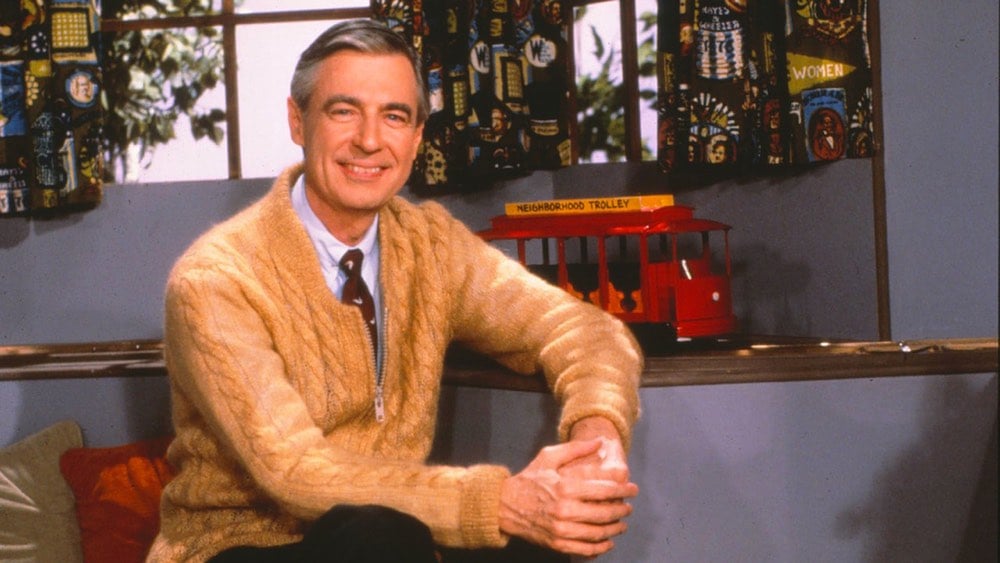
In 2002, Fred Rogers wrote a parenting book as a resource for caregivers of children aged two to six. One of the topics he covered was how to talk to children about tragic events in the news. Rogers begins by noting that even young children can pick up on when adults are feeling distressed:
In times of community or world-wide crisis, it’s easy to assume that young children don’t know what’s going on. But one thing’s for sure — children are very sensitive to how their parents feel. They’re keenly aware of the expressions on their parents’ faces and the tone of their voices. Children can sense when their parents are really worried, whether they’re watching the news or talking about it with others. No matter what children know about a “crisis,” it’s especially scary for children to realize that their parents are scared.
In times of crisis, kids need to feel safe:
In times of crisis, children want to know, “Who will take care of me?” They’re dependent on adults for their survival and security. They’re naturally self-centered. They need to hear very clearly that their parents are doing all they can to take care of them and to keep them safe. They also need to hear that people in the government and other grownups they don’t even know are working hard to keep them safe, too.
Parents need to step away from the news in order to be present for their kids and for their own well-being. The 2025 equivalent of limiting TV viewing would be “put down the phone”:
It’s easy to allow ourselves to get drawn into watching televised news of a crisis for hours and hours; however, exposing ourselves to so many tragedies can make us feel hopeless, insecure, and even depressed. We help our children and ourselves if we’re able to limit our own television viewing. Our children need us to spend time with them – away from the frightening images on the screen.
We need to let kids know that whatever they’re feeling is natural:
If we don’t let children know it’s okay to feel sad and scared, they may think something is wrong with them when they do feel that way. They certainly don’t need to hear all the details of what’s making us sad or scared, but if we can help them accept their own feelings as natural and normal, their feelings will be much more manageable for them.
Angry feelings are part of being human, especially when we feel powerless. One of the most important messages we can give our children is, “It’s okay to be angry, but it’s not okay to hurt ourselves or others.” Besides giving children the right to their anger, we can help them find constructive things to do with their feelings. This way, we’ll be giving them useful tools that will serve them all their life, and help them to become the worlds’ future peacemakers — the world’s future “helpers.”
And of course, we can urge kids to look for the helpers:
When I was a boy and I would see scary things in the news, my mother would say to me, “Look for the helpers. You will always find people who are helping.” To this day, especially in times of “disaster,” I remember my mother’s words and I am always comforted by realizing that there are still so many helpers — so many caring people in this world.
Update: On the first anniversary of 9/11, Fred Rogers recorded this brief message about tragic events in the news. Here’s the video followed by a full transcript:
Hello, I’m Fred Rogers. Some parents wonder how to handle world news with their young children. Well, we at Family Communications have discovered that when children bring up something frightening, it’s helpful right away to ask them what they know about it. We often find that their fantasies are very different from the actual truth. What children probably need to hear most from us adults is that they can talk with us about anything and that we will do all we can to keep them safe in any scary time. I’m always glad to be your neighbor.
This was one of Rogers’ last recordings before he died in early 2003.
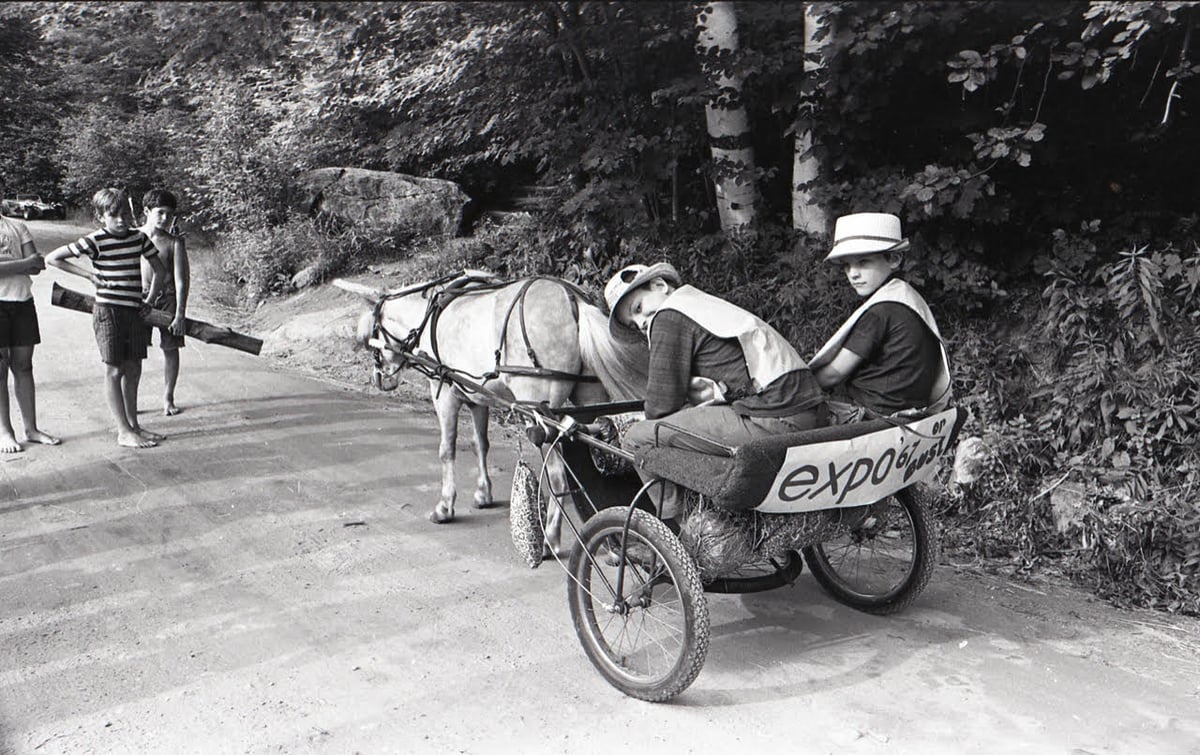
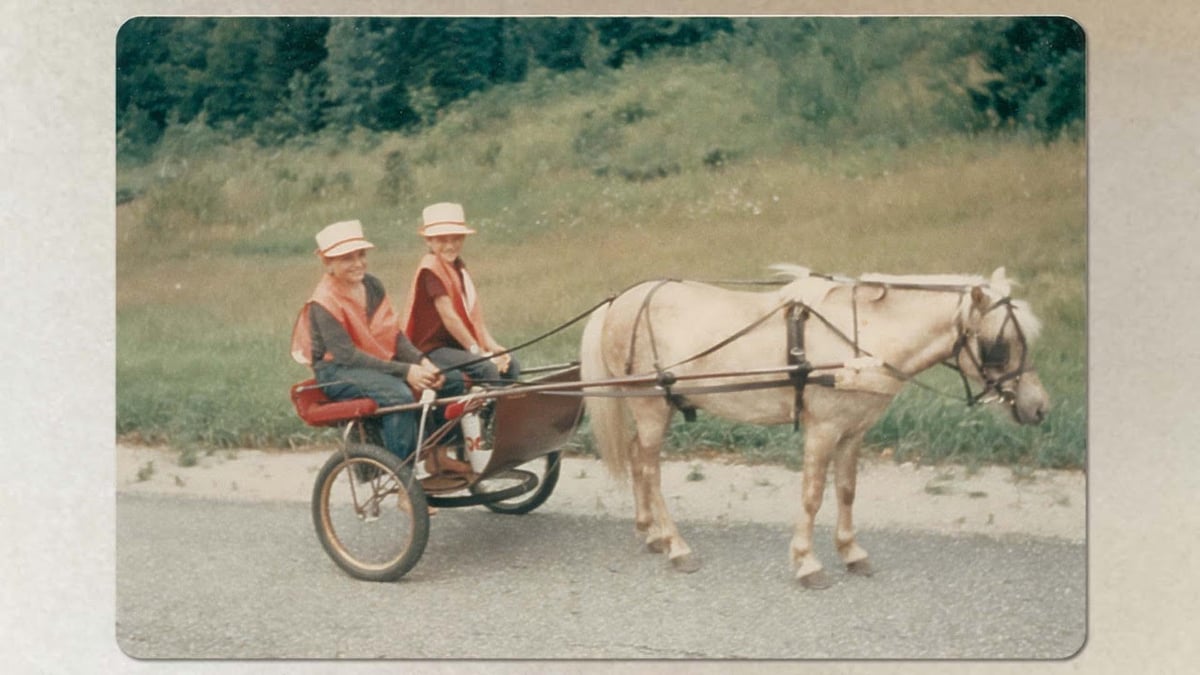
Pony Boys is a delightful short documentary about two boys (aged 9 & 11) who traveled from a Boston suburb to the 1967 World’s Fair in Montreal by pony cart.
In the short documentary above, the “pony boys,” Tony and Jeff Whittemore, recount that as youngsters, they were unaware of the controversial questions the trip raises. What constitutes responsible parenting? Did their parents do something dangerous, or was it a brilliant parenting move that taught lifelong lessons? What they recall is a life-changing adventure made possible by a free-spirited mother who believed they could do it.
You can watch Pony Boys here and check out more about their journey here, including press clippings, letters the boys & their parents received, and photos. And VPR has an interview with the filmmaker, Eric Stange. (thx, meg)
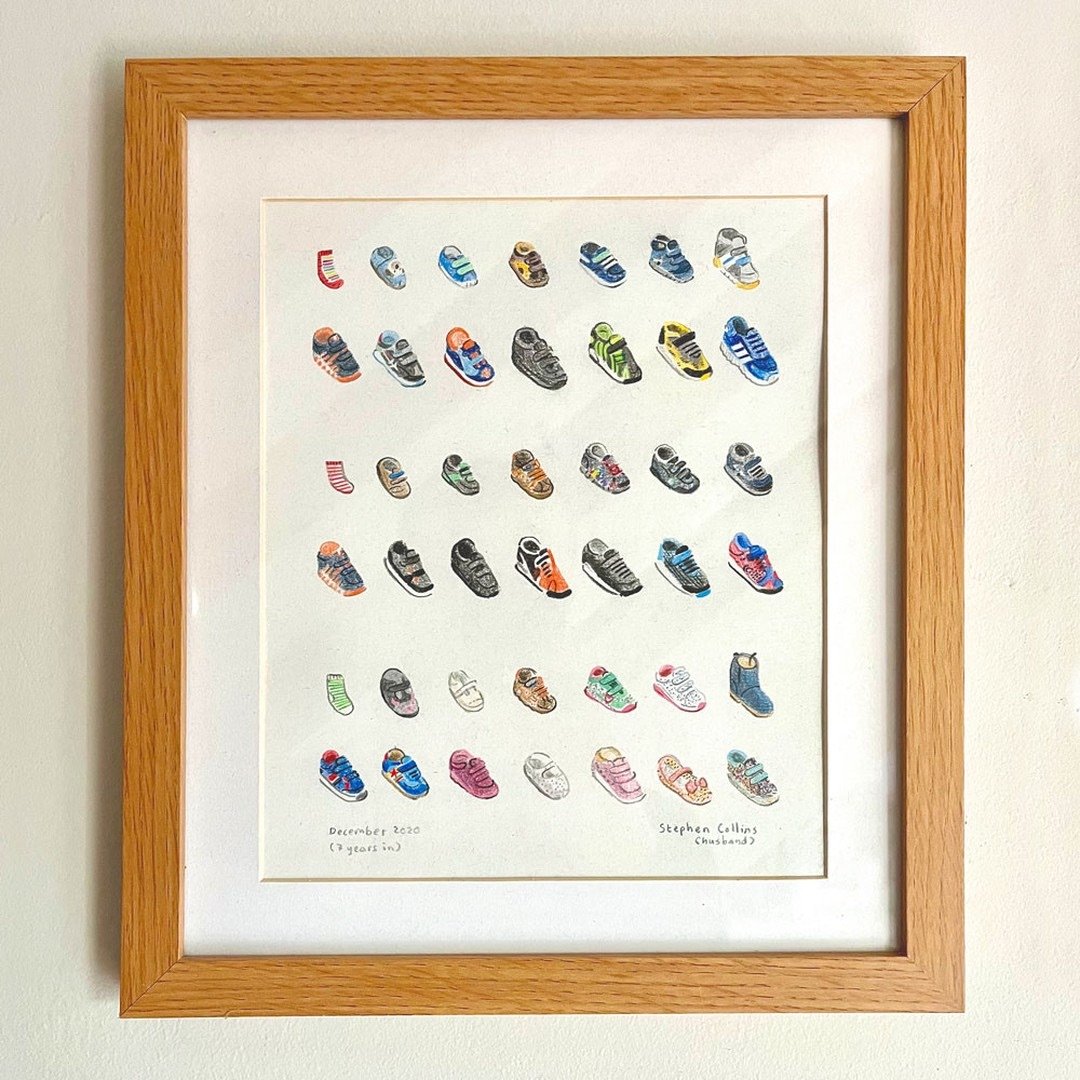
This is lovely: illustrator & cartoonist Stephen Collins drew the progression of shoes worn by each of his three kids.
Back in 2020 we had to chuck the kids’ baby shoes out 😱, so I decided to keep the first ones and draw the rest, in order, starting with pre-walking socks.
When I look at photos of my kids from when they were younger, my eye is always drawn to their shoes and clothes — some of them are so iconic in my mind they almost function as logos for my kids at different stages.
I ran across an interesting term/concept in Miranda July’s All Fours: third things. A character in the book attributes it to “the Quakers” and describes it like so:
It’s a topic of conversation that doesn’t belong to either party. The soul, usually so shy, can speak more easily through this Third Thing, at a slant.
It’s unclear if Quaker author Parker J. Palmer coined this term, but his 2004 book A Hidden Wholeness popularized the concept of third things. From The joy of third things:
In his book A Hidden Wholeness: The Journey Toward an Undivided Life, Quaker writer Parker J. Palmer talks about “third things,” how people can make emotional connections while talking about something they’re experiencing together. This can happen when people attend a concert or play, view a painting or even watch a baseball game.
Palmer believes that the soul is shy and that asking another person to immediately share something very vulnerable can scare them off. Connecting while engaged in third things is a gentler way to communicate.
Many people have fond memories of special conversations that transpired while they were doing the dishes with a parent or going fishing with a friend. This third thing they do together makes it easy and comfortable for them to converse more deeply, often without even making eye contact.
Many of the best conversations I have with my kids are facilitated by third things: watching a movie, playing video games, kicking a soccer ball around, playing mini golf, or running errands in the car. Conversation is no different that any other activity (like, say, shooting free throws or dancing): it’s much easier and open when you’re not actually thinking too hard about it.
For National Geographic, Tony Hale (who played Fear in Inside Out 2) talks to psychologist and author Dr. Lisa Damour about Pixar’s new film, her role as a consultant for the filmmakers, and what science says about the emotions in the movie. From The Kid Should See This:
By blending Pixar’s storytelling with scientific expertise, the Inside Out films and this discussion help make the complex topic of emotional development approachable and more familiar. They offer viewers of all ages vocabulary to better understand and express their feelings, while normalizing the intricate emotional experiences we encounter throughout life.
I have heard a lot of good things about Damour’s books from other parents, particularly Untangled: Guiding Teenage Girls Through the Seven Transitions into Adulthood and The Emotional Lives of Teenagers: Raising Connected, Capable, and Compassionate Adolescents.
Vox also has a really interesting article on the science of the emotions of Inside Out 2, with quotes from Damour and emotion scientist Dacher Keltner.
One of the things that happens when people become teenagers is that their brain becomes more sophisticated, and it allows for self-conscious emotions. Before age 13, kids are concrete in their thinking. They can’t always see things from another perspective. Then around 13 or 14, the ability to picture oneself on the outside, to imagine different scenarios, arrives as a result of brain development.
With that arrival comes the ability to be embarrassed and to imagine what other people think of you. Or to have envy, to want something somebody else has and to want to know why you don’t have it. Ennui is so funny and wonderful and really maps onto the natural disdain and over-it-ness teenagers can have for everything. Then, of course, anxiety is a major player in this movie. What anxiety requires is the ability to imagine and anticipate. Fear is our response to the threat right in front of us, whereas anxiety is picturing things that might happen.
See also The Making of “Inside Out 2” episode of Damour’s podcast.
As the parent of two teens and also as someone who perhaps remembers a little too much what it felt like to be a teenager, I found Inside Out 2’s portrayal of the emotions (and how to manage them) to be really convincing. (via the kid should see this)
The other day while singing to my daughter, I realized that I can, in fact, sing better than I used to. I think the sheer amount of “Wheels on the Bus” and “Row, Row, Row Your Boat” did the trick: I enjoy it more now and feel like I’m hitting more of the right notes. I’m still not “good,” but I’m not bad, and I’m less embarrassed to be caught singing in front of other people. It reminds me of the Terry Gross detail that she took voice lessons not to become a better singer but simply so she could sing along more pleasurably to music she loved.
Has anyone else been singing anything fun lately? For their kids, or in any other situation? I’ve been singing a lot of Carrie Anne, by The Hollies.
I am a sports parent but have never been the type that lived through the achievements of their kids, but even so, there are parts of Rich Cohen’s The Sad Fate of the Sports Parent I identified with.
The end began like this: One evening, after the last game of the high-school season, I asked my son if he’d be trying out for spring league. For a youth-hockey kid, playing spring league is the equivalent of a minor-league pitcher playing winter ball in Mexico — so necessary as a statement of intent and means of improvement that forgoing it is like giving up “the path.” Rather than a simple affirmative nod, as I’d expected, I got these words: “I’m going to think about it.” Think about it? For me, this was the same as a girlfriend saying, “We need to talk.”
Only later did I realize that those words were the first move in a careful choreography. My son wanted to quit, but in a way that would not break my heart. He also didn’t want me to rant and rave and try to talk him out of it.
We had reversed roles. He was the adult. I was the child.
I find the life-long child/parent role-reversal dynamic endlessly fascinating. And also this bit:
He had no inherent genius for the game, but he loved it, and that love, which was his talent, and the corresponding desire to spend every free moment at the facility — the life of a rink rat — jumping onto the ice whenever an extra player was needed, shooting tape balls in the lobby, made him an asset. A kid can have all the skills, speed, size, and shot, but if he doesn’t want to be there, if he doesn’t love the game, it’s not going to work.
It was passion that got him onto the top teams (this was tier-two and tier-three hockey in Fairfield County, Connecticut) and thus sowed the seed that eventually became, for me, a bitter plant. His love for the game elevated him to the hypercompetitive, goal-fixated ranks, where it’s always about the next tryout and the next season, who will make it and, more important, who will be left behind. Irony: His love for the game had carried him to a level where no love is possible.
Both of my kids are skiers competing on a national level and they are definitely struggling with this — how do you balance the genuine love of a sport and competition with the fixation on goals & judging? When is it no longer worth it?
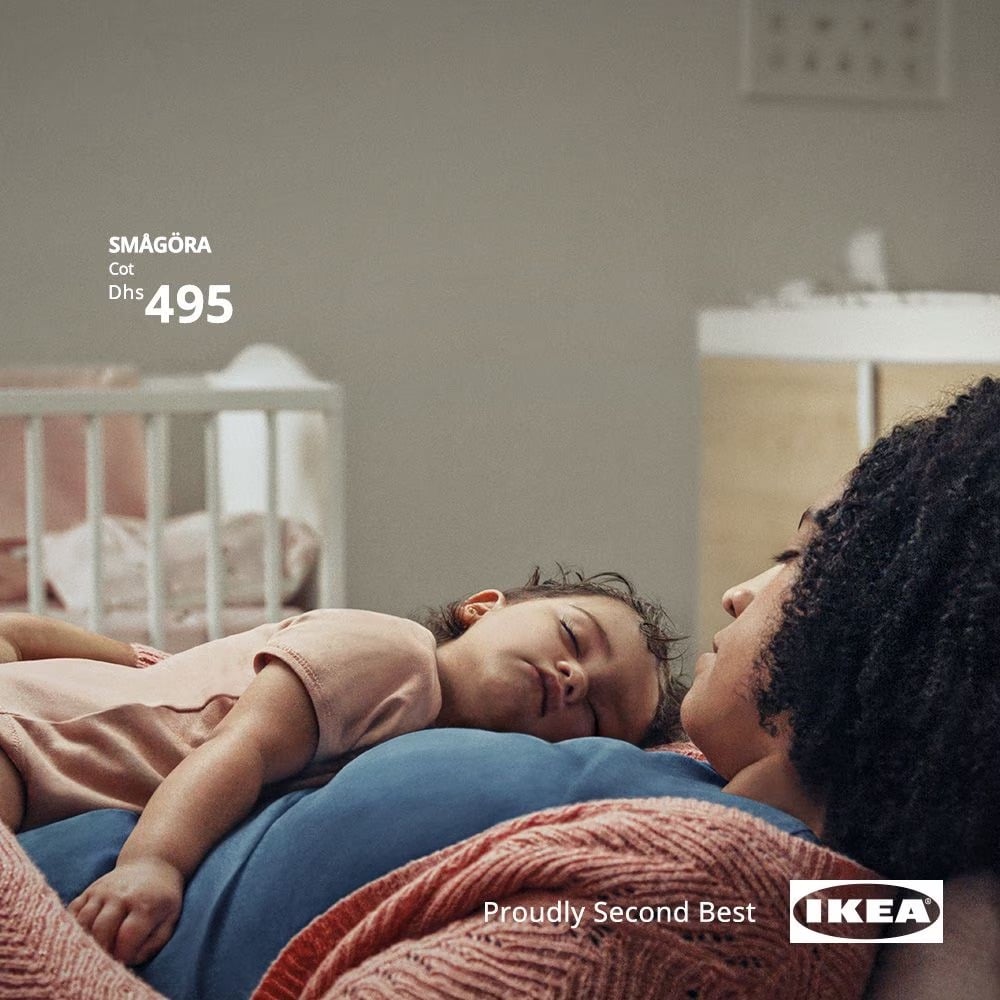
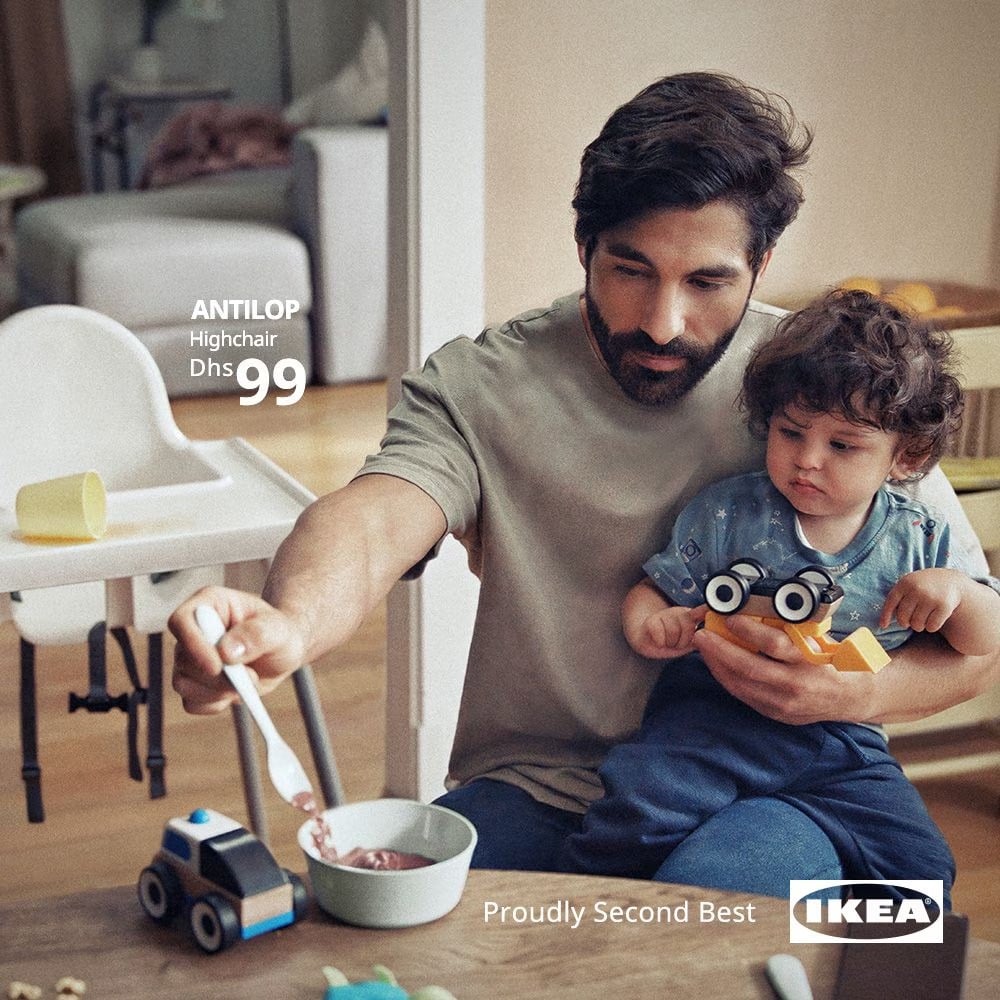
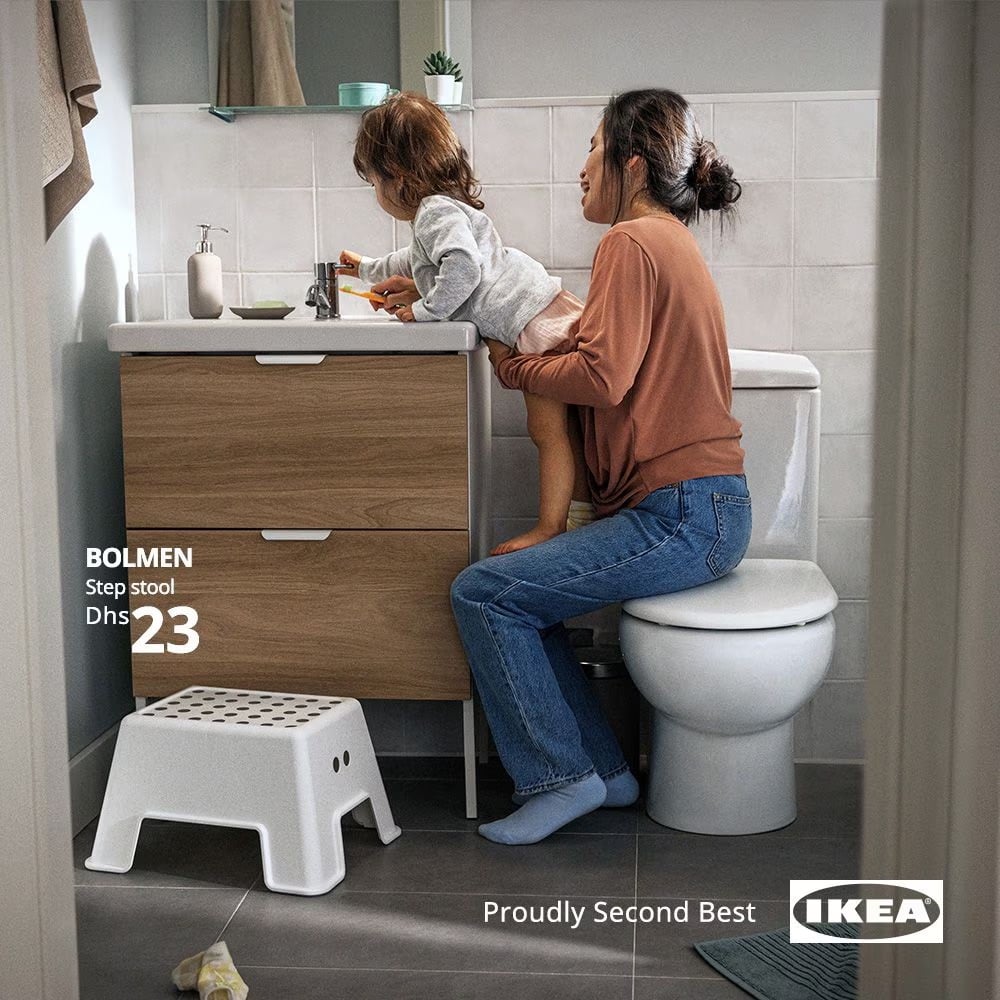
A clever ad campaign by an Ikea franchisee highlights how their products for kids can’t quite replace the support and comfort offered by their caregivers. (via @gray)
Here’s some parenting content on which I clicked quickly: neuroscientist Andrew Huberman interviewing parenting author and psychologist Becky Kennedy (a.k.a. DrBeckyatGoodInside). In the three-hour episode, they…
explain how to respond to emotional outbursts, rudeness, [and] entitlement, and how to repair fractured relationships, build self-confidence, and improve interpersonal connections with empathy, while also maintaining healthy boundaries.
Sign me up! There’s nothing I need more right now. Here’s a snippet on Instagram, about confidence.
Pairs well with a new Atlantic article investigating whether Montessori teaching is as much of a “prescription for idyllic family life” as social media can make it out to be. (Short answer: Not necessarily, but it offers a pretty good set of tools.) I also learned that the reason so many kids’ toys on Amazon are labeled as “Montessori” is in part because the name was never trademarked.
Meanwhile, The Marginalian resurfaced an old post featuring some of Mr. Rogers’ parenting advice, and while it’s not exactly actionable, it’s still comforting (“we always cared and always tried to do our best”). Can you tell I have a toddler at home?
Over the weekend, I listened to this podcast conversation between the psychologist & philosopher Alison Gopnik and writer Ted Chiang about using children’s learning as a model for developing AI systems. Around the 23-minute mark, Gopnik observes that care relationships (child care, elder care, etc.) are extremely important to people but is nearly invisible in economics. And then Chiang replies:
One of the ways that conventional economics sort of ignores care is that for every employee that you hire, there was an incredible amount of labor that went into that employee. That’s a person! And how do you make a person? Well, for one thing, you need several hundred thousand hours of effort to make a person. And every employee that any company hires is the product of hundreds of thousands of hours of effort. Which, companies… they don’t have to pay for that!
They are reaping the benefits of an incredible amount of labor. And if you imagine, in some weird kind of theoretical sense, if you had to actually pay for the raising of everyone that you would eventually employ, what would that look like?
It’s an interesting conversation throughout — recommended!
Chiang has written some of my favorite things on AI in recent months/years, including this line that’s become one of my guiding principles in thinking about AI: “I tend to think that most fears about A.I. are best understood as fears about capitalism.”
“I know some women who have decided to forgo motherhood altogether — not out of an empowered certainty that they want to remain child-free, but because the alternative seems impossibly daunting. Others are still choosing motherhood, but with profound apprehension that it will require them to sacrifice everything that brings them pleasure.” In Vox, Rachel M. Cohen writes about “How Millennials Learned to Dread Motherhood.”
As an old millennial, I feel compelled to say that being a mom is awesome and easily one of the most interesting and meaningful things that’s ever happened to me. But talking about how great it is can feel like tempting the gods. As Cohen notes in her piece, “When I started asking women about their experiences as mothers, I was startled by the number who sheepishly admitted, and only after being pressed, that they had pretty equitable arrangements with their partners, and even loved being moms, but were unlikely to say any of that publicly.”
This was me a couple of years ago when I first started playing Fortnite, as satirized by Adam Driver and the SNL gang:
I found this sketch via a piece that Tom Vanderbilt wrote about playing Fortnite with his daughter (and her friends).
It’s not as though Sylvie and I discussed the problem of free will as we dodged RPG rounds. For the most part, our interactions weren’t nearly so high-minded. We stole each other’s kills and squabbled over loot. She badgered me for V-Bucks so she could buy her character new baubles in the Item Shop. But sometimes, after playing, we’d go for a walk and analyze how we were able to notch a dub — Fortnite-speak for a win — or how we might have done better. We’d assess the quality of newly introduced weapons. (The best were OP, for “overpowering,” but often the makers of Fortnite would later “nerf” them for being too OP.) She’d chide me for trying to improve by battling more, rather than by practicing in Creative mode — which suddenly made her open to hearing about the late Swedish psychologist K. Anders Ericsson’s theories of “deliberate practice.” (Like many kids, she had a built-in filter against my teachable moments.) We actually were, per Adam Driver’s character, bonding.
And in our Fortnite games I saw her cultivate prowess. I’m not talking merely about the widely discussed perceptual and cognitive benefits of video games, which include an improved ability to track objects in space and tune out cognitive “distractors.” I’m talking about that suite of abilities sometimes referred to as “21st-century skills”: imaginatively solving open-ended problems, working collaboratively in teams, synthesizing complex information streams. “Unfortunately, in most formal education settings, we’re not emphasizing those very much,” argues Eric Klopfer, who directs the Education Arcade at MIT. “Just playing Fortnite doesn’t necessarily give you those skills — but playing Fortnite in the right way, with the right people, is certainly a good step in that direction.”
This is the plain and perhaps embarrassing truth: During my sabbatical, I didn’t pursue any activity (with the possible exception of mountain biking) as diligently as I did playing Fortnite. My kids have been playing it for awhile, both together and separately, and it was fun to watch them working together to complete quests and sometimes even win. I tried playing with them a few times the previous year, but the last shooter game I played was Quake III in the late 90s and so I was comically bad, running around firing my weapon into the sky or the ground and generally just embarrassing my kids, who left my reboot card where it landed after I’d died more often than not.
Early last year, even before I left on my sabbatical, I decided I wanted to learn how to play properly, so that I could do something with my kids on their turf. I played mostly by myself at first — and poorly. Slowly I figured out the rules of the game and how to move and shoot. I played online with my friend David, who was forgiving of my deficiencies, and we caught up while he explained how the game worked and we explored the island together. I finally got a kill and a win, in the same match — I’d found a good hiding place in a bush and then emerged when it was down to me and some other hapless fool (who was probably 8 years old or a bot) and I somehow got them. A friend who had arrived for dinner mid-game was very surprised when I started yelling my head off and running around the house.
Over the summer after I started the sabbatical, I played most days for at least 30 minutes. I got better and was having more fun. I won some matches and bought the Battle Pass so I could get some different skins and emotes. Even though I got a late start in the season, I grinded on quests to get the Darth Vader skin, which is amusing to wear while you’re trying out different emotes. (You haven’t lived until you’ve watched Vader do the death drop or dance to My Money Don’t Jiggle Jiggle, It Folds.1) When the kids got back from camp, I was good enough to at least not slow them down too much and get a couple of kills in the meantime. I learned the lingo and how to work as a team, with my kids leading the way.1 I’m still not great, but it’s become one of our favorite things to do together and I’m enjoying it while it lasts.
For her Culture Study newsletter, Anne Helen Petersen listed a few themes she’d identified over the past year. The first one is something I’ve noticed people talking a lot about too:
1) Our society values parenting, not parents; it honors “work ethic,” not workers; we cherish children in the abstract, but not actual children themselves.
To me, these ideas are borne out in the contrasts between the rhetoric of who and what we value (Moms! Kids’ futures! ESSENTIAL WORKERS!) and actual policy and behaviors. I mean that in terms of Covid, of course, but also in terms of labor protections for workers, the safety nets we provide for parents (and single parents in particular) and general actions and policy in regards to the future of the planet. We don’t value people, just generally. We value capital.
The Christian nationalists — who, despite ostensible Democratic control of the Senate, the House, and the presidency, nonetheless command the vision and future of the country — dress up obsession with controlling women’s bodies and freedom in the wardrobe of “the rights of the fetus,” but then allow that fetus, once it turns into an actual child, to go hungry, to live in fear of violence in their schools, to go unhoused or deal with housing insecurity, to endure the effects of environmental racism, and to grow into an adult indelibly marked by all of those experiences.
Bingo. This is also true to varying degrees for education (not teachers), art (not artists), and the troops (not individual soldiers that we send to incur PTSD, injury, and death).
BTW, Petersen has a new book out with her partner Charlie Warzel called Out of Office: The Big Problem and Bigger Promise of Working from Home, which relates to another of her yearly themes: “Work is miserable on so many levels — but it’s so hard to imagine a different way forward.”
Dan Sinker writes for The Atlantic about how navigating Covid risks, politically motivated bullshit, and America’s failing infrastructure has broken parents during the pandemic: Parents Are Not Okay.
Instead it was a year in limbo: school on stuttering Zoom, school in person and then back home again for quarantine, school all the time and none of the time. No part of it was good, for kids or parents, but most parts of it were safe, and somehow, impossibly, we made it through a full year. It was hell, but we did it. We did it.
Time collapsed and it was summer again, and, briefly, things looked better. We began to dream of normalcy, of trips and jobs and school. But 2021’s hot vax summer only truly delivered on the hot part, as vaccination rates slowed and the Delta variant cut through some states with the brutal efficiency of the wildfires that decimated others. It happened in a flash: It was good, then it was bad, then we were right back in the same nightmare we’d been living in for 18 months.
And suddenly now it’s back to school while cases are rising, back to school while masks are a battleground, back to school while everyone under 12 is still unvaccinated. Parents are living a repeat of the worst year of their lives-except this time, no matter what, kids are going back.
Almost every parent I know is struggling with exactly this: trying to keep their kids (and family and friends) safe from Covid-19 while balancing the social & emotional wellbeing of everyone concerned and not getting a lot of help from their governments or communities. Remote school is no longer an option, few infrastructure upgrades have been made to improve ventilation in schools, no vaccine mandates for teachers or staff, parents fighting administrators about vaccine & mask mandates, and everyone is trying to do complex risk calculations about sending their can’t-yet-be-vaccinated kids into buildings with other kids whose parents, you suspect, are not vaccinated and aren’t taking any precautions in states where Delta is endemic. All while trying to work and remain sane somehow? And most of the parents I know have resources — they have steady income & savings, live in safe communities, and have friends & family to fall back on when times get tough. Those who don’t? I truly do not know how they are doing any of this without incurring significant, long-term trauma for parents and kids. We, inasmuch as we’re still a “we” in America, are failing them all.
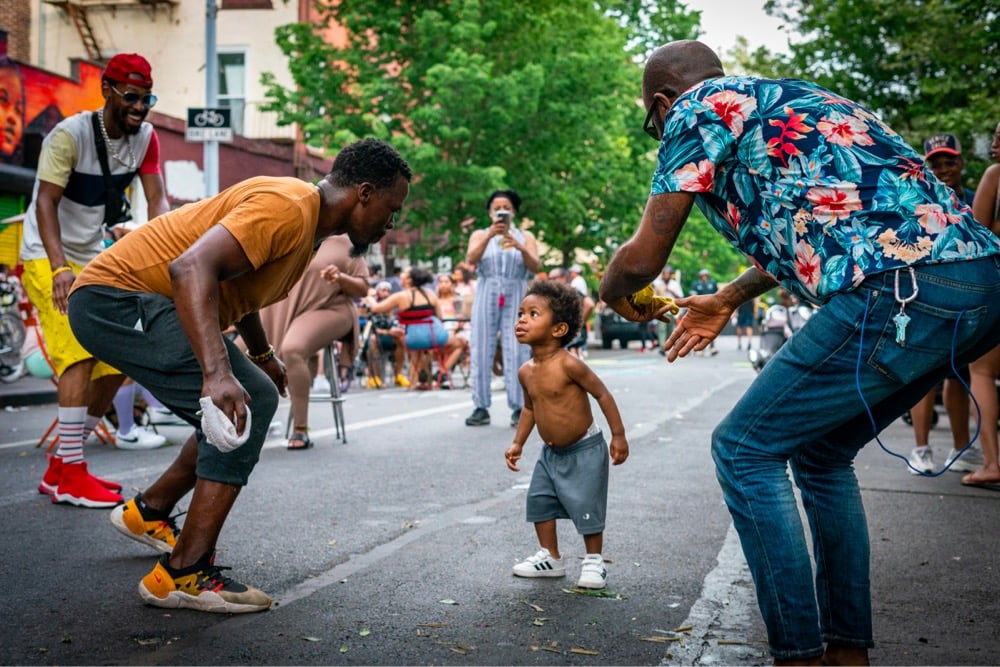
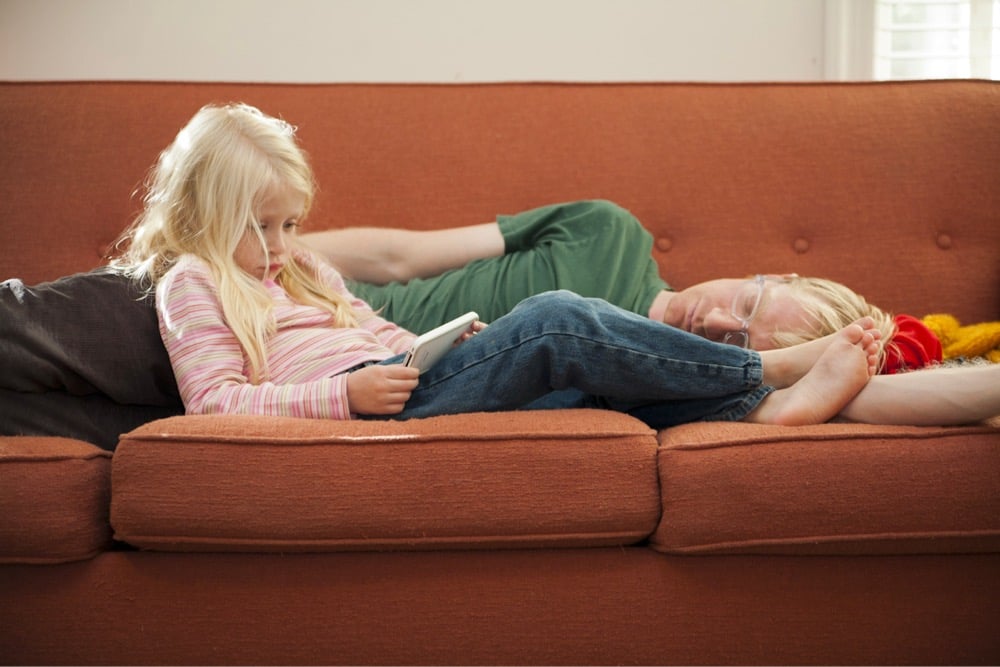
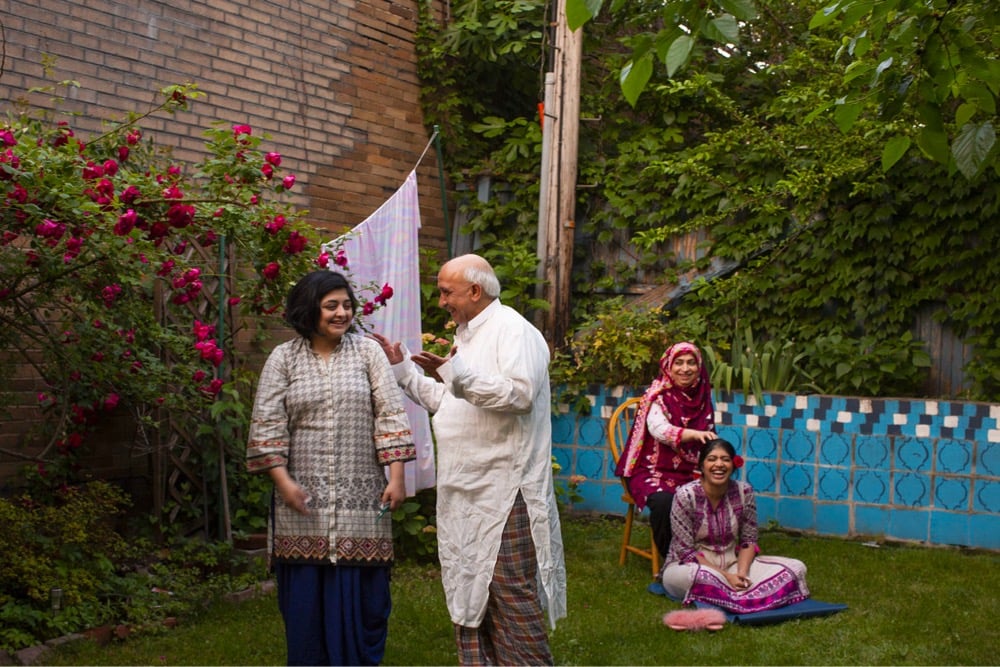
Just as they did last month in capturing motherhood, The Luupe has curated a collection of photos taken by women and non-binary photographers called 100 Visions of Fatherhood. Photos above by Amanda Addison, Kari Grimsby, and Hanifa Haris.
In a TEDx Talk from 2017, LB Hannahs talks about their experience as a transgender dad, comfort vs authenticity, and the collision of theoretical gender roles & identities with the practicalities of parenthood.
Now, for most people, what their child will call them is not something that they give much thought to outside of culturally specific words or variations on a gendered theme like “mama,” “mommy,” or “daddy,” “papa.” But for me, the possibility is what this child, who will grow to be a teenager and then a real-life adult, will call me for the rest of our lives, was both extremely scary and exciting. And I spent nine months wrestling with the reality that being called “mama” or something like it didn’t feel like me at all. And no matter how many times or versions of “mom” I tried, it always felt forced and deeply uncomfortable. I knew being called “mom” or “mommy” would be easier to digest for most people. The idea of having two moms is not super novel, especially where we live.
So I tried other words. And when I played around with “daddy,” it felt better. Better, but not perfect. It felt like a pair of shoes that you really liked but you needed to wear and break in. And I knew the idea of being a female-born person being called “daddy” was going to be a harder road with a lot more uncomfortable moments. But, before I knew it, the time had come and Elliot came screaming into the world, like most babies do, and my new identity as a parent began. I decided on becoming a daddy, and our new family faced the world.
(thx, megan)
Over at A Cup of Jo, Joanna Goddard interviewed three kids who are transgender about their experiences. Here’s Violet, she/her, age 13:
What do you wish people knew about being trans?
The main thing is that it’s not a choice. It’s a choice to come out, but being trans is not a choice. It wasn’t like one day I woke up and felt the way the wind blew and wanted to be a girl. I ALWAYS knew I wasn’t a boy. It wasn’t that I wanted to be a girl; I WAS a girl. I just had to put that into words and explain that.
Aya, she/her, age 9:
How did you tell your parents?
There was one night when my sister was like, ‘So… Mommy’s a girl, I’m a girl, Daddy’s a boy, and you’re a boy.’ But I immediately was like, ‘No, no, I’m a girl.’ And that was the first time, but there was another time. We were driving back from Mommy’s school, and she was telling me about the different words like transgender and all different words and when she described transgender, I was like, that’s me. I was five.
And this:
Also, fun fact: When we were watching a Mo Willems episode about drawing, he told us that his child is transgender — the one from Knuffle Bunny. Trixie is now Trix!
The comments on the post are worth reading as well — CoJ has the best comments section on the internet, quite a feat for 2021.
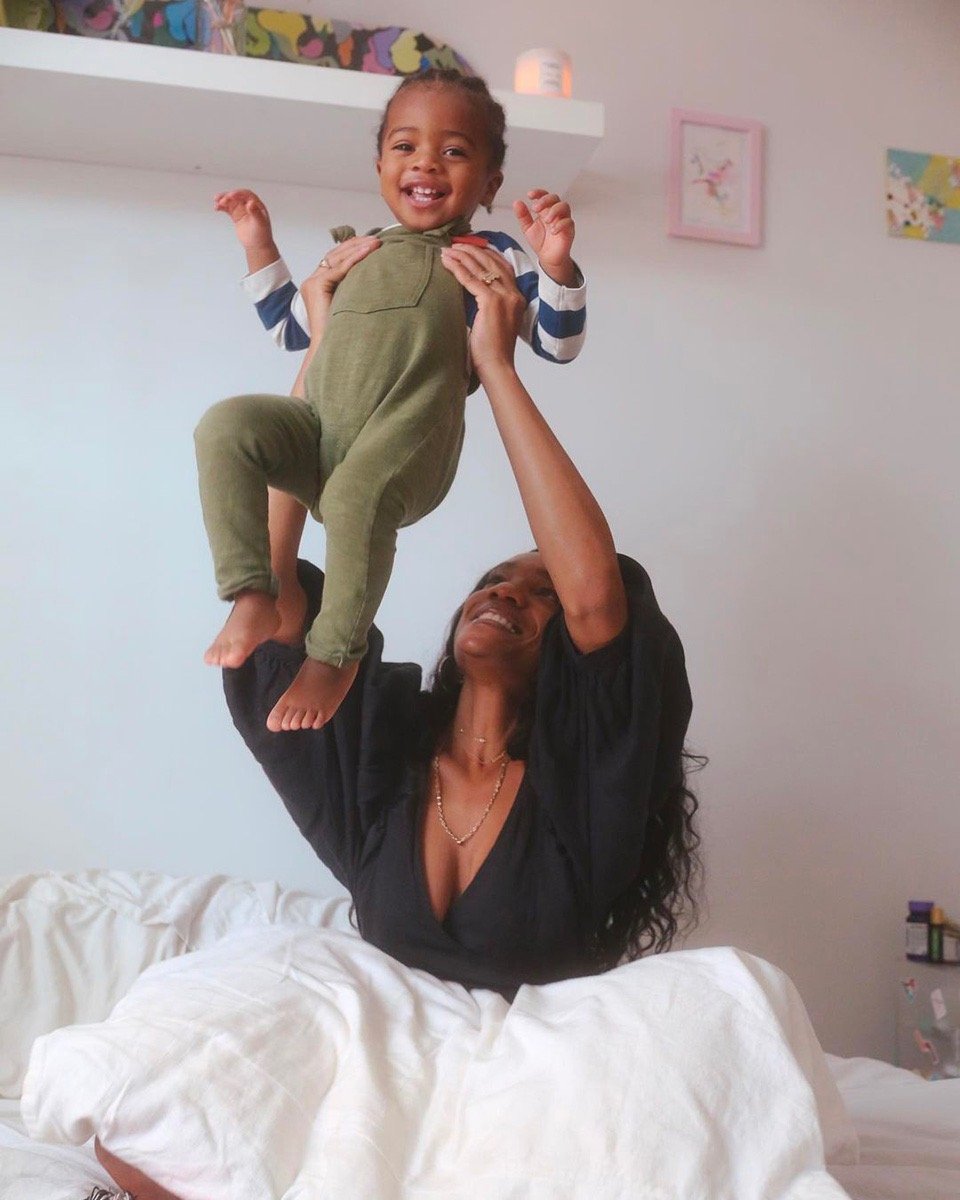
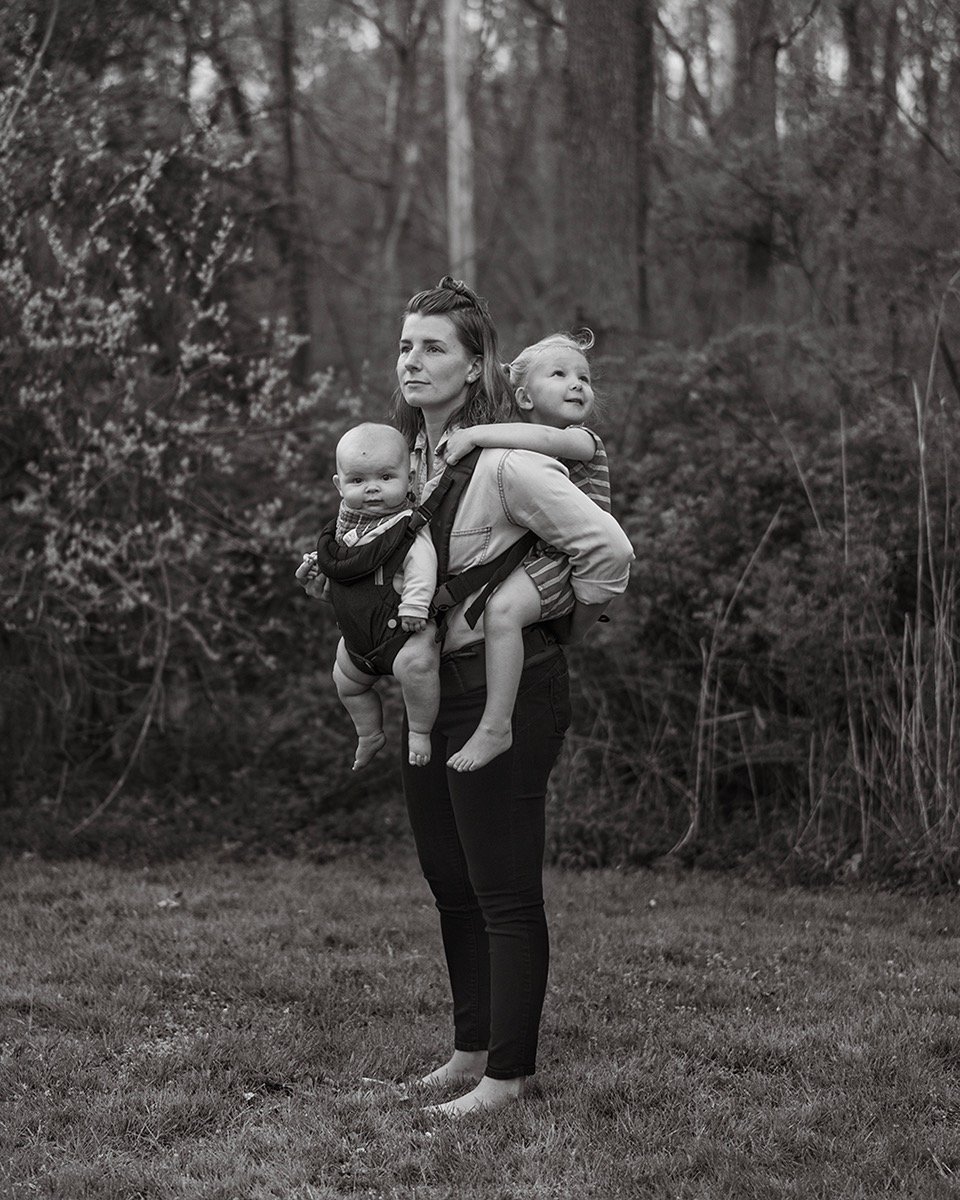
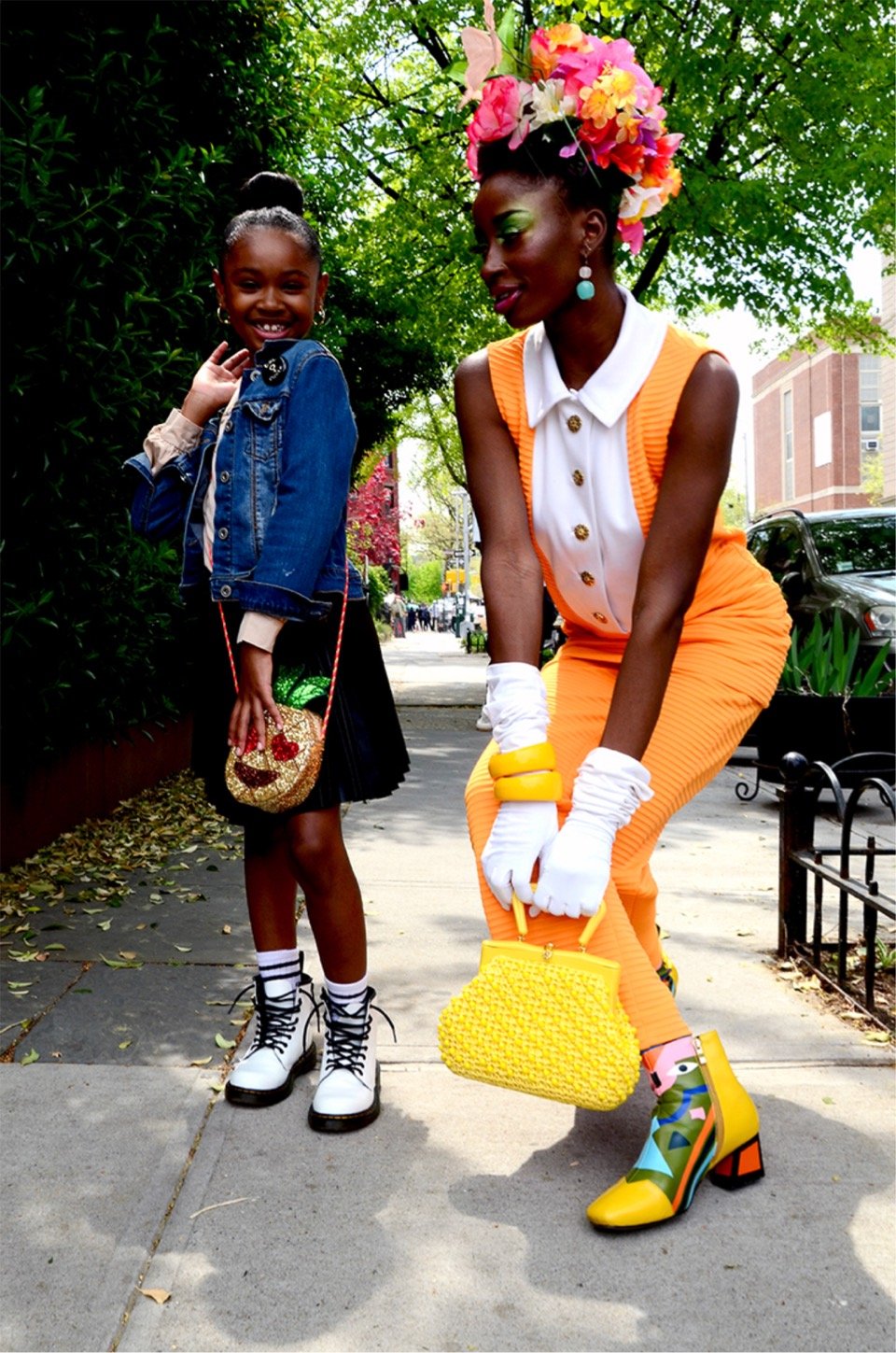
Curated by The Luupe, this is “a collection of photographs and words celebrating the complexities of motherhood”. And somehow even 100 photographs don’t adequately capture the vast experience of motherhood around the world. Photos above by Dee Williams, Brittany Marcoux, Diane Allford (via storythings)
Concerned that recent articles like this one about screen time panic were not adequately capturing the perspective of the kids themselves, Anne Helen Petersen asked a group of parents and caregivers to conduct interviews with kids about gaming and screen time.
So I wanted to hear them talk about their own relationship to the games they play: what they like about it, when they like to play, how games make them feel, who they like to play with, and how they respond to anxiety about their gaming/screen time.
I pulled out a few quotes from the kids but the whole thing is worth a read.
When people say that screentime is bad, I want to say, hey, I want to be more social at the moment and it’s hard to do that right now and I can only do it with technology.
I feel annoyed and angry with the “too much time playing video games argument,” because people don’t really understand. They don’t play these games. They don’t have any experience themselves, and they’re judging what we do based on what they’ve heard or read. Gaming is so new that there’s no conclusive evidence yet to prove if it’s actually harmful. It feels like they’re just trying to control us and tell us what to do.
When adults say that kids play too many video games it makes me kinda angry and confused. We’re already stuck at home and it feels like they’re trying to cut us off from our friends even more. So it’s kinda annoying.
Honestly I don’t really worry about spending too much time game at all. I already spend almost all my time on there anyway and it doesn’t seem to have any negative side effects. Key word “seem.” People need to make sure they don’t get correlation and causation mixed together.
Like many other parents, we’ve been struggling mightily with games, devices, and screen time during the pandemic (although for us this is an issue that carried over from The Before Times). As Petersen says, this is a complicated challenge and I am sympathetic to both the arguments these kids make (which mirror what I’ve heard from my kids) and parental concerns about too much time on devices (the effects of which I’ve seen in my kids).
What we’ve done, imperfectly, is prioritize the social aspect of gaming time — playing with friends, gaming clubs, playing together in the living room — over manically grinding away for hours on end in a dark room. We try to meet them on their terms — ask them what they did today in Minecraft or Among Us, show real interest about their progress, etc. I empathize and commiserate when I can — I grew up playing video games and I still get a little too into them on my phone or iPad sometimes. But we also encourage them to get outside and move their bodies, find ways to connect with friends that don’t involve killing virtual people, and try to get them to recognize some of the worst effects of too much screen time (they do, if you catch them at the right moment about it). Keeping a good connection with your kids around gaming & screens is the key bit, I think. With that in hand, in theory it’s at least possible to keep kids and parents alike safe and sane during all of this.
Today beginning at 10am ET as part of the official inauguration festivities, Keke Palmer will host a special livestream geared toward kids (embedded above).
The livestream, hosted by award-winning entertainer and advocate Keke Palmer, will feature a special message from Dr. Jill Biden; commentary from historians Doris Kearns Goodwin and Erica Armstrong Dunbar; a segment on presidential pets produced by Nickelodeon; excerpts of student voices from PBS NewsHour Student Reporting Labs “We the Young People” programming; trivia questions, including some asked by Doug Emhoff; segments produced by the Library of Congress; and other special features.
This sounds way better than whatever the talking heads on CNN will be going on about. For more information on the inauguration, check out the official site.
When he was a kid, Rob Kenney had a rough family life and grew up without stable parents around to teach him how to do common household chores. He and his wife successfully raised two children and Kenney decided to use his parenting experience to help those who may be lacking parental guidance. He’s started a YouTube channel called “Dad, how do I?” that offers “practical ‘dadvice’ for every day tasks” like how to fix a running toilet, how to check the oil in your car, and how to shave your face.
My god, the dad joke he tells at the beginning of the running toilet video is just *chef’s kiss* perfect.
This Saturday Night Live mock TV commercial for a Macy’s holiday sale cuts right to the truth about buying clothes for kids that aren’t right for them or their parents.
Some of their deals include “40% off cozy corduroys that’ll pinch his little nuts”, “kids jackets that are so big & thick they won’t fit in their carseat anymore”, and “everyday savings on mittens they’ll lose, shirts with the wrong Frozen princess, sweaters that make them hot”.
The Very Hungry Caterpillar was one of my absolute favorite books as a kid and one of first books that we read to our kids (and that they read back to us). I didn’t know this animated version existed until I ran across it on YouTube just now. I just went into the kids’ room to look for the book on the shelf and got a little teary as I searched.
My kids are 12 & 10 now and in an in-between phase of reading. They occasionally still pick up the picture books they loved as little kids but mostly are into graphic novels and chapter books now — Ollie just read Ready Player One and they’ve both been through all 7 Harry Potter books more times than I can count. We haven’t read a picture book together in months and I really miss snuggling up with them and reading Cloudy with a Chance of Meatballs, Cars and Trucks and Things That Go, Oh Say Can You Say?, or In the Night Kitchen. We’ll likely never read any of those books together again. It reminds me of one of the saddest things I’ve ever heard about parenting: one day you’ll pick up your kid, put them down, and never pick them up again…and you won’t remember it happening. *sobs*
NPR’s Anya Kamenetz shares six tips on how to talk to your kids about the climate crisis. Step 1 is to break the silence:
He says, despite the fact that the climate crisis literally affects everyone on earth, too many of us are sitting alone with our worries, our faces lit by our phone screens in the middle of the night. “We seem to be more scared of upsetting the conversation than we are scared about climate change.”
Mary DeMocker, an activist and artist in Eugene, Ore., is the author of The Parents’ Guide To Climate Revolution, a book focusing on simple actions families can take both personally and collectively. “The emotional aspect is actually, I think, one of the biggest aspects of climate work right now,” she says.
Asked what feelings parents tell her they are grappling with, she ticks off guilt, distraction, confusion. And the big one: fear.
See also 8 Ways To Teach Climate Change In Almost Any Classroom.
Filmmaker Charlie Tyrell’s father passed away when Charlie was in film school. Feeling like he never really knew his father all that well, he went through his stuff after he died, looking for clues as to who he really was. His tools, his police uniform, his cancer diagnosis. Charlie made a short film about his dad: My Dead Dad’s Porno Tapes.
We hold onto our loved ones when they pass. Objects can become talismans, and memories become mythic. Some objects become sacred for no reason and are just as impenetrable as the people who left them. I came to a conclusion during my process: You can’t take it with you, but you can pass it on.
The tapes mentioned in the title don’t feature all that much in the film; it’s actually about family secrets, breaking a generational cycle of abuse, and parenting. In talking about her husband’s difficulty connecting with his children, Charlie’s mom says: “you bring what you know to parenting”. As someone who often struggles as a parent, that line hit me hard. From a post I wrote a few years ago:
I worry about my children, about my relationships with them. I worry about being a good parent, about being a good parenting partner with their mom. How much of me do I really want to impart to them? I want them to be better than me, but I can’t tell them or show them how to do that because I’m me. I took my best shot at being better and me is all I came up with. What if I’m just giving them the bad parts, without even realizing it?
And from Madeline Miller’s Circe:
Two children he had had and he had not seen either clearly. But perhaps no parent can truly see their child. When we look we see only the mirror of our own faults.
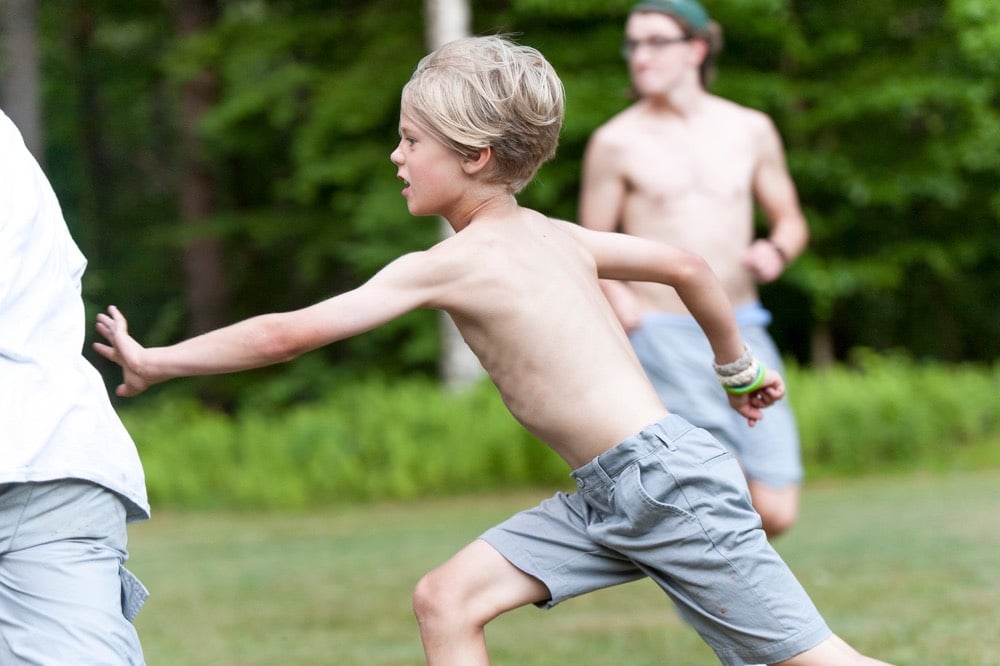
My kids are lucky enough to be at sleep-away summer camp this year. It’s their fourth year, and I was a little skeptical about this at first. Sleep-away camps weren’t really a thing in Wisconsin when I was a kid and schlepping out to the East Coast was not going to happen, financially speaking. But their mom went to camp and it had a big impact on her life and the kids wanted to go, so I went along.
I’m really glad I did. I miss them while they’re gone, but they have such an amazing time there, away from their parents, figuring out what kind of humans they are going to be. The staff at Ollie’s camp (an all-boys camp for grades 3-8 — Minna goes to an affiliated camp for girls) sent the parents a letter about some of the principles they use in supporting their campers by building “a feeling of profound belonging”. They are super thoughtful in their approach and none of it is mere lip-service. I thought a few of their principles were worth sharing with you. From a section that starts “We shape our program and culture to build belonging by…”:
…embodying our belief that there are many ways to be a man. We give boys a diverse array of role models — men and women in whom campers can see aspects of the selves they seek to develop. When the people around us model the same humility, humor, talent, and compassion that we seek to develop in ourselves, they help us to recognize the sturdy roots of those same virtues within us. In such moments, we know that we are in a place where we belong.
…focusing on what is personal, real, and lasting. Too often children learn to gauge belonging through external signals: the music they listen to, the brands they wear, the devices they own. The result can be toxic, especially for boys, who learn to measure themselves against dangerously narrow standards of masculinity. By embracing simplicity — in the uniforms we wear, the music we make, the technology we leave at home — we foster deeper connections with each other and even with ourselves.
…emphasizing honesty as the most direct path towards a life of substance and meaning. Ultimately, belonging is not an external validation, but an authentic way of being. Honesty — and its companion, vulnerability — are signs of strength and signals of openness. Honesty elevates relationships beyond the superficial, and invites us towards friendships in which we have the courage to be imperfect and the compassion to accept ourselves anyway. At camp, as in life, there is no more powerful belonging than to each other.
I don’t mind telling you that I teared up reading through these. That there are many ways to be a man, that masculinity can be toxic, that vulnerability is strength…hearing these ideas more often would have benefited an adolescent Jason, a shy and sometimes bullied small-town kid who didn’t feel like he belonged, truly belonged, anywhere until he went off to college and discovered that the world was full of weirdos just like, and also very unlike, himself. I still feel that little kid’s pain, and it makes me very happy that my kids are lucky enough to spend significant time in a place where those ideas take center stage.
Excerpts above are from Building Belonging from the staff at Camp Lanakila.
Older posts





Socials & More