Following on from last year’s successful trial, the Australian Open is once again broadcasting all their matches, nearly live and in their entirety, on YouTube — but with animated avatars in place of the players. Here’s how it looks in practice, kind of Wii Tennis; this is a match between Coco Gauff and Jodie Burrage from a few days ago (the animation starts just before the 35-minute mark:
The matches are only delayed by two minutes (the system needs some rendering time) and viewers get to hear the the audio & commentary from the actual match. From The Guardian:
The technology made its debut at the grand slam last year and audiences peaked for the men’s final, the recording of which has attracted almost 800,000 views on YouTube. Interest appears to be trending up this year and the matches are attracting roughly four times as many viewers than the equivalent time in 2024.
The director of innovation at Tennis Australia, Machar Reid, said although the technology was far from polished it was developing quickly. “Limb tracking is complex, you’ve got 12 cameras trying to process the silhouette of the human in real time, and stitch that together across 29 points in the skeleton,” he said. “It’s not as seamless as it could be – we don’t have fingers – but in time you can begin to imagine a world where that comes.”
Two weeks ago, Roger Federer gave the commencement speech at Dartmouth. After asserting that he’d graduated (and not retired) from professional tennis, Federer shared what he learned from his years on the pro circuit. Some excerpts from the transcript:
“Effortless”… is a myth.
I mean it.
I say that as someone who has heard that word a lot. “Effortless.”
People would say my play was effortless. Most of the time, they meant it as a compliment… But it used to frustrate me when they would say, “He barely broke a sweat!”
Or “Is he even trying?”
The truth is, I had to work very hard… to make it look easy.
I spent years whining… swearing… throwing my racket… before I learned to keep my cool.
The wakeup call came early in my career, when an opponent at the Italian Open publicly questioned my mental discipline. He said, “Roger will be the favorite for the first two hours, and then I’ll be the favorite after that.”
I was puzzled at first. But eventually, I realized what he was trying to say. Everybody can play well the first two hours. You’re fit, you’re fast, you’re clear… and after two hours, your legs get wobbly, your mind starts wandering, and your discipline starts to fade.
It made me understand… I have so much work ahead of me, and I’m ready to go on this journey now. I get it.
On talent:
Yes, talent matters. I’m not going to stand here and tell you it doesn’t.
But talent has a broad definition.
Most of the time, it’s not about having a gift. It’s about having grit.
In tennis, a great forehand with sick racquet head speed can be called a talent.
But in tennis… like in life… discipline is also a talent. And so is patience.
Trusting yourself is a talent. Embracing the process, loving the process, is a talent.
Managing your life, managing yourself… these can be talents, too.
Some people are born with them. Everybody has to work at them.
On “it’s only a point”:
In tennis, perfection is impossible… In the 1,526 singles matches I played in my career, I won almost 80% of those matches… Now, I have a question for all of you… what percentage of the POINTS do you think I won in those matches?
Only 54%.
In other words, even top-ranked tennis players win barely more than half of the points they play.
When you lose every second point, on average, you learn not to dwell on every shot.
You teach yourself to think: OK, I double-faulted. It’s only a point.
OK, I came to the net and I got passed again. It’s only a point.
Even a great shot, an overhead backhand smash that ends up on ESPN’s Top Ten Plays: that, too, is just a point.
Here’s why I am telling you this.
When you’re playing a point, it is the most important thing in the world.
But when it’s behind you, it’s behind you… This mindset is really crucial, because it frees you to fully commit to the next point… and the next one after that… with intensity, clarity and focus.
The truth is, whatever game you play in life… sometimes you’re going to lose. A point, a match, a season, a job… it’s a roller coaster, with many ups and downs.
And it’s natural, when you’re down, to doubt yourself. To feel sorry for yourself.
And by the way, your opponents have self-doubt, too. Don’t ever forget that.
But negative energy is wasted energy.
And “life is bigger than the court”:
I worked a lot, learned a lot, and ran a lot of miles in that small space… But the world is a whole lot bigger than that… Even when I was just starting out, I knew that tennis could show me the world… but tennis could never be the world.
I knew that if I was lucky, maybe I could play competitively until my late 30s. Maybe even… 41!
But even when I was in the top five… it was important to me to have a life… a rewarding life, full of travel, culture, friendships, and especially family… I never abandoned my roots, and I never forgot where I came from… but I also never lost my appetite to see this very big world.
Somehow, I didn’t know that until quite recently, tennis balls were white instead of yellow (Wimbledon used white balls until 1985). Here’s a British Pathé film from 1961 that shows how tennis balls were made, along with Wimbledon ball boy training:
The change in color happened due to the demands of television transmissions. In 1972 television was already in color all over the world (although in Spain it was not generalized until five or six years later). At the end of the 1960s, the person in charge of the BBC broadcasts (which, of course, was in charge of Wimbledon) was the renowned documentary filmmaker David Attenborough. And he noticed that the visibility of the traditional white ball was not perfect, especially if it approached the lines of the rectangle of play.
In that year of 1972, tennis was in full growth: the professional and amateur circuits had unified and women’s professional tennis was also growing. Tennis was becoming a great world spectacle and in this context television was fundamental. The International Tennis Federation, in charge of the rules, commissioned a study which showed that the yellow ball was more visible and therefore easier for viewers to follow. The courts, moreover, began to be multicolored once the use of synthetic materials in official tournaments was approved.
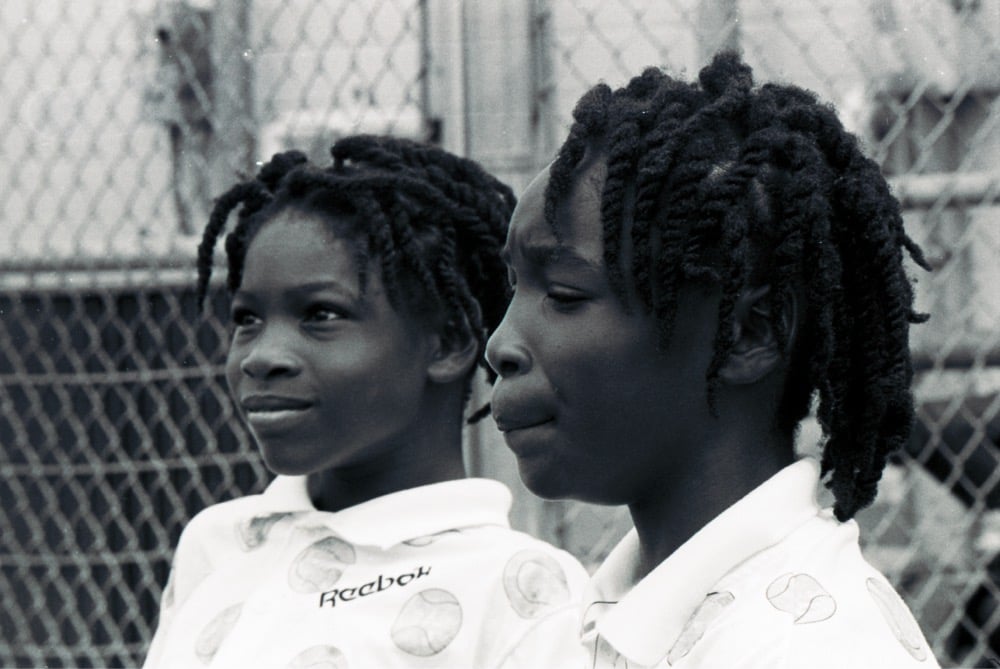
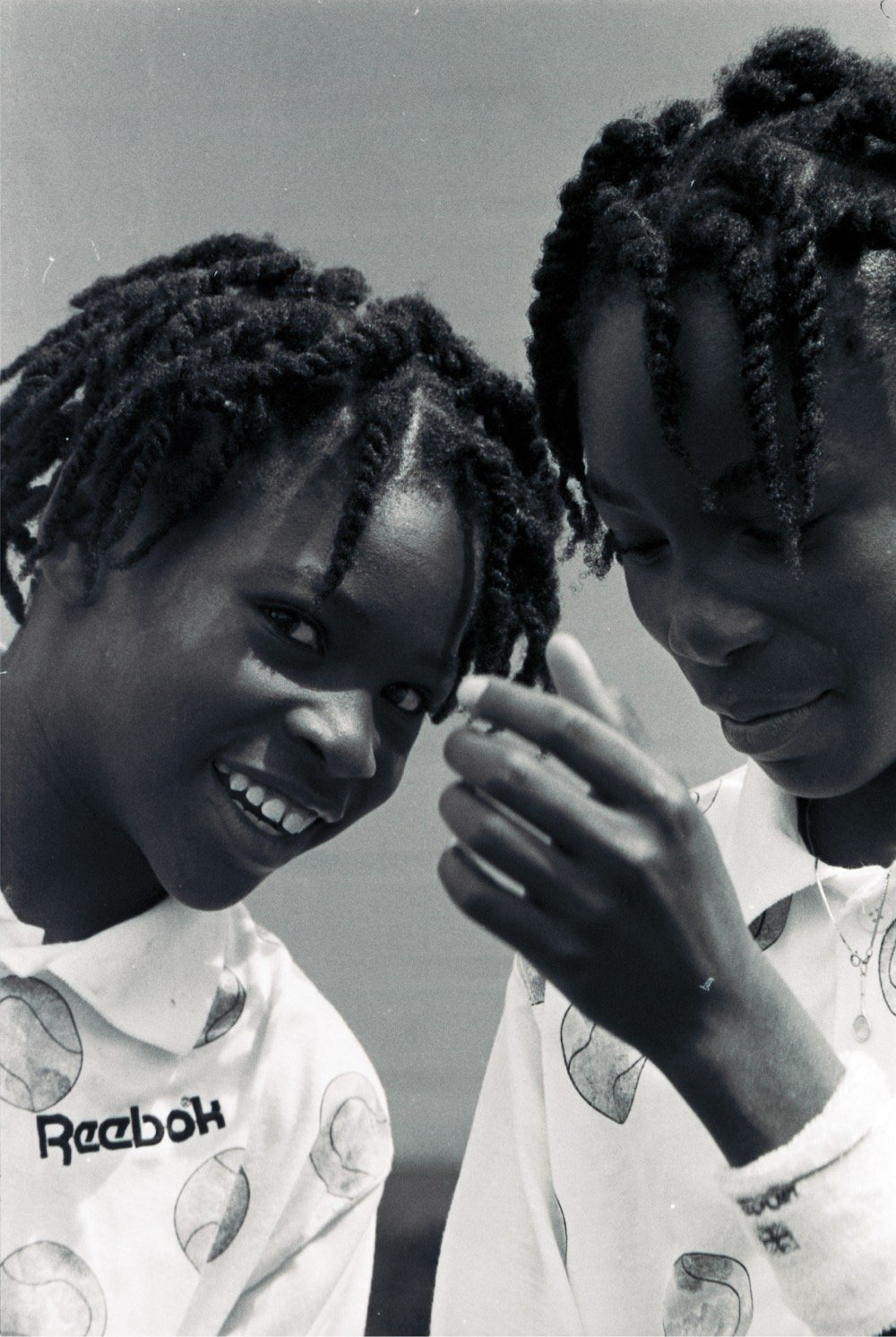
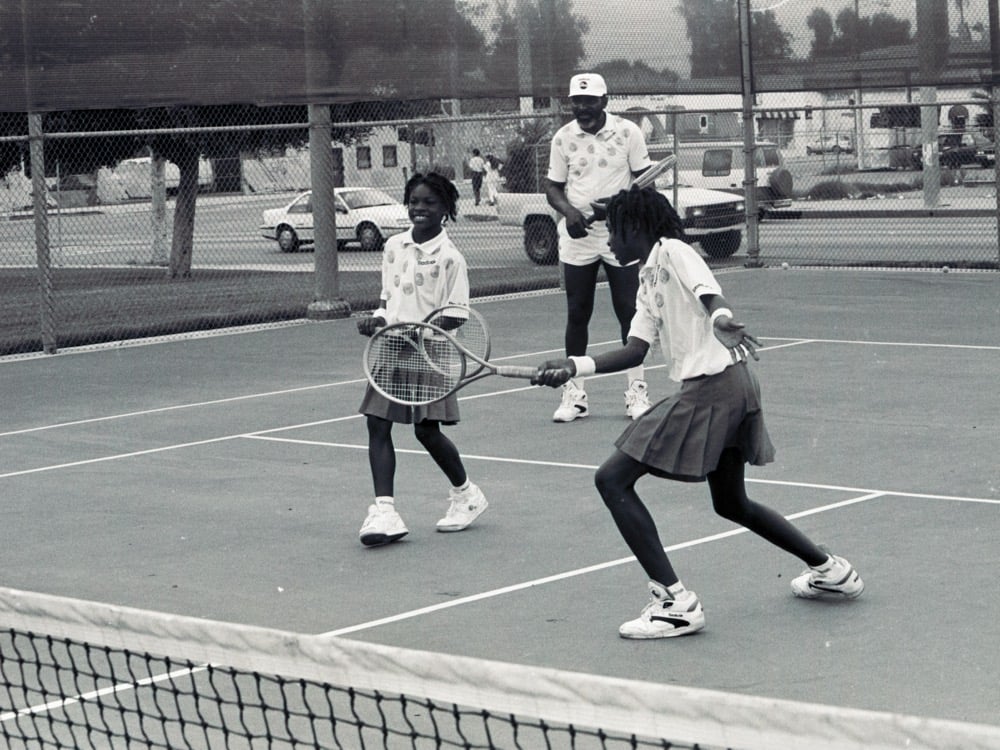
The Smithsonian’s National Museum of African American History and Culture is home to a collection of photographs taken by Rod Lyons in 1991 of Venus and Serena Williams practicing tennis at the ages of 12 and 10 on a tennis court near their home in Compton. Their father Richard is in the photos as well, coaching his daughters. Patrick Sauer talked to Lyons about the photos for Smithsonian Magazine:
“Where I was sent to shoot an up-and-coming tennis player was interesting because [the sport’s] ’70s [to] ’80s boom was over, so [tennis] wasn’t that popular overall, and you certainly didn’t see Black people in Compton out there playing. But other than that it was no big deal,” Lyons recalls. “I got there and started taking pictures of two young sisters named Venus and Serena, 12 and 10, taking lessons from their father, Richard. The practice session was disciplined and intense. Richard was really coaching ‘em up that day, but he wasn’t dictatorial, and [he] treated his daughters with kindness and respect.”
There’s another photo of the sisters from 1991 in this NPR piece, as well as some stories from locals about the Williams family:
Barbee was a 21-year-old limo driver and part-time tennis coach when Richard Williams invited him to train with his daughters.
“Tennis was a passion,” he says.
Barbee was a tennis prodigy himself, so when he faced Venus and Serena on the court, he had finally met his match.
“Man, it was unbelievable,” Barbee says. “Never seen nobody that good. It was something I’d never seen before in my life.”
Venus wasn’t even a teenager yet.
Training meant hitting hundreds of balls with enough force to break the strings on their racquets.
“Every other day, I was restringing my racquets,” he says. “My shoes, once a week. A hole right in my foot of my shoe. Used to tape them up.”
King Richard, a biopic of Richard Williams produced by his daughters, takes place during this period of time, is now out in theaters and on HBO Max, and is getting great reviews.
Being Serena is a five-art HBO documentary series on Serena Williams that focuses on her pregnancy, the birth of her daughter, and her determination to get back on the court and compete at a championship level.
I don’t know if there’s anything left for me in tennis, but I’m not done yet.
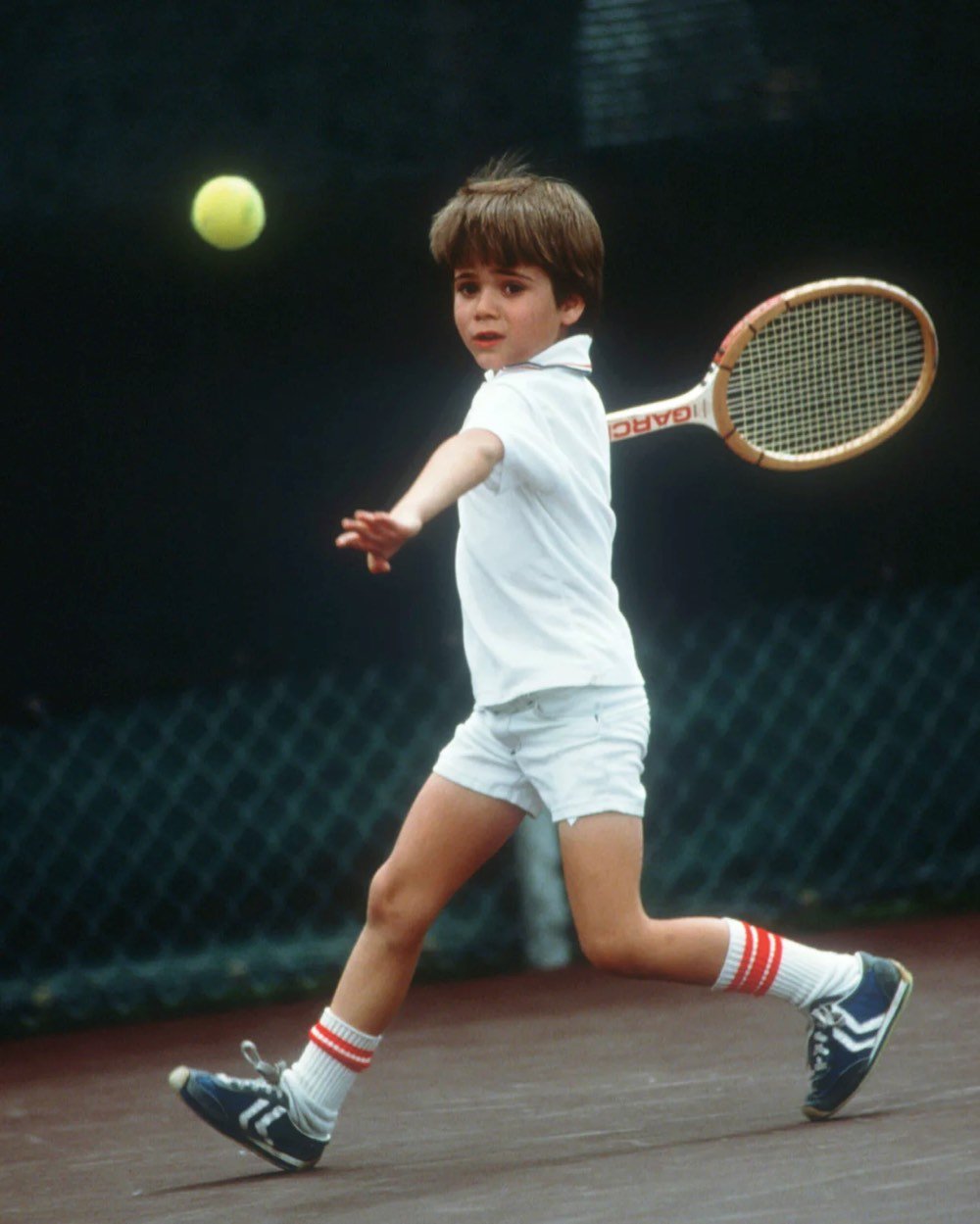
Let’s get this out of the way first…this is a photo of Andre Agassi playing tennis at age 7:
OMG, that face! That photo is from a recent profile/interview of Agassi, who, after some struggles on and off the court early in his career, seems to have figured out how to live his life with purpose. Through his foundation and other efforts, Agassi has helped build almost 80 schools around the country for underprivileged children.
Did Agassi also wish he could be on court playing Federer or Nadal? “No. You can’t believe you once were at that level — and, even if I could do it, I think of my life now and ask: ‘Why do they do it?’ Steffi said: ‘Can you believe what these guys are still willing to put themselves through?’ It’s remarkable but if I went back in time I would probably retire sooner.”
Surely he misses the intensity? “I miss that the least. That was always the tough part for me. I enjoyed the work that went into making yourself the best you can be but I hated what the scoreboard doesn’t say. It just tells you if you won or lost. But the biggest issue for most athletes is you spend a third of your life not preparing for the next two-thirds. One day your entire way of life comes to an end. It’s a kind of death. You just have to go through it and figure it out. In her own quiet way Steffi feels stronger than me. She’s pretty linear in how she lives. I probably do a little more reminiscing than she does — which says a lot.”
As a kid, I always loved watching Agassi play, especially during the second half of his career. He’d been through some shit, dealt with it, and was playing with a different kind of verve. His game was more knowing, purposeful. I still remember Pete Sampras, overflowing with talent, pounding that amazing serve of his at Agassi, a serve that no one else on the tour could return properly. Some of these wicked serves would confound him, but every few points, Agassi would take a Sampras serve, this perfect booming thing, and absolutely paste it right down the line or cross-court for an easy winner. He took everything that was good about that serve and molded it into his return — the better Sampras hit the serve, the better Agassi’s return would be. (via mr)
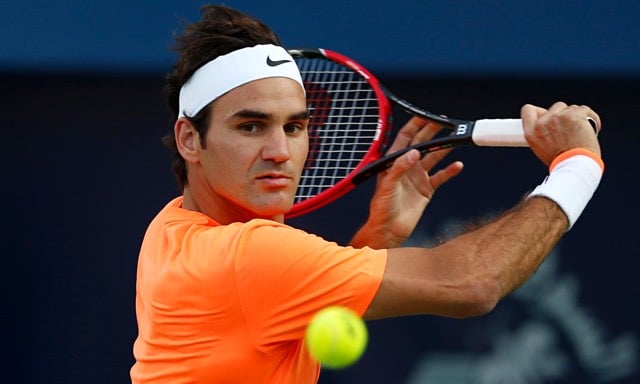
I’m now about the same age as the oldest competitive pro athletes. Correspondingly, I think this year’s Australian Open finals slate is awesome. I don’t know if I’ll be able to stay awake long enough this weekend to watch the matches live, but I’m excited all the same.
Serena Williams (2) vs. Venus Williams (13), Saturday 3:30 AM ET
Rafael Nadal (9) vs. Roger Federer (17), Sunday 3:30 AM ET
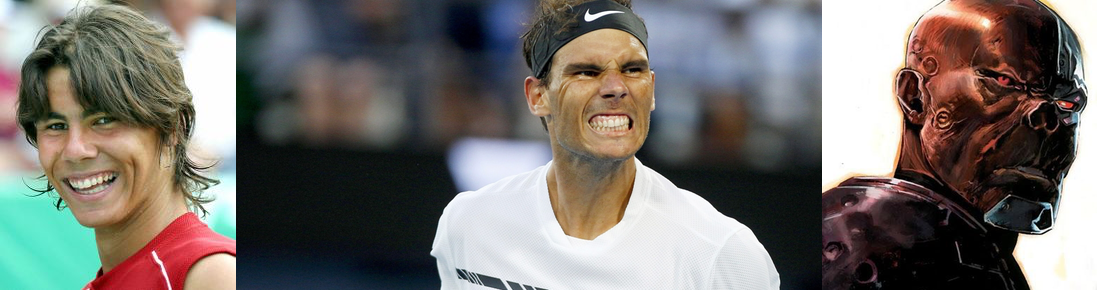
Sports are also great because commentators talk about athletes in their mid-thirties like they’re historical landmarks in need of restoration and repair. All four of these finalists are born-in-the-80s millennials; nobody talks about them like they talk about other millennials. Maybe because they already came for our jobs with their boundless talent and energy twenty years ago when they were still teenagers, I don’t know. Rafa’s the youngest of them at 30 and looks the oldest. Maybe because the Williams sisters and Federer are actual engineered superhumans. Again, I don’t know. All I know is that Nadal looks like Deathlok now. A sexy, sexy Deathlok.
Again, this comforts me, because I feel like Deathlok too. A less conventionally sexy Deathlok, but a cybernetic monstrosity of meat and metal all the same.
The old man bond makes me like athletes I hated. I never liked Vince Carter or Paul Pierce when they were young. Now that they’re two of the only NBA players who are older than me, I hope they never leave.
He’s a professional scorer. I say this about myself, too, and you could probably say it about Paul as well: When you see him walk into the arena before a game, you could probably say there’s no way in hell that those guys are playing tonight. Then Dirk will come in and drop 35. Regardless of how he feels before the game, once the big lights are on and you come on the court, he knows how to get it done, plain and simple.
When Dirk Nowitzki was drafted in 1998, Ross Perot owned Dallas’s team. I like having guys around who can drop 35 and knew Ross Perot. I think we need that in our lives. For just a little longer.
Update: Serena beat Venus in two tough sets, winning her 23rd Grand Slam championship, a record in the open era and just one behind Margaret Court for most all-time. And Federer beat Nadal in five sets of amazing tennis from both men, improbably beating his way back, backhand after brilliant backhand, after being down three games to one in the final set. The two best tennis players of our time (maybe of all time), each beating their toughest opponents. Just a perfect pair of finals.
This is a beautifully shot video of the process for making tennis balls, from what looks like bread dough in the first steps to stamping the logo on the ball right before it goes into the canister.
I was commissioned to make a film and shoot a set of images by ESPN for Wilson, to show the manufacturing process of their tennis balls for the US Open. We flew to the factory, shot the film and stills in one day then flew home. Its an amazingly complex manufacture, requiring 24 different processes to make the final ball. It was hot, loud and the people who worked there, worked fast. So much beauty in each stage. I love the mechanics of how things are made, it fills me with great pleasure.
I love the little hand-clasper bots that put the yellow felt on the balls. One question though: the entire video is shot at normal speed, but the people putting the felt on the balls, that seemed sped up. But maybe they were just moving that fast?
Speaking of, feel free to have many possibly conflicting feelings about the people making the balls and their inevitable future replacement by a fully automated system. I know I did! (thx, damien)
There’s more to being a pro than just playing tennis. The more successful you are, the more people will want out of you. It won’t always be something you’ll want to do, and it won’t always be fun. The pressure will be as exhausting as anything you’ll ever do on the tennis court. But as a tennis champion, you have that responsibility. You play tennis because you love the game, not because you love the limelight, so get ready. Think about getting some media training. It’ll go a long way. Luckily, you’ll be out of the game before these things called Twitter and Facebook come around. Be thankful for that. One day you’ll understand what I mean.
Oh, and put the newspaper down. Don’t read what people are saying about you. No good can come of it. And if you do hear or read something negative about yourself, don’t sweat it. Let your racket do the talking.
There’s nothing that distinguishes Sampras’ letter from others of the format, but it got me wondering if these letters from successful people to their younger selves would have the hoped-for impact. It seems to me that success requires struggle, failure, and a bit of stupidity…or if you want to be nice about it, a beginner’s mind. Skipping even some of that might take some of the edge off. Perhaps Sampras should write another letter to his 15-year-old self urging him to ignore any subsequent correspondence.
The first features TAKASKE, a Dance Dance Revolution player with ballerina-quick feet. Here he plays all eight footpads at ludicrous speed.
Then there’s Cara Black, a higly-ranked women’s doubles tennis player with a killer net game. Here she’s practicing volleys off the wall at close range.
She reels off 115 volleys in 43 seconds, beating the performance of her 16-year-old self.
Wimbledon winner and world No 1 Novak, 25, wants the donkey’s milk cheese to supply a new chain of restaurants in his Serbian homeland. The delicacy, known as pule, is made in Zasavica, Serbia, and is described as similar to Spanish manchego. Donkey milk is said to be very healthy for humans as it has anti-allergen properties and is low fat.
The story has been told so many times, of these early years, when Compton got used to the sight of the little girls who would always be playing tennis at the public park — or riding around in their faded yellow VW bus with the middle seat taken out to accommodate the grocery cart full of balls — but somehow the strangeness and drama of it retain a power to fascinate. The idea of this African-American family organizing itself, as a unit, in order to lay siege to perhaps the whitest sport in the world and pulling it off somehow. “I remember even talking to my sisters and brothers,” Oracene said, recalling a time before anyone had ever heard of the Williams sisters, “and telling them: ‘The girls are going to be professional. We’re going to need a lawyer, and we’re going to need an accountant.’ “
Isha, the middle daughter — sharply funny and practical, fiercely loyal to the family — told me: “Life was get up, 6 o’clock in the morning, go to the tennis court, before school. After school, go to tennis. But it was consistency. I hate to put it [like this], but it’s like training an animal. You can’t just be sometimey with it.” She still can’t sleep past 6.
My favorite observation from the story was actually from a behind-the-story piece that ran on the magazine’s blog.
One thing Venus talked about that was interesting was how easy it is for professional athletes to pick up other sports. So what they are good at is not the sport itself, but it’s just a way of being in the world. It’s a sense of their own bodies and an ability to manipulate their own bodies and have sort of a visual map in your head of what the different parts are doing. At one point she was talking about doing a benefit with Peyton and Eli Manning. They’d almost never played tennis before and they started out awful, and she said it was amazing to watch them. It was like watching a film. Every stroke they hit was noticeably better than the last. Every time they hit the ball. She said you could almost watch their brains working and by the end of it they were totally competent tennis players.
The Super Manning Bros anecdote hits because, as David Foster Wallace pointed out in his evisceration of tennis player Tracy Austin’s biography, it can be difficult for gifted athletes to talk about why and how they are able to do what they do. But Venus obviously can and I wish there’d been more of that in the main essay.
Both players, clearly, were serving well. But their ground strokes were near-perfect, too. They made almost no mistakes. Isner remembers feeling so happy with his game that “it’s hard to explain. I never thought about technique. I had no dark thoughts in my mind. I was just swinging away and the balls were going in - no matter if it was a big point, or whatever. It was crazy.”
Mahut, meanwhile, recalls an almost spiritual dimension to his play. “When we got into the money-time at 6-6 [he says ‘money-time’ in English], there was only John, myself, and my team. No one else. I didn’t hear the crowd. There was only the present time. I didn’t think about the point before, or the point after. I just stayed in the moment. I had absolutely no fear. The level of focus and awareness I had was so high. Normally, you don’t keep up for a long time. But that moment - I kept it for a long time.”
Mahut’s enjoyment, he says, was triggered by more than competition. After the many frustrations in his career, his pleasure came from fulfilling his potential. In this regard, his experience recalls Jean Bobet, the French cyclist of the 1950s, who wrote about experiencing “La Volupte” - the rare and sensual state of perfect riding. “La Volupte,” wrote Bobet, “is delicate, intimate, and ephemeral. It arrives, it takes hold of you, sweeps you up then leaves you again. It is for you alone. It is a combination of speed and ease, force and grace. It is pure happiness.”
How did it feel, to play tennis like that? “It was the biggest moment of my life,” says Mahut, gravely. “It was magical.”
And then, from Grantland, a piece by Brian Phillips about “the long autumn” of Roger Federer. The once near-magical Swiss, his best days behind him, is now merely the third best player in the world…but is also still really really good, hanging onto his greatness longer than he should maybe?
Roger Federer has spent longer as a “still” athlete than any great player I can remember. You could even argue that it’s one of the signs of his greatness. Other top players hit the “still” moment, hang around for a little longer, and then whoosh, they’re gone, broken up into memorial clips and Hall of Fame inductions, classic rock bands who’ve sold their copyrights. Federer, after three straight years of diminished results — 11 to 12 singles titles a year from 2004 to 2006, then eight in 2007, and four to five every year since — is … well, still really amazing. He’s still near his best, which means he’s still playing some of the best tennis the world has ever seen. If anything, he’s improved his serve to compensate for what’s maybe been a slight decline in his movement and shot-making — although, as McEnroe pointed out during the French Open, his movement is “still great.” Heading into Wimbledon, historically his best tournament, he warmed up at the French by sensationally ending Djokovic’s 41-match winning streak and playing as well as Paris has ever seen him play against Nadal.
But because he’s been “still great” for so long — because we keep seeing the end coming, even if it never actually comes — Federer has also acquired an aura of weird sadness over the past few years that’s hard to reconcile with the way we used to think about him.
Speaking of sports, Grantland, and Federer, Bill Simmons said of Lionel Messi earlier this year that “he’s better at soccer than anyone else is at anything”. That’s a pretty short list but got me wondering, if you expanded the criteria slightly, who else might join Messi on the “better at their sport than almost anyone else is at anything at some point in the past 5-6 years”. Off the top of my head, possible candidates include Roger Federer, Usain Bolt, Michael Phelps, Lindsey Vonn, Tiger Woods, Marta, Shaun White, Jimmie Johnson, and Annika Sörenstam. I don’t know much about hockey, but maybe Alex Ovechkin? No basketball, baseball, or football players on that list; Michael Jordan and Barry Bonds are the most recent candidates in basketball and baseball (please, don’t give me any of that LeBron crap) and I can’t think of any football player over the past 20 years who might fit the bill. Barry Sanders maybe? His team never won a lot of games and didn’t win championships, but man he was a genius runner.
This series of videos from the NY Times is called The Beauty of the Power Game and I can’t tell if they are cheap & exploitive or beautiful & revealing. They show women tennis players hitting shots in slow motion. The one of Victoria Azarenka is the best by far…the camera pans up her body slowly, showing first her footwork, then the pivot, backswing, intense focus of the eyes, swing, and finally the followthrough.
Novelist Nic Brown plays his childhood friend Tripp Phillips (former ATP circuit pro) in tennis. The challenge? To win a single point.
What I can’t do, no matter how hard I try, is win a single point. Not one. “You have no weapons,” he tells me two days later, over a lunch of cheap tacos and cheese dip. He reviews the match in this specific analytical way I’ve experienced with other professional athletes. To them, match review is engineering, not personal nicety. The performance is fact, not opinion. “No matter what,” he says, “I was going to have you off balance. And no matter what you did, I was going to be perfectly balanced. I knew where you were going to hit it before you hit it. It’s the difference between me and you. But if I played Roger Federer right now, he’d do the exact same thing to me.”
That bit reminds me of David Foster Wallace’s article on tennis pro Michael Joyce (Esquire, July ‘96). Specifically, how much of a skill difference there was between Joyce (the 79th best player in the world), the players he competed against in qualifiers, and the then-#1 ranked Andre Agassi.
It’s gotta be weird for Roger Federer. Last year at this time, people were saying that he was the best tennis player of all time. Now, near the top of his game and height of his powers, he might not even be the best current tennis player. And if you look at the statistics, Rafael Nadal may turn out to be the best tennis player ever.
Federer won his first Grand Slam title at age 21 and, by his 23rd birthday, had won two more. Sampras had won four by that age. Nadal is well ahead of that pace, having won his first Grand Slam at the precocious age of 18. The Australian was Nadal’s sixth and he will be a prohibitive favorite to capture his fifth consecutive French Open just a few days after he turns 23 in June.
In his latest podcast, Bill Simmons apologizes (sort of) for his stupid article on why tennis is sucky and boring, calling it “maybe the dumbest column I’ve ever written”. But then he goes on to say that what Wimbledon needs is a retractable roof on Centre Court and lights so that matches can proceed without fear of rain or night. Both of which are totally happening next year, unbeknowst to Simmons.
If you’re a sports columnist, it helps if you’re, you know, interested in sports. Many columnists are only interested in the big three sports — football, basketball, baseball — and treat other sports with a not-so-veiled disinterest or even distain. Competition, both against others and with the self, is at the base of all sports and if, as a so-called “sports fan”, you can’t find something of that to love about tennis or badminton or NASCAR, maybe you need to look elsewhere for work. Simmons needs to bring himself up to speed on tennis; he’s missed a lot.
And if you’re writing about a sport you don’t know much about and argue that it needs to be changed in such a way that makes it more exciting for the short attention span generation, you should also be prepared to advocate for the 35-game NBA season, the 60-game MLB season, moving the pitcher’s mound back to 65 feet, eliminating charging in the NBA, and 11-on-10 in NFL games.
1. The Federer/Nadal final at Wimbledon was epic. I was tense for the entire duration of the final three sets, which lasted about 2.5 to 3 hours. After years of sportswriters declaring that Roger Federer is the best player of all time, we might be faced with the possibility that he’s not even the best player of his generation. Two data points: 1) Nadal has shown that he can win on any surface, including Federer’s specialty, and 2) Nadal’s head-to-head record against Federer is 10-5 (although many of those wins came on clay). The match also clearly reveals the idiocy of this lame Bill Simmons article about how tennis needs to change.
2. Joey Chestnut successfully defended his title this weekend at the Nathan’s Famous Hot Dog Eating Contest, eating 59 hot dogs and buns in 10 minutes. He needed a 5-dog overtime to hold off long-time champ Takeru Kobayashi, who has lost to Chestnut the last two years. Chestnut weighs 230 pounds while Kobayashi is only 160 pounds.
3. The US Olympic swimming trials are over and Michael Phelps qualified in 5 individual events and will likely participate in three relays as well, giving him a chance to break Mark Spitz’s record of seven gold medals won in a single Olympics. Overshadowing Phelps’ achievements was “41-year-old mom” (that’s how they kept describing her on TV) Dara Torres, who qualified in both the 100-meter freestyle and the 50-meter freestyle.
Update: Ok, Nadal can’t consistently win on hardcourt. But he’s 22…give him time. (thx, everyone)
Art Grand Slam would be the perfect name for a web site showcasing the tennis-related art of Martina Navratilova. And so it is.
Almost 20 years since her last grand slam singles title, Martina Navratilova is back in action on the circuit — only this time she is turning tennis strokes into brush strokes as she helps to create a new form of contemporary art.
In its crudest and, perhaps, most joyful expression, it involves the player hitting paint-covered tennis balls at a canvas, usually marked with court lines and prepared to resemble a playing surface: clay, grass or artificial.
I love the idea of conservation of concentration conveyed in this piece about Roger Federer, that we’ve got only so much intense focus to go around and successful athletes like Federer are really good at saving it up for the big moments.
A couple of times during press conferences, I noticed something kind of interesting about Roger Federer. I’ll get to it in a minute, but let me describe the scene first. Players enter Interview Room One, where all of the Rajah’s pressers take place, at the corner diagonally opposite from where the players enter. The players come in and turn right, to take their seat behind the microphone on the little dais or stage. Most players look to their left as they enter, just gauging the room and who is in it and how full it is. Federer, though, always keeps his head down and eyes averted, until he sits and begins to answer questions, when he makes direct eye contact with each questioner.
Anyway, a couple of times during his press conferences, someone’s cell phone went off, each time with an annoyingly loud ring tone. Both times, everyone turned, first to locate and then to glare at the culprit: have you no shame? And both times, I noticed, Roger kept his eyes locked on his interlocutor, never glancing in the direction of the phone. I’m sure he was conscious, on one level, that there was an interruption occurring, but he had decided to ignore it. Not even a darting of the eyes towards the irritant. Both coming in the room with his head down and refusing to allow himself to be distracted or interrupted seemed to convey the same thing: he chooses to focus selectively, and focuses intensely once he does.
It was difficult to keep the quoting down to those two paragraphs…just go read the whole thing. (And of course, this ties into my continuing fascination with relaxed concentration and the battle with the self as the true struggle in life.)
Note: If you are a member and tried to log in, it didn't work, and now you're stuck in a neverending login loop of death, try disabling any ad blockers or extensions. Or try logging out and then back in. Still having trouble? Email me!



Socials & More