Vanity Fair has an excerpt of Small Fry, a memoir by Lisa Brennan-Jobs, the oldest daughter of Apple co-founder Steve Jobs, who named an early computer after her. Jobs notoriously denied paternity from the moment of Brennan-Jobs’ birth.
Then, in 1980, the district attorney of San Mateo County, California, sued my father for child-support payments. My father responded by denying paternity, swearing in a deposition that he was sterile and naming another man he said was my father.
I was required to take a DNA test. The tests were new then, and when the results came back, they gave the odds that we were related as the highest the instruments could measure at the time: 94.4 percent. The court required my father to cover welfare back payments, child-support payments of $385 per month, which he increased to $500, and medical insurance until I was 18. The case was finalized on December 8, 1980, with my father’s lawyers insistent to close. Four days later Apple went public and overnight my father was worth more than $200 million.
But before that, just after the court case was finalized, my father came to visit me once at our house in Menlo Park, where we had rented a detached studio. It was the first time I’d seen him since I’d been a newborn in Oregon.
“You know who I am?” he asked. He flipped his hair out of his eyes.
I was three years old; I didn’t.
“I’m your father.” (“Like he was Darth Vader,” my mother said later, when she told me the story.)
“I’m one of the most important people you will ever know,” he said.
In return for speaking at the retreat, Jobs got Murdoch to hear him out on Fox News, which he believed was destructive, harmful to the nation, and a blot on Murdoch’s reputation. “You’re blowing it with Fox News,” Jobs told him over dinner. “The axis today is not liberal and conservative, the axis is constructive-destructive, and you’ve cast your lot with the destructive people. Fox has become an incredibly destructive force in our society. You can be better, and this is going to be your legacy if you’re not careful.” Jobs said he thought Murdoch did not really like how far Fox had gone. “Rupert’s a builder, not a tearer-downer,” he said. “I’ve had some meetings with James, and I think he agrees with me. I can just tell.”
This line from Jobs — “The axis today is not liberal and conservative, the axis is constructive-destructive” — is truly the best summary of Trumpism I’ve seen.
It’s been eight years since that conversation and the Republican Party & their voters have doubled down in destroying opportunities for people (particularly those with little power), driven by the likes of Fox News. This destruction will be felt for generations to come.
Glenn and Shannon Dellimore own at least two original Apple I computers built in 1976 by Steve Wozniak, Dan Kottke, and Steve Jobs. The couple recently purchased one of the computers at auction for $365,000 and then lent it to London’s Victoria and Albert Museum for an exhibition. The hand-built machine is in such good condition that they were able to boot it up and run a simple program.
The superlative rarity of an Apple-1 in this condition is corroborated by this machine’s early history.The owner, Tom Romkey, owned the “Personal Computer Store” in Florida, and was certified as an Apple level 1 technician in 1981. One day, a customer came into his shop and traded in his Apple-1 computer for a brand new NCR Personal Computer. The customer had only used the Apple-1 once or twice, and Mr. Romkey set it on a shelf, and did not touch it again.
The Apple I was the first modern personal computer: the whole thing fit on just one board and used the familiar keyboard/monitor input and output.
By early 1976, Steve Wozniak had completed his 6502-based computer and would display enhancements or modifications at the bi-weekly Homebrew Computer Club meetings. Steve Jobs was a 21 year old friend of Wozniak’s and also a visitor at the Homebrew club. He had worked with Wozniak in the past (together they designed the arcade game “Breakout” for Atari) and was very interested in his computer. During the design process Jobs made suggestions that helped shape the final product, such as the use of the newer dynamic RAMs instead of older, more expensive static RAMs. He suggested to Wozniak that they get some printed circuit boards made for the computer and sell it at the club for people to assemble themselves. They pooled their financial resources together to have PC boards made, and on April 1st, 1976 they officially formed the Apple Computer Company. Jobs had recently worked at an organic apple orchard, and liked the name because “he thought of the apple as the perfect fruit — it has a high nutritional content, it comes in a nice package, it doesn’t damage easily — and he wanted Apple to be the perfect company. Besides, they couldn’t come up with a better name.”
In other words, Woz invented the Apple computer, but Jobs invented Apple Computer. Here’s a longer video of another working Apple I:
This one is also in great condition, although it’s been restored and some of the original parts have been replaced. If you’d like to play around with your own Apple I without spending hundreds of thousands of dollars at an auction, I would recommend buying a replica kit or trying out this emulator written in Javascript. (thx, chris)
In the ten years since, iPhone has enriched the lives of people around the world with over one billion units sold. It quickly grew into a revolutionary platform for hardware, software and services integration, and inspired new products, including iPad and Apple Watch, along with millions of apps that have become essential to people’s daily lives.
I guess we know why iPod development has seemed a little sluggish lately. When the Zune came out two months ago, it was thought that maybe Apple was falling behind, coasting on the fumes of an aging product line, and not innovating in the portable music player space anymore. I think the iPhone puts this discussion on the back burner for now. And the Zune? The supposed iPod-killer’s bullet ricocheted off of the iPhone’s smooth buttonless interface and is heading back in the wrong direction. Rest in peace, my gentle brown friend.
It’s difficult to overstate the impact of the iPhone on the world. In just 10 short years, smartphones have completely and irreversibly changed how a large part of humanity communicates and is quickly changing how the rest will. And that all started with the iPhone. As I noted at the time, you could see a product like this coming but Apple put it all together in a way that became the blueprint, for better and for worse, for every device and mobile application that followed. Not bad for a computer that didn’t have copy/paste when it launched.
After The Man freaked out back in the 60s, LSD and other psychedelics were banned and criminalized. But slowly, scientists are experimenting with psychedelics to treat depression, anxiety, and other ailments.
In the 1960s, a psychologist and former Harvard teacher named Timothy Leary coined the phrase ‘Turn on. Tune in. Drop out.’ The slogan was inspired by advertising jingles, but Leary wasn’t pushing a product, he was promoting a drug: LSD.
But today, scientists are studying psychedelics once again, in the latest twist in the long, strange story of LSD.
Even outside of a therapeutic setting, many people extolled the beneficial effects of psychedelics. Former Apple CEO Steve Jobs recalled in his biography by Walter Isaacson:
Taking LSD was a profound experience, one of the most important things in my life. LSD shows you that there’s another side to the coin, and you can’t remember it when it wears off, but you know it. It reinforced my sense of what was important — creating great things instead of making money, putting things back into the stream of history and of human consciousness as much as I could.
In 1997, shortly after Apple’s purchase of NeXT, Steve Jobs took the stage at Apple’s annual developer conference to answer questions from the audience for at least 50 minutes. It was a different time for sure. Apple was reeling, Jobs had just returned as an advisor and then interim CEO, his last company, NeXT, had not succeeded on its own, and the iPod & Apple Stores were years off.
When he arrived at Apple after the NeXT acquisition, Jobs moved swiftly to pare down the number of projects that the company was working on. In this first video, Jobs responds to a question about Apple killing a promising technology called OpenDoc.
Jobs talks about how “focus means saying ‘no’” and how Apple’s loss of focus has made the company less than the sum of its parts and not more. Even at this early stage in Apple’s comeback, you can see the seeds of how it was going to happen.
In the second video, a later questioner tells Jobs “it’s sad and clear that on several accounts you’ve discussed, you don’t know what you’re talking about”, asks him to comment on OpenDoc again, and also tell the audience what “he’s personally been doing for the last seven years”, a reference to his answer to the earlier question in the video above and the failure of NeXT.
Instead of laying into the guy, as a caricature of Steve Jobs might, he responds thoughtfully and almost humbly about how Apple needs to focus on its “larger, cohesive vision” of selling products to people, starting with customer experience rather than technology, and most importantly, making decisions.
Of course, in hindsight, it is obvious how overwhelmingly right Jobs was in his assertions. Since then, Apple has focused relentlessly on what worked and has succeeded brilliantly, beyond anything anyone, save perhaps Jobs, would have ever imagined. I wonder what that cheeky engineer is up to now? (via alphr)
(Also, can we talk about the patches on Jobs’ jeans? That’s not a fashion thing, right? Like, those aren’t $450 jeans made to look worn out. To me, those are obviously Steve’s favorite pair of jeans — probably Levi’s, I can’t tell for sure — patched up because he wants to keep wearing them. No one in technology has been picked apart like Steve Jobs by people looking for clues to who he was as a person and how that informed his business activities.1 Was he an asshole? Was he an artist? Was he just all smoke and mirrors? If we can stoop to the level of assessing a man’s character by the clothes he wears, it seems to me that whatever else he did, Jobs was at once pragmatic and dreamy when it came to products, to objects. What a potent combination that turned out to be.)
Update: The man who takes a swipe at Jobs in the later video was possibly identified on Quora last year by an anonymous person who said they worked on the WWDC event and spoke to the man in question.
The audience member is named Robert Hamisch. Mr. Hamisch was a consultant at a security firm in the 1990’s that did consultant services for Sun Microsystems (their billing and payroll department) for a short period of time. As far as I know, he left the company (the consulting firm, he never worked for Sun directly) and has since retired. He attended the 1997 WWDC sponsored by his security consulting firm, although never had any stake in Sun Microsystems as a whole besides general system security for their billing and payroll department. I don’t know why he specifically asked about Java, but he may have just been frustrated with Jobs and his performance as a whole.
A short web search turned up no information on Hamisch. (thx, charles)
See this whole post as a prime example of this. Lol.↩
There’s a documentary on Steve Jobs coming out called Steve Jobs: The Man in the Machine. The director is Alex Gibney, who directed the excellent Going Clear (about Scientology), We Steal Secrets (about Wikileaks), and Enron: The Smartest Guys in the Room. The trailer:
Mario Koran writes about how tough it can be to be a parent (particularly a single parent) and the impossibility of describing parenthood to someone without kids. This all rings true to me, especially this bit:
I also learned that being a dad means living in constant fear. Due to dumb, random chance, or a second’s negligence, my entire world could implode at any moment. She could be electrocuted, shot, run-over, kidnapped or poisoned. She could get leukemia. It’s all there, just waiting to happen. Each week, the fear seems to grow.
During the day, I keep these emotions contained in wire mesh. I can see the feelings. I know they’re there, behind the wire. But I ignore them. I focus on work. At night, that wire mesh falls away. It’s just my wife and Lucia and me, singing Twinkle Twinkle or ABCs — or Twinkle Twinkle to the tune of ABCs. Some nights, after we tick off the lights and everything’s quiet, I feel so much I suddenly realize I’m crying.
Elsewhere, danah boyd on “the irrational cloud of fear”. Even Steve Jobs, not the best parent in the world, said that having kids is like having “your heart running around outside your body”. Not every parent feels this way, but if you are prone to anxiety, that pretty much covers it.
I have been doing a poor job keeping up with my Steve Jobs-related media. I haven’t had a chance to pick up the new Becoming Steve Jobs book yet. And I had no idea that the Aaron Sorkin-penned biopic was still in the works, much less that Michael Fassbender is playing Jobs and Danny Boyle is directing. Here’s the trailer:
The trailer debuted during last night’s series finale of Mad Men, which was possibly the most appropriate venue for it. [Slight spoilers…] Draper always had a Jobs-esque sheen to him, although the final scene showed us that, yes, Don Draper actually would like to sell sugar water for the rest of his life.
Update: A proper trailer has dropped. I don’t know how much we’ll learn about the actual Steve Jobs from the movie, but it looks like it might be good.
Update: Another trailer. This is looking like a strong film.
A new biography of Steve Jobs is coming out in March, written by Brent Schlender and Rick Tetzeli, a pair of technology journalists who have covered Jobs and the personal computer revolution for decades. John Gruber has read it and calls it “remarkable”.
It is, in short, the book about Steve Jobs that the world deserves. You might wonder how such a book could be written without Jobs’s participation, but effectively, he did participate. Schlender, in his work as a reporter for The Wall Street Journal and Fortune, interviewed Jobs extensively numerous times spanning 25 years. Remember the 1991 joint interview with Jobs and Bill Gates? That was Schlender. As the book makes clear, Jobs and Schlender had a very personal relationship.
The book is smart, accurate, informative, insightful, and at times, utterly heartbreaking. Schlender and Tetzeli paint a vivid picture of Jobs the man, and also clearly understand the industry in which he worked. They also got an astonishing amount of cooperation from the people who knew Jobs best: colleagues past and present from Apple and Pixar — particularly Tim Cook — and his widow, Laurene Powell Jobs.
Update: A glitch in Amazon’s Look Inside the Book feature gave Luke Dormehl a sneak peek at some of the book’s details, including that Tim Cook offered Jobs a part of his liver and Jobs talked about buying Yahoo.
Another interesting tidbit: Steve Jobs and Disney boss Bob Iger talked about buying Yahoo! together at one point, a move that would have given Apple an “in” in the search business.
While the question of Apple buying Yahoo! has been raised plenty of times over the years, this is the first time there’s been a serious suggestion that Jobs considered such an acquisition.
Buying Yahoo! would have given Apple access to a host of patents, web services and other tools in a fiercely competitive sector. Yahoo! would have been an interesting fit for Apple (which is probably why it didn’t happen), but it’s fascinating to consider what might have been.
One afternoon, Cook left [Jobs’] house feeling so upset that he had his own blood tested. He found out that he, like Steve, had a rare blood type, and guessed that it might be the same. He started doing research, and learned that it is possible to transfer a portion of a living person’s liver to someone in need of a transplant. About 6,000 living-donor transplants are performed every year in the United States, and the rate of success for both donor and recipient is high. The liver is a regenerative organ. The portion transplanted into the recipient will grow to a functional size, and the portion of the liver that the donor gives up will also grow back.
Totally sweet and charming video of Apple co-founder Steve Wozniak talking about the early days at the company while setting up and using an old Apple II.
Of Apple’s two founding Steves, Wozniak was the technologist and Jobs was the one with the artistic & design sense, right? But it’s obvious from watching this video that Woz cared deeply about design and was a designer of the highest order. Those early Apple circuit boards are a thing of beauty, which is echoed in the precision and compactness with which Apple currently designs iPhone and Mac hardware. They each have their own unique way of expressing it, but Woz and Jony Ive speak in a similarly hallowed way about how their products are built.
I awoke one night in Quito, Ecuador, this year and came up with a way to save a chip or two from the Apple II, and a trivial way to have the 2 grays of the Apple II be different (light gray and dark gray) but it’s 38 years too late. It did give me a good smile, since I know how hard it is to improve on that design.
By the time I was done, the design of the Nova was half as many chips as all of the other minicomputers from Varian, Digital Equipment Corp., Hewlett-Packard, all of the minicomputers of the time (I was designing them all). And I saw that Nova was half as many chips and just as good a computer. What was different? The architecture was really an architecture that just fit right to the very fewest chips.
My whole life was basically trying to optimize things. You don’t just save parts, but every time you save parts you save on complexity and reliability, the amount of time it takes to understand something. And how good you can build it without errors and bugs and flaws.
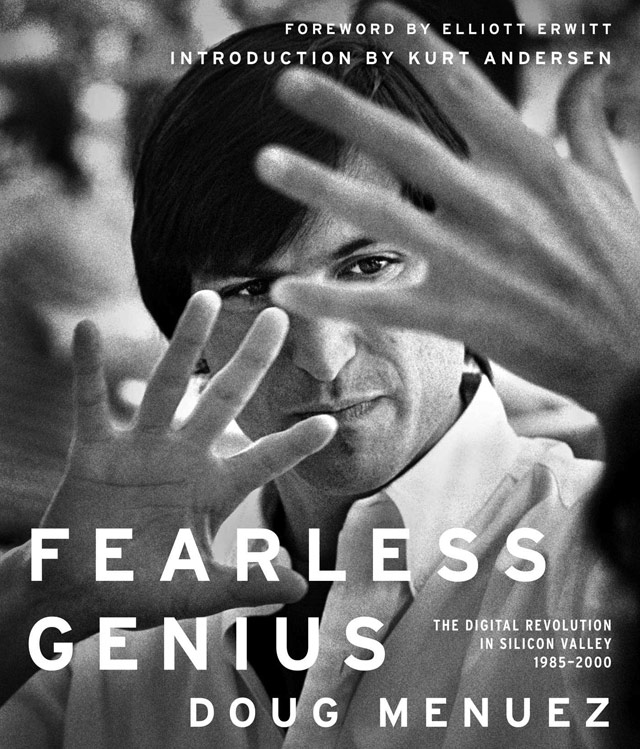
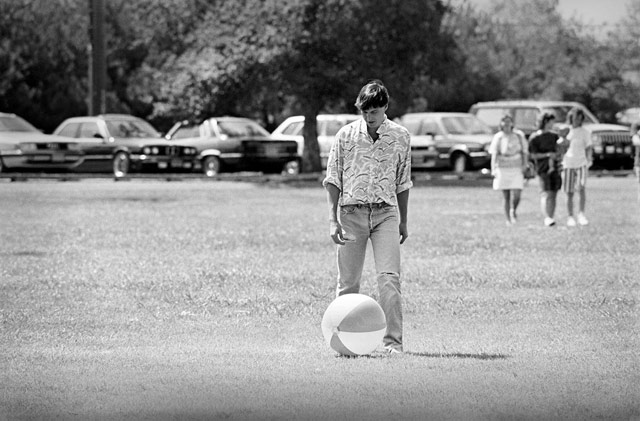
Beginning in 1985, photographer and filmmaker Doug Menuez wrangled access to some of the people at the center of the Silicon Valley technology boom, including Steve Jobs as he broke away from Apple to create NeXT. Menuez has published more than 100 of those behind-the-scenes photos in a new book, Fearless Genius.
In the spring of 1985, a technological revolution was under way in Silicon Valley, and documentary photographer Doug Menuez was there in search of a story — something big. At the same time, Steve Jobs was being forced out of his beloved Apple and starting over with a new company, NeXT Computer. His goal was to build a supercomputer with the power to transform education. Menuez had found his story: he proposed to photograph Jobs and his extraordinary team as they built this new computer, from conception to product launch.
In an amazing act of trust, Jobs granted Menuez unlimited access to the company, and, for the next three years, Menuez was able to get on film the spirit and substance of innovation through the day-to-day actions of the world’s top technology guru.
The analysis of the weak parts of Apple’s recent introduction of the iPhone 6 and Apple Watch at the beginning of this piece is good, but the real gem is the complete reworking of the presentation as Steve Jobs might have approached it.
Jobs: It’s not easy being an engineer at Apple. (Laughs) How do you take the world’s best phone and make it even better? (Cheers)
When we first launched the iPhone back in 2007, we didn’t anticipate the central role it plays today-how it would touch every part of our lives. (Cheers)
Seven years later, our iPhones are the window to our world. Through this window I see my wife and kids. I see my friends, take care of work, and relax.
If this window is so important, what if we made it a little bigger?
(Steve holds out his hand and starts separating his fingers as if he’s stretching an iPhone)
(Once they get really far, he grins and quickly pushes them back together)
Jobs: But not too big! (Audience chuckles) You still want to be able to hold it in one hand and fit it inside your pocket.
Our team of smart engineers have come up with the perfect size.
The heartfelt folksiness is pitch perfect. And the whole thing about the iWatch is amazing:
Jobs: The iWatch comes with a special sensor that detects your heartbeat. In addition to linking to Apple Health, it does something very special.
Something very dear to me.
I’d like to see how my daughter is doing. Instead of sending her a text, what can I do? I press this button twice, and… (Heartbeats echo in the auditorium)
You can’t see it, but my watch is vibrating to her heartbeat. I can close my eyes and know that my daughter is alive, living her life halfway around the globe.
Not sure if Jobs would have approached it this way, but it made me actually want to get an Apple Watch. (via @arainert)
Peter Sims writes about an under-appreciated aspect of Steve Jobs’ success: he “was a superb collaborator with the people who he respected and trusted”.
[Ed] Catmull, now president of both Pixar as well as Walt Disney Animation (a position Catmull has held since Disney acquired Pixar for $7.4 billion in 2006), was Jobs’ longest-running colleague, a working relationship that spanned 26 years. Catmull dedicates a chapter of his superb recent book Creativity, Inc. to what it was like to work with Jobs. Catmull, who has the least overt ego of any senior executive I’ve ever met, saw Jobs mature enormously over time, especially in the development of personal empathy and humility.
In fact, Catmull, sees Jobs’ life as having taken a classic Hero’s Journey arc.
From his widely-reported immature and often arrogant youth, Jobs by all accounts appeared to develop into a far more empathetic human being and wise leader. But that personal transformation would not have happened without what leadership scholar Warren Bennis described as “crucibles” — those personal crises and setback experiences that shape us much like “medieval alchemists used in their attempts to turn base metals into gold” — and, that allow for personal and leadership metamorphosis.
The “far more” qualifier in front of “empathetic” is necessary when speaking of Jobs’ transformation. I think what he developed could probably be referred to as a ruthless empathy, employed much like another other tool in the service of building great companies and making great products.
Explaining Hitler is a 1998 book by Ron Rosenbaum that compiled a number of different theories about why Adolf Hitler was the way he was, updated recently with new information.
Hitler did not escape the bunker in Berlin but, seven decades later, he has managed to escape explanation in ways both frightening and profound. Explaining Hitler is an extraordinary quest, an expedition into the war zone of Hitler theories. This is a passionate, enthralling book that illuminates what Hitler explainers tell us about Hitler, about the explainers, and about ourselves.
Oh my God, there are so many terrible psychological attempts to explain Hitler. I think the subject brings out the worst in talk show psychologists. There’s a lot of ‘psychopathic narcissism’ among those psychologizing Hitler. The examples in my book were two psychoanalysts-one wanted to claim that Hitler became Hitler because he was beaten by his father, and the other psychoanalyst was equally determined to believe that Hitler had a malignant mother who was over-protective. As if everyone who has an over-protective mother or abusive father turns into Hitler. If everyone who has been struck by their father turned into Hitler we would be in a lot more trouble than we are.
Incredible that the Mac is still around; the 90s were a dire time for Apple and it’s amazing to see the current fantastic iMacs and Macbooks that came after some epically bad mid-90s machines. Here’s Steve Jobs introducing the original Mac in 1984 (a snippet of the full introduction video):
Steven Levy writes about covering the introduction of the Mac for Rolling Stone.
First, I met the machine. From the instant the woman running the demo switched on that strange-looking contraption (inspired in part by the Cuisinart food processor), I knew the Macintosh would change millions of lives, including my own. To understand that, you must realize how much 1984 really was not like 2014. Until that point, personal computers were locked in an esoteric realm of codes and commands. They looked unfriendly, with the letters of text growing in sickly phosphorescence. Even the simplest tasks required memorizing the proper intonations, then executing several exacting steps.
But the Macintosh was friendly. It opened with a smile. Words appeared with the clarity of text on a printed page - and for the first time, ordinary people had the power to format text as professional printers did. Selecting and moving text was made dramatically easier by the then-quaint mouse accompanying the keyboard. You could draw on it. This humble shoebox-sized machine had a simplicity that instantly empowered you.
If you have had any prior experience with personal computers, what you might expect to see is some sort of opaque code, called a “prompt,” consisting of phosphorescent green or white letters on a murky background. What you see with Macintosh is the Finder. On a pleasant, light background (you can later change the background to any of a number of patterns, if you like), little pictures called “icons” appear, representing choices available to you. A word-processing program might be represented by a pen, while the program that lets you draw pictures might have a paintbrush icon. A file would represent stored documents - book reports, letters, legal briefs and so forth. To see a particular file, you’d move the mouse, which would, in turn, move the cursor to the file you wanted. You’d tap a button on the mouse twice, and the contents of the file would appear on the screen: dark on light, just like a piece of paper.
Levy has also appended a never-seen-before transcript of his interview with Steve Jobs onto the Kindle version of Insanely Great, a book Levy wrote about the Mac.
The rollout on January 24th was like a college graduation ceremony. There were the fratboys, the insiders, the football players, and developers played a role too. We praised their product, their achievement, and they showed off our work. Apple took a serious stake in the success of software on their platform. They also had strong opinions about how our software should work, which in hindsight were almost all good ideas. The idea of user interface standards were at the time controversial. Today, you’ll get no argument from me. It’s better to have one way to do things, than have two or more, no matter how much better the new ones are.
That day, I was on a panel of developers, talking to the press about the new machine. We were all gushing, all excited to be there. I still get goosebumps thinking about it today.
What’s clear when you talk to Apple’s executives is that the company believes that people don’t have to choose between a laptop, a tablet, and a smartphone. Instead, Apple believes that every one of its products has particular strengths for particular tasks, and that people should be able to switch among them with ease. This is why the Mac is still relevant, 30 years on-because sometimes a device with a keyboard and a trackpad is the best tool for the job.
“It’s not an either/or,” Schiller said. “It’s a world where you’re going to have a phone, a tablet, a computer, you don’t have to choose. And so what’s more important is how you seamlessly move between them all…. It’s not like this is a laptop person and that’s a tablet person. It doesn’t have to be that way.”
Snell previously interviewed Steve Jobs on the 20th anniversary of the Mac, which includes an essay that Jobs wrote for the very first issue of Macworld in 1984:
The Macintosh is the future of Apple Computer. And it’s being done by a bunch of people who are incredibly talented but who in most organizations would be working three levels below the impact of the decisions they’re making in the organization. It’s one of those things that you know won’t last forever. The group might stay together maybe for one more iteration of the product, and then they’ll go their separate ways. For a very special moment, all of us have come together to make this new product. We feel this may be the best thing we’ll ever do with our lives.
As always, Folklore.org is an amazing source for stories about the Mac told by the folks who were there.
Susan Kare designed the icons, the interface elements, and fonts for the original Macintosh. Have a look at her Apple portfolio or buy some prints of the original Mac icons.
I like to claim that I bought the second Macintosh computer ever sold in Europe in that January, 30 years ago. My friend and hero Douglas Adams was in the queue ahead of me. For all I know someone somewhere had bought one ten minutes earlier, but these were the first two that the only shop selling them in London had in stock on the 24th January 1984, so I’m sticking to my story.
The Next Web has an interview with Daniel Kottke (no relation) and Randy Wigginton on programming the original Mac.
TNW: When you look at today’s Macs, as well as the iPhone and the iPad, do you see how it traces back to that original genesis?
Randy: It was more of a philosophy - let’s bring the theoretical into now - and the focus was on the user, not on the programmer. Before then it had always been let’s make it so programmers can do stuff and produce programs.
Here, it was all about the user, and the programmers had to work their asses off to make it easy for the user to do what they wanted. It was the principle of least surprise. We never wanted [the Macintosh] to do something that people were shocked at. These are things that we just take for granted now. The whole undo paradigm? It didn’t exist before that.
Like Daniel says, it’s definitely the case that there were academic and business places with similar technology, but they had never attempted to reach a mass market.
Daniel: I’m just struck by the parallel now, thinking about what the Mac did. The paradigm before the Mac in terms of Apple products was command-line commands in the Apple II and the Apple III. In the open source world of Linux, I’m messing around with Raspberry Pis now, and it terrifies me, because I think, “This is not ready for the consumer,” but then I think about Android, which is built on top of Linux. So the Macintosh did for the Apple II paradigm what Android has done for Linux.
In what appears to be an excerpt from Fred Vogelstein’s new book on the Apple/Google mobile rivalry, a piece from the NY Times Magazine on how the iPhone went from conception to launch. That the Macworld keynote/demo of the phone went off so well is amazing and probably even a bit lucky.
The iPhone could play a section of a song or a video, but it couldn’t play an entire clip reliably without crashing. It worked fine if you sent an e-mail and then surfed the Web. If you did those things in reverse, however, it might not. Hours of trial and error had helped the iPhone team develop what engineers called “the golden path,” a specific set of tasks, performed in a specific way and order, that made the phone look as if it worked.
But even when Jobs stayed on the golden path, all manner of last-minute workarounds were required to make the iPhone functional. On announcement day, the software that ran Grignon’s radios still had bugs. So, too, did the software that managed the iPhone’s memory. And no one knew whether the extra electronics Jobs demanded the demo phones include would make these problems worse.
Jon Caramanica talks with Kanye West about his work, his past, his impending child, and all sorts of other things in the NY Times. I started pulling interesting quotes but stopped when I realized that I was copy/pasting like 96% of the article. So, you only get two:
I sat down with a clothing guy that I won’t mention, but hopefully if he reads this article, he knows it’s him and knows that out of respect, I didn’t mention his name: this guy, he questioned me before I left his office:, “If you’ve done this, this, and this, why haven’t you gone further in fashion?” And I say, “I’m learning.” But ultimately, this guy that was talking to me doesn’t make Christmas presents, meaning that nobody was asking for his [stuff] as a Christmas present. If you don’t make Christmas presents, meaning making something that’s so emotionally connected to people, don’t talk to me.
And I don’t want to ruin the amazing last few paragraphs, but I just had to include this:
I think what Kanye West is going to mean is something similar to what Steve Jobs means. I am undoubtedly, you know, Steve of Internet, downtown, fashion, culture. Period. By a long jump. I honestly feel that because Steve has passed, you know, it’s like when Biggie passed and Jay-Z was allowed to become Jay-Z.
The bureau’s head of climate monitoring and prediction David Jones said the new scale, which also features a pink code for temperatures from 52 to 54 degrees, reflected the potential for old heat records to be smashed.
“The scale has just been increased today and I would anticipate it is because the forecast coming from the bureau’s model is showing temperatures in excess of 50 degrees,” Jones told Fairfax newspapers.
Australia’s all-time record temperature is 50.7 degrees, set in January 1960 at Oodnadatta in the state of South Australia.
The nation as a whole experienced its hottest day on record on Monday with the average maximum temperature across the country hitting 40.33 degrees, surpassing the previous mark of 40.17 degrees set in 1972.
I feel like climate change needs a Steve Jobs to kick everyone’s ass into action on this, iPhone announcement-style. “Unprecedented polar ice cap melt, new colors on Australia’s weather map, massive East Coast hurricanes, are you getting it? These are not three separate incidents. This is one global pattern. And we are calling it anthropogenic climate change. [wild applause]” (via @ftrain)
If walking is a casualty of modern life the world over — the historian Joe Moran estimates, for instance, that in the last quarter century in the U.K., the amount of walking has declined by 25 percent — why then do Americans walk even less than people in other countries? Here we need to look not at pedometers, but at the odometer: We drive more than anyone else in the world. (Hence a joke: In America a pedestrian is someone who has just parked their car.) Statistics on walking are more elusive than those on driving, but from the latter one might infer the former: The National Household Travel Survey shows that the number of vehicle trips a person took and the miles they traveled per day rose from 2.32 trips and 20.64 miles in 1969 to 3.35 and 32.73 in 2001. More time spent driving means less time spent on other activities, including walking. And part of the reason we are driving more is that we are living farther from the places we need to go; to take just one measure, in 1969, roughly half of all children lived a mile or more from their school; by 2001 three out of four did. During that same period, unsurprisingly, the rates of children walking to school dropped from roughly half to approximately 13 percent.
A businessman laments that he no longer has colleagues at work. He doesn’t stop by to talk; he doesn’t call. He says that he doesn’t want to interrupt them. He says they’re “too busy on their e-mail.” But then he pauses and corrects himself. “I’m not telling the truth. I’m the one who doesn’t want to be interrupted. I think I should. But I’d rather just do things on my BlackBerry.”
A 16-year-old boy who relies on texting for almost everything says almost wistfully, “Someday, someday, but certainly not now, I’d like to learn how to have a conversation.”
In today’s workplace, young people who have grown up fearing conversation show up on the job wearing earphones. Walking through a college library or the campus of a high-tech start-up, one sees the same thing: we are together, but each of us is in our own bubble, furiously connected to keyboards and tiny touch screens. A senior partner at a Boston law firm describes a scene in his office. Young associates lay out their suite of technologies: laptops, iPods and multiple phones. And then they put their earphones on. “Big ones. Like pilots. They turn their desks into cockpits.” With the young lawyers in their cockpits, the office is quiet, a quiet that does not ask to be broken.
I read a study that measured the efficiency of locomotion for various species on the planet. The condor used the least energy to move a kilometer. And, humans came in with a rather unimpressive showing, about a third of the way down the list. It was not too proud a showing for the crown of creation. So, that didn’t look so good. But, then somebody at Scientific American had the insight to test the efficiency of locomotion for a man on a bicycle. And, a man on a bicycle, a human on a bicycle, blew the condor away, completely off the top of the charts.
And that’s what a computer is to me. What a computer is to me is it’s the most remarkable tool that we’ve ever come up with, and it’s the equivalent of a bicycle for our minds.”
Perhaps then the iPhone is an automobile for our mind in that it allows us to go anywhere very quickly but isolates us along the way.
ps. This photo that accompanies Vanderbilt’s article is kind of amazing:
Totally speechless. I think it’s further from my desk to the bathroom here in the office than it is from that house to the bus.
Brent Schlender interviewed Steve Jobs many times over the past 25 years and recently rediscovered the audio tapes of those interviews. What he found was in those years between his departure from Apple in 1985 to his return in 1996, Jobs learned how to become a better businessman and arguably a better person.
The lessons are powerful: Jobs matured as a manager and a boss; learned how to make the most of partnerships; found a way to turn his native stubbornness into a productive perseverance. He became a corporate architect, coming to appreciate the scaffolding of a business just as much as the skeletons of real buildings, which always fascinated him. He mastered the art of negotiation by immersing himself in Hollywood, and learned how to successfully manage creative talent, namely the artists at Pixar. Perhaps most important, he developed an astonishing adaptability that was critical to the hit-after-hit-after-hit climb of Apple’s last decade. All this, during a time many remember as his most disappointing.
The discussion of the lessons he took from Pixar and put into Apple was especially interesting.
And just as he had at Pixar, he aligned the company behind those projects. In a way that had never been done before at a technology company—but that looked a lot like an animation studio bent on delivering one great movie a year—Jobs created the organizational strength to deliver one hit after another, each an extension of Apple’s position as the consumer’s digital hub, each as strong as its predecessor. If there’s anything that parallels Apple’s decade-long string of hits—iMac, PowerBook, iPod, iTunes, iPhone, iPad, to list just the blockbusters—it’s Pixar’s string of winners, including Toy Story, Monsters, Inc., Finding Nemo, The Incredibles, WALL-E, and Up. These insanely great products could have come only from insanely great companies, and that’s what Jobs had learned to build.
Speaking of Apple, here’s a profile of Jerry Manock, who worked for Apple from 1977 to 1984 and designed the case for the Apple II and helped design the Macintosh. Manock was Jobs’ first Jony Ive.
The whole basis of the class I’ve taught at UVM for 21 years is … integrated product development, which means concurrently looking at all of these things: the aesthetics, the engineering, the marketing … which is what we were doing at Apple. Not necessarily purposefully, but everybody was just thrown together… I would walk through the software place and look around and see what people were doing … walk through the marketing area. I had my drawings all on the walls, so anybody could come up. There was a red pencil hanging there. I’d say, “If you see something you don’t like, or is a problem — I don’t care whether it’s a janitor or Steve — write the correction, circle it, put your phone there and I’ll call you and we’ll talk about it.”
At the end of this month Jeff Atwood is leaving Stack Exchange, a company he cofounded with Joel Spolsky. In a post on his blog, he explains why:
Startup life is hard on families. We just welcomed two new members into our family, and running as fast as you can isn’t sustainible for parents of multiple small children. The death of Steve Jobs, and his subsequent posthumous biography, highlighted the risks for a lot of folks. […] Stack Overflow and Stack Exchange have been wildly successful, but I finally realized that success at the cost of my children is not success. It is failure.
In his post, Jeff points to a similar post by another entrepreneur, Brad Wardell.
In the last several years, the company has been successful enough to generate a substantial amount of capital. And with it, I have been fortunate to bring in people with great talent. And so I started thinking of all the amazing things we would do. I would put in crazy hours to do it, of course, but we would go and do amazing things.
Then Steve Jobs died.
And suddenly I realized something. What is the objective here? My oldest child just turned 15. My other two are no longer little either. And I have been missing out on them.
For a long time, work was my only thing. I worked evenings, weekends, and Christmas. At those rare times when I wasn’t at work in body, I was there in spirit, unable to speak or think of much else. I wanted so badly to climb the mountain that I stopped asking why I was doing it.
I admire [Jobs] for the mountains he climbed. At the same time, I wonder if he missed the whole point, becoming the John Henry of our time. He won the race, but at what cost?
Me? I may turn out to be a failure in business, but I refuse to fail my kids.
This mirrors my main reaction to Jobs’ death and Isaacson’s book as well. I wasn’t working 80 hours a week or leading a growing company or even spending very little time with my kids but I was pushing pretty hard on Stellar, pushing it towards a potential future of insane working hours, intense stress, and a whole lot less time with my family (and selfishly, less time for myself). Since Jobs died, I’ve been pushing a little less hard in that direction.
Four is hardly a trend but it is interesting that the death and biography of the greatest businessman of our generation — someone who was responsible for so many world-changing products and ideas, who shaped our world through sheer force of will & imagination, etc. etc. — is inspiring some people to turn away from the lifestyle & choices that made Jobs so successful & inspiring in the public sphere and to attempt the path that Jobs did not.
Get it while you can: an hour-long BBC documentary about Steve Jobs with on-camera interviews with Woz, Stephen Fry, Tim Berners-Lee, John Sculley and many others.
Jobs’s sensibility was editorial, not inventive. His gift lay in taking what was in front of him-the tablet with stylus-and ruthlessly refining it. After looking at the first commercials for the iPad, he tracked down the copywriter, James Vincent, and told him, “Your commercials suck.”
“Well, what do you want?” Vincent shot back. “You’ve not been able to tell me what you want.”
“I don’t know,” Jobs said. “You have to bring me something new. Nothing you’ve shown me is even close.”
Vincent argued back and suddenly Jobs went ballistic. “He just started screaming at me,” Vincent recalled. Vincent could be volatile himself, and the volleys escalated.
When Vincent shouted, “You’ve got to tell me what you want,” Jobs shot back, “You’ve got to show me some stuff, and I’ll know it when I see it.”
Mona Simpson’s eulogy for her brother is beautiful and moving; it’s almost incidental that her brother was Steve Jobs. The last few paragraphs are just…
His philosophy of aesthetics reminds me of a quote that went something like this: “Fashion is what seems beautiful now but looks ugly later; art can be ugly at first but it becomes beautiful later.”
Dan Lyons posted the notes of a long conversation he had with Steve Wozniak last week. Lots of Apple history and prehistory…I didn’t know, for instance, that Woz designed the Apple I before Jobs was involved.
I was highly regarded for my engineering skills. But I never wanted money. I would have been a bad person to run a company. I wanted to be a nice guy. I wanted to make friends with everybody. Yes I came up with the idea for the personal computer but I don’t want to be known as a guy who changed the world. I want to be known as an engineer who connected chips in a really efficient way or wrote code that is unbelievable. I want to be known as a great engineer. I’m thankful Steve Jobs was there. You need someone who has a spirit for the marketplace. Who has the spirit for who computers change humanity. I didn’t design the Apple II for a company. I designed it for myself, to show off. I look at all the recent Apple products, like the iPhone, the iPad, and even Pixar, and it was like everything Steve worked on had to be perfect. Because it was him. Every product he created was Steve Jobs.
And Woz is *still* an Apple employee! He makes $100 a week. (via stellar)







Stay Connected