kottke.org posts about smell
After Terri Nelson noticed people complaining online about a lack of scent from newly purchased scented candles, Kate Petrova analyzed Amazon reviews for candles from the past three years and found a drop in ratings for scented candles beginning in January 2020 (compared to a smaller ratings decline for unscented candles).
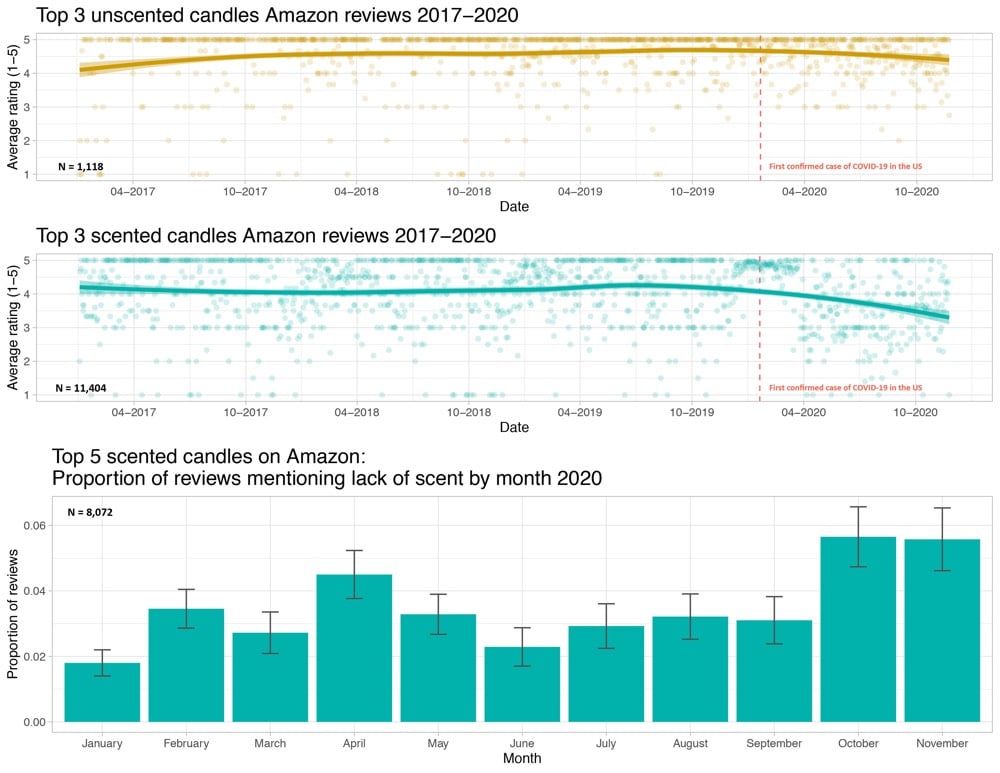
The hypothesis is that some of these buyers have lost their sense of smell due to Covid-19 infections and that’s showing up in the ratings.
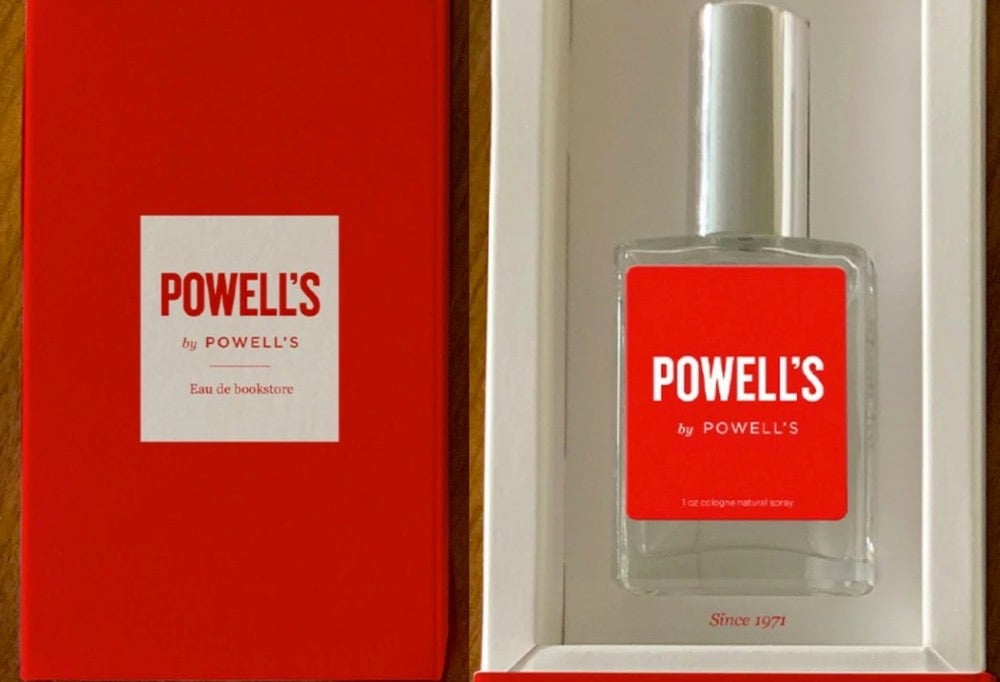
Beloved Portland indie bookseller Powell’s Books is selling a unisex fragrance that smells like a bookstore.
This scent contains the lives of countless heroes and heroines. Apply to the pulse points when seeking sensory succor or a brush with immortality.
According to KOIN, the company noticed that customers missed the smell when they were closed during the pandemic lockdown in the spring.
Powell’s Books is releasing a limited edition unisex fragrance that captures what they said is what customers missed most about Powell’s — the aroma.
Store officials said they surveyed customers about what they missed while the store was temporarily closed by the pandemic. It’s not the books. It’s the smell.
The perfume comes packaged in something that looks like a book, like a hidden bottle of hooch or a gun.
If you can’t get your hands on Powell’s scent, you have other options. Demeter makes a fragrance called Paperback that’s available in a variety of formats (cologne, shower gel, diffuser oil) and Christopher Brosius offers a scent called In The Library in his shop. (via moss & fog)
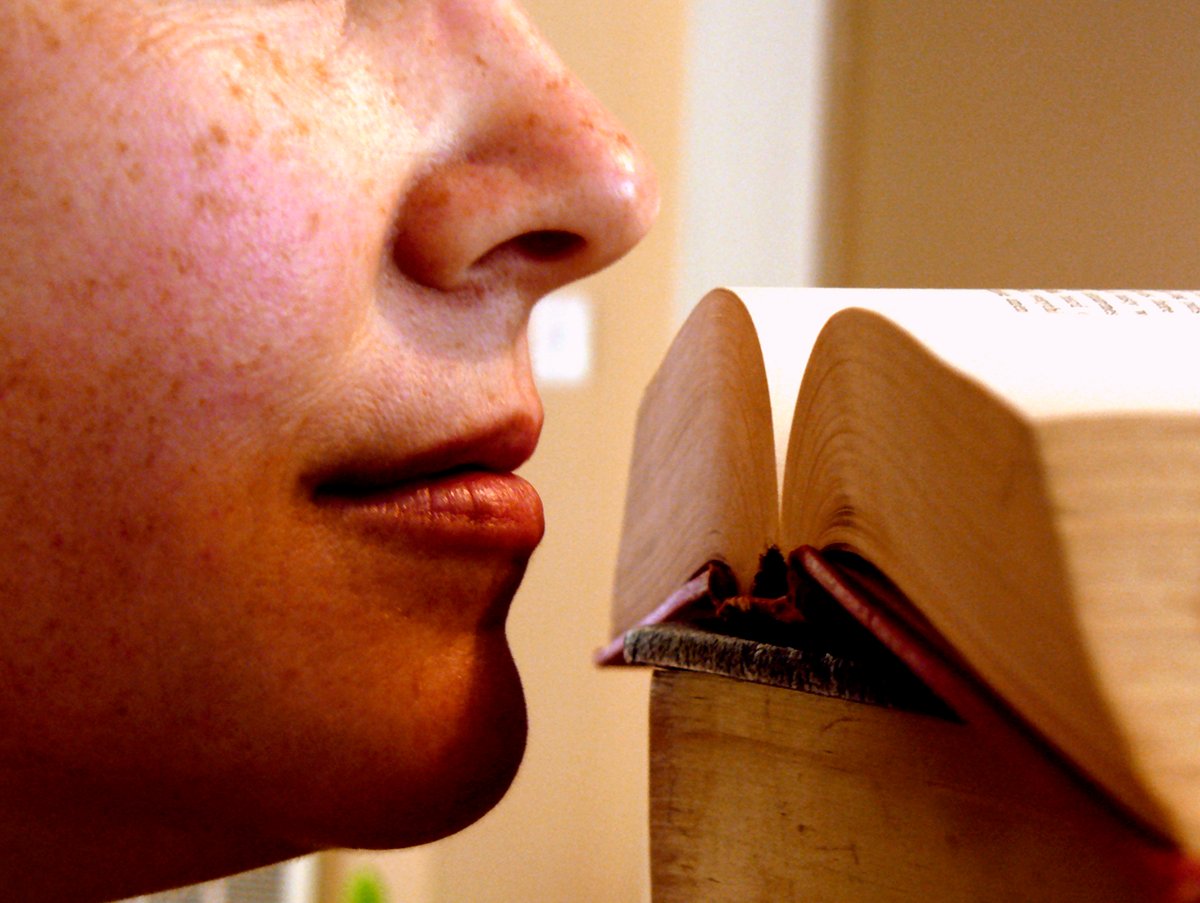
Earlier this week, I wrote about how literature transforms text into voice and experience — the word made flesh, basically. But the examples I used of “experience” focused, as such discussions often do, on the image: in other words, vision. And it should be obvious that embodied experience is much richer than that. Experience is tactile and spatial, mental and auditory. It’s not photography; it has a taste and a temperature.
Smell might be the most ineffable feature of animal life. Words and food go through the mouth, so language and taste have a more intimate relationship than it does with smell, the seat of breath. The language of taste colonizes other experiences almost as much as vision does. The word “taste” alone testifies to this.
Smell is more delicate, and harder to explain or describe. In conversation, we have words, sure, but mostly communicate smell through grunts or exaggerated faces. Or again, through analogy with taste — with which it’s closely linked.
It’s probably safe to say that the deeper we move into language, especially the more cerebral side of language, the more alienated we become from smell. The world stops being beings among beings, and becomes res extensa.
Still, writers have to try to find a way to square this circle. How do you do it? Do you try to dominate the reader and go all pulpy, immersive, and visceral? Or do you write around it: using smell as a starting point for memory and sensibility, counting on readers to fill in the gaps?
Consider this passage from Helena Fitzgerald and Rachel Syme’s perfume newsletter, The Dry Down:
What we know as “leather” in scent is really an intellectual idea and not a true distillation of anything; it’s the ingenious concept of covering up the smell of dried-out skins with flowers so that these skins can be sold as luxury goods. The real story behind this idea is one of violence and hideous smells: many of the bloody, gut-strewn tanneries of 16th century France were located in close proximity to the Grasse perfume distilleries (where flowers were also sent to their deaths by hot steam or being suffocated in tallow), so close that the air in town became a heady melange of life and death, all mixed up; it must have smelled overwhelming and nauseating and murderous and terrifying (but then, that was the way most of Europe smelled before sewage systems were invented). Legend has it that this intermingling began when Catherine de Medici came over from Italy to rule France in 1547 and asked the Grasse tanners to start scenting their gloves with jasmine to rid them of the putrid scent of the kill; oiled gant then became de rigeur among aristocratic French try-hards…
It was all the rage to pretend that the dead thing you were wearing on your hands arrived to your palace smelling like a rose; and that’s still pretty much where we are with leather. When you close your eyes and think of what a pure leather smells like to you (a S&M dungeon? Frye boots crunching over autumn leaves? A tawny satchel worn down by years of use?), what you must know is that whatever you are imagining is an artificial smell, a clever creation passed down from some genius in post-classical Provence who conjured up a way to give a pushy queen exactly what she desired. That smell of suede, of the inside of a new handbag, that’s always a damn lie. Actual leather smells like rotting, like wretching, like rigor mortis. It’s not pleasant, but then, luxury is about high-stakes deceit, about playing hide-the-damage inside buttery language and astronomical price tags.
Later, Rachel writes about a perfumer she met names Stephen Dirkes:
When we first met, Dirkes brought me real ambergris to smell, waving an antique tin of pungent whale belly under my nose; I will never forget it. He also brought civet and castoreum, true animal secretions, to show me how very close to death we are at all times when we love perfume. These materials don’t smell fresh or vibrant, they smell like the other side of the bell curve, the decline, the decay. Stephen was the first person to tell me about the Grasse tanneries, and I remember he said something like “There is a death drive in these smells,” and that perfume is often an expression of self-loathing as much as it is of self-love. And that’s what leather is to me. You can’t wear it unless deep down, you loathe humanity as much as you love it, unless you acknowledge the gory hidden history of our hedonism, unless you know, in your heart, that opulence is a cover-up job.
Helena, in the same newsletter, writes the following beautiful observation about the smell of books:
What makes old book smell work as a scent that can be worn on the skin is a leather note, and the other smells that mingle in a university library, the kind of place where more hidden corners, more secret hide-outs, reveal themselves the longer you stay - the undercurrent of cooped-up people’s sweat, a hum of anxiety and ambition and want, the waft of the snacks that somebody snuck in, the sudden out-of-place hope when someone cracks a window, the residue of cigarettes clinging to people’s hair and clothes when they come back in from one more smoke break during a marathon study session. It smells like the gummy, self-satisfied leather of old book bindings and the grateful sinking feeling when you flop onto a broken-down Chesterfield sofa. Leather dominates New Sibet, but it is rounded out by notes of ash and carnation, iris and fur and moss, and it comes together to smell like a library not in the romantic Beauty and the Beast sense of a library, but the lived-in, slightly gross, sleep-deprived, buzzing all-too-human and really pretty rank smell of a college library. Old book smell made human is admittedly a little bit gross, in the way that even the fanciest college with the most prestigious pedigree, the most beautiful wrought iron gates and most gracious green quadrangles is still full of college students, and college students are inevitably kind of disgusting. But that human grossness is what’s missing from old book smell, and it’s what makes New Sibet into a wearable expression of old book smell. It smells not just like books but like their context, the people crowding in around them, the bodies sinking time as lived experience into the leather covers of old books through their human smell.
I’m not much of a perfume person. I am, however, a writing and smelling person. And I love the way Helena and Rachel write about smells.
Via Amanda Mae Meyncke, who adds:
This is the thing I’ve told more people about in 2017 than anything else — it is an utter delight. I never cared about perfume at ALL before this, and their writing is so good and so precise, so intelligent and so ACCURATE, that every suggestion they’ve made has smelled exactly like their descriptions — which are a mixture of memory, sense, history and more — and they’ve done the impossible, making this aloof-seeming shit absolutely accessible and delightful.
(This is also a relatively cheap, luxurious, happy-making hobby in the midst of perilous times.)
Earlier in the month, I wrote about a man who lost his sense of smell.
Over lunch, he says: “I joke I can’t smell my daughter’s diaper. But I can’t smell my daughter. She was up at 4 o’clock this morning. I was holding her, we were laying in bed. I know what my son smelt like as a little baby, as a young kid. Sometimes not so good, but he still had that great little kid smell to him. With her, I’ve never experienced that.”
Jason Caplin lost his sense of smell suddenly five years ago, but recently regained that ability. It has not been the fantastic experience you might expect.
And so to tonight. Here it is, then. Smell at full blast. The inside of my head is basically completely uncalibrated. My nose just has no idea what to do with this rediscovered fury of data. Walking to the tube, I tentatively tried breathing in through my nose. Once. I felt alarm bells going off at the back; smells that had no place together (and which I could only vaguely recall in name) set my eyes watering and made me gag. I sneezed, a lot. At the big roundabout I could smell mint, horses, an outdoor pool from a family holiday when I was eight. The supermarket smelt of hair, even though I don’t think I could tell you what hair smells like, and it set me wondering how much of this my brain was reconstructing on the fly. The tube was almost unbearable and I blinked to stop crying.
That happened back in May…I hope things have settled down for him. (via gyford)
Nick Johnson slammed his head on the ice while playing hockey last year and hasn’t been able to smell anything since then.
At the time of his accident, Nick’s wife was eight months pregnant with their second child. Over lunch, he says: “I joke I can’t smell my daughter’s diaper. But I can’t smell my daughter. She was up at 4 o’clock this morning. I was holding her, we were laying in bed. I know what my son smelt like as a little baby, as a young kid. Sometimes not so good, but he still had that great little kid smell to him. With her, I’ve never experienced that.”
Much of the article focuses on research about how smell can send signals we are not aware of (e.g. body odor can “smell” like stress), but my favorite thing about smell is its connection to memory…which makes the quote above all the more poignant. There are certain scents that when I smell them, they zap me so vividly back to when I was a kid or in college…it’s like time travel.
A “scent solutions” company called Air Aroma made a Macbook Pro unboxing smell for an art exhibition in Melbourne last year.
To replicate the smell a brand new unopened Apple was sent to our fragrance lab in France. From there, professional perfume makers used the scents they observed unboxing the new Apple computer to source fragrance samples. On completion the laptop was sent back to Australia, travelling nearly 50,000kms and returned to our clients together with scent of an Apple Macbook Pro.
(via @buzz)
I don’t wear cologne (or colon) or really care for the smell of perfume, but I love reading about perfume and scent. Roja Dove is an independent perfumer who creates bespoke scents for well-heeled clientele.
His custom-made leather Dunhill case holds small eyedropper bottles with the 238 tinctures, resinoids, absolutes and essential oils that comprise the “building blocks of every single fragrance that you can think of.” It also folds neatly into a piece of hand luggage should a client require him to pay a flying visit.
“Most of my formulas are quite short, normally between 20 and 50 ingredients,” he says. “It’s like painting; if you use too many colors, all you get is a dirty gray.”
Eric Schlosser’s Fast Food Nation came out ten years ago but this chapter on how much the taste and smell of food is chemically manipulated is still well worth a read.
Today’s sophisticated spectrometers, gas chromatographs, and headspace-vapor analyzers provide a detailed map of a food’s flavor components, detecting chemical aromas present in amounts as low as one part per billion. The human nose, however, is even more sensitive. A nose can detect aromas present in quantities of a few parts per trillion — an amount equivalent to about 0.000000000003 percent. Complex aromas, such as those of coffee and roasted meat, are composed of volatile gases from nearly a thousand different chemicals. The smell of a strawberry arises from the interaction of about 350 chemicals that are present in minute amounts. The quality that people seek most of all in a food — flavor — is usually present in a quantity too infinitesimal to be measured in traditional culinary terms such as ounces or teaspoons. The chemical that provides the dominant flavor of bell pepper can be tasted in amounts as low as 0.02 parts per billion; one drop is sufficient to add flavor to five average-size swimming pools. The flavor additive usually comes next to last in a processed food’s list of ingredients and often costs less than its packaging. Soft drinks contain a larger proportion of flavor additives than most products. The flavor in a twelve-ounce can of Coke costs about half a cent.
While listing his ten favorite fragrances, NY Times perfume critic Chandler Burr recalls Luca Turin’s definition of chic.
Luca once called something chic, and I asked him why, or rather what “chic” was exactly. He sighed and said despairingly, “Chic is the most impossible thing to define.” He thought about it. “Luxury is a humorless thing, largely. Chic is all about humor. Which means chic is about intelligence. And there has to be oddness — most luxury is conformist, and chic cannot be. Chic must be polite, but within that it can be as weird as it wants.”
(via gold digger)
Mayor Bloomberg held a press conference today to address the mysterious maple syrup smell sporadically experienced by New Yorkers since 2005. The cause? Fenugreek seeds.
The source of the odor was a plant in North Bergen, N.J., which processes seeds of the herb fenugreek to produce fragrances.
Update: Gothamist has more details.
Henry Molaison — more widely known as H.M. — died last week at 82. Molaison was an amnesiac and the study of his condition revealed much about the workings of the human brain. He lost his long-term memory after a surgery in 1953 and couldn’t remember anything after that for more than 20 seconds or so.
Living at his parents’ house, and later with a relative through the 1970s, Mr. Molaison helped with the shopping, mowed the lawn, raked leaves and relaxed in front of the television. He could navigate through a day attending to mundane details — fixing a lunch, making his bed — by drawing on what he could remember from his first 27 years.
Molly Birnbaum was training to be a chef in Boston when she got hit by a car and lost her sense of smell. Soon after, she moved to New York.
Without the aroma of car exhaust, hot dogs or coffee, the city was a blank slate. Nothing was unbearable and nothing was especially beguiling. Penn Station’s public restroom smelled the same as Jacques Torres’s chocolate shop on Hudson Street. I knew that New York possessed a further level of meaning, but I had no access to it, and I worked hard to ignore what I could not detect.
Update: Here’s another take on anosmia and Birnbaum’s article.
In the first year of my recovery, I regularly visited both a neurologist and neuropsychologist who both disputed this claim. They told me that smell and taste, although related, are essentially exclusive. If anything, my neuropsychologist told me, smell is more integrated with memory.
In my experience, I’ve found this to be true: I have not lost my love of food; in fact, I feel like my appreciation for flavor combinations have been heightened. Milk does not taste like a “viscous liquid” to me and ice cream is certainly more than just “freezing.” Similarly, a good wine is more than tasting the acids, a memorable dessert is more than simply sweet, and french fries do not taste like salty nothing-sticks.
Perfumer Christopher Brosius has a little shop in Brooklyn, out of which he offers several surprising and offbeat perfumes.
When my parents visited New York, I gave them a tour of my favourite scents in the shop. This took some time: the accords include clever riffs on the smell of rubber, from the intoxicating Inner Tube to a just-short-of-noxious Rubber Cement. Equally impressive is Wet Pavement, which strikes me as wearable, even pretty. Burning Leaves is startlingly alluring, and Ink smells so authentic that I held up the bottle to show my mother that the fluid was clear and not an indelible blue. Roast Beef is predictably revolting, but still a must-smell. My mother lingered over In the Library, a blend that Christopher describes as “First Edition, Russian and Moroccan Leather, Binding Cloth and a hint of Wood Polish”.
Unsurprisingly, Brosius also created the Demeter line of fragrances, featuring scents like Creme Brulee, Wet Garden, Funeral Home, Dirt, and Sugar Cookie.
In remembrance of her grandmother, Chicagoan Jessica Dunne created her own perfume called Ellie.
She sought out Michel Roudnitska, a perfumer who lives in France, to be her collaborator. Her family in her hometown of Villanova, Pa., served as her focus group. A friend volunteered to tie by hand the grosgrain ribbon bow that decorates each package. Then Ms. Dunne cold-called Claudia Lucas, the perfume buyer at Henri Bendel in Manhattan, and asked whether she could send a sample of the perfume.
More information about Ellie, as well as a more contemporary scent called Ellie Nuit, is available on Dunne’s site.
New Japanese device records smells for later playback. Smell is the sense most associated with memory, so this could be quite a compelling personal history recorder.
When I posted about a cold of mine back in December that completely killed my sense of smell and taste (they’re both back now, thanks), I asked:
I remember reading a book or article once that mentioned a person who lost their sense of taste and when it would briefly return, that person would drop whatever they were doing and go eat a great meal. Anyone know where that story is from?
In response to that post (but not that specific question), I got a nice email from a reader inquiring about my recent preoccupation with smell (I’ve posted a couple other things about smell in the past months) and identified herself as having thought about smell recently as well. I wrote her back and recommended a favorite book of mine, A Natural History of the Senses by Diane Ackerman, specifically the chapters on smell (my favorite part).
I first read this book back in college for a class and it’s one of the few books I keep going back to every few years to reread[1]. After I sent that email, I went to find my dog-eared copy and started reading it. On page 40, in the section about anosmia, I found the answer to my above query. After a year-long fit of sneezing, Judith Birnberg lost her sense of smell and taste, which returned sporadically thereafter:
The anosmia began without warning… During the past three years there have been brief periods — minutes, even hours — when I suddenly became aware of odors and knew that this meant that I could also taste. What to eat first? A bite of banana once made me cry. On a few occasions a remission came at dinner time, and my husband and I would dash to our favorite restaurant. On two or three occasions I savored every miraculous mouthful through an entire meal. But most times my taste would be gone by the time we parked the car.
I knew I’d read that somewhere!
[1] Other books I’ve read more than once in adulthood[2]:
1984
Contact
Several Roald Dahl books
LoTR series
The Hobbit
Genius
Dark Sun
A People’s History of the United States
1984 I’ve probably read 9 or 10 times since I was 10. With the exception of A People’s History (I think I got the gist the first two times around), I’ll probably continue to reread those books indefinitely. Books I hope to reread soon: Lolita, Infinite Jest.
[2] I reread so many books as a kid, including the Roald Dahl books alluded to above, Where the Red Fern Grows, and Cloudy With a Chance of Meatballs.
So, it’s day five of my cold[1]. Last night, I was down to only two out of my five senses. My sense of taste and smell left the scene sometime on Saturday. On Sunday, I had salad and fruit for lunch because I figured if I can’t taste anything, I might as well eat healthy. Trying to smell or taste strongly aromatic substances like wine or scented shower gel produces a sensation not unlike that of tasting or smelling something, except there’s no smell or taste. It’s the weirdest thing…I don’t even know how to properly describe it. It’s like there’s a ghost of a taste and when I think too hard about trying to really taste it, it’s gone. It’ll be a relief when I finally decongest and can enjoy food again[2].
And then yesterday while driving, we went from sea level up to around 600 ft of elevation, which caused the pressure to build up in my head enough to affect my hearing. By 4pm, everything was kind muffled and I was asking Meg speak up repeatedly. I could just barely hear the hum of the highway under the car. Last night at dinner, I couldn’t taste anything, smell anything, hear anything, and my voice was so gravelly from my cold (and probably way too loud from overcompensating for the hearing loss) that listening to me was probably not very pleasant. My ears finally popped somewhat this morning and I can hear ok again, but smell and taste are still missing. Come back, guys, I miss you!
Update: Here’s an article by Jason Feifer from the Washington Post about his investigation into his poor senses of taste and smell. (thx, mim)
[1] After a bit of research this AM, I’ve determined that what I have is a cold and not the flu.
[2] I remember reading a book or article once that mentioned a person who lost their sense of taste and when it would briefly return, that person would drop whatever they were doing and go eat a great meal. Anyone know where that story is from?
Syrupy sweet smell in Manhattan yesterday still unexplained. There were reports from all over the city, but air tests and investigations revealed very little.
Among the featured designs at the National Design Triennial was the Demeter Fragrance Library. The company, run by Christophers Brosius and Gable, puts out perfumes, lotions, soaps, candles, and body gels with scents like Creme Brulee, Wet Garden, Funeral Home, Dirt, and Sugar Cookie. According to this article in Happi, the New Zealand fragrance was developed for the Lord of the Rings movie and Demeter’s odd scents might have other uses:
Tomato, for example, was found to be an odor absorber. Some of the edible fragrances are said to help curb cravings. And though the company has yet to perform psychological tests, researchers said the Dirt fragrance made Alzheimer patients more lucid.
Perhaps I should tag along with Meg the next time she goes to Sephora. (Never thought I’d find myself saying that…)


Socials & More