


Indian Street Lettering
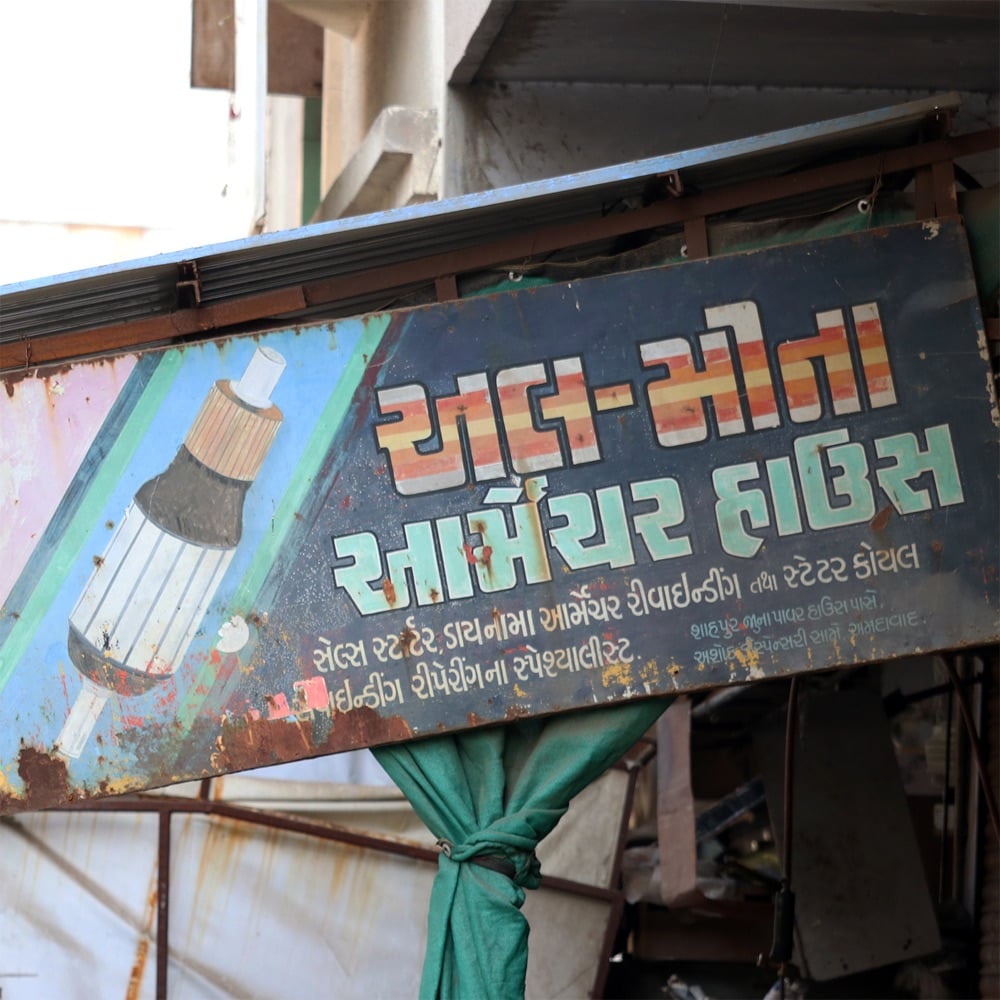
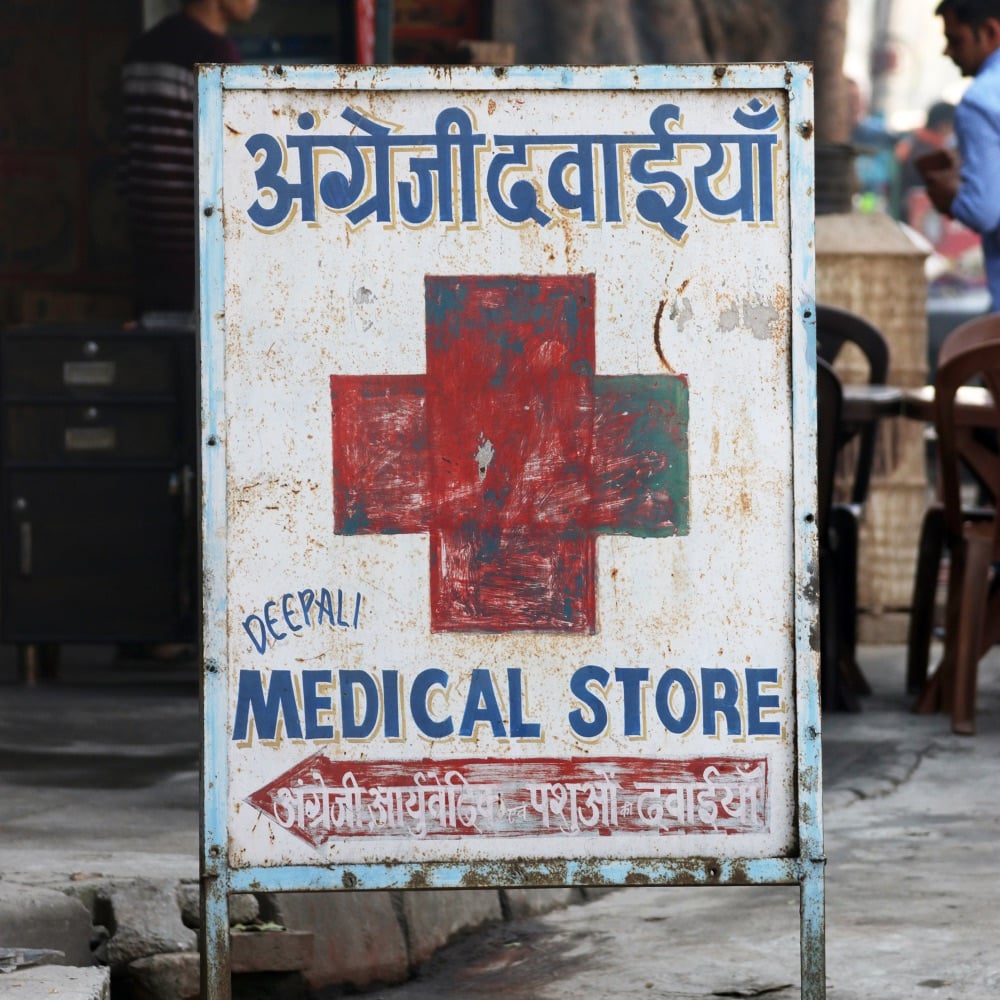
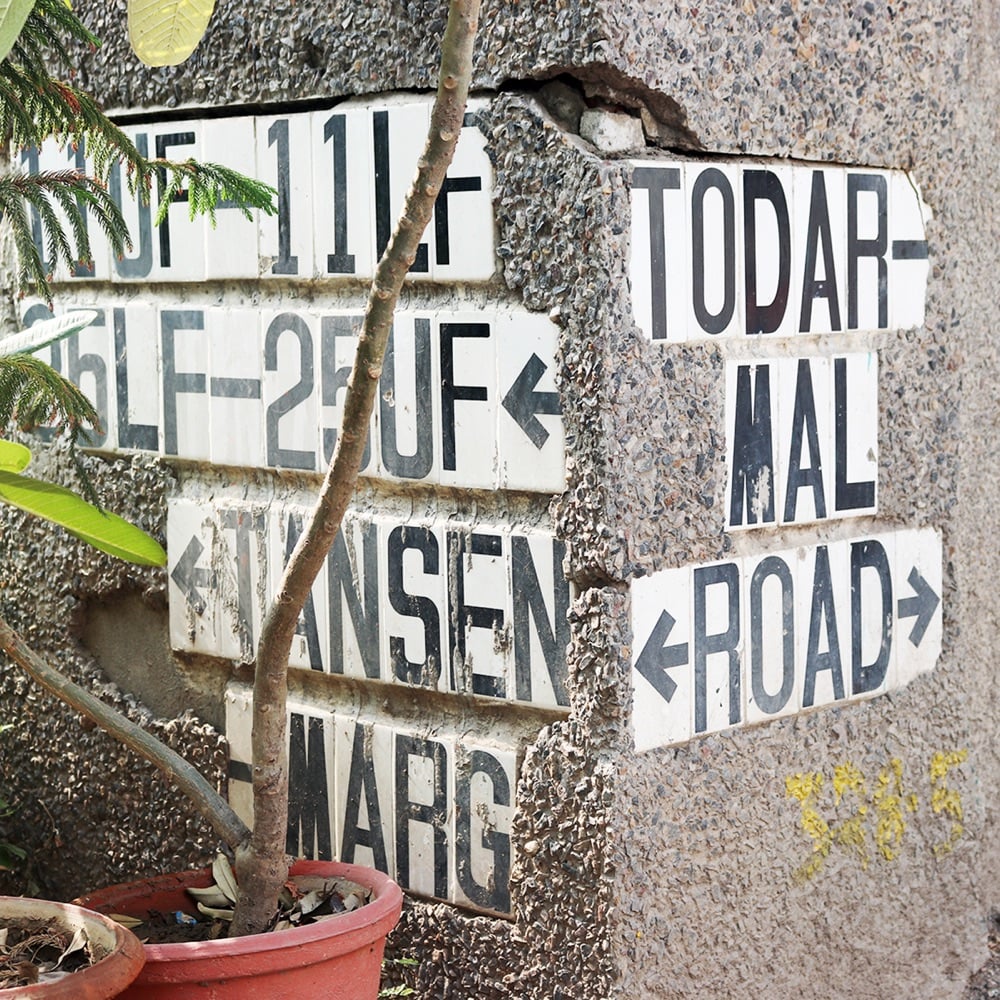
Pooja Saxena collects interesting examples of lettering from the streets of cities in India. Here are a few recent examples:
(via @ashur)

This site is made possible by member support. 💞
Big thanks to Arcustech for hosting the site and offering amazing tech support.
When you buy through links on kottke.org, I may earn an affiliate commission. Thanks for supporting the site!
kottke.org. home of fine hypertext products since 1998.
Beloved by 86.47% of the web.
Pooja Saxena collects interesting examples of lettering from the streets of cities in India. Here are a few recent examples:
(via @ashur)
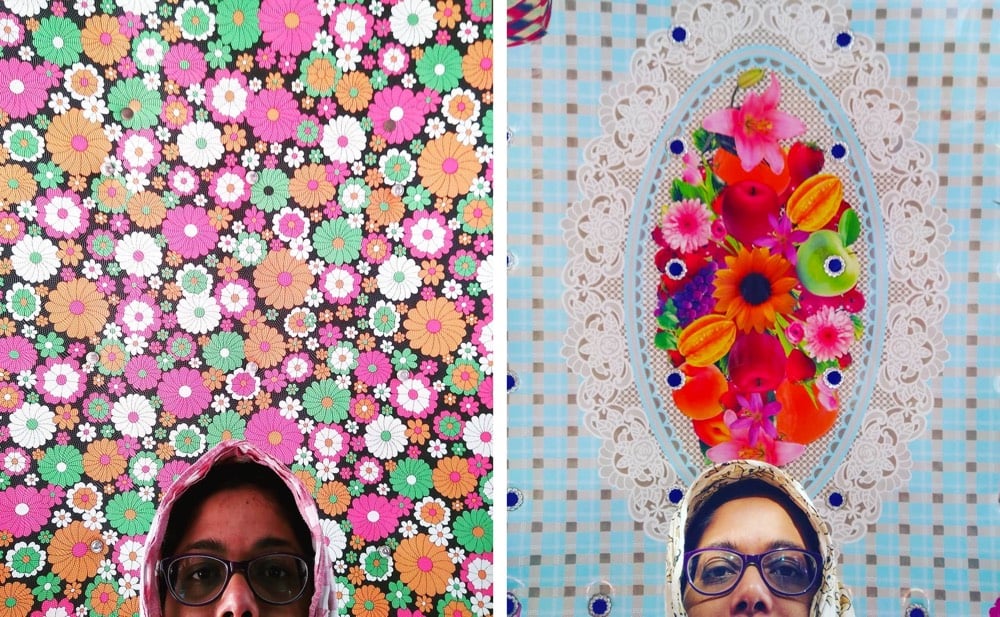
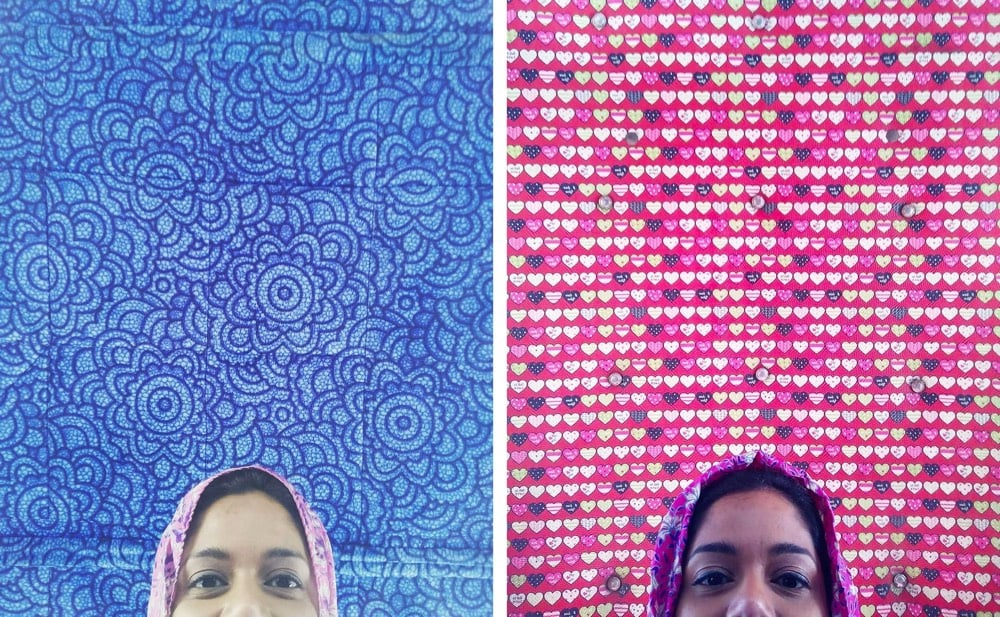
Since April 2017, Rachel Lopez has been taking photos of the ceilings of Mumbai taxis, many of which are decorated with colorful vinyl overlays. As Lopez says in a piece she wrote for PRI, “it’s more fun than the cold, gray inside of an Uber”. (via @themexican)
In 1988, India had over 200,000 cases of polio reported. For the past three years, they’ve had 0. At the end of this month, the WHO will announce the end of polio in India.
America experienced the height of polio in the 1940s and ’50s, when about 35,000 people became disabled every year. Fear and panic spread and parents were known to warn their children to not drink from public water fountains, avoid swimming pools and stay away from crowded public places like movie theaters. Perhaps the most famous case of polio in America was Franklin Delano Roosevelt, the first president with a significant physical disability.
The development of the Salk and Sabine vaccines helped lead to eradication of polio in the United States in 1979. In India, too, vaccination was critical.
“There were three keys to our success,” Kapur says. “Immunize, immunize and immunize.”
Vaccines. And now my kids don’t die.
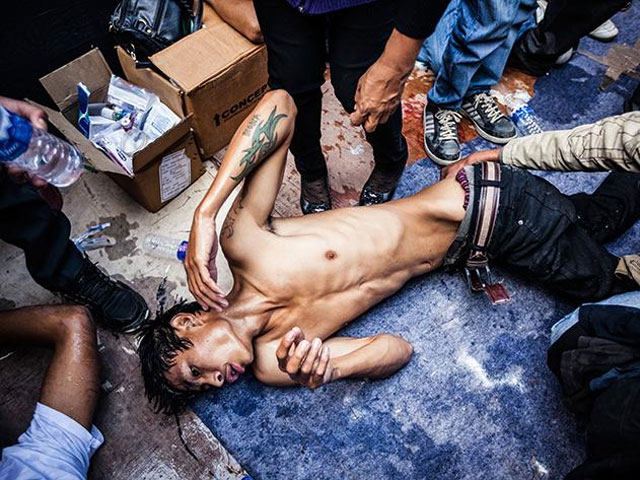
Mary Roach travels to the state of Nagaland in India, where some of the world’s hottest chili peppers grow, to observe a chili-eating competition, in which contestants see who can eat the most insanely hot chilis in 20 seconds. This guy is dealing with the after effects of competing (perhaps on a vision quest):
The event itself is surprisingly low-key. The mood is one of stoic grimness. No one is screaming in pain. No one will be scarred by the heat. That’s not how capsaicin works. It only feels hot. The human tongue has pain receptors that respond to a certain intensity of temperature or acid. These nerve fibers send a signal to the brain, which it forwards to your conscious self in the form of a burning sensation. Capsaicin lowers the threshold at which this happens. It registers “hot” at room temperature. “It trips the alarm,” says Bruce Bryant, a senior researcher at the Monell Chemical Senses Center in Philadelphia. “It says, ‘Get this out of your mouth right now!’” The chili pepper tricks you into setting it free.
The whole affair is beginning to seem like an anticlimax when I look up from my notes to see Pu Zozam headed my way. I have seen people stagger in movies, but never for real directly in my sightline. Zozam’s legs buckle as he tries to keep walking. He goes down onto one knee and collapses sideways onto the floor. He rolls onto his back, arms splayed and palms up. He’s making sounds that are hard to transcribe. Mostly vowels.
This story gives me the chance to alert you to one of my favorite units of measure, the Scoville scale, a “measurement of the pungency (spicy heat) of chili peppers”. As the article states, the chili used in the contest has been measured at 1,000,000 Scoville heat units (SHU). As a comparison, Sriracha sauce is about 1000-2000 SHU, jalapenos register 3,500-8,000 SHU, and habanero is about 100,000-350,000 SHU. (via coudal)
The Perennial Plate videos always make me jealous, and this beautiful cut of a “day” in India is no exception. This is gorgeous and you should watch it on full screen.
The Children’s Development Khazana is a bank staffed and patronized exclusively by children. It started in New Delhi in 2001 and has since opened up more than 200 branches in half-a-dozen countries.
The branches are run almost entirely by and for the children, with account holders electing two volunteer managers from the group every six months.
“Children who make money by begging or selling drugs are not allowed to open an account. This bank is only for children who believe in hard work,” said Karan, a 14-year-old “manager”.
During the day, Karan earns a pittance washing up at wedding banquets or other events. In the evening, he sits at his desk to collect money from his friends, update their pass books and close the bank.
“Some account holders want to withdraw their money. I ask them why and give it to them if other children approve. Everyone earns five per cent interest on their savings.”
On Monday and Tuesday, two separate major power outages left half of India without electricity. By Tuesday afternoon, different reports had power mostly back in many of the affected areas. 670 million people is over twice the population of the United States, and I don’t want to imagine the shitstorm unleashed if there ever was a double US power outage.
A lack of coal and a lack of monsoon rains are two of the reasons being blamed for the blackout. Along with the increase in power needed for irrigation, India’s hydroelectric capacity has dropped about 20% because of the delayed rains.
Indeed, the New York Times points to a dearth in imported coal as one of the possible causes for triggering the massive blackout. Another potential force that is driving energy demand and limiting supply is this year’s monsoon, the annual rainy season that supplies three-quarter’s of the country’s water. Or, rather, that this year’s monsoon never happened. The lack of monsoon rains, says Reuters, has caused energy demand to climb as farmers in northwestern India’s heavily producing agricultural regions leaned more heavily on irrigation to water their fields.
In response to this question on Quora — What are some English phrases and terms commonly heard in India but rarely used elsewhere? — Pushpendra Mohta offers up a story with many examples.
As it turns out, the manager there is also my college batchmate. You can use my connection there. Just give your good name. We were both backbenchers but he was actually rusticated for ragging and bunking. The final straw was when he was caught eve-teasing the dean’s daughter. But, he did some jugaad and palm greasing, and got himself a license to manufacture Indian-made foreign liquor. Rags to riches story. Now he is a mover and shaker. For a while he was under the scanner of the IT authorities and they chargesheeted a disproportionate-asset case against him. I think he may have been doing some hawala transactions. The whole official machinery was after him. He tried to file a grievance but there was no redressal mechanism for such cases. Ultimately, he went on an indefinite fast.
My favorite term from the rest of the thread is “prepone”, which means to move something ahead in the schedule, i.e. the opposite of postpone. (via @ftrain)
This short documentary describes how the theft of scientific material from a Dutch lab resulted in the people in an Indian slum using fungus to provide enough electricity to heat and light an entire building. The fungus was originally stolen from a lab in Amsterdam with the intent to bring a new type of narcotic to market. Researchers discovered the fungus grows so quickly it can be used “like a giant potato clock.”
The reason you haven’t heard anything about this is it’s just a theory of Tobias Revell. I was all set to buy it until that last picture of a mushroom on a roof. (via dens)
Years ago, Arunachalam Muruganantham saw his wife collecting dirty rags to use for her period and thought there might be a better way. Now the sanitary napkins he invented in response are made and sold all over rural India, often by women.
The conversation spurred Mr Muruganantham into a frenzy of invention to try and produce an affordable napkin for women such as his wife. Such was his dedication, bordering on obsession, that he once wore a football bladder of animal blood to trial a prototype. He was forced from his home by villagers who thought his methods had become too perverse after he started collecting used napkins from medical students and storing them in his home. He was even abandoned - albeit temporarily - by his wife and mother, who believed he had gone mad.
(via @mulegirl)
Knowing nothing about cricket, ESPN.com writer Wright Thompson heads for India to watch the 2011 Cricket World Cup and discovers he’s a fan but that India’s relationship with the sport is changing.
“The aggression, the brashness,” says Bhattacharya, the cricket writer turned novelist. “It’s now something which Indians see that this is what we have to do to assert our place in the world. We’ve been f—-ed over for thousands of years. Everyone has conquered us. Now we’re finding our voice. We’re the fastest-growing economy in the world. We are going to buy your companies. Our cricket team is like going to f—-ing abuse you back, and we’re going to win and we’re going to shout in your face after we win. People love that.”
See also How To Explain the Rules of Cricket.
In the New Yorker, Michael Specter reports on tuberculosis, the world’s deadliest infectious disease — worldwide, more than 5000 people die from it every day. In India, misdiagnosis and improper treatment result in tens of thousands of unnecessary deaths a month and even new genetic screening machines might not help matters.
Since late 2009, the hospital has had one unique asset: a piece of equipment called a P.C.R., which can multiply tiny samples of DNA and analyze them. The device is not as fast as the GeneXpert, but it can examine the genetics of virtually any organism, including tuberculosis. The hospital’s machine, which was purchased with money from a government research grant, has never been used. “The hospital has had this for months,” Mannan said. “But nobody knows how it works.” We were standing at the door of the virology lab, where the new P.C.R. Cobas TaqMan 48, made by Roche and sold for roughly fifty thousand dollars, was resting on a shelf, still wrapped in its shipping material.
How could that be? I was staring at a machine that could alter, even save, the lives of scores of the people who were sitting nearby in the gathering heat. Mannan said nothing, though his anger was palpable.
[…] “It’s a nice lab,” Mannan said when we left. “Beautiful, actually. But if the doctors used it properly that would interfere with their private practice.”
I asked what he meant.
“It is simple,” he said. “If patients are treated at the hospital, they won’t need to pay for anything else.”
Petty bribery is common in India, but the introduction of a zero rupee banknote has given some would-be bribers pause.
One such story was our earlier case about the old lady and her troubles with the Revenue Department official over a land title. Fed up with requests for bribes and equipped with a zero rupee note, the old lady handed the note to the official. He was stunned. Remarkably, the official stood up from his seat, offered her a chair, offered her tea and gave her the title she had been seeking for the last year and a half to obtain without success.
To combat receding Himalayan glaciers caused by man-made climate change, Indian Chhewang Norphel has been building his own glaciers.
Here, Norphel is using what is abundant — stone — to conserve what is precious — water. The idea is simple: Divert the unneeded autumn and winter runoff into a series of large, rock-lined holding ponds. As the days grow colder, the ponds freeze and interconnect into a growing glacier. He has built 10 glaciers across the region. His largest stretched more than a mile before an unusual week of rain wiped it out in 2006.
Norphel says that a good artificial glacier costs about $50,000.
In one hilly area in the rainforest of northeastern India, they build bridges out of living trees. Specifically the roots.
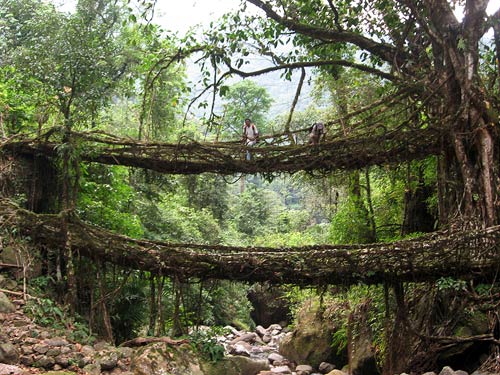
The root bridges, some of which are over a hundred feet long, take ten to fifteen years to become fully functional, but they’re extraordinarily strong — strong enough that some of them can support the weight of fifty or more people at a time. In fact, because they are alive and still growing, the bridges actually gain strength over time — and some of the ancient root bridges used daily by the people of the villages around Cherrapunjee may be well over five hundred years old.
Mukesh Ambani, the fifth richest man in the world, is building the most expensive single family residence ever, a $2 billion — yes, BILLION — 27-story skyscraper in downtown Mumbai.
Atop six stories of parking lots, Antilla’s living quarters begin at a lobby with nine elevators, as well as several storage rooms and lounges. Down dual stairways with silver-covered railings is a large ballroom with 80% of its ceiling covered in crystal chandeliers. It features a retractable showcase for pieces of art, a mount of LCD monitors and embedded speakers, as well as stages for entertainment. The hall opens to an indoor/outdoor bar, green rooms, powder rooms and allows access to a nearby “entourage room” for security guards and assistants to relax.
Photos here. In fairness, the place sounds like a combination corporate HQ with an incorporated family living space, but still. Not noted in the article is the expensive laboratory-grade scanning electron microscope that Ambani uses to locate his teensy penis, for which the 27-story house is compensation.
The Indian letter writing industry (for those who are unable to write themselves) is all but extinct because of near-ubiquitous mobile phones and text messaging.
Mr. Sawant mourns the demise of the letter culture. After dropping a letter in the box, he used to imagine its winding journey. Someone far away would open what he had written on someone else’s behalf; the reader would savor its kind words or its little secrets, then maybe file it away in a box, and perhaps revisit it weeks later in a burst of nostalgia.
But even Sawant admits that ringing his daughter on his mobile is much easier than writing a letter.
An anticorruption group in India is printing zero-rupee notes designed to be handed to officials demanding bribes. The note is “a symbol to express refusal to grease the palms of officials”. (via tmn)
Portraits of Indians, many of whom had never been photographed. (via cyn-c)
Killing female fetuses in the womb is becoming more of a problem in Punjab, India. “In the last one year in [Dhanduha village], against 12 boys only three girls were born, and in the last five years, 34 baby boys were born as against only 18 girls. A sex ratio of just 529:1000!” (via 3qd)
Why is the incidence of cancer in India so much lower than in the US?
Inspired by Thomas Friedman’s book, A.J. Jacobs outsources his life to India. He starts with his job but is eventually letting his Indian assistants argue with his wife, read to his son at night, edit his Wikipedia entry on his behalf, and even worry for him. Ben Hammersley also recently wrote about personal outsourcing.
Ill-timed Dairy Queen advertisement for their “Earthquake” dessert. Officials say that the death toll has reached 22,000 from the eathquake that hit the northern parts of India and Pakistan on Saturday.
Here’s a story that mentions that Slashdot commenter that outsourced his job. “About a year ago I hired a developer in India to do my job. I pay him $12,000 out of the $67,000 I get. He’s happy to have the work. I’m happy that I have to work only 90 minutes a day just supervising the code. My employer thinks I’m telecommuting. Now I’m considering getting a second job and doing the same thing.”
Coke is using 500,000 liters of water/day in India despite water shortages. Coke is threatening to sue a photographer who put up a billboard critical of that water usage.
Socials & More