One of the best uses of technology is to make people laugh. In this three-part series, the Numerical YouTube channels uses some simple editing to increase the size of the goal until some laughably off-the-mark strikes by professional footballers Ousmane Dembélé, Harry Kane (his penalty miss vs France), and Nicolas Jackson finally find their targets. The misses just get more and more funny as the goal gets bigger.
Produced by Venus & Serena Williams and US soccer star Alex Morgan and directed by Rachel Ramsay & James Erskine, Copa 71 is a forthcoming documentary about a women’s soccer tournament that took place in Mexico City in 1971 that was the first, albeit unofficial, Women’s World Cup. A short teaser trailer is above. From a piece in Variety about the film:
In August 1971, more than 100,000 football fans packed Mexico City’s Azteca Stadium for a historic tournament. Teams from England, France, Denmark, Argentina and Italy flew in for 21 days of matches alongside Mexico’s national team, while eager sponsors lined up for a piece of the action. The players, who received a hero’s welcome wherever they went, might as well have been the Rolling Stones.
They were, in fact, a group of around 100 women — many of them teenagers — taking part in a pioneering unofficial Women’s World Cup. And just as quickly as they tasted fame, it was snatched away as the tournament was all but erased from football history.
Many of the competitors were just teenagers — from Wikipedia:
England’s team included 13-year-old Leah Caleb, 14-year-old Gill Sayell, and 15-year-old Chris Lockwood; their captain was 19-year-old Carol Wilson and they were accompanied by referee Pat Dunn as a chaperone and trainer. 15-year-old Susanne Augustesen scored a hat-trick for Denmark as they beat Mexico 3-0 in the final.
Copa 71 is premiering at the Toronto Film Festival in September and then hopefully will find its way into theaters and onto streaming. (thx, meg)
In the 1994 Caribbean Cup qualifying group stage match between Barbados and Grenada, the 90 minutes of normal time ended with an intentional own goal by Barbados and then with Grenada trying to score either a goal or an own goal and Barbados defending both nets. Say what?! How did this happen?
Well, it was the confluence of a few things:
The match would go into overtime in case of a tie.
The “golden goal” rule was in effect for overtime…the first goal wins and the match is immediately over. Oh, and the goal is worth 2 goals, not just one.
To qualify for the next round, Barbados not only needed to win the match, they needed to win it by two goals…a one-goal difference would not be enough.
The match started off routinely and Barbados scored the first two goals, establishing the two-goal winning margin they required: in the 83rd minute, the game changed when Grenada scored a goal, which would take Grenada through to the finals unless Barbados could score again.
Barbados attempted to score for the next few minutes, but as time ran out they switched to a different strategy: tying the game so they could attempt to achieve the two-goal margin with the golden goal in extra-time. In the 87th minute, they stopped attacking, with Barbados defender Terry Sealey and goalkeeper Horace Stoute passing the ball between each other before Sealey intentionally scored an own goal to tie the game at 2-2.
With just three minutes of normal time left, the Grenadian players caught on to the Barbadians’ plan, and realised that they would advance in the tournament by scoring a goal in either net, since they would still qualify for the finals with a 1-goal loss. This saw normal time finish in a highly unusual manner, with Grenada trying to score a goal in (and Barbados trying to defend) both nets. For the next three minutes, Barbadian players successfully defended both sides.
As 90 minutes had expired with the score at 2-2, the game went on to extra time, where the winning “golden goal” would count double — thus, Barbados only had to score once to qualify for the 1994 Caribbean Cup. Trevor Thorne scored the winning goal for Barbados to advance to the next round with a score of 4-2.
This advertisement from Orange, the French telecom company, about the French national football team is one of the best commercials I’ve seen recently. I don’t want to tell you too much about it because the impact of it comes from watching it, so just watch it and you’ll see. And afterwards, you can read more about the ad here.
No one disputes that referees are as fit as they’ve ever been. The problem, according to many observers, is that referees are also worse than they’ve ever been. In 2017, then-Arsenal manager Arsène Wenger claimed that English referees’ level “drops every season”. The next season, Cardiff manager Neil Warnock despaired at how the “best league in the world” could possibly have “the worst officials”.
Today, that story of perpetual decline has given way to one of full-blown crisis. Every week brings a new wave of anger — from fans, players, managers and pundits — about alleged errors, inconsistencies and incompetence. This is at the polite end of the spectrum. On social media, referees’ mistakes are often blamed not on inevitable human error, or even simple ineptitude, but on elaborate conspiracies to derail this or that club. (The fact that every fanbase believes there is a conspiracy against their particular club does not seem to give people pause.)
There is no statistical evidence to support this story of decline. In fact, all such evidence suggests that referees are making fewer mistakes a match, with accuracy rising each season. (However, these statistics themselves are difficult to assess, given that they are collected not by a truly independent body, but by PGMOL and the Premier League, and very little of this data has ever been made public.) Instead, the critics point to a large, often indisputable, collection of individual errors and baffling decisions. These errors amount to only a tiny percentage of all decisions, but having been replayed and discussed over and over, they are the ones etched into memory.
In season one of his podcast Against the Rules, Michael Lewis explored the disconnect between how referees are perceived and their actual performance, not just in sports but also in governance, business, and even the arts.
There are interesting bits throughout the piece, many of which deal with human psychology (esp. of groups) and even philosophy. I found this bit worth quoting:
On the next day I spent with England, 5 November, he was refereeing the champions, Manchester City, at home to Fulham. In a room at a swanky hotel on the outskirts of Manchester, England and his team gathered for their pre-match meeting. His usual assistants had been replaced, because they support Manchester clubs. (Every official must declare their allegiances, and will not be assigned that team’s matches or those of their closest rivals. Other factors that determine appointments include how many times an official has refereed each club that season, how close they live to the stadium, and which teams their family members support.)
Fascinating! Do any of the sports leagues in the US do this? Or is, as I suspect, the support for one’s team in England just so much more intense and foundational to one’s personal identity than in America?
A beautiful scene from the 2014 Mauritanian film Timbuktu (which was recently included on Slate’s New Black Film Canon), in which young men under the rule of Islamic extremists quietly and defiantly play a forbidden football match with an imaginary ball. (thx, caroline)
Since I’m probably not alone in wanting to hang onto the magic of the World Cup a little longer, here are the top 15 goals of the tournament, featuring the likes of Messi (twice!), Rashford, Mbappe, and of course Richarlison’s incredible effort against Serbia. See also this other take on the top goals.
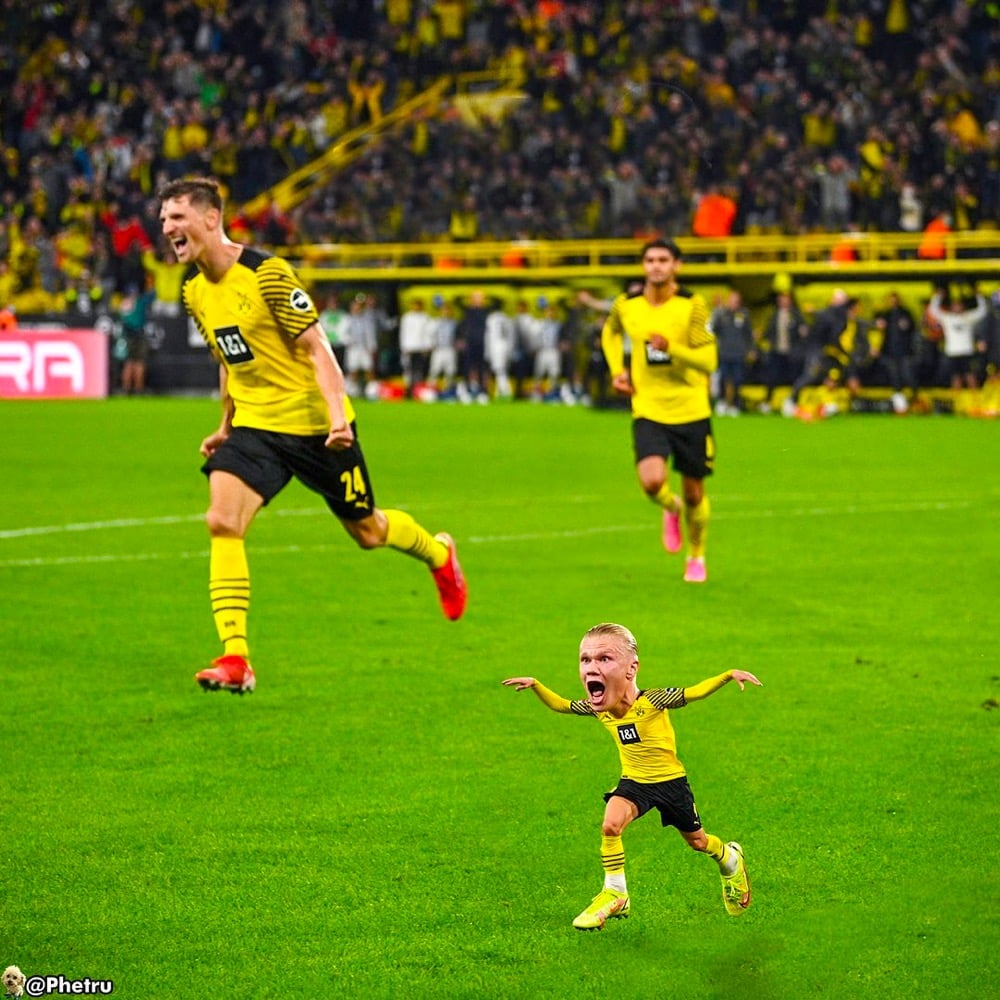
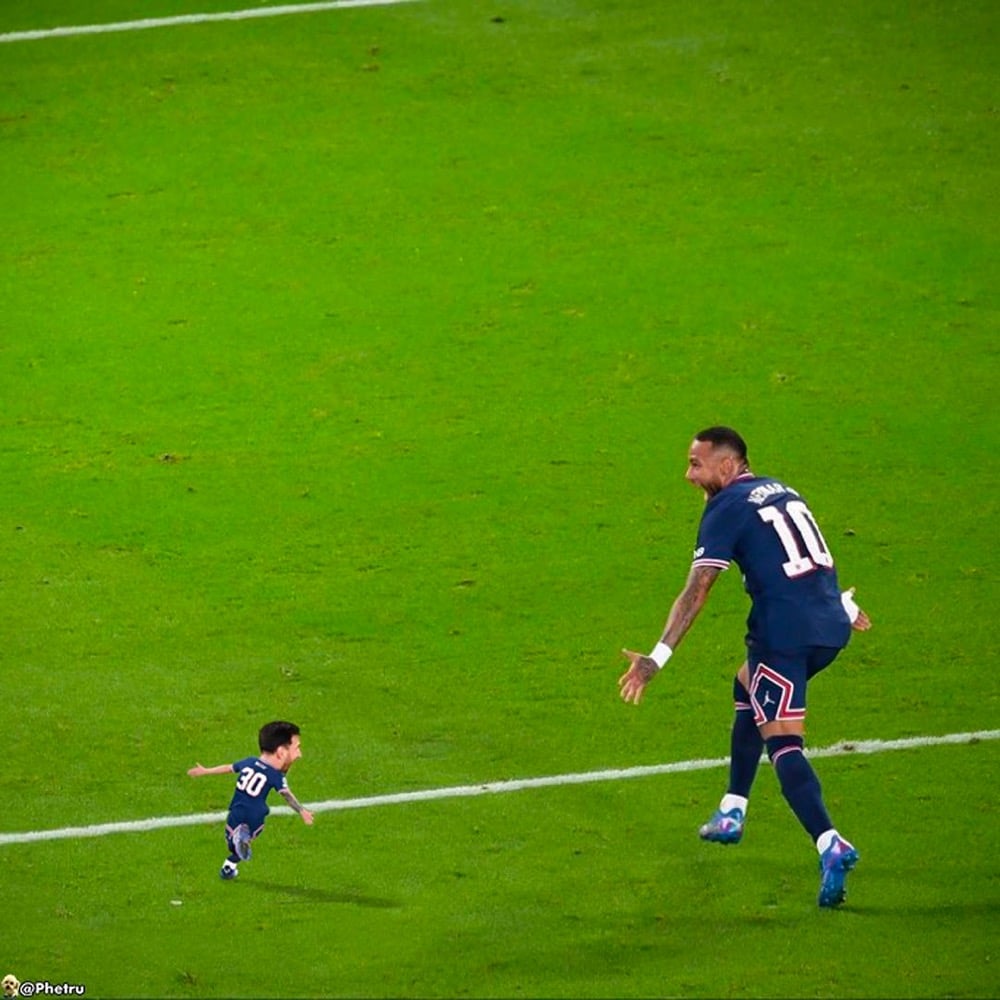
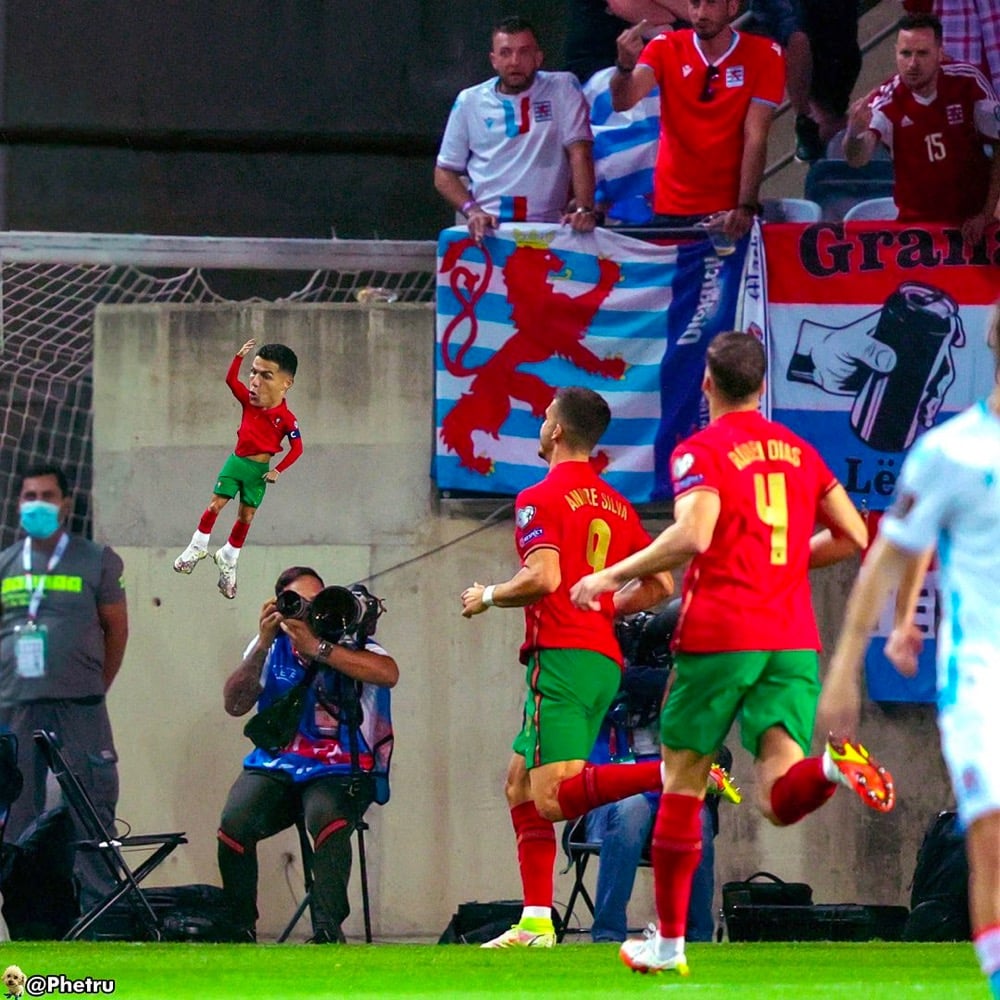
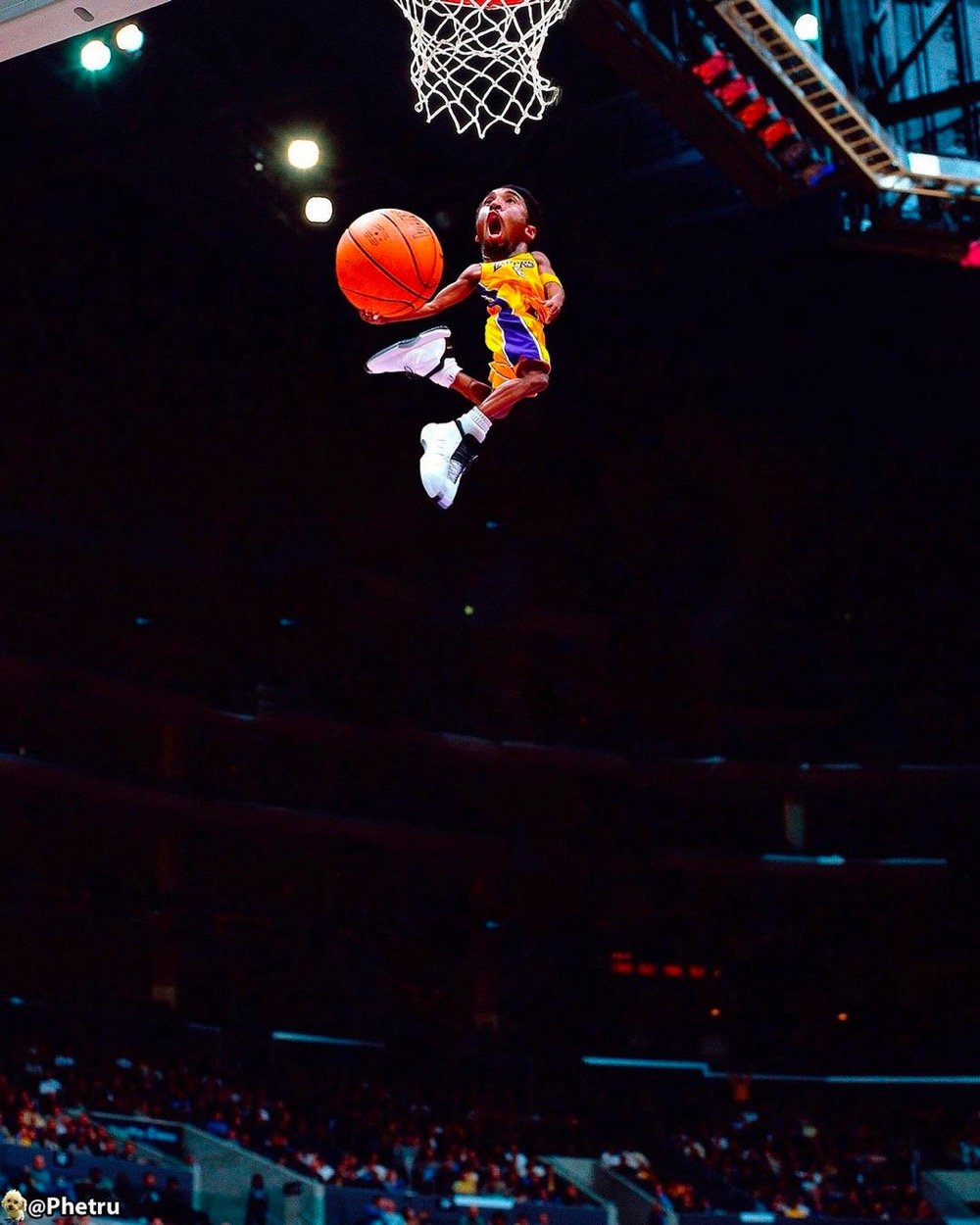
I am a little bit obsessed with Phetru’s miniaturized soccer stars (along with the occasional other sports stars or celebrities, like Kobe above or Emma Raducanu) — they’re like bobbleheads come to life. It was tough picking out just 3 or 4 to feature…each successive photo was funnier than the last.
From 2019 to 2021, a small Spanish football team was renamed Flat Earth FC, both as a publicity stunt and because club president Javi Poves couldn’t understand how water “curves”.
“Football is the most popular sport and has the most impact worldwide, so creating a club dedicated to the flat earth movement is the best way to have a constant presence in the media,” said Poves earlier this year. “Flat Earth FC is the first football club whose followers are united by the most important thing, which is an idea.”
The club’s crest is now a circular image of the earth, pressed flat on to all kits, and fans are encouraged to spark regular conversations in their pursuit of answers from the powers that be. The team mascot? An astronaut. It’s a radical move, but the club is bringing in supporters from afar. “It’s really amazing to be part of this amazing movement,” says Flat Earth player Mario Cardete. “I think it’s more than a club.”
During the pandemic, the club also became anti-mask and anti-vax — because conspiracy theories come in price-saving 3-packs, I guess? Poves resigned in late 2020 and the club was renamed and then purchased by a larger club to become their reserve team. The Earth remains round.
Last week, twelve of the biggest, richest, and best European soccer teams announced they were going to form a new midweek competition called The European Super League. The reaction was swift: fans revolted, soccer governing bodies threatened to kick these teams out of other competitions (with immediate effect, including the Champions League which is presently in the semifinal stage), large-scale condemnation from the press, teams started to back out, and 48 hours after the announcement, the league was all but dead.
So what the hell happened? There have been lots of takes and I obviously haven’t read them all, but here are two I found especially valuable in wrapping my head about the Super League failure and, more importantly, what it can tell us about how power, wealth, community, and attention interact 21 years into this rapidly aging century. First up, Alex Shephard writing for The New Republic: The Existential Crisis That Led to the European Super League Fiasco.
What all of these cultural dinosaurs are confronting, though rarely head on, is the fact that there is no monoculture anymore. They may occupy tremendous cultural space — and a team like Real Madrid is rivaled only by other European soccer teams in the sports world — but it is not and never will be what it was before. The mass appeal these teams enjoyed until fairly recently is not coming back, and it’s not just the fault of Fortnite or FIFA. There are simply too many competitors — and, after all, you can watch the best bits on social media anyways.
O’Hanlon: In addition to the various corporate pressures, it really does seem like the fan reaction made a material difference. Do you find that heartening at all?
Blyth: I think it’s heartening in the following sense. It’s emblematic of broader shifts that are going on right now. Basically we’re all struggling to find a capitalism 4.0, and we’re all fed up with capitalism 3.0, and this is a huge example of the limits of capitalism 3.0. This “I own it. It’s my right. I’ll do what I want with it”. Except, no you won’t because there’s such a thing as a public conception of ownership of these assets, even if you formally own them. There are limits to how far you can push this market logic on the social institutions without provoking a reaction. Karl Polanyi, the Hungarian sociologist and historian from the 1940s, wrote that the big fuck-ups of the 19th century and 20th century were attempts to shove markets down people’s throats to the point where they revolted.
In a sense, what you’re seeing here is a classic Polanyian reaction. So I think it’s heartening in that it shows there are limits to how much you can commodify these social goods even if they are nominally private assets. It’s heartening in another way in that they’re gonna have to have a reckoning with these balance sheets. If you’re not Sheikh Mansour and you’re not Roman Abramovich, how are you going to fund Paul Pogba’s ridiculous salary? And it’s just not clear that you are going to, so there may need to be a restructuring, which would be great because the model is there. Look at how the Germans do this. They invest heavily in talent. They invest heavily in youth, they buy, but they buy judiciously. They don’t pay ludicrous salaries. And the funds own 51 percent of the companies. It’s a perfect model, right? Because they’ve got cooperative ownership between the people who are the kind of social owners. And then you’ve got the titular owners who do the investment, and there’s a balance of those interests.
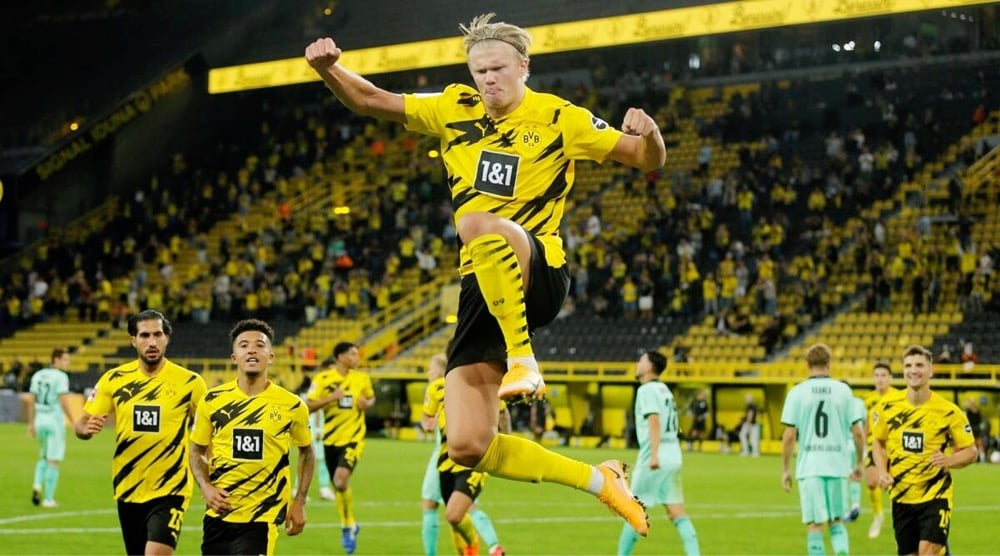
Let me know if there are other Super League pieces out there that I should read — I’ll add them to this post. (Photo above of Erling Haaland because he is a goofy beast and one of the 12 Super League teams is going to pay an absolutely obscene amount of money for him in a few months.)
Apple just announced that season two of Ted Lasso will be premiering on Apple+ on July 23. That’s it, that’s the news. Watch the trailer. Rejoice. Be happy.
Second-tier Scottish football club Inverness Caledonian Thistle doesn’t have a camera operator for matches at their stadium so the club uses an AI-controlled camera that’s programmed to follow the ball for their broadcasts. But in a recent match against Ayr United, the AI controller kept moving the camera off the ball to focus on the bald head of the linesman, making the match all but unwatchable. No fans allowed in the stadium either, so the broadcast was the only way to watch.
Four years to the day after Colin Kaepernick kneeled during the national anthem of an NFL preseason game to protest the oppression of Black people in the United States, the Milwaukee Bucks refused to play their NBA playoff game and set off an NBA-wide strike, as well as strikes by teams in the WNBA, MLB, and MLS. They were reacting to the attempted murder of Jacob Blake by a Kenosha police officer on Sunday and the subsequent inaction by officials to take any disiplinary action against the officer.
The shooting prompted numerous N.B.A. players and coaches to express frustration and anger that the various measures they have been taking for weeks to support the Black Lives Matter movement, such as kneeling during the national anthem and wearing jerseys bearing social justice messages, were having little impact. Some also began to question, as the Nets’ star guard Kyrie Irving did in June before the 2019-20 season resumed, whether providing entertainment through basketball was actually diverting public attention away from the broader social justice movement.
Fueled by that frustration, Milwaukee’s players stunned league officials by organizing Wednesday’s boycott, a walkout that had virtually no precedent in N.B.A. history.
Milwaukee’s George Hill gave a glimpse of the Bucks’ mind-set on Monday when he openly questioned whether the league’s return had successfully amplified the players’ messaging.
“We shouldn’t have even come to this damn place to be honest,” Hill said. “I think coming here just took all the focal points off what the issues are.”
I am not going to stand up to show pride in a flag for a country that oppresses black people and people of color. To me, this is bigger than football and it would be selfish on my part to look the other way. There are bodies in the street and people getting paid leave and getting away with murder.
You can see why the players believe that little has been done to address this state of affairs — there’s definitely more awareness now, but substantive change is not happening.
Update: A previous version of this post referred to the players’ walkout as a boycott (following the Times’ language). While boycott is technically accurate, it is generally used to refer to consumers withholding their purchase power as a protest. Strike is a more exact word to use in a situation where workers are withholding their labor (even though the players are not demanding concessions from their employers), so I updated the post to reflect that. (thx, david)
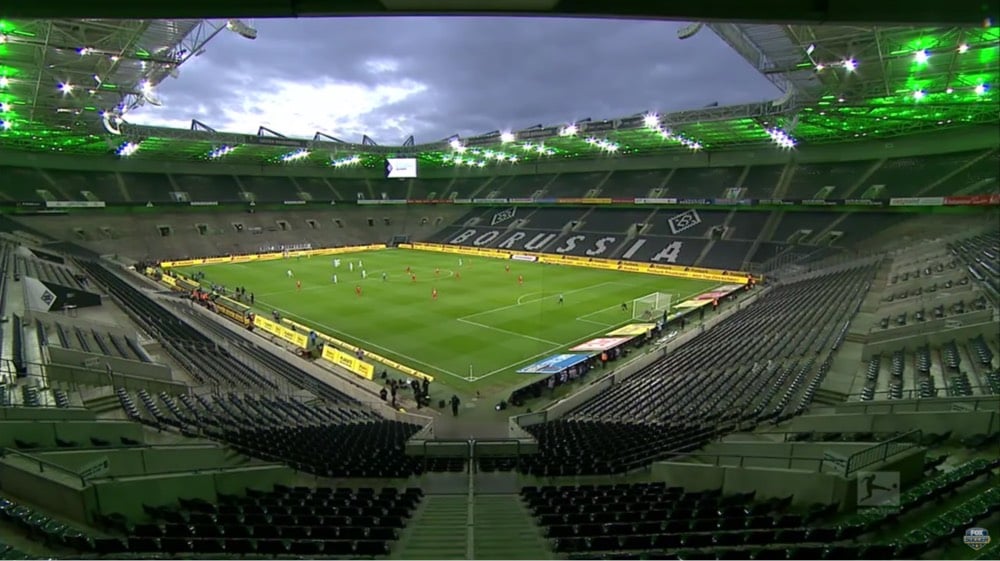
Yesterday I watched a bit of the Champions League match between PSG and Borussia Dortmund, played at the Parc des Princes stadium in Paris, which has a seating capacity of almost 48,000 under normal circumstances. But for yesterday’s game, the game was played in a completely empty stadium in order to help prevent the spread of COVID-19. Without the chants, jeers, and cheers of the crowd, you can clearly hear the actual sounds of the game like the players talking to each other and the ball being kicked.
I’m not sure how much the empty stadium hampered the potential spread of the virus though — PSG fans gathered in huge numbers outside Parc des Princes to cheer on their team during the match and celebrate the win afterwards.
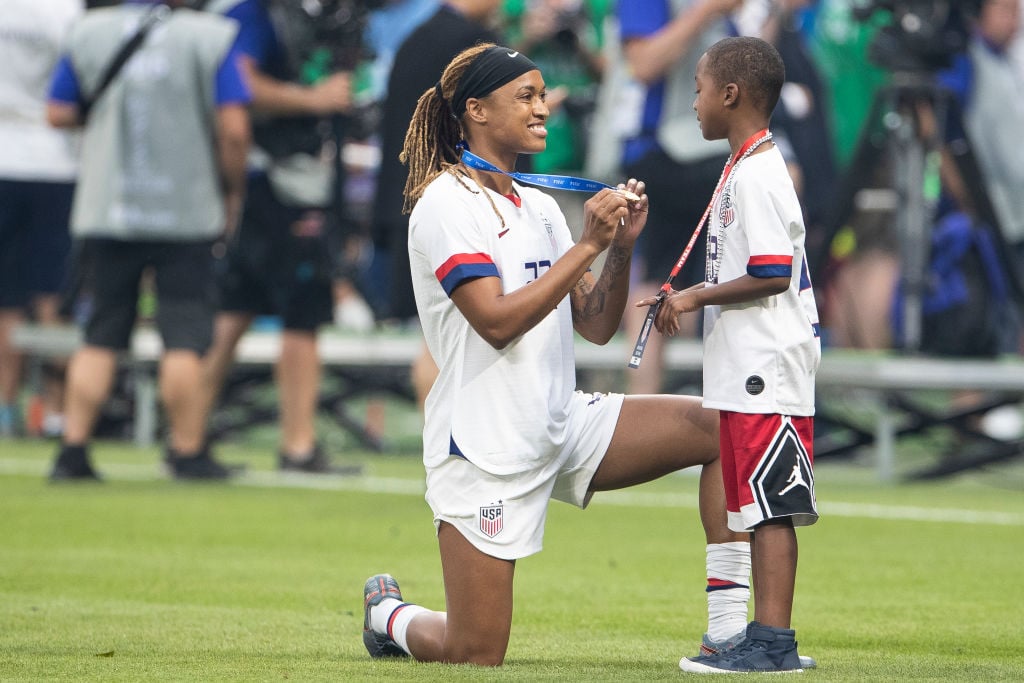
It’s pretty well-known now that the US Women’s National Team for soccer is wildly underpaid, particularly relative to their male counterparts. But those low salaries also effect who gets to play on the team and how they live their lives. In the middle of an interview with Into the Gloss, Jessica McDonald explains how she makes it work.
I’m the only mom on the national team [USWNT]. And then amongst the National Women’s Soccer League [NWSL], there are seven of us. It’s so hard, oh my God. The best way I can describe it is that it takes a lot of mental toughness. Of my career in the NWSL, I’ve only played one season where I wasn’t a mom. Trying to figure out a routine is probably the hardest thing, and because I got traded a lot, I had to find new babysitters and child care all the time. Child care in particular was very difficult, because it’s expensive and we don’t get paid much. If I put [my son] in a daycare, that’s my entire paycheck, you know?
It’s not as if this is a problem unique to championship-winning athletes, but come on. You’d like to think, in a semi-just world, the best of the best could afford day care.
Asif Kapadia, the director of Senna and Amy, has directed a documentary film about footballer Diego Maradona, one of the best to ever lace up the cleats.
Having never won a major tournament, ailing football giant SSC Napoli had criminally underachieved. Their fanatical support was unequalled in both passion and size. None was more feared. But how they ached for success…
On 5th July 1984, Diego Maradona arrived in Naples for a world-record fee and for seven years all hell broke loose. The world’s most celebrated football genius and the most dysfunctional city in Europe were a perfect match for each other.
Maradona was blessed on the field but cursed off it; the charismatic Argentine, quickly led Naples to their first-ever title. It was the stuff of dreams.
But there was a price… Diego could do as he pleased whilst performing miracles on the pitch, but when the magic faded he became almost a prisoner of the city.
The film will debut at Cannes and HBO just bought the TV and streaming rights. Senna is one of my all-time favorite documentaries, so I’m excited for this one.
Update: I’ve embedded the full trailer above and moved the teaser down here:
In his four seasons as manager for FC Barcelona, Pep Guardiola led the club to 14 trophies, including winning the Champions League twice and La Liga 3 times. Sure, he had players like Messi, Eto’o, Xavi, Iniesta, Puyol, Alves, Henry, and Ibrahimović, but as the trailer says, he also knew exactly what to do with them. Take the Ball, Pass the Ball is an upcoming documentary about the Guardiola years at Barca. I’m excited for this…Pep’s first year was right around when I started watching the team in earnest.
The Iceland men’s soccer team is nearly impossible not to root for in this World Cup. They are the smallest nation by population ever to qualify for a World Cup. Their coach is a dentist and still maintains his hometown dental practice. The Skol chant done by the team’s fans is a great addition to the collection of international soccer chants & songs. All great underdog stuff.
Adding to that, their goalkeeper Hannes Thor Halldórsson is a former film director who, until four years ago, pursued soccer as a second job. In anticipation for the World Cup, Halldórsson stepped back into his old job to direct a commercial for Coca-Cola featuring the Icelandic men’s national team and the Skol chant.
Pretty good for a keeper. Is this the best commercial ever made by someone who has also kept clean sheets against both Lionel Messi and Cristiano Ronaldo?
The great Ronaldinho has officially retired from world football at age 37. When you talk about the best football players ever, Ronaldinho has to be part of the conversation. He was awarded three player of the year awards, won the World Cup with Brazil, and won the Champions League with Barcelona. He was also only one of two Barcelona players ever to receive a standing ovation from Real Madrid supporters at their home stadium. More than many other players, he consistently did things with a ball that left you, mouth agape, thanking whatever higher power you believe in that you just witnessed a minor miracle. He was dazzlingly talented and I just loved watching the guy play.
But. Because of issues with fitness, injury, and lifestyle, Ronaldinho didn’t live up to his full potential. He managed only ten seasons of play in the top European leagues and only a handful of those were full seasons at his best. In his final full season at AC Milan, he played well and showed flashes of his best self but ended up leaving halfway though the next season. He was only 31. For reference, Lionel Messi will turn 31 this summer and has played 14 seasons for Barcelona with no signs of slowing; Cristiano Ronaldo will be 33 next month, has played 15 seasons for Manchester United & Real Madrid, and won the Ballon d’Or in 2017 for a record-tying fifth time; and Zlatan Ibrahimovic has played 19 seasons for 7 different top European clubs and scored 50 goals in a season at 34 years of age. If Ronaldinho had been able to combine his talent with fitness and a better mindset for training & competing, perhaps instead of placing him somewhere on the list of the best 100 players of all time, we’d be talking about the top 5 or 10.
There are a ton of videos on YouTube that show Ronaldinho’s skill and best goals. But my two favorite Ronaldinho moments are decidedly less dramatic. The first is when he scored a goal by shooting it under the wall on a free kick:
Many other players have scored similar goals (Ronaldinho himself did it more than once) but he does it in such a casual yet precise way.
Speaking of casual, my all-time favorite Ronaldinho moment didn’t even happen in a game. A fan recorded him warming up before a game, lazily juggling the ball. He boots the ball high in the air and settles it dead on the pitch with such indifference that you can almost hear him yawn. Then he playfully nutmegs a teammate:
I’ve watched this video dozens and maybe even hundreds of times and it never gets old.
Sports superstars are staying superstars longer than ever before. Sure, there have been outliers before (Kareem Abdul-Jabbar, Ted Williams) but increasingly the best players in the major sports are veterans fighting off the ravages of time: Tom Brady, Roger Federer, Cristiano Ronaldo, Gianluigi Buffon, Zlatan Ibrahimovic, Aaron Rodgers, etc.
When players perform at such a high level for so long, we no longer get sick of them. Instead, they become such an ever-present part of sports culture that many of us can’t help but love them. Buffon was launched to superstardom in 2006, when, perhaps already the best goalkeeper in the world, he was one of the faces of a then-unlikable Italian team that controversially made their way to winning the World Cup. Now he probably has a near-100-percent approval rating — still saving enough shots, winning enough games and doing enough stunts to earn it. Ronaldo became a worldwide name after replacing Beckham in the no. 7 shirt for Manchester United and doing a bunch of stepovers. He was unpopular with a segment of English fans for his entire stay in the Premier League; they viewed him as having an overly precious playing style in a game that was supposed to be anything but. Even upon his 2009 departure to Madrid, which came after he delivered every major trophy to Manchester, Ronaldo was mocked for, as this Telegraph headline put it, being a preening peacock: England would miss his footballing talents but not “the theatrics, the astonishing self-regard.”
But if you hang around long enough, you begin to earn a grudging respect from everyone who isn’t a Barcelona fan. If you have closely watched the last decade-plus of Ronaldo, Buffon, Messi, and Zlatan and not seen a play in which you learned to love them, then you haven’t really watched them.
Interesting observation, but I would have liked to read more about why…the piece only quickly mentions “modern training methods [and] technology”. Training and technology have made it possible to blend the energy & power of youth with the wisdom gained through experience, and it’s a potent combination.
P.S. A round of applause for writer Kevin Clark for the line: “It is possible that Ronaldo cannot pass the Turing test.”
As Iwobi suggests, however, they increasingly do more than that: They are not merely representations of the game, but influencers of it. Iwobi is not the only player who believes that what he does on the field has been influenced by what he has seen rendered on a screen.
Ibrahimovic said that he would “often spot solutions in the games that I then parlayed into real life” as a young player. Mats Hummels, the Bayern Munich and Germany defender, has suggested that “maybe some people use what they learn in FIFA when they find themselves on a pitch.”
I’m now an analyst at Plymouth. We’ve just signed the goalkeeper Marc McCallum, who some FM players will remember was an incredible prospect at Dundee United as a kid. I used to sign him all the time. When he came for a trial this summer, he walked in and it was one of the strangest moments in my life. I’ve never met him in person — I’d only ever seen his face on a computer game — but straight away I knew it was him.
I spoke to him at a pre-season game the next day. We got around to the subject of Football Manager and he’d been in charge of Argyle on the last game, getting them to the Premier League and signing himself. I asked him what he did when he first took over, and he said he got rid of all the staff. So I said: “Did you sack me?” And it turned out he’d actually sacked me as well. It was a strange opening conversation to have with someone.
American football and the Madden franchise have a similar relationship. The game is so realistic that prospective players can learn NFL-style offenses and established players like Drew Brees use the game to prep for the games ahead.
The New Orleans Saints quarterback told Yahoo! Sports in an interview this week that modern football simulation games such as Madden NFL have become so realistic that playing them during downtime can actually have a positive impact on the athlete’s on-field performance.
“Down the road it is going to be even more so,” Brees said. “The games are getting more lifelike every year, and everything in Madden is based on what really happens on the field.
“The plays are the same, it is updated all the time and you can go through a lot of stuff without having to get hit. I can definitely see a time when these things are used a lot more to help players.”
EA Sports’ FIFA is one of the most popular sports video games in the world. But it’s also a challenging game to master, which can make for some blooper-filled afternoons with your mates. In these two videos, real players get out onto the pitch to imitate the mannerisms and slip-ups of their video game counterparts.
In Twelfth Man, a short film by Duane Hopkins, you’ll witness the chaotic and occasionally ugly run-up to a football match in one of the most heated rivalries in England, the Tyne-Wear derby pitting Sunderland against Newcastle United. Watching it, I was reminded of the rhetoric and confrontations happening around the US in the presidential primaries. Turns out, equating politics with sports is not far off the mark in this case.
Sunderland and Newcastle are situated 12 miles apart in North East England. After first meeting in 1883, the teams have played a total of 155 matches, with each winning 53 matches (with 49 draws). According to Wikipedia (and ultimately sourced from a pair of texts on the two cities), the rivalry between the two cities dates back to the English Civil War in the 17th century:
The history of the Wear-Tyne derby is a modern-day extension of a rivalry between Sunderland and Newcastle that dates back to the English Civil War when protestations over advantages that merchants in Royalist Newcastle had over their Wearside counterparts led to Sunderland becoming a Parliamentarian stronghold.
Sunderland and Newcastle again found themselves on opposite sides during the Jacobite Rebellions, with Newcastle in support of the Hanoverians with the German King George, and Sunderland siding with the Scottish Stuarts.
If you’re unfamiliar with English football, the entire entry is worth a read, particularly the sections on policing and banning fans during away games and hooliganism. There’s even an entire section on players (and a couple of managers) who have played for both teams, a reminder that although rivalries may stretch back centuries and be rooted in deep political differences, money holds a powerful attraction. (Which brings us right back to the US presidential primaries…)
Update: Matches between the two teams may be hard to come by next year. With a 3-0 win over Everton on May 11, Sunderland secured a place in the Premier League next year and caused Newcastle to be relegated to the Championship, the league below the Premier League. The bitter rivalry rolls on.
Pele: Birth of a Legend is a biopic about the rise of Pele, the Brazilian footballer. It was written and directed by Jeff and Michael Zimbalist, who also directed The Two Escobars, an excellent 30 for 30 film about Colombian drug lord Pablo Escobar and Colombian footballer Andres Escobar. (via @ivanski)
Chris Wondolowski is a striker for the San Jose Earthquakes in MLS. Here’s how he goes about his job of putting the ball in the net. Unsurprisingly, 99% of being a striker involves not kicking a football.
A major part of my job is to lie (sorry, Mom). I have to use deception to manipulate two, sometimes three, defenders guarding me. It’s a 90-minute game of chess. If I know we don’t have the ball in a threatening spot, I’ll often sacrifice my positioning for a little while so I can soften up the defenders for later. I want to build up their confidence and make them think they’re all over me. For example, I always know the exact spot I want to end up when a play is building in the middle of the field. And if I see that my teammate is running down the wing with the ball, I know he’s maybe eight seconds away from crossing the ball into the box. I can’t simply run to my spot right away. I need to use about 7.5 seconds before the potential pass comes to confuse the defenders. I need to make them believe that I’m going anywhere else but that spot.
Wondo is also one of a number of athletes who uses visualization before games to prepare himself for success.
Long before the game starts, whether I’m at home at Avaya Stadium or on the road, I’m already on the field starting my work. But I’m not warming up or kicking a ball around; I’m imagining how the whole game will play out in my head. I walk the entire field listening to music, from one goal area to the other. I’m visualizing where the other 21 men could be, how the ball might come to me, and how I can get it past the defenders and the goalie. I might also picture the ball arcing through the air from a corner kick, then me jumping up, making contact with my head and the ball going into the top corner, splashing against the netting before settling in the grass. (It’s the little details that make it real.) No matter what, in my head, I’m envisioning myself scoring. Every time, the ball lands perfectly in the back of the net.
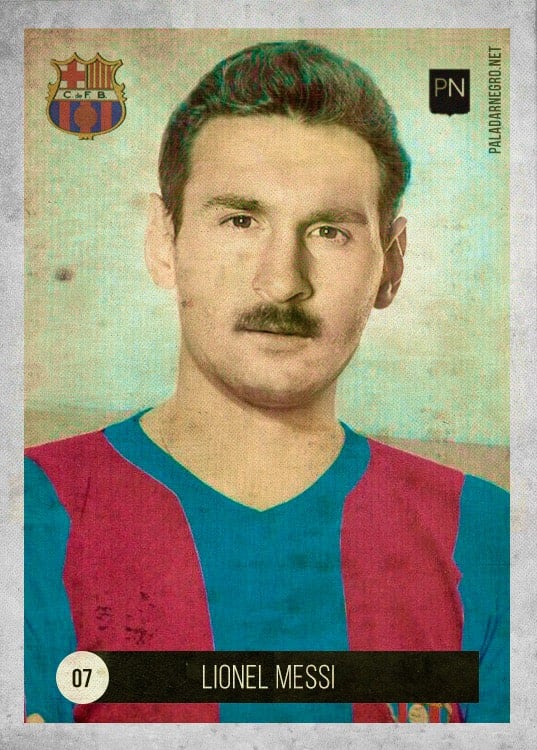
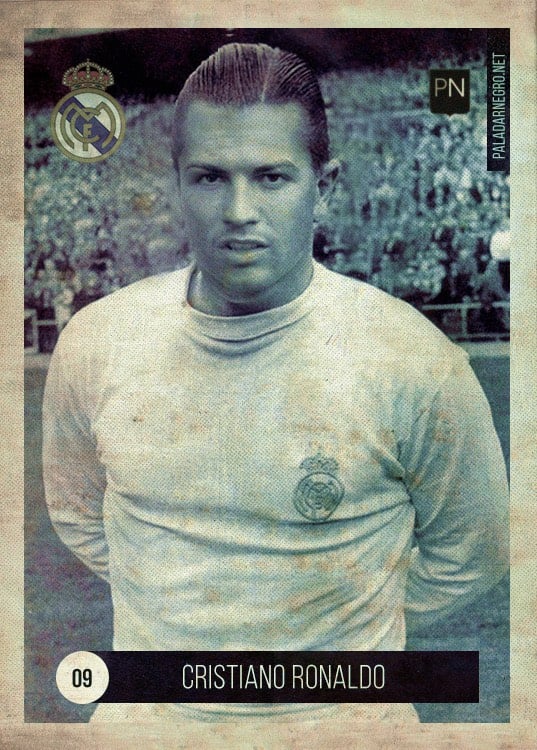
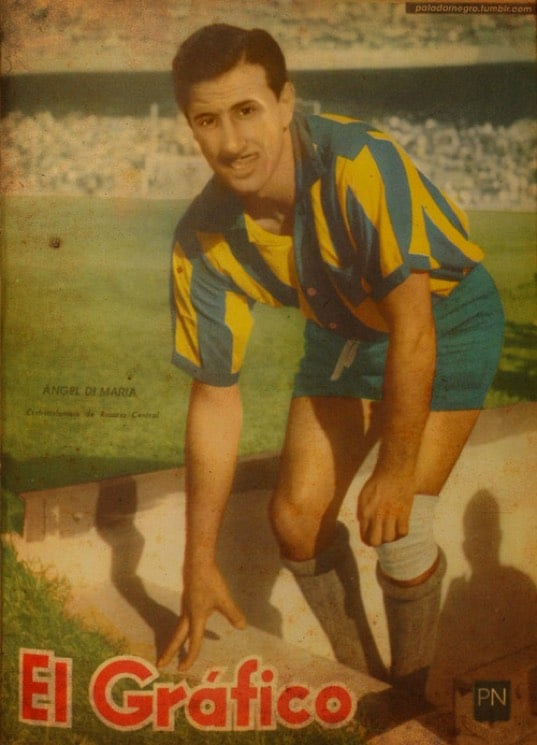
If you want to see what Leo Messi, Cristiano Ronaldo, and Neymar might have looked like if they played in the 1950s/60s, Paladar Negro photoshopped some Barcelona & Real Madrid players onto old timey trading cards.
They previously did a similar project with Argentinian players…this one of Angel Di Maria is amazing:
While reading this otherwise excellent article written by US soccer player Christie Rampone, I discovered a type of diet I’d never heard of before, the blood type diet (italics mine).
Age and parenting make me think about longevity. I definitely believe one big reason for my longevity has to do with the dietary and fitness changes I made after being diagnosed with auto-immune conditions after giving birth to my youngest daughter Reece in 2011. For example, I’ve gone gluten-free and have started to eat to my blood-type. Also, a friend introduced me to a natural ingredient called EpiCor to help strengthen my immune system. I have taken EpiCor daily for the past three years and it has become a beneficial part of my daily routine of rest, recovery, working out, eating healthy, and being in airports and hotels more than my own house.
The underlying theory of blood type diets is that people with different blood types digest lectins differently, and that if people eat food that is not compatible with their blood type, they will experience many health problems. On the other hand, if a person eats food that is compatible, they will be healthier.
That theory is, in turn, based on an assumption that each blood type represents a different evolutionary heritage. “Based on the ‘Blood-Type’ diet theory, group O is considered the ancestral blood group in humans so their optimal diet should resemble the high animal protein diets typical of the hunter-gatherer era. In contrast, those with group A should thrive on a vegetarian diet as this blood group was believed to have evolved when humans settled down into agrarian societies. Following the same rationale, individuals with blood group B are considered to benefit from consumption of dairy products because this blood group was believed to originate in nomadic tribes. Finally, individuals with an AB blood group are believed to benefit from a diet that is intermediate to those proposed for group A and group B.”
As you might have already guessed, there is no evidence that eating your blood type is beneficial nor do the claims of differing lectin digestion have scientific merit. Homeopathic nonsense.
This goal by Lionel Messi in the Copa del Rey final over the weekend is just out of this world.
You’ll notice:
1. He takes on three defenders at once and beats them all by himself, even though they had him pinned against the sideline.
2. There is only a brief moment during his run that the ball is more than a foot and a half away from his feet. The combination of his fierce pace and that delicate delicate touch is unstoppable.
3. The ball never gets away from him because by the time that he kicks it, he has already moved to receive it. This is most evident on his final touch, right before he tucks it inside the near post…he’s already moved to the left to receive the pass before he taps it to himself.
4. How did he find the space between the keeper and the near post for that?





Stay Connected