kottke.org posts about war
Timur Fatkullin is a Ukrainian flying ace who uses his acrobatic flying skills honed before the war to shoot down Russian drones.
When I fly close to the target, I can’t engage because there’s houses or infrastructure underneath. So we keep flying, keeping it in the searchlight, in the spotlight. And we’re not even, because it’s like 200 kilos target and we’re six tons, and it’s black Shahed in the black night. But from my aerobatics, I brought formation flying. You have to be professional, you have to be confident, practice a lot, anticipate a lot, and trust completely each other. There’s no other way. So these skills help enormously, and with this aircraft, we can stay in the air up to 4.5 hours. It’s my devotion, not just to my country, but to aviation. That’s the truth.
As you can see in this video from the NY Times, planes like these shoot the drones down using low-fi techniques: with machine guns mounted in the planes’ doorways.
One of the drone-hunting pilots, who are civilian volunteers: “Standing aside and doing nothing is impossible. For our team, it’s impossible.”
And from a different perspective, here’s a WSJ video profile of a Ukrainian drone pilot:
The Night Witches were an all-female Soviet bomber regiment that attacked Nazi forces during World War II.
An attack technique of the night bombers involved idling the engine near the target and gliding to the bomb-release point with only wind noise left to reveal their presence. German soldiers likened the sound to broomsticks and hence named the pilots “Night Witches”.
Some of the aviators were Jewish, like Polina Gelman:
She would be among a half-million Jews who are believed to have served in the Red Army, according to Yad Vashem. They fought not only for the survival of the Soviet Union, but also against the annihilation of their people in Nazi death camps in Poland.
“I have decided to go to the front,” Gelman wrote to her mother, adding, “I am a daughter of the Jewish people” with “a particular account” to settle with Hitler.
The women were barely given proper aircraft — crop dusters! — but they were quiet & maneuverable, ideal for night attacks:
The regiment flew in steel-and-canvas Polikarpov U-2 biplanes, a 1928 design intended for use as training aircraft (hence its original uchebnyy designation prefix of “U-“) and for crop dusting, which also had a special U-2LNB version for the sort of night harassment attack missions flown by the 588th. The plane could carry only 350 kilograms (770 lb) of bombs, so eight or more missions per night were often necessary. Although the aircraft was obsolete and slow, the pilots took advantage of its exceptional maneuverability; it also had a maximum speed that was lower than the stalling speed of both the Messerschmitt Bf 109 and the Focke-Wulf Fw 190, which made it very difficult for German pilots to shoot down…
There are many possible and plausible answers to this simple question. Timothy Snyder offers a useful perspective in helping answer it:
How do [we] understand the war with Iran? We must get away from the propaganda and ask why this might be happening, in light of the facts that we do know.
These facts suggest two interpretive frameworks: a foreign war as a mechanism to destroy democracy at home; and a foreign war as an element of personal corruption by the president of the United States.
From the United States, the most plausible angle of view is domestic politics, not foreign policy.
Trump is not a conventionally intelligent person and is losing his wits to age, but he remains an instinctual genius. There’s no grand plan here and there doesn’t need to be; he’s just moving towards his flame: enrichment for himself, entrenching power, and instability for everyone else.
The Track is a documentary film about a group of athletes training in post-war Bosnia to make the Olympics in luge.
The Track is a coming-of-age journey of three friends chasing their improbable Olympic dreams in post-war Bosnia. Training on a crumbling track left behind from the 1984 Sarajevo Winter Olympics, the boys are guided by their devoted coach Senad, whose fight to rebuild the neglected track mirrors his determination to create a future for his athletes in a country facing one of the highest youth unemployment rates in Europe.
Filmed over five transformative years, The Track captures an intimate and deeply human coming-of-age story set against the backdrop of a nation still recovering from the scars of war, political corruption, and rising nationalism. As the boys balance Olympic ambition with the pull of street life, heartbreak, and survival, their paths begin to diverge, revealing the stark realities young people face in modern Bosnia.
You can check the website for online and IRL showings; it’s on Amazon Prime in the US.
From the V&A Museum, here’s a 90-minute video of someone knitting a pair of gloves using a knitting pattern from the 1940s from the museum’s archive.
Featuring soft-spoken moments, natural yarn sounds, needles gently tapping, and the soothing rhythm of slow, careful making, this video is designed for deep relaxation, calm focus, and background ambience, perfect for studying, crafting, or winding down at the end of the day.
And from the knitting patterns page, some history:
Hand-knitting was at a peak in Britain in the 1940s. During the Second World War, women on the home front were encouraged to contribute to the war effort by knitting for the troops, which was promoted as public duty. Advertising at the time stated: ‘England expects – knit your bit’.
Many knitting patterns were given away free, while wool was also sent to schools so that children could knit gloves, scarves and balaclava helmets for the forces. Wool was also supplied to organisations such as the Women’s Institutes of England and Wales, who made over 22 million knitted garments for the Red Cross (an average of 67 garments per member). Parcels of their knitwear were sent to prisoners of war, as well as to troops.
I know we’ve got some knitters in the group…have you ever tried any of these patterns? If not, report back if you give them a try.
In this video, 98-year-old British WWII veteran Ken Turner demolishes a Tesla with a Sherman tank. Here’s what Turner had to say before getting down to business:
I’m old enough to have seen fascism the first time around; now it’s coming back. Elon Musk, the richest man in the world, is using his immense power to support the far-right in Europe, and his money comes from Tesla cars. Well, I’ve got this message for Mr Musk. We’ve crushed fascism before and we’ll crush it again.
(via @prisonculture.bsky.social)
On Friday, Heather Cox Richardson spoke at an event marking the 250th anniversary of the lighting of the lanterns at Boston’s Old North Church. The lantern lighting — “one if by land, two if by seas” — was part of years-long effort by some American colonists to resist what they thought of as unjust behavior by a tyrant king, and led to the start of the Revolutionary War. Richardson’s speech is well worth reading.
It was hard for people to fathom that the country had come to such division. Only a dozen years before, at the end of the French and Indian War, Bostonians looked forward to a happy future in the British empire. British authorities had spent time and money protecting the colonies, and colonists saw themselves as valued members of the empire. They expected to prosper as they moved to the rich lands on the other side of the Appalachian Mountains and their ships plied the oceans to expand the colonies’ trade with other countries.
That euphoria faded fast.
Almost as soon as the French and Indian War was over, to prevent colonists from stirring up another expensive struggle with Indigenous Americans, King George III prohibited the colonists from crossing the Appalachian Mountains. Then, to pay for the war just past, the king’s ministers pushed through Parliament a number of revenue laws.
In 1765, Parliament passed the Stamp Act, requiring the payment of a tax on all printed material—from newspapers and legal documents to playing cards. It would hit virtually everyone in the North American colonies. Knowing that local juries would acquit their fellow colonists who violated the revenue acts, Parliament took away the right to civil trials and declared that suspects would be tried before admiralty courts overseen by British military officers. Then Parliament required colonials to pay the expenses for the room and board of British troops who would be stationed in the colonies, a law known as the Quartering Act.
But what Parliament saw as a way to raise money to pay for an expensive war—one that had benefited the colonists, after all—colonial leaders saw as an abuse of power. The British government had regulated trade in the empire for more than a century. But now, for the first time, the British government had placed a direct tax on the colonists without their consent. Then it had taken away the right to a trial by jury, and now it was forcing colonists to pay for a military to police them.
You can also watch Richardson give her speech at the Old North Church (she begins at the ~1:18:30 mark):
You can also listen to her read it on Apple Podcasts, Spotify, or wherever you get your podcasts. (thx, meg)
Writing from Ukraine on his way to the front in the country’s war with Russia, Timothy Snyder muses about the differences in life & freedom on the Ukrainian & Russian sides of the war’s front line.
Yet, on this, the Ukrainian side of the line, people lead completely different lives than under Russian occupation or in Russia. Ukrainians say what they want, including about the war and about politics. Journalists cover the war and write about politics. There is fear, although less than you might think; but it is fear of bombs and missiles and violence from Russia, not of denunciations or oppression or of one’s own government. I have the strange feeling, this week in Kyiv, that Ukrainians are living freer lives now than Americans. At a book store where I was talking to a Ukrainian philosopher about freedom, a young woman put her hand on my arm and said “sorry about the U.S.”
Snyder then goes on to wonder if the United States is now headed towards a similar line:
I have in mind something deeper: the transformation of our public and private lives. As in Russia, we have let local newspapers and local media die. As in Russia, their place was taken by a few commercial operations. As in Russia, the media are owned by oligarchs, who then become close to government or submit to it (not all of the media in America, of course, are submitting, but far too many are). As in Russia, our daily lives are flooded by such a rushing river of contradictory lies that we have trouble knowing where we are, let alone what we should do. As in Russia, a president supported by oligarchs and their media power is trying to humiliate the other branches of government. The executive is seeking to marginalize the legislature — forever — by ruling without passing laws. The executive is seeking to marginalize the judiciary — forever — by ignoring court rulings. Those things, of course, have already happened in Russia.
This passage made my stomach drop:
As I close my tablet and go to sleep, I am safer than every single one of you reading this in the United States, and indeed safer than I would be in the United States. My train will stop in five hours. But America will keep hurtling.
It’s a great, provocative piece; read the whole thing.
80 years ago today, the Nazi death camp at Auschwitz-Birkenau was liberated. An estimated 1.1 million people (Jews, Poles, Russian POWs, Roma) were murdered at Auschwitz-Birkenau between 1940 and 1945, and this date was subsequently chosen by the United Nations as International Holocaust Remembrance Day.
One of the things you can do to mark the day is to join Yad Vashem’s IRemember Wall:
The IRemember Wall is a unique and meaningful opportunity for you to participate in an online commemorative activity marking International Holocaust Remembrance Day.
By joining our IRemember Wall, your name will be randomly matched to the name of a Holocaust victim from our Central Database of Shoah Victims’ Names, and will appear together on the Wall.
You can also choose a specific name to remember and match with on the Wall from our Central Database of Shoah Victims’ Names, which contains over 4.8 million names of Holocaust victims.
As he does every year, illustrator Christoph Niemann drew the person he matched with and shared the story of her life.
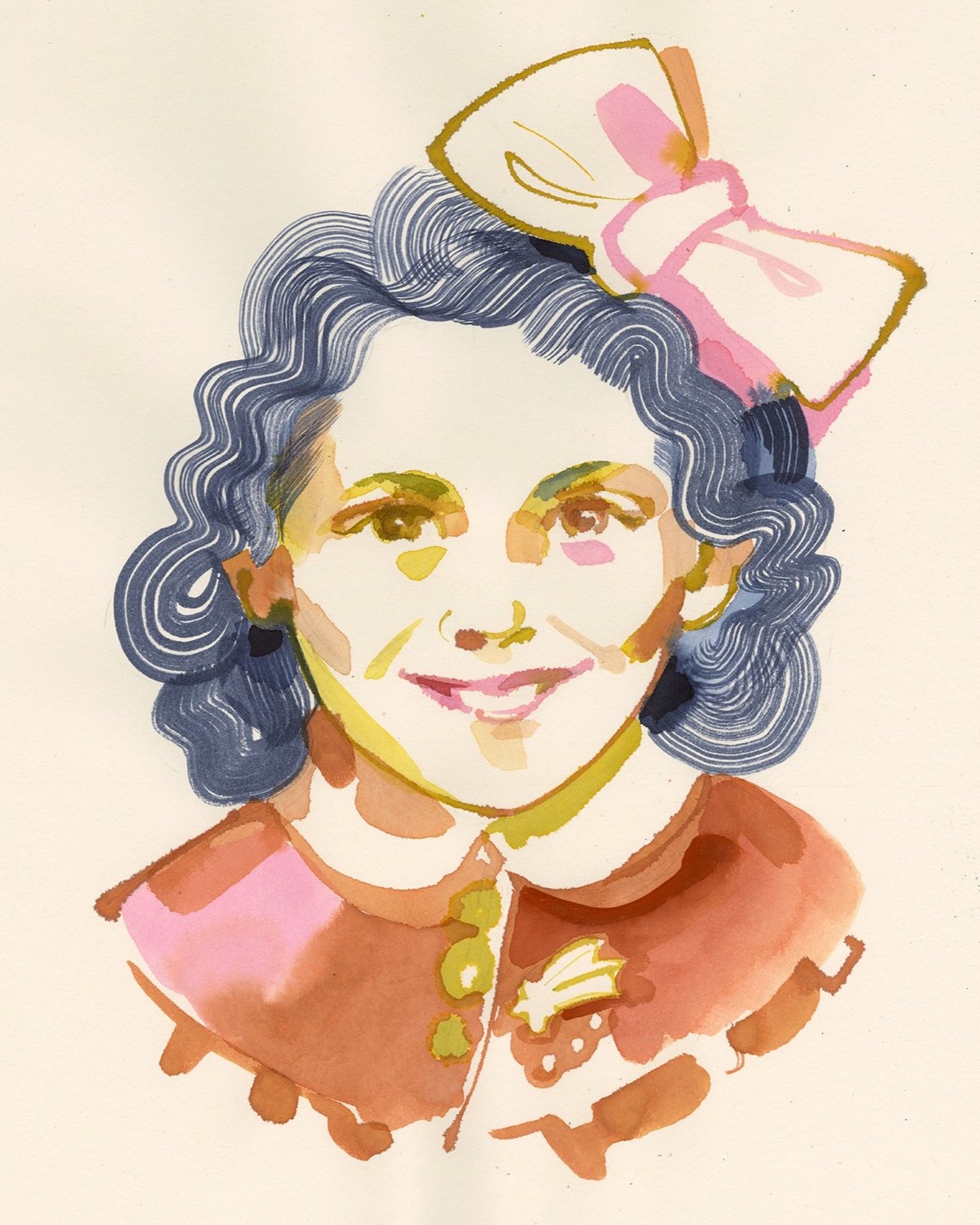
This year I was paired with Astro Cofino. We have very little biographical information: she was born in 1930 in Athens, her parents were called Benoua and Mairy. The first thing that caught my eye when I saw Astro’s photo was a little brooch she’s wearing: it looks like a comet, and I can’t help but thinking that it was meant as a reference to her name? Astro is maybe 11 or 12 in the picture, she smiles, with a tiny hint of giddiness in her eyes.
Here’s Astro’s information from Yad Vashem’s database — she was murdered by the Nazis at Auschwitz when she was 14.
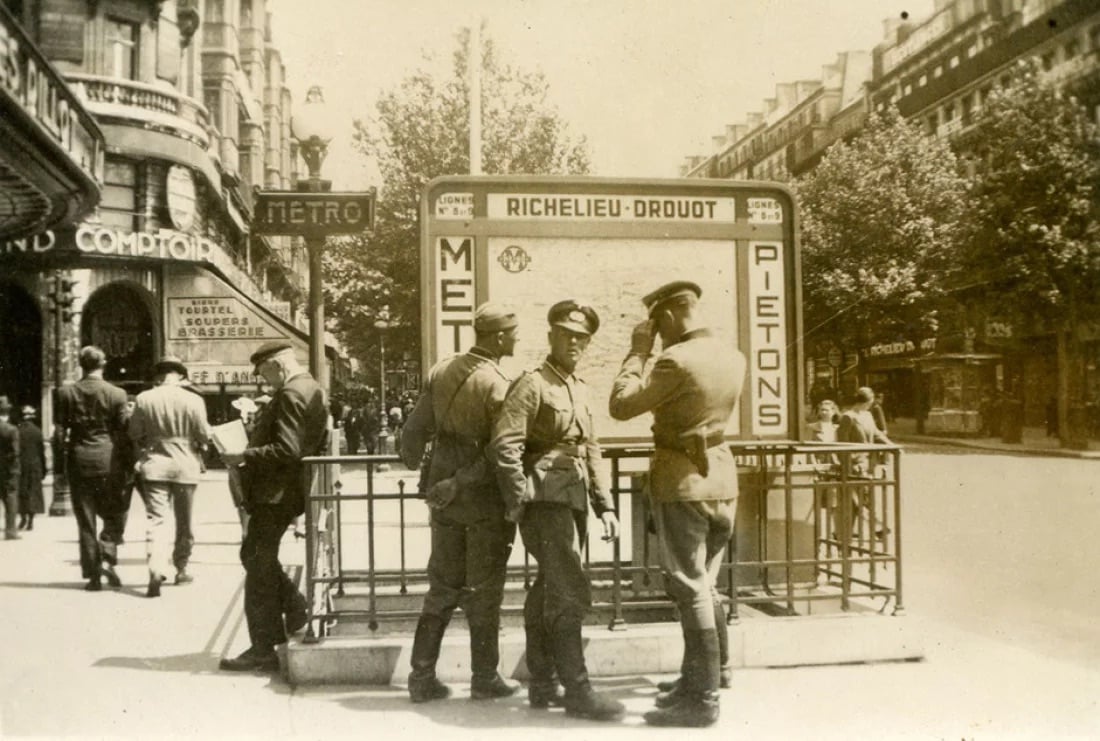
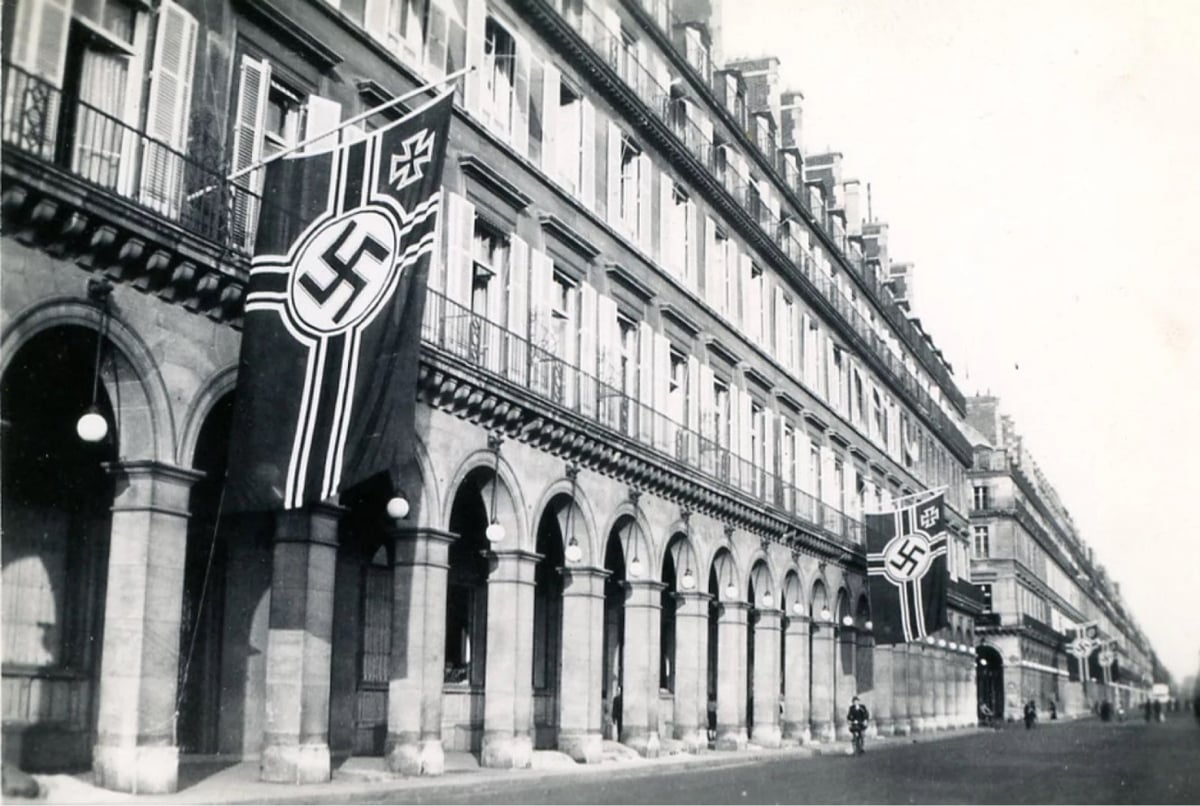
In 2020, Stéphanie Colaux discovered an album of photos of Nazi-occupied Paris at a French flea market.
“As I flipped through the pages I realized, my God, it’s all scenes of [Nazi] occupied Paris. And I knew I’d found a treasure,” she says. “And then I read the little note in the front. ‘If you find this album,’ it said, ‘take care of it and have the courage to look at it.’ I thought, someone sent a message in a bottle and I just found it.”
The discovery set off a hunt for the unknown photographer, who took the photos at the risk of their own life — the unauthorized taking of such photos was “punishable by imprisonment or death”. The story of the search is very much worth reading.
Adding to the intrigue were the captions on the back of the photos, written in block letters as if someone were trying to mask their handwriting. Not only was the location, date and exact time of day noted, but there was also often a snarky caption about the German soldiers, whom the photographer referred to, pejoratively, as “Fritzes.”
One read: “After 10 months of Occupation, the Fritzes still can’t find their way around Paris.”
“The words are very sarcastic,” Broussard says. “There is a kind of irony. For example, he says ‘our protectors.’”
A copy of the letter written and signed by Albert Einstein in 1939 warning President Franklin Roosevelt of the possibility of Nazi Germany building nuclear weapons is up for auction next week at Christie’s. The estimate is $4-6 million.

The present letter is based directly on the content that Einstein dictated in German. Leo Szilard then translated the text into English and dictated it in turn to a Columbia University typist. Unsure of the level of detail to present to the chief executive, Szilard also made a longer version that recommended specific administrative steps the President could take to support uranium research. The longer version was the one delivered to the White House. It has rested, since 1945, in the permanent collection of the Franklin D. Roosevelt Library at Hyde Park, New York and has been referenced in myriad histories and biographies. It is arguably the single-most influential letter of the twentieth century. Leo Szilard retained the original version of that historic communication and it is offered here, together with Einstein’s handwritten letter to Szilard transmitting both signed letters addressed to the President of the United States.
The letter reads in part:
Recent work in nuclear physics made it probable that uranium may be turned into a new and important source of energy. New Experiments performed by E. Fermi and L. Szilard, which have been communicated to me in manuscript, make it now appear likely that it will be possible to set up a chain reaction in a large mass of uranium and thereby to liberate considerable quantities of energy. Less certain, but to be kept in mind, is the possibility of making use of such chain reactions for the construction of extremely powerful bombs.
Nuclear weapons historian Stephen Schwartz writes more about the letter on Bluesky:
On August 15, Szilard mailed the letter to prominent economist Alexander Sachs, who had formerly worked for Roosevelt, after trying and failing (at Sach’s suggestion) to get Charles Lindbergh to personally deliver the letter to the president.
Sachs did not immediately reach out to Roosevelt. Then, on September 1, Hitler invaded Poland and Roosevelt became preoccupied with the war. Sachs finally met with Roosevelt on October 11, bringing not only the letter but scientific reports and papers provided by Szilard.
The letter is being sold by the estate of late Microsoft co-founder Paul Allen. The series of Allen auctions also include notable items like an Apple I computer, an Enigma machine, a Cray-1 supercomputer, a NASA flight suit worn by Buzz Aldrin, and a cool-ass meteorite.

Oh man, I screwed up big-time you guys and owe you an apology. The great Erik Larson (The Devil in the White City, The Splendid and the Vile, In the Garden of Beasts) came out with a new book two weeks ago and I somehow missed it! I almost shrieked when I saw it on the bookstore front table yesterday.
Anyway, the book is called The Demon of Unrest: A Saga of Hubris, Heartbreak, and Heroism at the Dawn of the Civil War (bookshop.org). Here’s the synopsis:
On November 6, 1860, Abraham Lincoln became the fluky victor in a tight race for president. The country was bitterly at odds; Southern extremists were moving ever closer to destroying the Union, with one state after another seceding and Lincoln powerless to stop them. Slavery fueled the conflict, but somehow the passions of North and South came to focus on a lonely federal fortress in Charleston Harbor: Fort Sumter.
Master storyteller Erik Larson offers a gripping account of the chaotic months between Lincoln’s election and the Confederacy’s shelling of Sumter — a period marked by tragic errors and miscommunications, enflamed egos and craven ambitions, personal tragedies and betrayals. Lincoln himself wrote that the trials of these five months were “so great that, could I have anticipated them, I would not have believed it possible to survive them.”
With a movie out in theaters called Civil War and southern states once again agitating for “”“state’s rights”“” (I really can’t put enough exaggerated air-quotes around that phrase) in order to control bodily freedoms, The Demon of Unrest is really timely; Larson himself connects the events of the book with January 6th in a reader’s note:
I was well into my research on the saga of Fort Sumter and the advent of the American Civil War when the events of January 6, 2021, took place. As I watched the Capitol assault unfold on camera, I had the eerie feeling that present and past had merged. It is unsettling that in 1861 two of the greatest moments of national dread centered on the certification of the Electoral College vote and the presidential inauguration.
I was appalled by the attack, but also riveted. I realized that the anxiety, anger, and astonishment that I felt would certainly have been experienced in 1860-1861 by vast numbers of Americans. With this in mind, I set out to try to capture the real suspense of those long-ago months when the country lurched toward catastrophe, propelled by hubris, duplicity, false honor, and an unsatisfiable craving on the part of certain key actors for personal attention and affirmation. Many voices at the time of Sumter warned of civil war, but few had an inkling of what that might truly mean, and certainly none would have believed that any such war could take the lives of 750,000 Americans.
History may not repeat itself, but it sure does rhyme. So anyway, I’m 60+ pages in and can already recommend it — you can get The Demon of Unrest at Amazon or bookshop.org.
In 1953, shortly after taking office and Joseph Stalin’s death, President Dwight Eisenhower gave a speech to the American Society of Newspaper Editors that has come to be known as the Chance for Peace speech.
Every gun that is made, every warship launched, every rocket fired signifies, in the final sense, a theft from those who hunger and are not fed, those who are cold and are not clothed. This world in arms is not spending money alone.
It is spending the sweat of its laborers, the genius of its scientists, the hopes of its children.
The cost of one modern heavy bomber is this: a modern brick school in more than 30 cities.
It is two electric power plants, each serving a town of 60,000 population.
It is two fine, fully equipped hospitals. It is some 50 miles of concrete highway.
We pay for a single fighter plane with a half million bushels of wheat.
We pay for a single destroyer with new homes that could have housed more than 8,000 people.
This, I repeat, is the best way of life to be found on the road the world has been taking.
This is not a way of life at all, in any true sense. Under the cloud of threatening war, it is humanity hanging from a cross of iron.
Some 70 years later, the theft not only continues but has been outsourced around the world and into our communities. (via clayton cubitt)
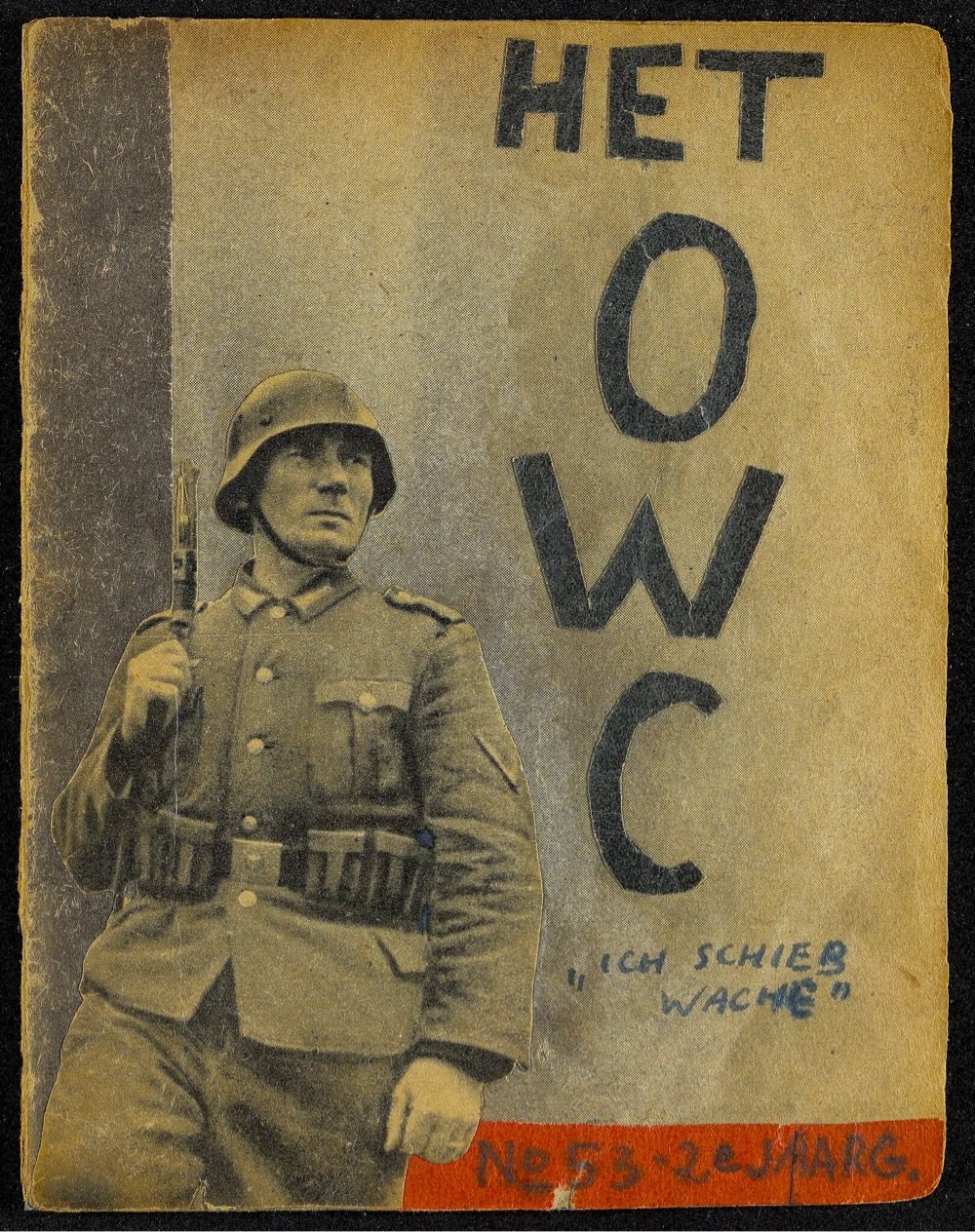
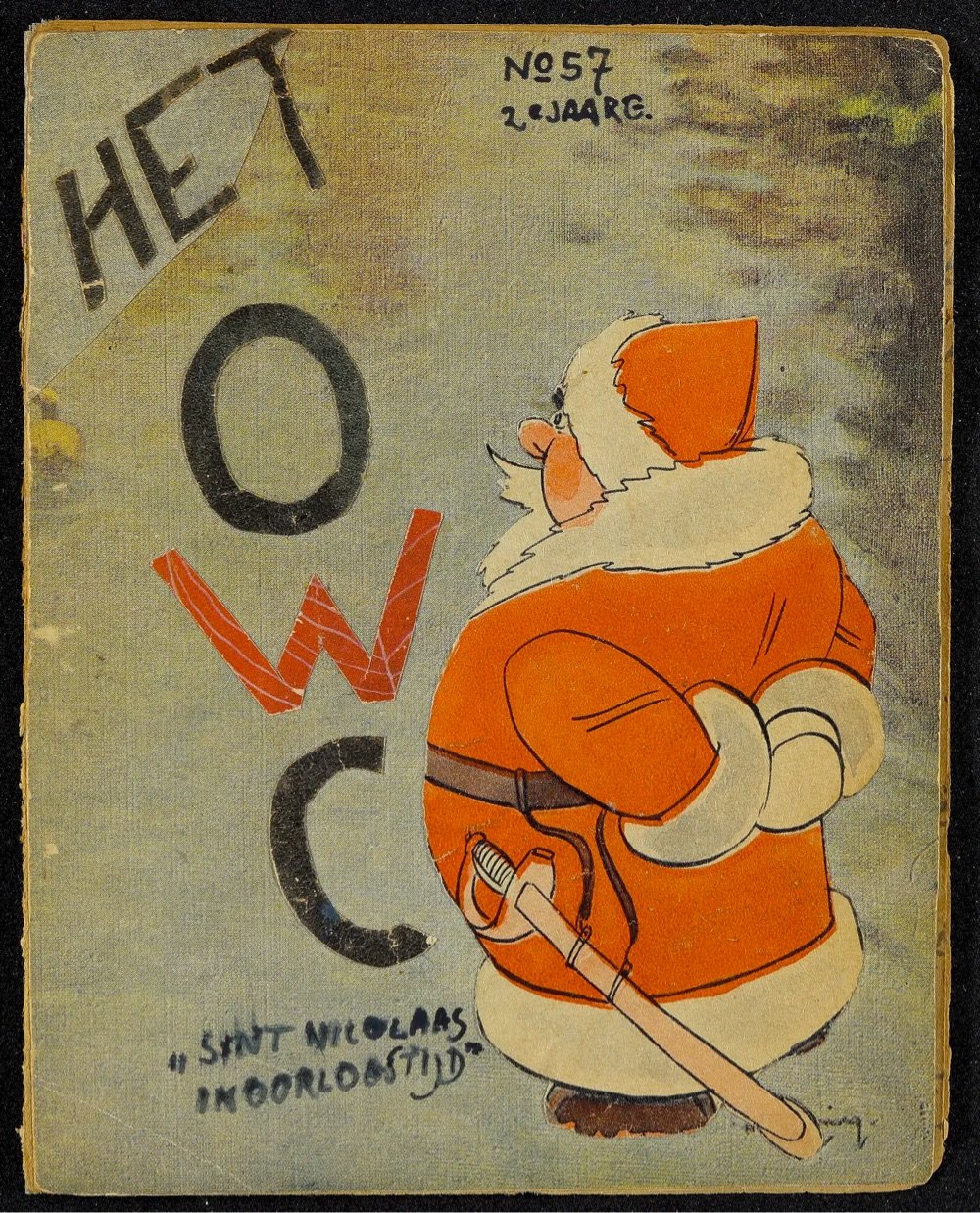
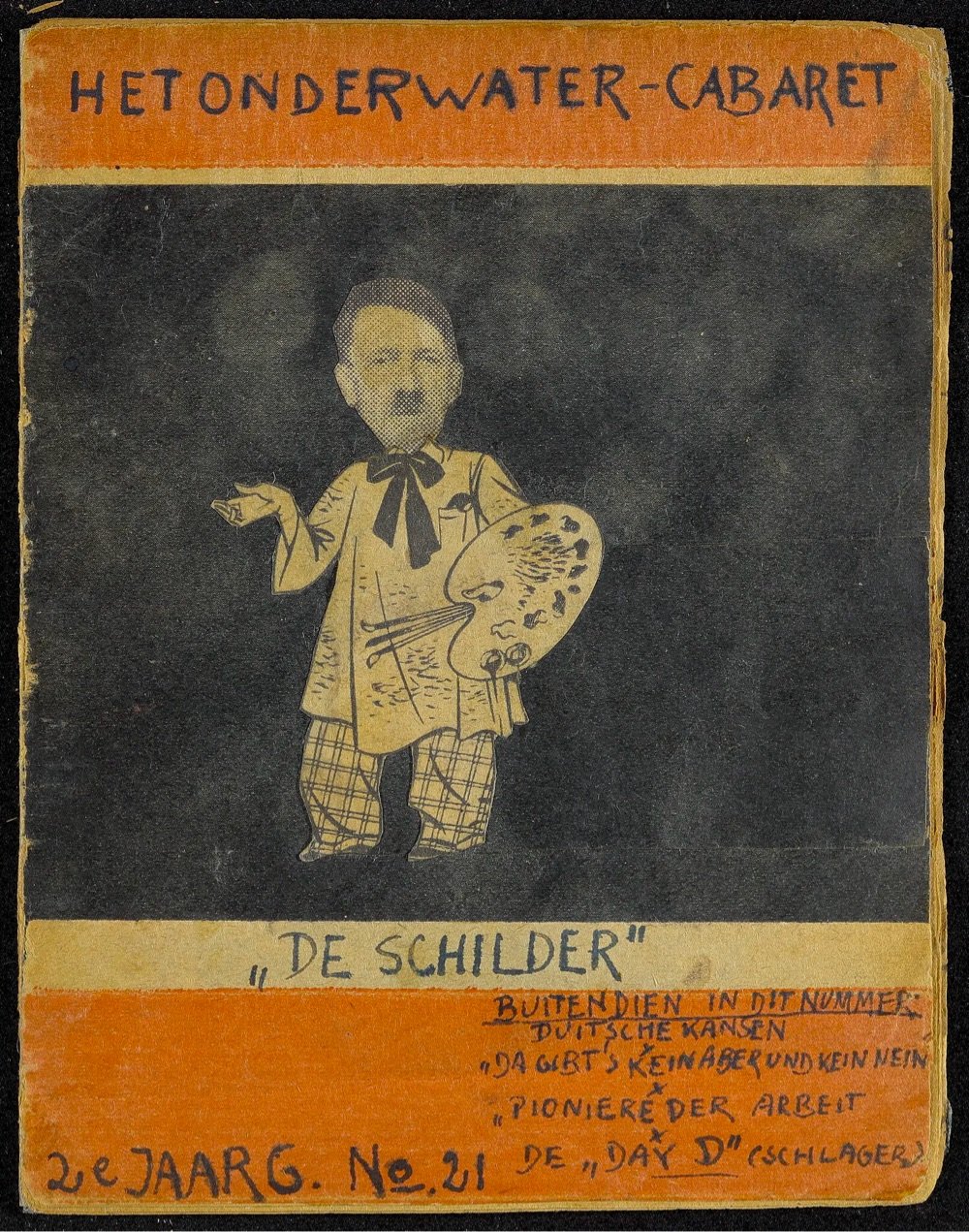
Kurt Bloch, a German Jew hiding in the crawl space of a Dutch attic, published 95 editions of a zine from 1943 to 1945.
Each issue included original art, poetry and songs that often took aim at the Nazis and their Dutch collaborators. Bloch, writing in both German and Dutch, mocked Nazi propaganda, responded to war news and offered personal perspectives on wartime deprivations.
Each edition consisted of a single copy that was passed around to trusted readers and, incredibly, all 95 copies have survived to the present day.
Each edition of Bloch’s magazine consisted of just a single copy. But it may have been read by as many as 20 to 30 people, Groeneveld estimated.
“There was huge organization behind him, which included couriers, who brought food, but who could also bring the magazine out, to share with other people in the group who could be trusted,” Groeneveld said. “The magazines are very small, you can easily put one in your pocket or hide it in a book. He got them all back. They must have also returned them in some way.”
(via open culture)
In their latest video, Kurzgesagt takes a break from their more serious topics to consider a scenario from the realm of science fiction: interstellar combat. Using technology that is theoretically available to us here on Earth, could a more advanced civilization some 42 light years away destroy our planet without any warning? They outline three potential weapons: the Star Laser, the Relativistic Missile, and the Ultra-Relativistic Electron Beam.
Here’s what I don’t understand though: how would the targeting work? In order for an alien civilization to hit the Earth with a laser from 42 light years away, it has to not only predict, within a margin of error of the Earth’s diameter, precisely where the Earth is going to be, but also have a system capable of aiming across 42 light years of distance with that precision. Is this even possible? How precisely do we know where the Earth is going to be in 42 years? And if you’re aiming at something 42 light years away, if you move the sights a nanometer, how much angular distance does that shift the the destination by? And how much does the gravity of matter along the way shift the trajectory and is it possible to accurately compensate for that? Maybe this should be their next video…
I ran across this Slate piece by George Saunders yesterday and thought it was worth reposting. (Content warning: this article lists many violent acts, none of which are performed.)
At precisely 9 in the morning, working with focus and stealth, our entire membership succeeded in simultaneously beheading no one. At 10, Phase II began, during which our entire membership did not force a single man to suck another man’s penis. Also, none of us blew himself/herself up in a crowded public place. No civilians were literally turned inside out via our powerful explosives. In addition, at 11, in Phase III, zero (0) planes were flown into buildings.
During Phase IV, just after lunch, we were able to avoid bulldozing a single home. Furthermore, we set, on roads in every city, in every nation in the world, a total of zero (0) roadside bombs which, not being there, did not subsequently explode, killing/maiming a total of nobody. No bombs were dropped, during the lazy afternoon hours, on crowded civilian neighborhoods, from which, it was observed, no post-bomb momentary silences were then heard. These silences were, in all cases, followed by no unimaginable, grief-stricken bellows of rage, and/or frantic imprecations to a deity. No sleeping baby was awakened from an afternoon nap by the sudden collapse and/or bursting into flame of his/her domicile during Phase IV.
It’s a timely reminder of the overwhelming huge number of people in the world who are not militant extremists — but also of the power held by the tiny minority that are.
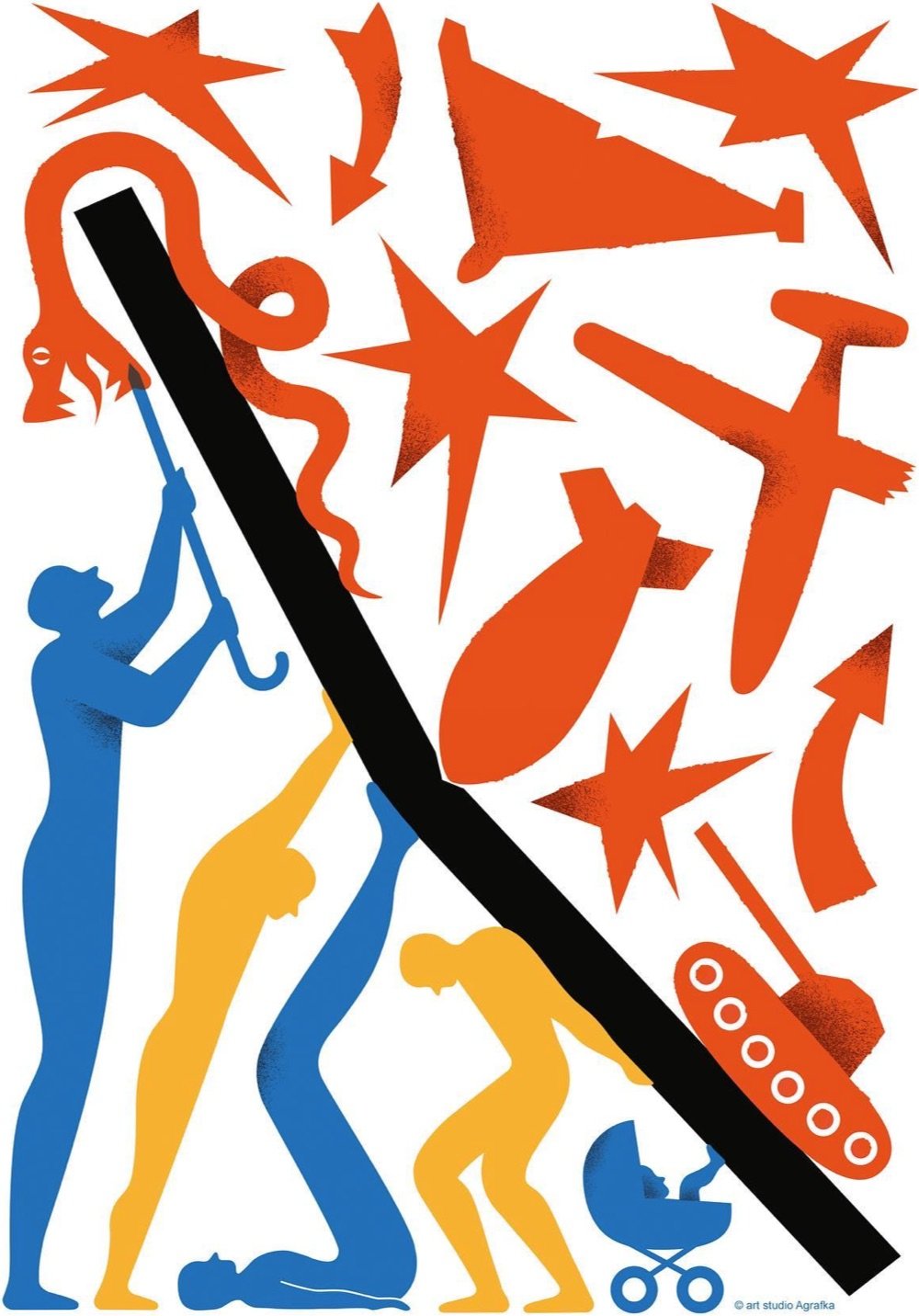
This is a poster for the 2023 International Book Arsenal Festival which recently took place in Kyiv, Ukraine. The poster was designed by Art Studio Agrafka from an illustration they originally did for the cover of Linkiesta Magazine.
A book festival. During a war. In a city under martial law. While schools and legislatures here in the US ban books about Black and LGBTQ+ experiences based on bad faith complaints of tiny fundamentalist parent groups. Tell me, who’s doing democracy better right now? (via @gray)
In 1990, the US government sent $20,000 and a formal letter of apology to more than 82,000 Japanese Americans who were incarcerated in concentration camps during World War II. Morgan Ome, whose grandfather was imprisoned and got a check, looks at the effect this had on those who received it and how the reparative process might look for other communities (Black and Native Americans).
In one of the letters, the daughter of an incarceree tells how the $20,000, invested in her family’s home equity and compounded over time, ultimately enabled her to attend Yale. “The redress money my family received has always been a tailwind at my back, making each step of the way a tiny bit easier,” she wrote. Just as her family was able to build generational equity, she hoped that Black Americans, too, would have “the choice to invest in education, homeownership, or whatever else they know will benefit their families, and, through the additional choices that wealth provides, to be a little more free.”
In addition to money, acts of formal apology, an on-going acknowledgment of harm, and a public process can be important to those harmed:
A $20,000 check could not reestablish lost flower fields, nor could it resurrect a formerly proud and vibrant community. Still, the money, coupled with an official apology, helped alleviate the psychological anguish that many incarcerees endured. Lorraine Bannai, who worked on Fred Korematsu’s legal team alongside Don Tamaki, almost never talked with her parents about the incarceration. Yet, after receiving reparations, her mother confided that she had lived under a cloud of guilt for decades, and it had finally been lifted. “My reaction was: ‘You weren’t guilty of anything. How could you think that?’” Bannai told me. “But on reflection, of course she would think that. She was put behind barbed wire and imprisoned.”
Yamamoto, the law professor in Hawaii, stresses that the aims of reparations are not simply to compensate victims but to repair and heal their relationship with society at large. Kenniss Henry, a national co-chair of the National Coalition of Blacks for Reparations in America, told me that her own view of reparations has evolved over time. She sees value in processes such as community hearings and reports documenting a state’s history of harm. “It is necessary to have some form of direct payment, but reparations represent more than just a check,” she said.
In this short video from the BBC narrated by Helena Bonham Carter, activist and actor George Takei talks about his imprisonment in an American concentration camp during WWII because he was of Japanese descent.
I began school in Rohwer, a real school, in a black tar paper barrack. There was an American flag hanging at the front of the classroom and on the first morning, the teacher said, “We’re going begin every morning with the pledge of allegiance to the flag. I will teach it to you and you are to memorize that.” But I could see right outside my schoolhouse window the barbed wire fence and the sentry tower as I recited the words “with liberty and justice for all”. An innocent kid, too young to understand the stinging irony in those words.
Takei has done many talks & interviews over the years about his experience, including for the Archive of American Television, Democracy Now!, and a TED Talk back in 2014:
He also published a graphic novel about his time in the camps called They Called Us Enemy.
In an uncompromising TED Talk from a few days ago, Garry Kasparov warns we must confront “true evil” in the world when we see it, in this case Vladimir Putin and his regime.
Actually, my first article of warning was published in “The Wall Street Journal” on January 4, 2001. I saw evil because I heard evil. Putin was telling us what he was. All we had to do was listen. When Putin said that there was no such thing as a former KGB agent, I knew Russia’s fragile democracy was in danger. When Putin said that the collapse of the Soviet Union was the greatest geopolitical catastrophe of the 20th century, I knew Russia’s newly independent neighbors were at risk. And when Putin talked at the Munich Security Conference in 2007 about a return to spheres of influence, I knew he was ready to launch his plan. It was the language from the Molotov-Ribbentrop Pact, 1939. The language Hitler and Stalin used to divide Europe. And a year later, in 2008, Putin invaded the Republic of Georgia. 2014, Ukraine.
It’s a paradox, isn’t it? Dictators lie about everything they have done, but often they tell us exactly what they’re going to do. Just listen. Anyone who is surprised at Putin’s war crimes in Ukraine must not be aware about his long record, beginning with the Second Chechen War in Grozny more than two decades ago. Vladimir Putin has been a war criminal from the start.
When he was talking about the problem with compromising with authoritarians, I was reminded of a phrase I’ve heard in a couple of different contexts recently: meeting a racist halfway on their views is still racism; meeting a fascist halfway on their views is still fascism. As Rebecca Solnit put it in an article about the 2020 election: “Who the hell wants unity with Nazis until and unless they stop being Nazis?” Meeting a brutal authoritarian halfway, Kasparov is arguing, is still tyranny.
Building on the lessons of World War II, Ukrainians are trying to save their art and other important cultural artifacts from destruction during Russia’s invasion. When an invader repeatedly tries to deny the cultural distinction of a people for decades and even centuries, like Russia has done with Ukraine, saving buildings and statues and paintings can be of great importance.
Because under the 1954 convention, “damage to cultural property means damage to the cultural heritage of all mankind”. So attacks on cultural heritage are a considered war crime. But treaties can only do so much. In the years since, conflicts around the world have rendered immeasurable damage to cultural heritage. A lot of it intentional. Like the Taliban’s destruction of the Bamiyan buddhas. And Isis’ attacks on ancient sites all over Syria.
“That cultural heritage is not only impacted, but in many ways it’s implicated and central to armed conflict. These are things that people point to that are unifying factors for their society. They are tangible reflections of their identity.”
And Putin has made it clear that identity is at the ideological center of Russia’s invasion: “I would like to emphasize again that Ukraine is not just a neighboring country for us. It is an inalienable part of our own history, culture, and spiritual space.”
“He thinks that we don’t really exist and they want to destroy all the signs of our identity.”
BTW, regarding the destruction of the museum that housed works by Maria Prymachenko at the start of the video: according to the Ukrainian Institute, the works were saved from burning by local residents.
The details of the atrocities committed against the people of Bucha, Ukraine by Russian soldiers are more horrifying than language has words for. Luke Mogelson and photographer James Nachtwey are reporting for the New Yorker from Bucha as loved ones and volunteers try to make sense of the destruction. Note: the descriptions and photos in this piece may be disturbing (but IMO, we cannot turn away from this). This is one of the tamer paragraphs:
On the far side of a stretch of railroad tracks, two elderly women had been killed in their house. One lay in the doorway, another in the kitchen. Both were bundled in heavy winter coats. Neighbors said that they had been sisters, both in their seventies. Their small house was filled with hardcover books, and they did not own a television; it was impossible not to imagine their quiet, literary life together before it was annihilated. In the only bedroom, two narrow mattresses were pushed together and covered by a single blanket.
Update: From the NY Times, Bucha’s Month of Terror.
As the Russian advance on Kyiv stalled in the face of fierce resistance, civilians said, the enemy occupation of Bucha slid into a campaign of terror and revenge. When a defeated and demoralized Russian Army finally retreated, it left behind a grim tableau: bodies of dead civilians strewn on streets, in basements or in backyards, many with gunshot wounds to their heads, some with their hands tied behind their backs.
This is another great episode of James Payne’s Great Art Explained on the work of Claude Monet, specifically the massive water lily canvases he completed before his death, created as “a war memorial to the millions of lives tragically lost in the First World War”.
Claude Monet is often criticised for being overexposed, too easy, too obvious, or worse, a chocolate box artist. His last works, the enormous water lily canvasses are among the most popular art works in the world.
Yet there is nothing tame, traditionalist, or cosy about these last paintings. These are his most radical works of all. They turn the world upside down with their strange, disorientating and immersive vision.
Monet’s water lilies have come to be viewed as simply an aesthetic interpretation of the garden that obsessed him. But they are so much more.
These works were created as a direct response to the most savage and apocalyptic period of modern history. They were in fact conceived as a war memorial to the millions of lives tragically lost in the First World War.
I’ve seen these paintings at the Musée de l’Orangerie — amazing to see them exactly the way in which the artist intended them to be seen.
See also Film of Claude Monet Painting Water Lilies in His Garden (1915) and Monet’s Ultraviolet Vision.
This is really good: Arnold Schwarzenegger recorded a message, subtitled in both English and Russian, directed at the Russian people (and briefly, Vladimir Putin) about the war in Ukraine. It’s a canny piece of media by an exceptional communicator — drawing on his obvious respect for the people of Russia and his father’s experience as a German soldier in World War II, Schwarzenegger tells Russian citizens that they’ve been lied to about the war by their leadership, that most of the world is against their actions, and warns them about the consequences of being economically and socially isolated from the rest of the world.
This is not the war to defend Russia that your grandfather or your great grandfathers fought. This is an illegal war! Your lives, your limbs, your futures are being sacrificed for a senseless war condemned by the entire world.
After Russia invaded the country, Ukraine’s post office (Ukrposhta) decided to hold a contest to design a stamp that illustrated “Ukrainians’ determination to defend their land”. Out of 500 submissions, Ukrposhta chose 20 designs as the finalists.
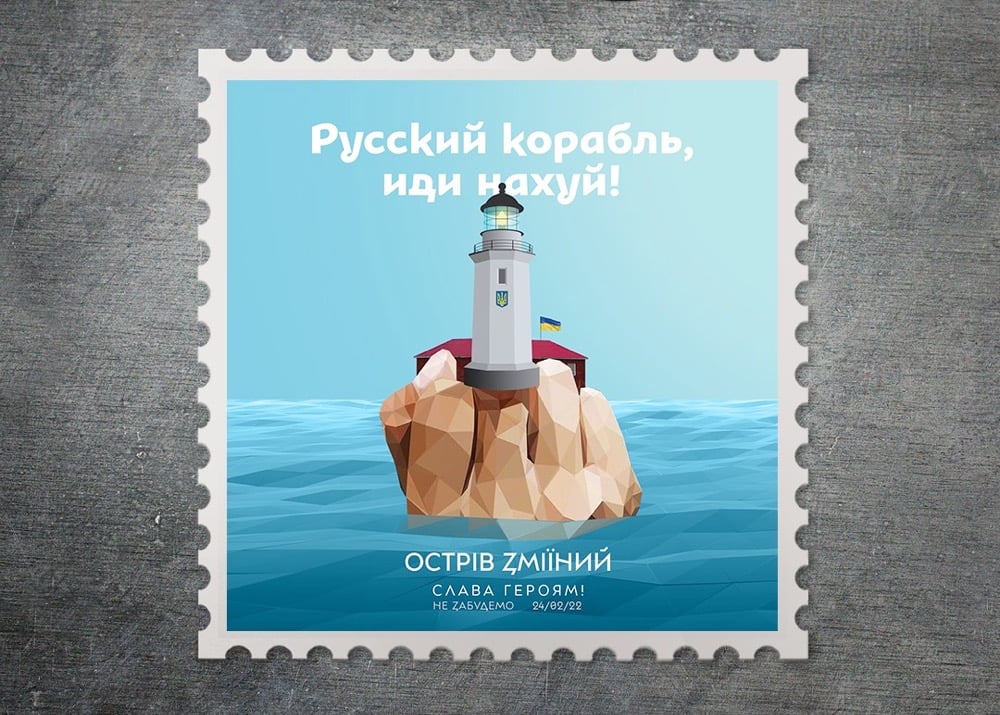
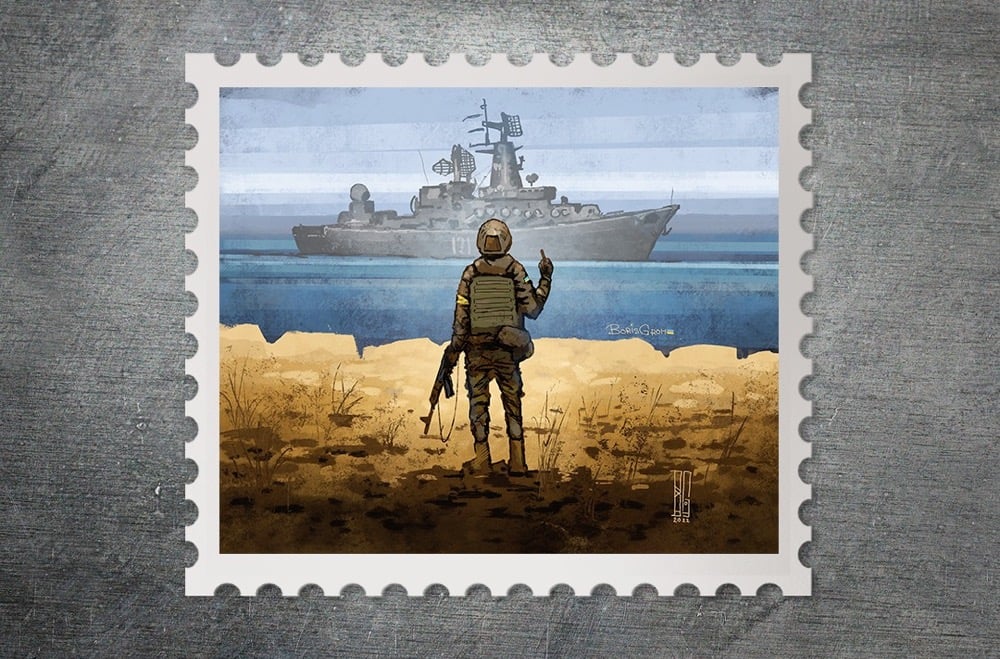
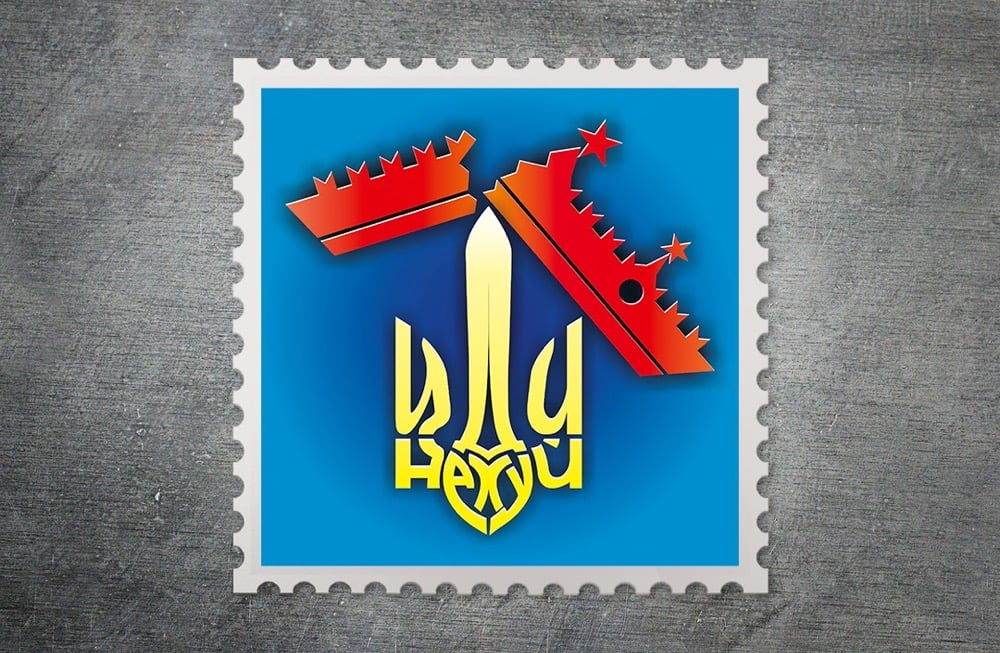
(Paweł Jońca’s illustration would also have made an amazing stamp.) Many of the finalists, including the winning entry (middle stamp above), reference the Ukrainian soldiers on Snake Island who told a Russian warship “Go fuck yourself”. Ukrposhta is now working on getting the winning stamp printed so that people can use it for postage — because, perhaps unbelievably, the post office continues to deliver the mail & packages throughout much of the country. (thx, @jackisnotabird)
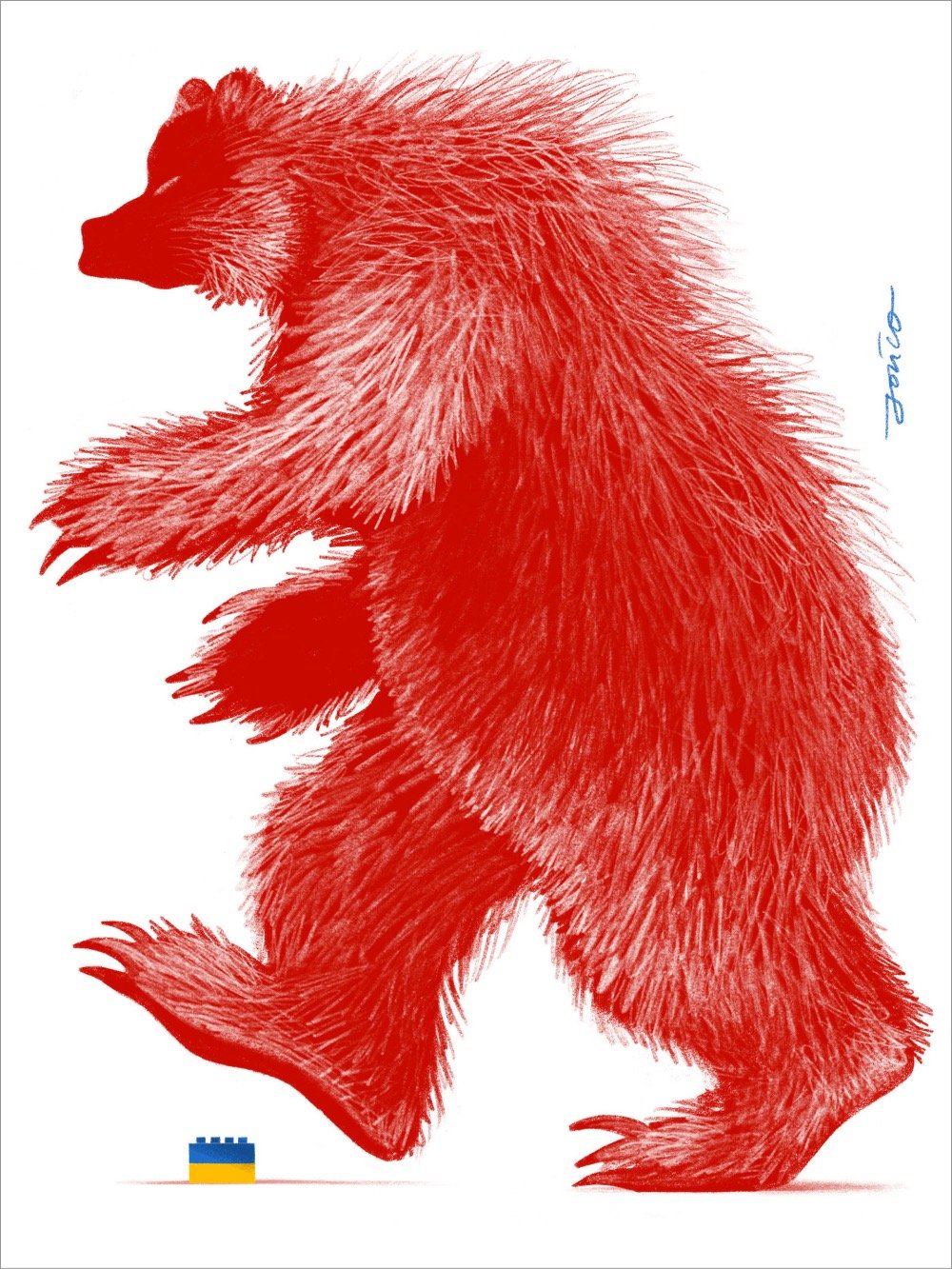
An absolutely fantastic poster by Polish illustrator Paweł Jońca of a giant red Russian bear about to step on a small Ukrainian flag made of Lego bricks. A printable digital download of this poster is available “by paying ANY amount” with all proceeds going to humanitarian aid for Ukraine (specifically to Polska Akcja Humanitarna).
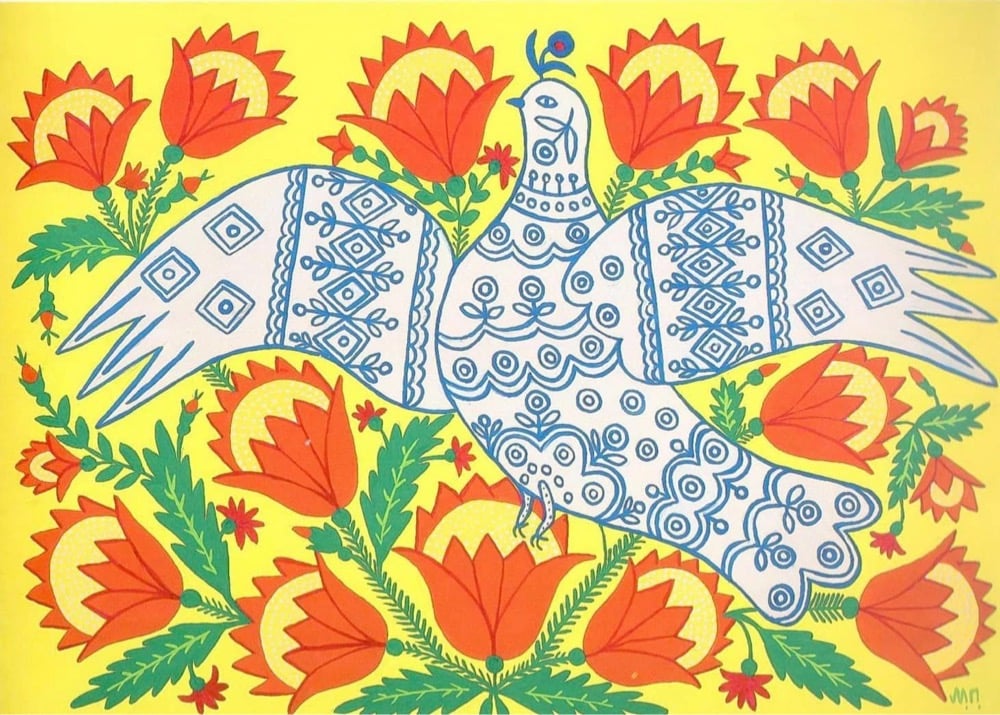
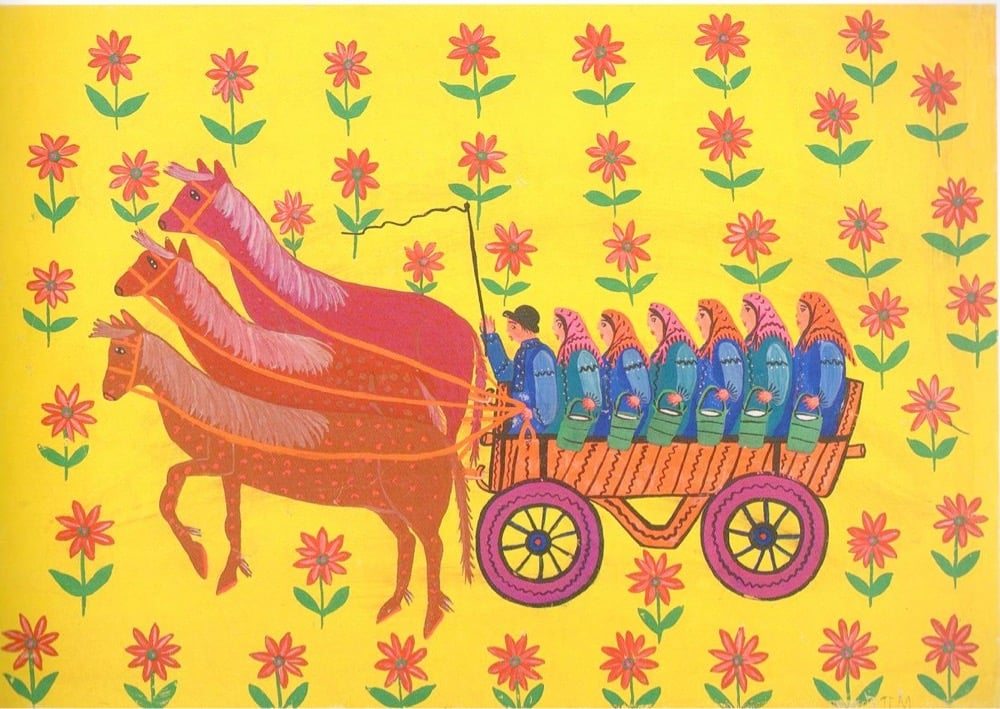
Maria Prymachenko is one of Ukraine’s best-known artists. Known for her colorful, expressive, and “primitive” style, Prymachenko won a gold medal for her work at the 1937 World’s Fair in Paris and Pablo Picasso is said to have remarked “I bow down before the artistic miracle of this brilliant Ukrainian” after seeing her work. Prymachenko’s paintings featured animals (both real & fantastical), everyday Ukrainian people, food & agriculture, and themes of war & peace.
Earlier this week, the Ministry of Foreign Affairs of Ukraine announced that the Ivankiv Historical and Local History Museum had been burned in the Russian invasion and that 25 works by Prymachenko had been lost. Luckily, according to the Ukrainian Institute, local residents were able to save the paintings.
You can find more of Prymachenko’s work below and at WikiArt.
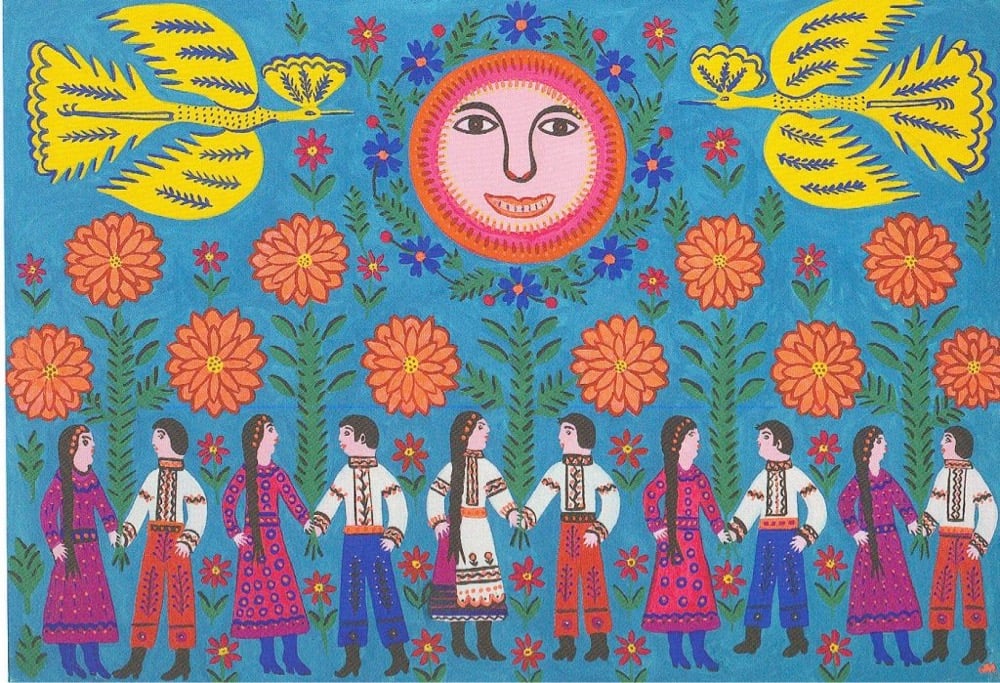

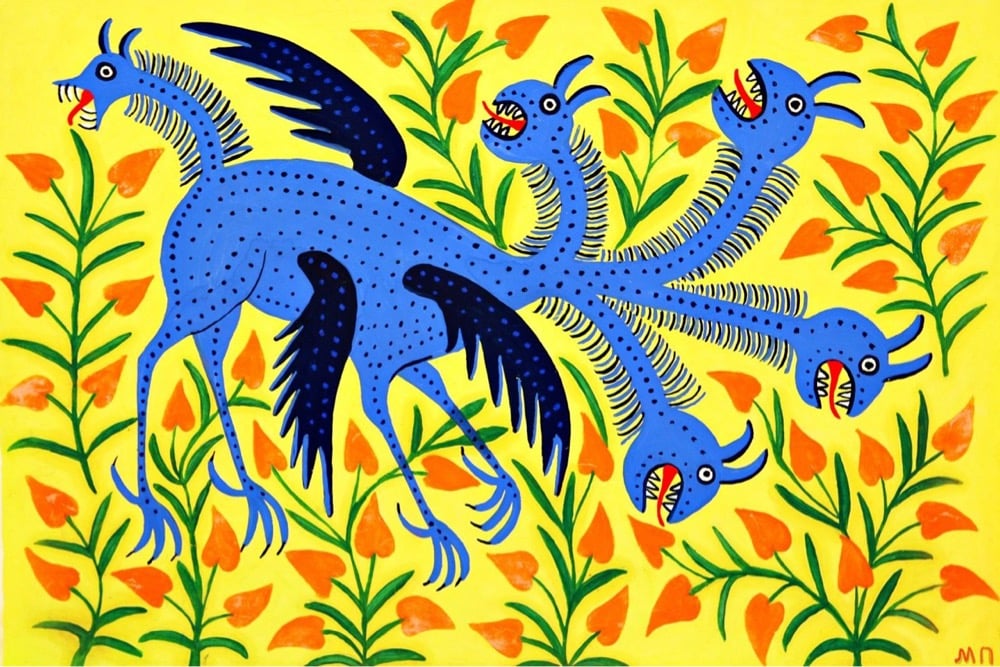
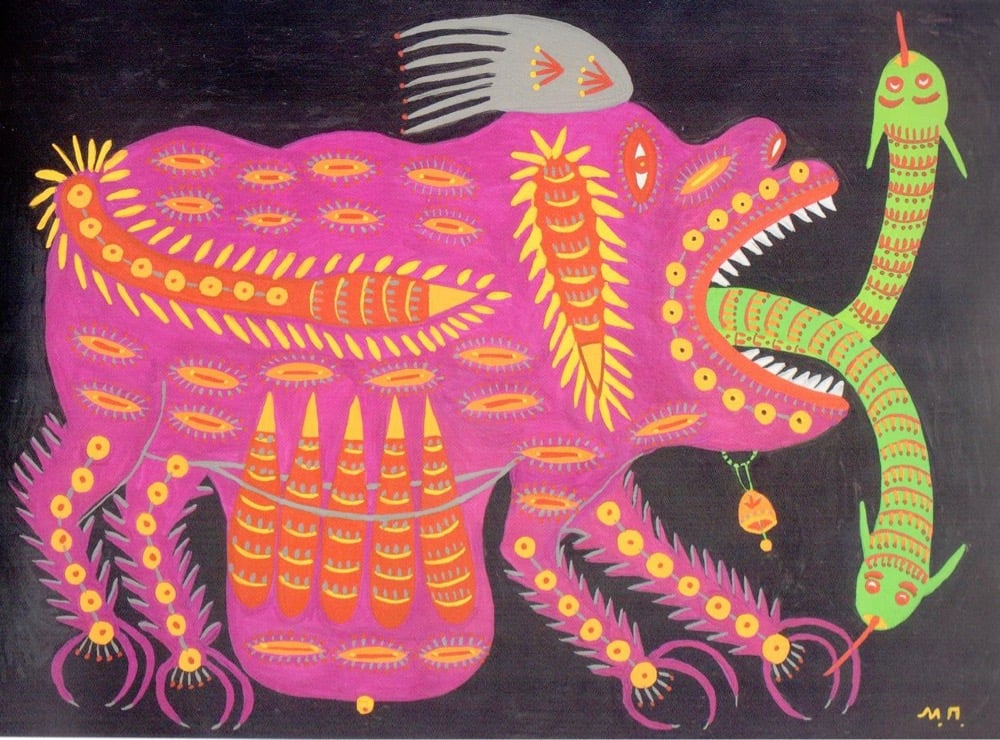
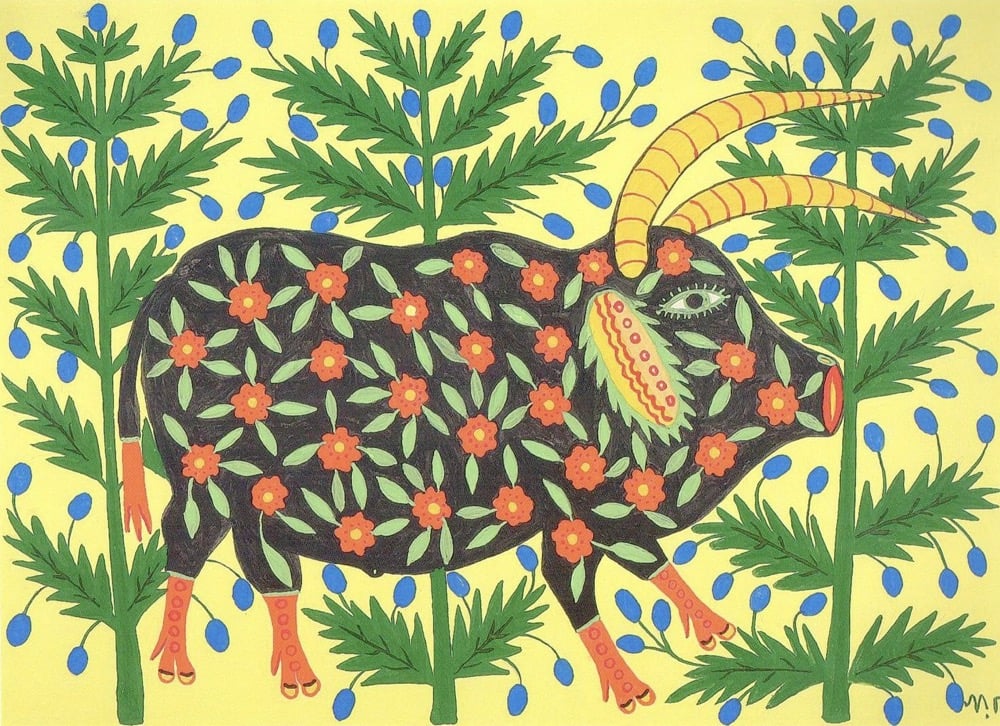
In the weeks leading up to the Russian invasion of Ukraine, the NY Times did a short series of videos about how average Ukrainians were preparing to defend their country. On Jan 28, video journalists spoke to military and residents in Mariupol:
My main takeaway from this video is that the war in Ukraine has been ongoing for some time; the recent invasion is an escalation — a significant one to be sure, but definitely part of whole series of Russian moves. As Fiona Hill replied in a recent interview when asked if we were on the brink of World War III:
We’re already in it. We have been for some time. We keep thinking of World War I, World War II as these huge great big set pieces, but World War II was a consequence of World War I. And we had an interwar period between them. And in a way, we had that again after the Cold War. Many of the things that we’re talking about here have their roots in the carving up of the Austro-Hungarian Empire and the Russian Empire at the end of World War I. At the end of World War II, we had another reconfiguration and some of the issues that we have been dealing with recently go back to that immediate post-war period. We’ve had war in Syria, which is in part the consequence of the collapse of the Ottoman Empire, same with Iraq and Kuwait.
All of the conflicts that we’re seeing have roots in those earlier conflicts. We are already in a hot war over Ukraine, which started in 2014. People shouldn’t delude themselves into thinking that we’re just on the brink of something. We’ve been well and truly in it for quite a long period of time.
From Feb 8, a visit to a civilian training center, where people learned how to handle weaponry and field dress wounds:
From Feb 22, a profile of a small paramilitary group that’s been fighting the Russian-backed separatists in the eastern part of the country for years now, sometimes in collaboration with official forces:
One of the paramilitaries said:
God forbid, if a full-scale war breaks out tomorrow in Ukraine, there will be tens, if not hundreds, of thousands of volunteers just like me. Just like in 2014.
And on Feb 26, a video of civilians in Kyiv waiting to pick up weapons to help defend the city:
One of the people waiting in line, Hlib Bondarenko,1 spoke about why he was there:
We are in a queue where people are waiting to get their weapons to fight the Russian invaders. There is no reason to believe that they’re going to stop anytime soon. And their objective, at least to me, seems to be the occupation of my entire country and the destruction of everything I love. I’m just a regular civilian. I have basically nothing to do with war or any other thing like it. And I wouldn’t really want to participate in anything like this, but I don’t really have any choice because this is my home.
In progress before the Russian invasion of Ukraine and completed as Russian troops began their advance into the country, this video is a helpful overview of some of the geographical, historical, demographic, environmental, political, and economic reasons why, from the perspective of Putin & Moscow, Russia wants to bring Ukraine back into their orbit. (via open culture)
Good morning, everyone. As you have likely heard, Russia invaded Ukraine earlier today. Here’s the news from Reuters, NY Times, Associated Press, and CNN. From Reuters:
Russian forces invaded Ukraine on Thursday in a massed assault by land, sea and air, the biggest attack by one state against another in Europe since World War Two.
Missiles rained down on Ukrainian cities. Ukraine reported columns of troops pouring across its borders from Russia and Belarus, and landing on the coast from the Black and Azov seas.
Although I hope I’m wrong, this is not likely to end well for anyone and my thoughts are with the people of Ukraine, those in nearby countries, and also with Russian citizens & soldiers who will bear the consequences for the actions of their “leadership”.
So I wanted to get that out there but also to acknowledge that I don’t know how much I will be talking about this on the site, even though it’s potentially such a big deal. There have never been any hard and fast rules about what goes on the site or not. I am not a journalist and I generally don’t cover current events and news here — but sometimes I do. The pandemic has been a massive exception in that regard over the past two years — it felt irresponsible not to talk about it here, link to resources, amplify expert advice & opinion, and attempt to counter deliberate and deadly misinformation. There are going to be much better sources of news, information, opinion, and analysis about the situation in Ukraine than kottke.org, so I’m going to largely leave them to it. Also, I have not been feeling super sturdy lately, and I’m not sure diving into WWIII is the best thing for me to be doing right now.
Again, just wanted to acknowledge that in case you were wondering why I’m not covering “the biggest attack by one state against another in Europe since World War Two”. Be safe out there, everyone.
Older posts




Socials & More