kottke.org posts about weblogs
Hey folks, I just wanted to update you on some things I’ve launched recently at the ol’ dot org. (RSS reader folk, you’re going to have to click through to the actual WWW to see these…don’t be scared, you can do it.)
1. Last month, I added the ability for members to fave comments, to see comments they’ve posted and faved, and the ability to sort comments in threads. You can read about those features here.
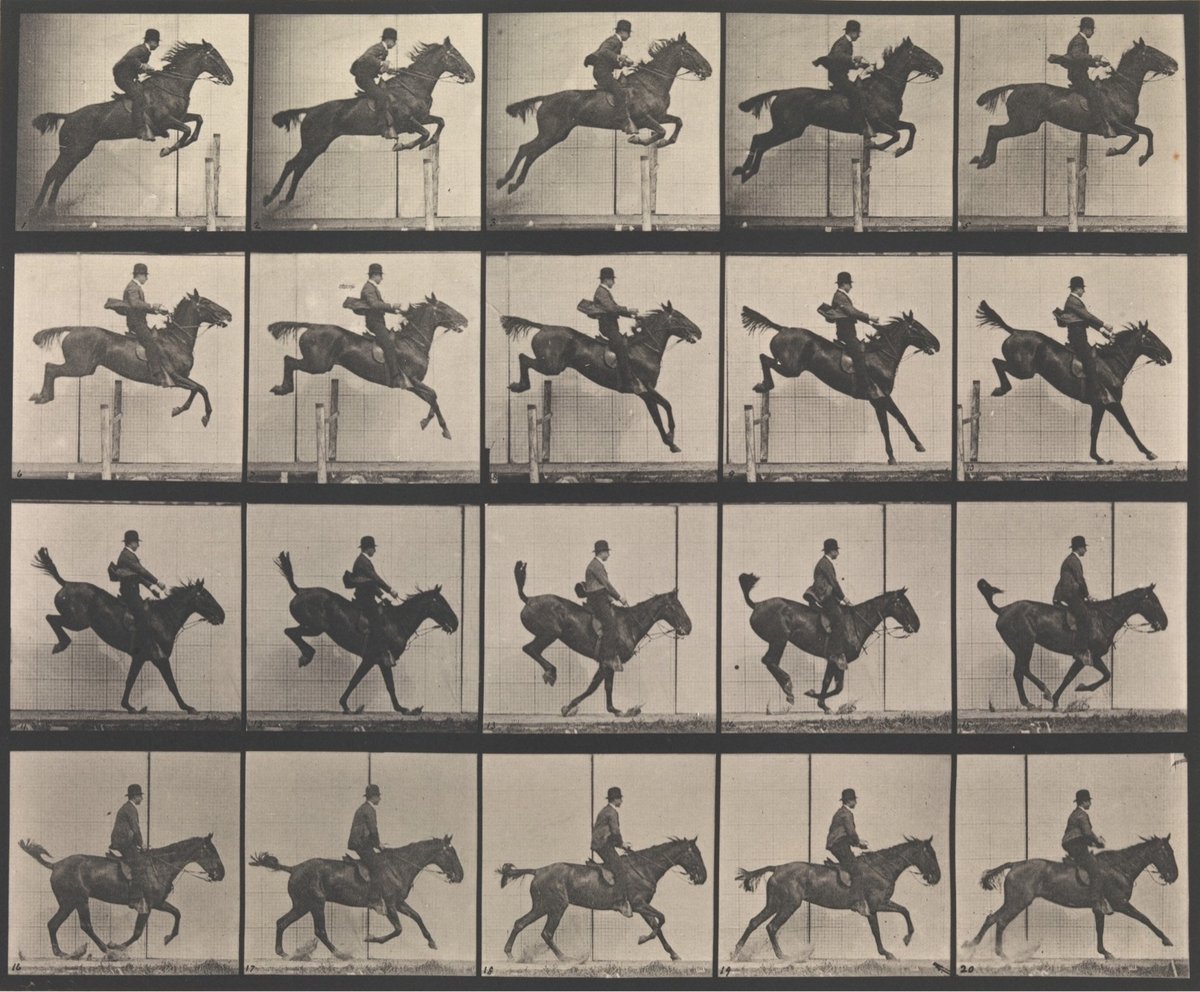
2. Image zooming. If you click on images in posts (on the Embroidery Journaling post or the Eadweard Muybridge image at the top of this post), the image will zoom to fill the browser. Clicking it again will shrink it again. (Oh and I’m testing a feature that does the same thing for videos.)
3. For the Quick Link URL cards/unfurls, I’m displaying the embedded video instead of a cover image. For example, see this post about the special overalls that Finnish university students wear.
4. I refreshed the design of the newsletter a little bit and added a link to the comment section of each post. Because HTML email is a pain in the ass, it doesn’t look/work quite how I want it to yet, but it’s getting there. More tbd.
5. And the best for last: I can now pull Bluesky & Mastodon posts into comment threads in the form of reposts. You can see it in action in the posts about Meta’s Free Speech Grift, HTML: the Most Significant Computing Language Ever Developed, and The Truth About January 6th. I’m using it to collect noteworthy direct comments to my posts on those platforms but also a curated collection of posts and links that I think are particularly relevant to particular posts. So far, it’s been such a quick & easy way to pull in more information and voices around a topic.
Inspiration for this feature came from social media (retweeting, etc.) but also from the original reblog concept developed by Jonah Peretti, Mike Frumin, and others at Eyebeam while we were all there. Their software was the inspiration for Tumblr’s reblog feature, Twitter’s retweet, and Facebook’s share. Going back to the source (and the linkblogging & feedreaders that they were inspired by) is a useful reminder that these sorts of features aren’t just available to Twitter & FB. And in fact, we’ve let social media sites pull in so much content & activity from the open web…it’s time to start pulling back a little.
Right now, reposting is something only I can do (*rubs hands together diabolically*) but I might open it up to others after I iron out a few kinks and if there’s interest. It only works with Bluesky & Mastodon rn, but I’m going to add email (for threads like this) and Threads, although after this bullshit, I may not bother. Anyway, this feature was on the original roadmap for comments and I’m so glad I found the time to finally make it happen.
Ok, that’s all for now. As always, let me know in the comments if you have questions, comments, concerns. ✌️
I enjoyed Ezra Klein’s podcast conversation with Nilay Patel, the editor of The Verge. They talked about media and AI mostly.
(First of all, anyone who says they’re trying to “revolutionize the media through blog posts” is a-ok in my book.)
Anyway, here’s Patel on the limitations of AI and where humans shine:
But these models in their most reductive essence are just statistical representations of the past. They are not great at new ideas.
And I think that the power of human beings sort of having new ideas all the time, that’s the thing that the platforms won’t be able to find. That’s why the platforms feel old. Social platforms like enter a decay state where everyone’s making the same thing all the time. It’s because we’ve optimized for the distribution, and people get bored and that boredom actually drives much more of the culture than anyone will give that credit to, especially an A.I. developer who can only look backwards.
Later he talks more specifically about why curation will grow more important in a world inundated with aggressively mid AI content:
And the idea is, in my mind at least, that those people who curate the internet, who have a point of view, who have a beginning and middle, and an end to the story they’re trying to tell all the time about the culture we’re in or the politics we’re in or whatever. They will actually become the centers of attention and you cannot replace that with A.I. You cannot replace that curatorial function or that guiding function that we’ve always looked to other individuals to do.
And those are real relationships. I think those people can stand in for institutions and brands. I think the New York Times, you’re Ezra Klein, a New York Times journalist means something. It appends some value to your name, but the institution has to protect that value. I think that stuff is still really powerful, and I think as the flood of A.I. comes to our distribution networks, the value of having a powerful individual who curates things for people, combined with a powerful institution who protects their integrity actually will go up. I don’t think that’s going to go down.
Yeah, exactly. Individuals and groups of like-minded people making things for other people — that stuff is only going to grow more valuable as time goes on. The breadth and volume offered by contemporary AI cannot provide this necessary function right now (and IMO, for the foreseeable future).
And finally, I wanted to share this exchange:
EZRA KLEIN: You said something on your show that I thought was one of the wisest, single things I’ve heard on the whole last decade and a half of media, which is that places were building traffic thinking they were building an audience. And the traffic, at least in that era, was easy, but an audience is really hard. Talk a bit about that.
NILAY PATEL: Yeah first of all, I need to give credit to Casey Newton for that line. That is something — at The Verge, we used to say that to ourselves all the time just to keep ourselves from the temptations of getting cheap traffic. I think most media companies built relationships with the platforms, not with the people that were consuming their content.
I never focused on traffic all that much, mainly because for a small site like kottke.org, there wasn’t a whole lot I could do, vis-à-vis Google or Facebook, to move the needle that much. But as I’ve written many times, switching to a reader-supported model in 2016 with the membership program has just worked so well for the site because it allows me to focus on making something for those readers — that’s you! — and not for platforms or algorithms or advertisers. I don’t have to “pivot to video”; instead I can do stuff like comments and [new thing coming “soon”] that directly benefit and engage readers, which has been really rewarding.
See also Kyle Chayka’s recent piece for the New Yorker: The Revenge of the Home Page.
Perhaps the platform era caused us to lose track of what a Web site was for. The good ones are places you might turn to several times per day or per week for a select batch of content that pointedly is not everything. Going there regularly is a signal of intention and loyalty: instead of passively waiting for social feeds to serve you what to read, you can seek out reading materials-or videos or audio-from sources you trust. If Twitter was once a sprawling Home Depot of content, going to specific sites is more like shopping from a series of specialized boutiques.
I’m going to get slightly petty here for a sec and say that these “back to the blog / back to the web” pieces almost always ignore the sites that never gave up the faith in favor of “media” folks inspired by the former. It’s nice to see the piece end with a mention of Arts & Letters Daily, still bloggily chugging along since 1998. /salty
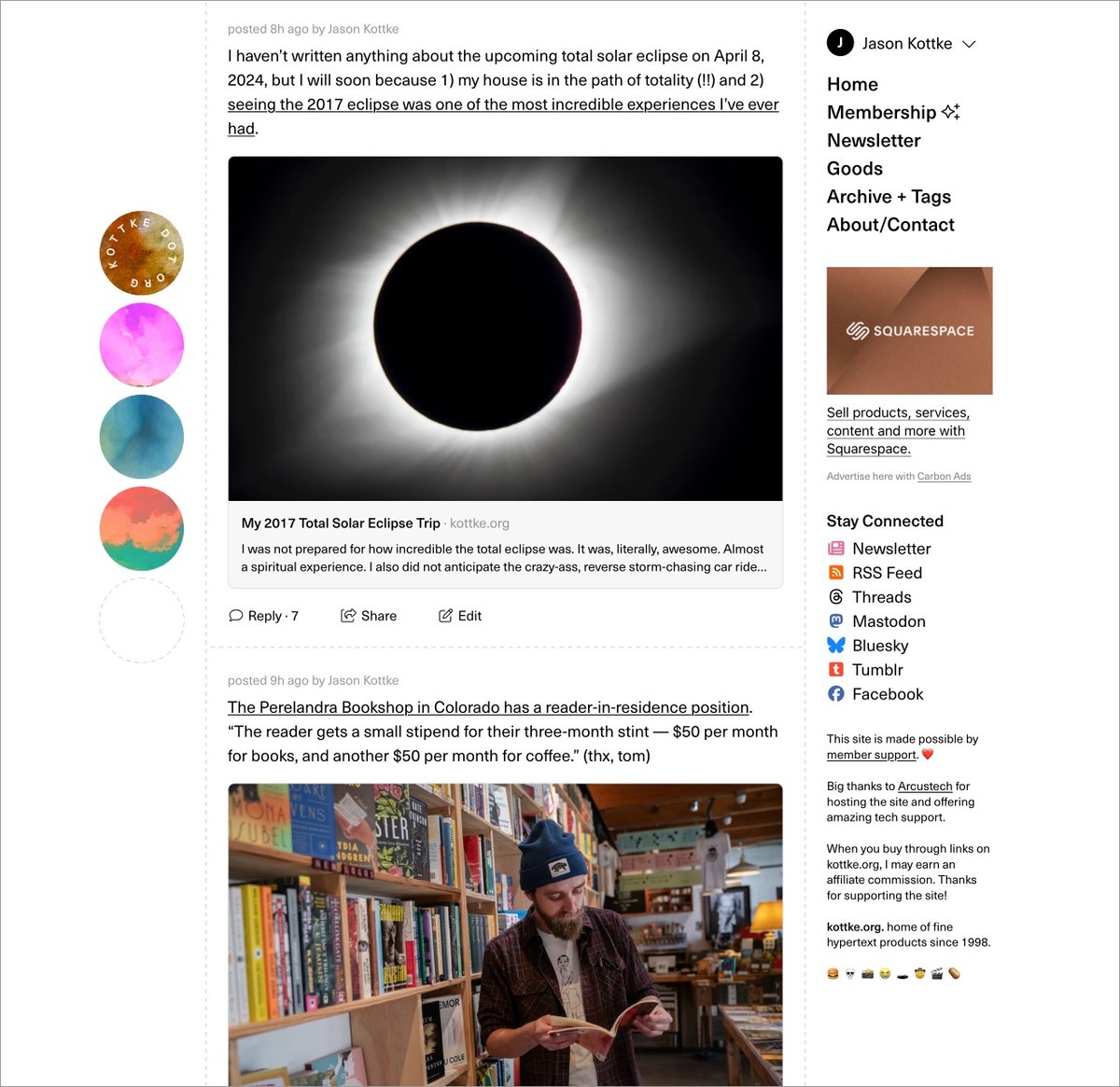
Well. Finally. I’m unbelievably pleased, relieved, and exhausted to launch the long-awaited (by me) redesign of kottke.org today. Let’s dive right into what has changed and why.
{ Important: If the “logo” on the left/top is not circles and is squares/diamonds instead, you can update your browser to the latest version to see it how I intended. (Will be looking for a fix for this…) }
(Justified and) Ancient. The last time I redesigned the site, a guy named Barack Obama was still President. Since then, I’ve launched the membership program, integrated the Quick Links more fully into the mix, (more recently) opened comments for members, and tweaked about a million different things about how the site works and looks. But it was overdue for a full overhaul to better accommodate all of those incremental changes and, more importantly, to provide a solid design platform for where the site is headed. Also, I was just getting tired of the old design.
Back to the Future. In my post introducing the new comments system, I wrote about the potential for smaller sites like mine to connect people and ideas in a different way:
The timing feels right. Twitter has imploded and social sites/services like Threads, Bluesky, and Mastodon are jockeying to replace it (for various definitions of “replace”). People are re-thinking what they want out of social media on the internet and I believe there’s an opportunity for sites like kottke.org to provide a different and perhaps even better experience for sharing and discussing information. Shit, maybe I’m wrong but it’s definitely worth a try.
Before Facebook, Tumblr, Twitter, Instagram, and Snapchat came along and centralized social activity & output on the web, blogs (along with online diaries, message boards, and online forums) were social media. Those sites borrowed heavily from blogging — in the early years, there wasn’t much that those sites added in terms of features that blogs hadn’t done first. With the comments and now this redesign, I’m borrowing some shit back from the behemoths.
A social media design language has evolved, intelligible to anyone who’s used Twitter or Facebook in the past decade. Literally billions of people can draw what a social media post looks like on a napkin, show it to someone else from the other side of the world, and they’d say, “oh, that’s a post”. In thinking about how I wanted kottke.org to look and, more importantly, feel going forward, I wanted more social media energy than blog energy — one could also say “more old school blog energy than contemporary blog energy”. Blogs now either look like Substack/Medium or Snow Fall and I didn’t want to pattern kottke.org after either of those things. I don’t want to write articles — I want to blog.
Practically speaking, “social media energy” means the design is more compact, the type is smaller,1 the addition of preview cards for Quick Links, and the reply/share/???? buttons at the bottom of each post. But, it also still looks like a personal (old school) blog rather than a full-blown Twitter clone (I hope). I think this emphasis will become clearer as time goes on.
So What’s Different? I mean, you can probably tell for yourself what’s changed, but I’ll direct your eye to a few things. 1. Member login + easy account access for members on the top of every page. kottke.org has always been very much my site…but now it’s just a little bit more our site. 2. No more top bar (on desktop), so the content starts much higher on the page. 3. Most Quick Links have a preview card (also called an unfurl) that shows the title, a short description, and often an image from the link in question — the same as you’d get if someone sent you a link via text or on WhatsApp. 4. We’ve bid a fond farewell to the Whitney typeface and welcomed Neue Haas Unica into the fold. 5. IMO, the design is cleaner but also more information dense, reflecting the type of blogging I’d like to do more of. 6. Dark mode! There’s no toggle but it’ll follow your OS settings.
Billions and Billions. kottke.org has (famously?) never had a logo. I’ve never wanted one thing to represent the site — in part because the site itself is all over the place and also because it’s fun to switch things up every once in awhile. Instead, I’ve always gone for a distinctive color or gradient that lets readers know where they are. This time, I’ve opted for a series of circles — a friend calls them “the planets” — but with a twist. There are 32 images, each with 4 different hues and 8 different rotations, that can slot into the 4 available spaces…and no repeats. By my calculations (corrections welcome!), there are over 900 billion different permutations that can be generated, making it extremely unlikely that you’ll ever see the same exact combo twice. Even if, like last time, this design lasts for almost eight years.
Gimme the Goods. The tiny collection of kottke.org t-shirts has its own page on the site now. The Hypertext Tee based on the previous design will be offered only for another few weeks and then probably be retired forever. To be replaced with…TBD. 😉
Winnowing Down. Last time I redesigned, I went back and modified the template of every page on the site, even stuff from the late 90s and early 00s that no one actually remembers. This time around, I’m focusing only on the core site: blog posts from 1998-present, tag pages, membership, and the few pages you can get to from the right sidebar. The rest of the site, mostly pages deep in the archive that see very little (if any) traffic, are going to stick with the old design, effectively archived, frozen in digital amber. We wish those old pages well in their retirement.
So yeah, that’s kind of it for now. There is so much left to do though! The comments need some lovin’, some social media things need tightening up, the about page could use some tuning, the newsletter needs a visual refresh, a few other small things need doing — and then it’s on to the next project (which I haven’t actually decided on, but there are several options).
I’m happy to hear what you think in the comments, on social media, or via email — feedback, critique, and bug reports are welcome. Now, if you’ll excuse me, I have not taken a full day off from the site since late December (including weekends), so I’m going to go collapse into a little puddle and sleep for about a week.
I realize how it sounds, but I’m going to say it anyway because it’s the truth. When I first clapped eyes on the World Wide Web, I fell in love. Here’s how I described the experience in a 2016 post about Halt and Catch Fire:
When I tell people about the first time I saw the Web, I sheepishly describe it as love at first sight. Logging on that first time, using an early version of NCSA Mosaic with a network login borrowed from my physics advisor, was the only time in my life I have ever seen something so clearly, been sure of anything so completely. It was a like a thunderclap — “the amazing possibility to be able to go anywhere within something that is magnificent and never-ending” — and I just knew this was for me and that it was going to be huge and important. I know how ridiculous this sounds, but the Web is the true love of my life and ever since I’ve been trying to live inside the feeling I had when I first saw it.
My love for the web has ebbed and flowed in the years since, but mainly it’s persisted — so much so that as of today, I’ve been writing kottke.org for 25 years. A little context for just how long that is: kottke.org is older than Google. 25 years is more than half of my life, spanning four decades (the 90s, 00s, 10s, and 20s) and around 40,000 posts — almost cartoonishly long for a medium optimized for impermanence. What follows is my (relatively brief) attempt to explain where kottke.org came from and why it’s still going.
It’s an absurd understatement to say that the web has changed a lot in the nearly 30 years since I experienced that “thunderbolt that completely changed my life” — it’s now a massive, overwhelmingly corporate entity that encompasses and organizes an ever-growing share of human information and activity. As a web designer in the 90s and early 00s, I helped companies figure out how to use the web for business, but the core of my own personal experience of the web has always been self-expression and making websites for individual humans to read & experience.
I started making personal websites shortly after discovering the web, first using Notepad and then a program called HTML Assistant. My first site had an audience of exactly one — it lived on a 3.5” floppy disk and was mostly a jazzed-up version of my bookmarks file that I carried back and forth from my dorm room to the physics lab. When I was finally able to finagle public server access, I launched a site called “some web space” (all lowercase, because 90s)1 that included a hand-drawn graphic of swiss cheese and a bunch of links related to Pulp Fiction. This is me right around that time:
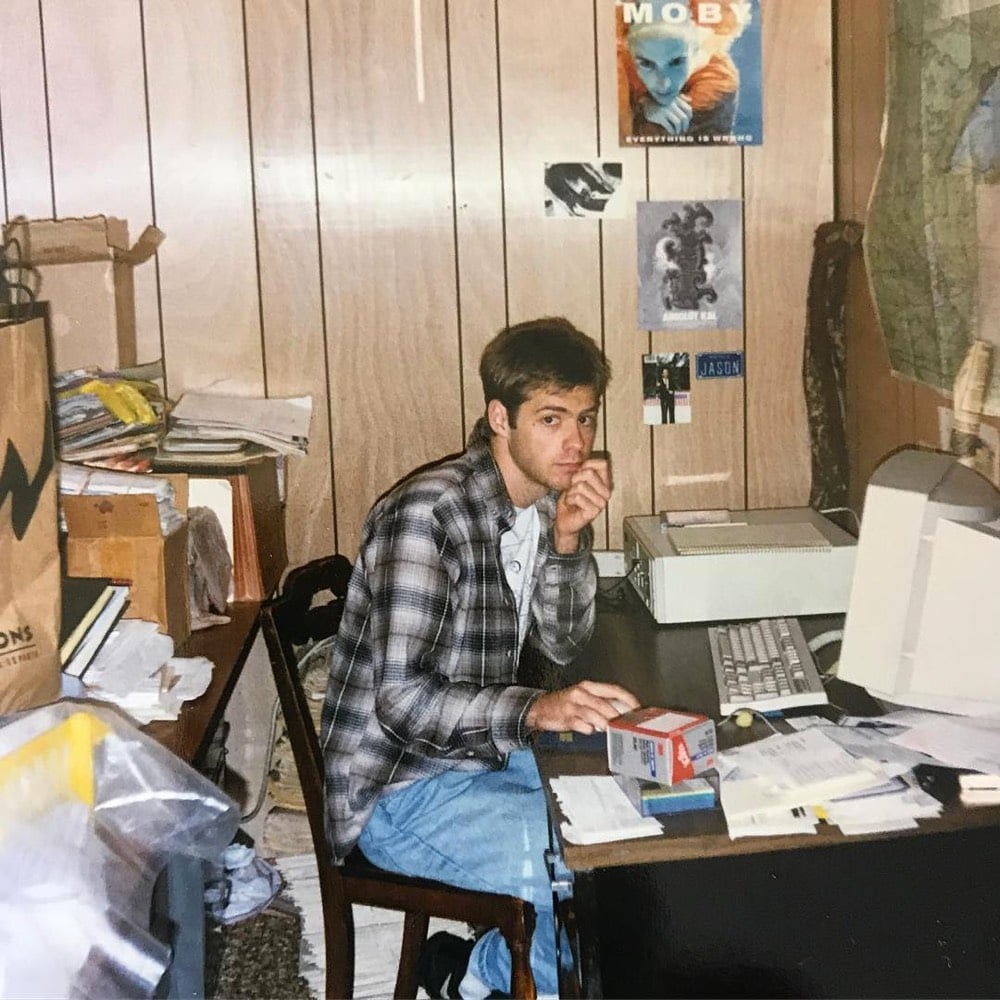
That tiny baby Jason loved cheese, Quentin Tarantino, and the World Wide Web, bless his little heart.
Anyway, the sites I built then were terrible at first, but I was obsessed and slowly they improved. some web space turned into a site called 0sil8, which became a playground of sorts for my experiments in writing and design. Every few weeks/months, I’d create a new “episode” to put up on 0sil8 and gradually I gained an online following and became part of a community of folks who were likewise experimenting with the web.
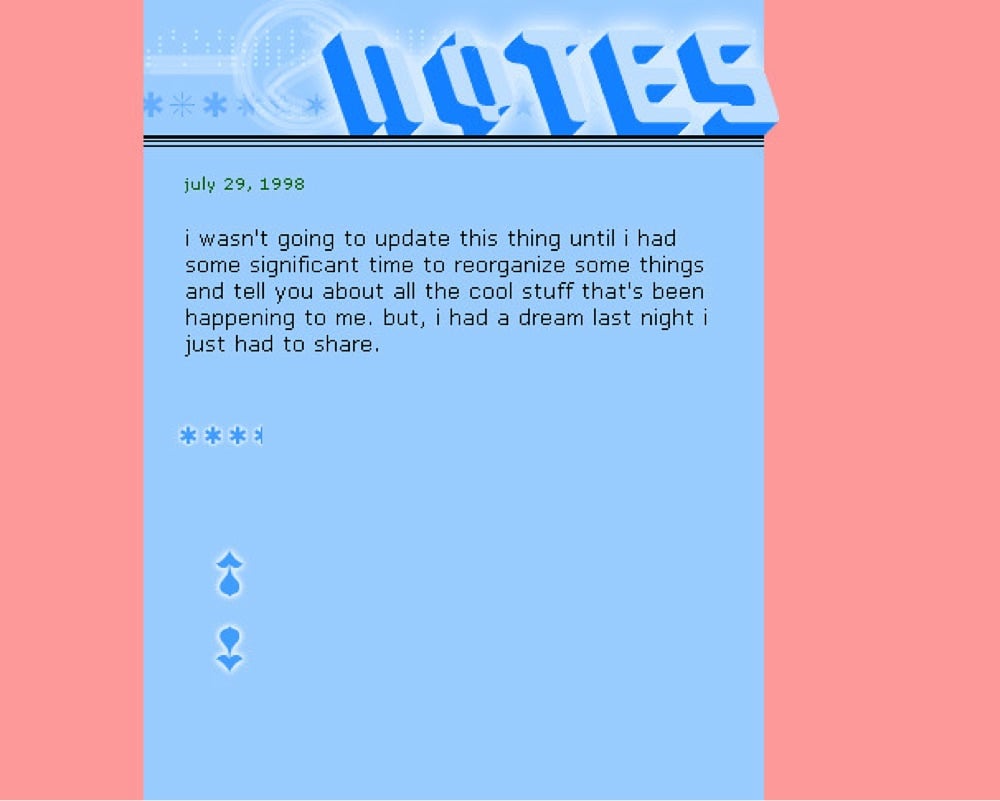
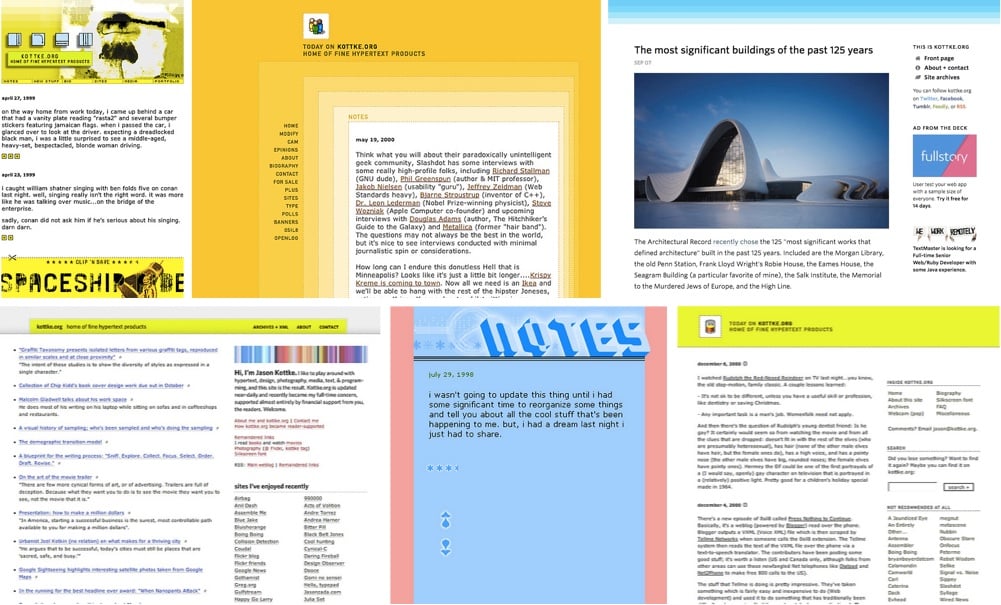
Around this time, more and more of what I was reading online were diaries and these things called weblogs.2 The updates on weblogs & diaries were smaller but more frequent than on other personal sites — their velocity felt different, exhilarating. But by the time I actually got interested enough to start my own weblog, there were so many of them — hundreds! maybe thousands! — that I thought I was too late, that no one would be interested. I forged ahead anyway and on March 14, 1998, I started the weblog that would soon become kottke.org. It was called Notes and here’s what it looked like:
I’m not gonna go through the whole history of the site, but it eventually took off in a way that I didn’t anticipate. Since 2005, kottke.org has been my full-time job and supports my family. I’ve met so many people from all over the world through my work here, including many life-long friends and my (now ex-) wife. I’ve spoken at conferences and travelled the world. I got to be on TV. I launched a membership program (which you should totally join if you haven’t already) that has given the site an incredible boost as it powers through its third decade.
On the occasion of the 20th anniversary of kottke.org, I wrote this:
I’ve been reading back through the early archives (which I wouldn’t recommend), and it feels like excavating down through layers of sediment, tracing the growth & evolution of the web, a media format, and most of all, a person. On March 14, 1998, I was 24 years old and dumb as a brick. Oh sure, I’d had lots of book learning and was quick with ideas, but I knew shockingly little about actual real life. I was a cynical and cocky know-it-all. Some of my older posts are genuinely cringeworthy to read now: poorly written, cluelessly privileged, and even mean spirited. I’m ashamed to have written some of them.
But had I not written all those posts, good and bad, I wouldn’t be who I am today, which, hopefully, is a somewhat wiser person vectoring towards a better version of himself. What the site has become in its best moments — a slightly highfalutin description from the about page: “[kottke.org] covers the essential people, inventions, performances, and ideas that increase the collective adjacent possible of humanity” — has given me a chance to “try on” hundreds of thousands of ideas, put myself into the shoes of all kinds of different thinkers & creators, meet some wonderful people (some of whom I’m lucky enough to call my friends), and engage with some of the best readers on the web (that’s you!), who regularly challenge me on and improve my understanding of countless topics and viewpoints.
I had a personal realization recently: kottke.org isn’t so much a thing I’m making but a process I’m going through. A journey. A journey towards knowledge, discovery, empathy, connection, and a better way of seeing the world. Along the way, I’ve found myself and all of you. I feel so so so lucky to have had this opportunity.
That all still rings incredibly true and I cannot improve upon it as an explanation of why I’m still here doing this moderately anachronistic thing. Thank you all so much for reading. ♥
P.S. You can read my thoughts on past anniversaries and view some previous site designs here: 10 years, 18-ish years, 20 years, and 24 years.
P.P.S. I wrote a separate post about this yesterday, but if you find value in what I do here, I’d appreciate if you’d support the site by purchasing a membership. And to everyone who has supported the site over the years, thank you so much!
P.P.P.S. Last one: I’m gonna write more about this later today, but I’ve turned ordering back on for Kottke Hypertext Tees for the next 24 hours or so. Go get ‘em!
P.P.P.P.S. Ha, I’ve thought of one more thing: I’ve turned comments on for this post! kottke.org used to allow comments on every post, but it’s been almost 8 years since the last time they were on. I figured it would be fun to try them out today. No idea if they’re even going to work or how long they will be available, but let’s try it out. If you’d like to share how long you’ve been reading the site or leave any memories or observations, feel free. My inbox is open as well. Ok, that’s really all for now! Thank you!
Update: A bunch of comments got hung up in a spam filter in my CMS that I didn’t even know was active. They should be all through now…sorry about that!
I have no idea what this video is or where it came from (and I don’t want to?) but this is basically me between 9am and 3pm everyday.
Hold my calls, I’m busy blogging! (via andy)
24 years ago today, I published the first post on kottke.org and, aside from a few weeks-long stretches (including a two-month paternity break when my son was born), I just never stopped. 1998! The late 20th century, for god’s sake. I write an anniversary post like this every year and I’m increasingly unsure how to think about the magnitude of that length of time — 24 years is just a few months away from being half of my life. Half. Of. My. Life. How? Why?!
In 2018, on the 20th anniversary of the site, I wrote a little bit about what I’ve gotten out of the site:
Some of my older posts are genuinely cringeworthy to read now: poorly written, cluelessly privileged, and even mean spirited. I’m ashamed to have written some of them.
But had I not written all those posts, good and bad, I wouldn’t be who I am today, which, hopefully, is a somewhat wiser person vectoring towards a better version of himself. What the site has become in its best moments — a slightly highfalutin description from the about page: “[kottke.org] covers the essential people, inventions, performances, and ideas that increase the collective adjacent possible of humanity” — has given me a chance to “try on” hundreds of thousands of ideas, put myself into the shoes of all kinds of different thinkers & creators, meet some wonderful people (some of whom I’m lucky enough to call my friends), and engage with some of the best readers on the web (that’s you!), who regularly challenge me on and improve my understanding of countless topics and viewpoints.
I had a personal realization recently: kottke.org isn’t so much a thing I’m making but a process I’m going through. A journey. A journey towards knowledge, discovery, empathy, connection, and a better way of seeing the world. Along the way, I’ve found myself and all of you. I feel so so so lucky to have had this opportunity.
I’ve been going through a bit of a rough patch for the past several months, both related to the site and not, and it’s so helpful for me to read that today, to be reminded of what kottke.org has given me and the special place it occupies in my life. I know some of you have been reading since the very beginning and others only for a few weeks/months, but I’d like to thank all of you for coming along with me on this journey.
And hey, while I have you here, I’d especially like to thank those readers who have supported kottke.org with a membership over the last five years — that financial support has allowed me to keep this site open and free for everyone to read, an increasing rarity in today’s subscription media environment. If you would like to join them (or if you’re a former member1 wanting to contribute again), step right this way.
I am still listening to the excellent interview with Tressie McMillan Cottom on The Ezra Klein Show, but I wanted to highlight this exchange right at the beginning of the interview because I think it’s relevant to a lot of our shared interests, especially if you’ve been online reading blogs or personal sites for 15, 20, or even 25 years:
EZRA KLEIN: Well, I’m always asking for us to bring back blogging.
[LAUGHING]
There is a nostalgia, oftentimes, among people who came up in it, for the internet of the aughts.
TRESSIE MCMILLAN COTTOM: Yeah. The old internet.
EZRA KLEIN: Do you think that’s nostalgia, or do you think something was lost?
TRESSIE MCMILLAN COTTOM: Hmm. OK. So I now work with a lot of internet people. I’m in an information school at a university. And so a lot of my very good friends are those people, so I want to tiptoe carefully. I do think that there was a clubbiness and a camaraderie, even among people who politically disagreed. There was a class of thinkers, a class of writers who came up in that web 2.0 that does feel like, yeah, we lost something there.
There was a humanity there for good or for bad. Humanity is messy, but there was a sense that those ideas were attached to people, and there were things driving those people, there’s a reason they had chosen to be in that space before it all became about chasing an audience in a platform and turning that into influencer and translating that into that — before all that happened, the professionalization of it all. And that’s what I think we’re missing when we become nostalgic for that web 2.0. I think it’s the people in the machine.
Having said that, I am very resistant to nostalgia as a thing because usually what we are nostalgic for is a time that just was not that great for a lot of people. And so what we were usually really nostalgic for is a time when we didn’t have to think so much about who was missing in the room, who wasn’t at the table. So when I talk to friends, and especially younger people coming up behind us either in the internet or in writing spaces, we’re like, that time was horrible for young queer people.
They talk about looking for little safe pockets of space in web 2.0 world where it was still very OK to be homophobic, for example, in those spaces and our casual language and how we structured that kind of thing. And they love being able to leave that part behind in this new world of whatever the web is now, both a consolidated and a disaggregated new web.
That’s why I’m like resistant to nostalgia. At the same time, I’m like, yeah. I also laugh and go, I really miss having a blog. In some ways, coming back to the newsletter, and Substack was kind part of that. It’s me being nostalgic for having a place where I could put thoughts that didn’t fit into any other discourse or genre, and I wanted a space where I could talk to people who were actually interacting like real people. They weren’t acting like bots, or trolls, or whatever your internet persona is.
So, I mean, I say I’m resistant to nostalgia. I just try not to reproduce it, but even I get a little — I’ll always have a soft spot for Blogger, which is coincidentally my first “where I state” space on Blogger.
EZRA KLEIN: Yup. Me too.
TRESSIE MCMILLAN COTTOM: [LAUGHS] I’ll always be a little romantic about it.
EZRA KLEIN: But I think you’re right about that criticism of it, too. Something that, for all that I can tip into nostalgia, something that I think is often missed in today’s conversation is the conversation has never been wider.
TRESSIE MCMILLAN COTTOM: Yes.
EZRA KLEIN: People talk all about things they can’t say, but it has never been wider.
TRESSIE MCMILLAN COTTOM: Yup.
EZRA KLEIN: There’s never been a larger allowable space of things you could say.
TRESSIE MCMILLAN COTTOM: That’s right.
EZRA KLEIN: And people have also never been more pissed about how it feels to participate in it. I don’t want to say never, but broadly, there is an intensity to that conversation that is distinct, and I don’t think those things are unrelated, right? I think it is the wideness of the conversation and the fact that there are so many people you might hear from that make you feel cautious and insecure and unsafe, and the good of it is the bad of it.
TRESSIE MCMILLAN COTTOM: Exactly. One of the things I like to say to people is that we think that broadening access in any realm — we do this with everything, by the way. It’s such an American way to approach the world. We think that broadening access will broaden access on the terms of the people who have benefited from it being narrowed, which is just so counterintuitive.
Broadening access doesn’t mean that everybody has the experience that I, privileged person, had in the discourse. Broadening it means that we are all equally uncomfortable, right? That’s actually what pluralism and plurality is. It isn’t that everybody is going to come in and have the same comforts that privilege and exclusion had extended to a small group of people. It’s that now everybody sits at the table, and nobody knows the exact right thing to say about the other people.
Well, that’s fair. That means we all now have to be thoughtful. We all have to consider, oh, wait a minute. Is that what we say in this room? We all have to reconsider what the norms are, and that was the promise of like expanding the discourse, and that’s exactly what we’ve gotten. And if that means that I’m not sure about letting it rip on a joke, that’s probably a pretty good thing.
Look, as someone who benefitted hugely from it, I miss the golden age of blogging as much as anyone — productive discussions in comment threads, the community alchemy of Flickr, Google Reader, cross-blog conversations, the Open Web, small pieces loosely joined, etc. etc. etc. — but over the past few years, I’ve felt a lot less nostalgia for it for exactly the reasons McMillan Cottom & Klein are talking about here. Make the Internet Great Again is, in many important ways, as short-sighted, futile, and limiting as, well, you know.
Hi folks. As you may have seen here recently, there is now an official kottke.org podcast: Kottke Ride Home (subscribe here). Every weekday, host Jackson Bird brings you 15 minutes of “the coolest stuff that happened in the world today”. Last week, Jackson and I talked on Skype for a special weekend bonus episode of the podcast: A Conversation with Jason Kottke (more listening options).
This is a peek behind the scenes of Jason’s process, his philosophies, and general thoughts on the internet — where it’s been, and maybe where it’s going. We talked about what running the blog looks like now, how it’s changed over the years. The evolution of patronage models, and his current thoughts on them. We talked a bit about burn out and managing that tension between what you really want to do versus what may appear to be the path of success online. And about the increasingly challenging task of maintaining ownership over what you create online. We also compared and contrasted our experiences as an OG blogger versus an OG vlogger, and how terrible both of those words are.
I thought this was a really good conversation. Jackson had some great questions that got me talking about some stuff I don’t normally get into. Hopefully we’ll do another one again soon. In the meantime, subscribe to Kottke Ride Home to get the best of the internet into your ears every weekday.
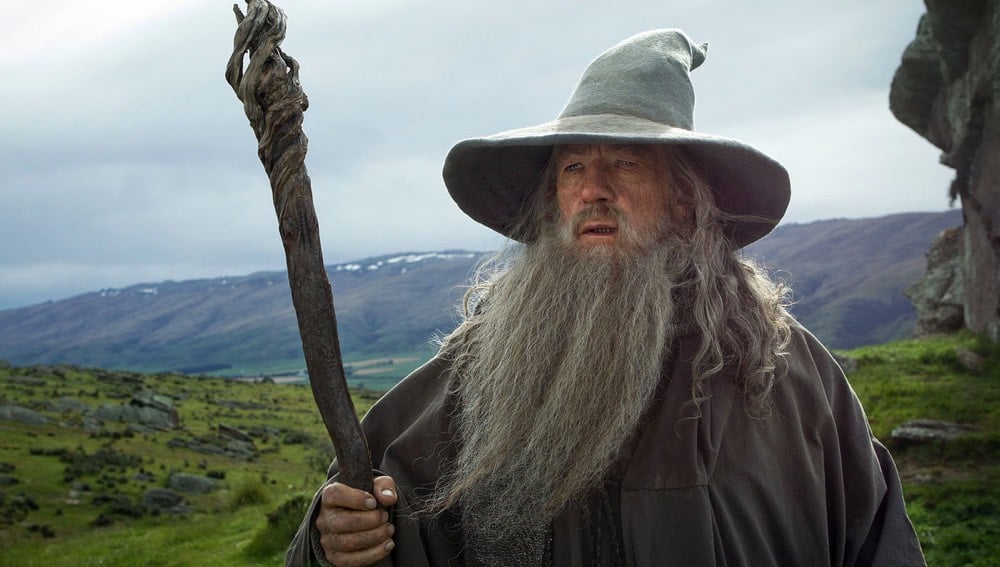
Starting in 1999 with his casting as Gandalf and continuing through 2003, Ian McKellan wrote a blog called The Grey Book about his experiences starring in Peter Jackson’s Lord of the Rings movie trilogy. (His website is getting pounded right now, so check out the Internet Archive mirror if you can’t get through.)
So the journey has begun without me. On Monday 11th October, Elijah Wood et al gathered in Hobbiton — and I hear they are behaving themselves! I have been in Toronto, masquerading as Magneto, the master of magnetism, on the set of Bryan Singer’s “X-Men.” I have just sent Peter Jackson an e-mail of good luck. I don’t expect an immediate reply — directing a film is totally time-consuming.
Meanwhile, Tolkien aficionados are mailing to the “Grey Book.” From teenagers and readers old as wizards come the advice, the demands, the warnings — united by the hope that the film’s Gandalf will match their own individual interpretations of the Lord of the Rings. I take comfort from the general assurance that they approve of the casting (not just of me but of all the other actors so far announced - thrilling news that Cate Blanchett is joining us.) Yet how can I satisfy everyone’s imagined Gandalf? Simply, I can’t.
And yet I believe he did satisfy almost everyone. Maybe McKellen will even reprise his role as the wizard in the upcoming Amazon series. (via a very excited Stephen Colbert)
Yesterday I linked to a thread discussing old school bloggers who are still active. One of the best of the old guard is very much still at it: Alan Taylor. Taylor has been curating photographic essays the The Atlantic for more than 8 years — and for several years before that at The Boston Globe and on his own blog. His latest features the work of Margaret Bourke-White, one of my all-time favorite photographers.
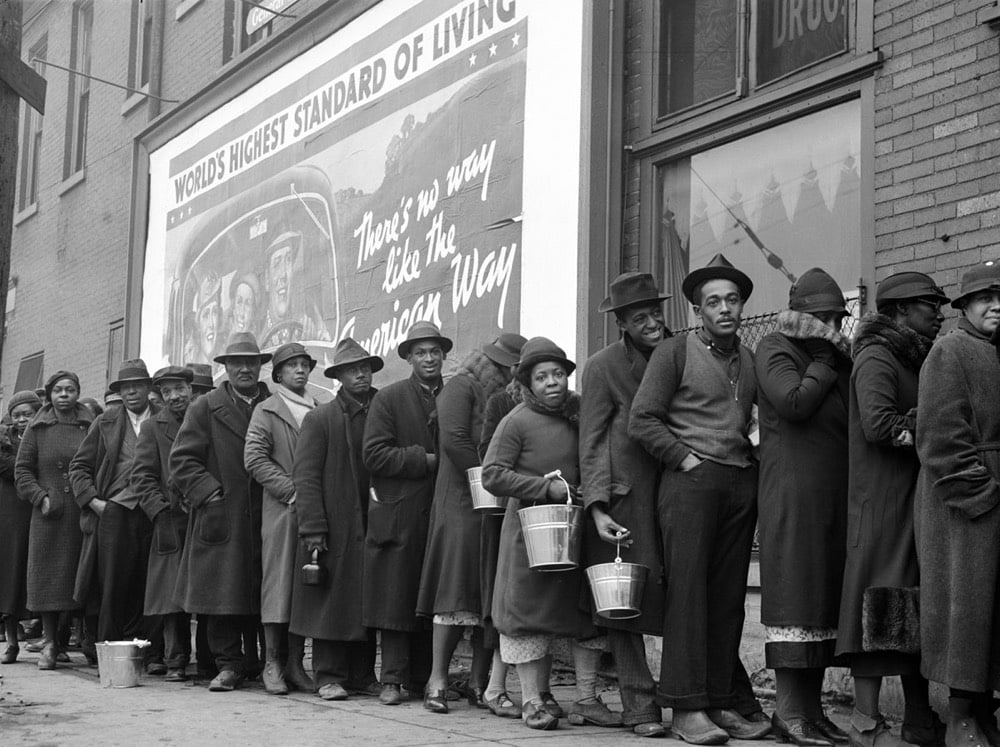
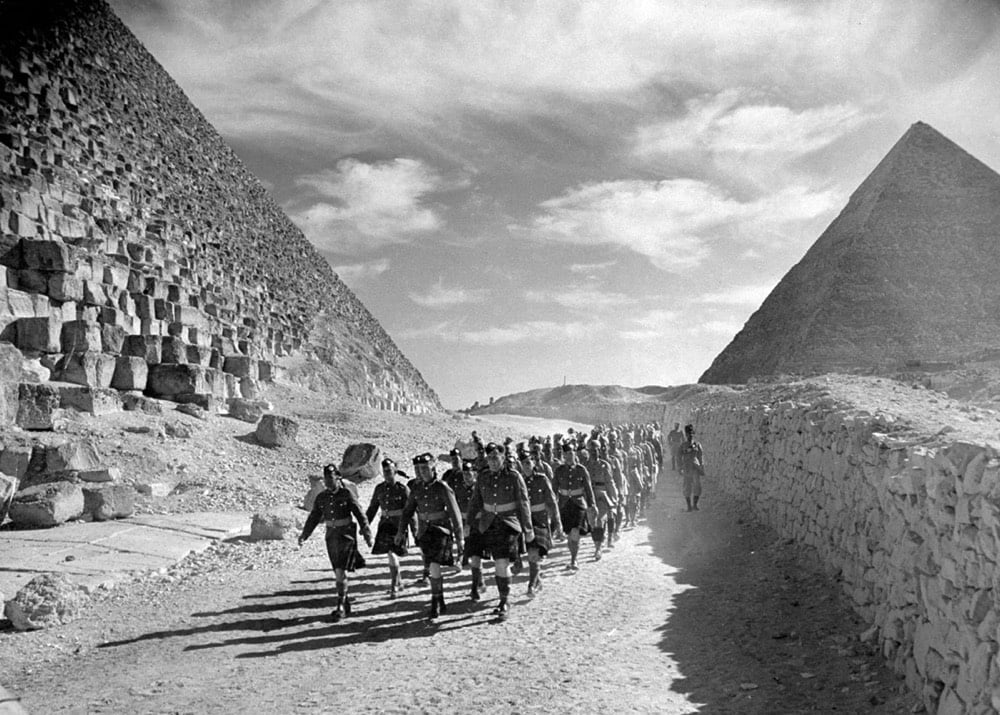
That first shot is an alternate view of this iconic photo.
By 1929, she began working for magazine publishers, joining both Fortune and, later, LIFE. She spent years traveling the world, covering major events from World War II to the partition of India and Pakistan, the Korean War, and much more. Bourke-White held numerous “firsts” in her professional life — she was the first foreign photographer allowed to take pictures of Soviet industry, she was the first female staff photographer for LIFE magazine and made its first cover photo, and she was the first woman allowed to work in combat zones in World War II.
Here’s Bourke-White in a fleece-lined flight suit during World War II, ready to work. Badass.

It’s nothing new for people who built tools to later have remorse when seeing those tools abused. Sometimes that remorse is world-historical, like with many of the scientists whose work led to the atom bomb. Sometimes, it’s something less than that, like the guy who built the retweet button for Twitter.
In the retweet button’s case, this guy is named Chris Wetherell. He’s also responsible for leading the team that built Google Reader. This is usually posed as an irony: the guy who built a thing that’s now loathed and everywhere (the retweet) also built the thing that’s beloved after its death. But to me, it’s not so ironic.
See, what Wetherell did in both cases was less invent something from whole cloth than adapt a user behavior (manual retweets and RSS readers) into part of a corporate product. In both case, the corporate versions of each were so successful that they crowded out the original forms of user behavior. The retweet got lucrative but ugly, the RSS reader enabled all new kinds of connections, but grew costly. The retweet lived and Reader died, but the underlying pattern was the same; once it was handed over to the corporation, everyone lost control.
And I think you can argue that there’s a parallel here too with the atom bomb folks. Few of them were upset that the structure of the universe works the way their theories predicted. What terrified them was putting the tremendous power inherent in the structure of the universe at the behest of the state.
This is the builder’s remorse. Not that you invented a thing, not that the consequences were unforeseen. It’s that you gave the thing to a power structure where things were overwhelmingly likely to end in ruin. You gave the power to people who don’t care about what you claim to care about. And that problem, because of the nature and structure of money and power, is extremely hard to avoid.
Kurzgesagt is one of my favorite YouTube channels. Their videos are entertaining & thoroughly researched, and the subject matter is right in the kottke.org wheelhouse. (This one on the physical limitations of humanity when it comes to space exploration is a particular recent favorite.)
So I appreciated their latest video called Can You Trust Kurzgesagt Videos?
In it, they detail the process of making their videos, which has gotten more extensive as the channel matures. The second half is about a pair of videos that didn’t meet their current standard: one about addiction (which I posted about here) and another about the European migrant crisis of 2015. The addiction video represented only one side of a controversial issue within the scientific community while the migrant video was hastily produced and poorly researched. As a result, they deleted both videos, even though they were among the channel’s most popular and plan to publish a future video about addiction that will look more broadly at its causes.
With 20+ years of kottke.org archives, I’ve been thinking about this issue as well. There are many posts in the archive that I am not proud of. I’ve changed my mind in some cases and no longer hold the views attributed to me in my own words. I was too frequently a young and impatient asshole, full of himself and knowing it all. I was unaware of my privilege and too frequently assumed things of other people and groups that were incorrect and insensitive. I’ve amplified people and ideas in the past that I wouldn’t today.
My process today is more rigorous (but not as rigorous as Kurzgesagt b/c we have different aims) and I’ve gained some wisdom (I hope!) about when vigor or sensitivity are called for. I still place a lot of responsibility on the shoulders of the reader — you are a smart bunch and I expect you to read and view everything here with a critical eye — but I am also more aware of my (small but not insignificant) responsibility as an informational gatekeeper.
But so anyway, I don’t know what to do about those old problematic posts. Tim Berners-Lee’s idea that cool URIs don’t change is almost part of my DNA at this point, so deleting them seems wrong. Approximately no one ever reads any post on this site that’s more than a few years old, but is that an argument for or against deleting them? (If a tree falls in the woods, etc…) Should I delete but leave a note they were deleted? Should I leave the original posts but append updates citing my current displeasure? Or like Mister Rogers used to do, should I rewrite the posts to bring them more into line with my current thinking? Is the kottke.org archive trapped in amber, a record of what I’ve written when I wrote it, or is it a living, breathing thing that thrives on activity? Is it more like a book or a performance? In my mind it’s both, which is why the site is compelling (IMO) but also makes this issue so thorny for me. The web is weird that way…but how do I embrace the weirdness re: this issue?
Design historian Steven Heller collects vintage letterheads and shares some examples at Design Observer.
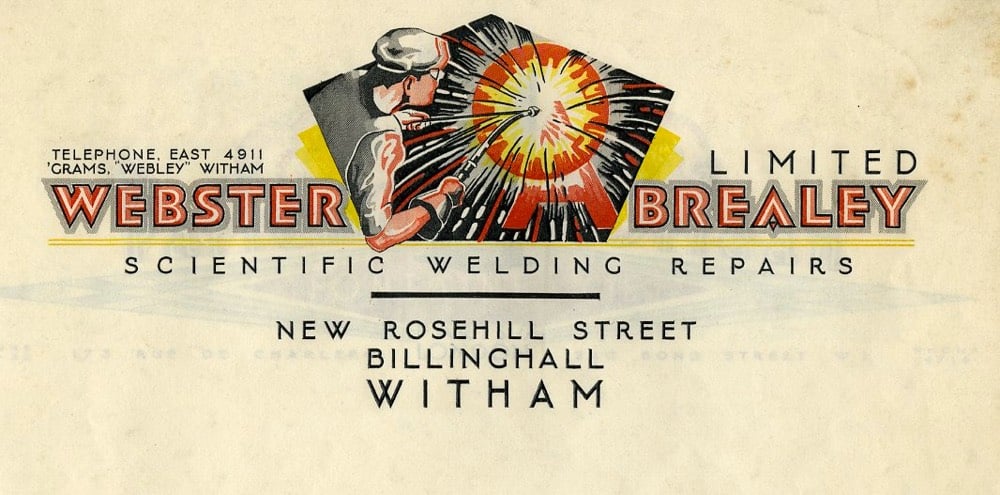
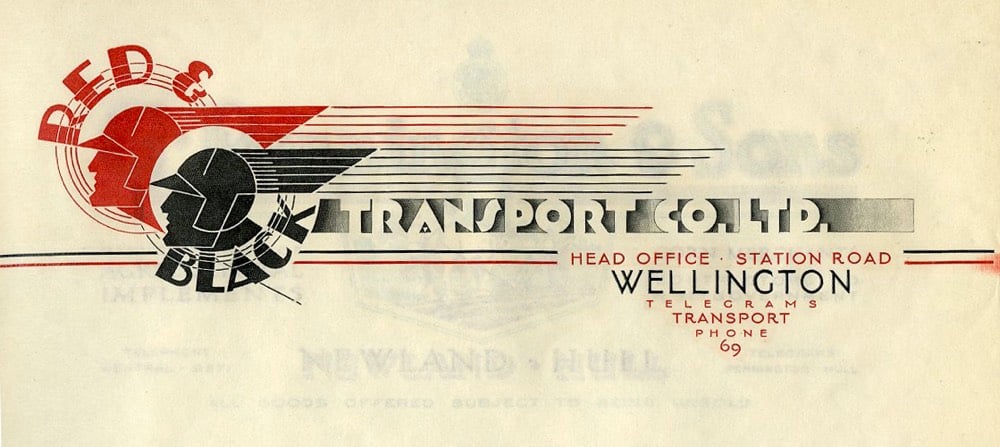
The design of blogs owes much to the letterhead (and, perhaps more obviously, to the newspaper masthead). Blog posts are, after all, public letters “to whom it may concern”. The first design I did for Gawker was quite letterheady and I loved & envied my pal Dean Allen’s letterhead-inspired design for Cardigan Industries.
Update: Loooots more great letterhead examples at Letterheady. (thx, jenni)

Subscribers to Noticing, the Kottke.org newsletter, have already seen our two-part Best of 2018 series, published on Thursday the 20th and Friday the 21st. We decided to split the best-of into two parts, with the first letter, the A-Sides, focusing on the 50 most popular posts of the year, and the second, the B-Sides, collecting our personal favorites.
For the B-Sides, Jason and I each submitted lists of posts we wanted to include, and after discarding redundancies, it turned out that the number of “favorite” posts was an even 100. I’d expected to write up about fifty, which was the number of the first newsletter. But that century mark felt like a sign, and a challenge I wanted to meet. So, fuck it; we wrote up the full 100.
Here’s an excerpt from the first newsletter:
Mapping cities, the planet, the stars
A number of the year’s best posts, as always, featured maps. A literal world map stars countries with the literal translations of their names. A map of the world after four degrees of warming is sobering, if not outright depressing. (Spoiler: most of the places where lots of people live will become hostile to the point of unliveable.) A map of the world where the sizes of countries is determined by their population has a similar “whoa!” effect, making you rethink the distribution of the planet. But maybe nothing is more “whoa!” than a timeline map of the 200,000 year history of human civilization, starting with migrations out of sub-Saharan Africa and following human travel and development through to the present.
We’ve reached the point in our development where we don’t necessarily need cartography to map our surroundings; photography will do the job. Even in 1920, photographers were able to capture stunning aerial photographs like cities, like these snaps of Edinburgh. These days, you can take aerial panoramas from 20,000 feet using as something as ubiquitous as an iPhone. Or use a fractal lens to take pictures of Tokyo, bending yourself into the future from that great contemporary city.
We now know what high-resolution photos of the Earth taken from the surface of the moon look like. We know how our seemingly geometric road grids subtly correct themselves for the curvature of the Earth’s surface. And we can even photograph black holes — or rather, watch stars in orbit around black holes, using a twenty-year time lapse. (Twenty years? Huh.)
That “twenty years” bit is a callback, as Kottke.org turned 20 this year.
And here is an excerpt from the B-Sides issue, which is, let’s just say, more dense:
The Year In Inspiration

Consider the fable of the dragon-tyrant. Literally, it’s about the possibility of extending the human lifespan and human flourishing, instead of sacrificing the young and old alike to the tyranny of death. But allegorically, as Jason writes, “humanity has lots of dragons sitting on mountaintops, devouring people, waiting for a change in the world’s perspective or technology or culture to meet its doom.”
Consider, too, the calmness of airline pilots. In the midst of disaster, good pilots actually get calmer, and this helps them solve their problems.
Do you need to get yourself out of a funk? Or console or otherwise help a grieving friend? Think about what Augustine says about hope: hope stretches us out across time. It makes our hearts bigger in order to contain it. And all our secular hopes help to prepare us for the great hope to come, that all might be redeemed and made perfect, and we can find our true place in the cosmos. Think about Dean Allen, one of the kindest and most talented people in the tech universe, and whether or not he’s found the peace that eluded him — that eludes us all — on Earth.
We are, all of us, explorers and hermits, both searching for adventure and longing for routine. This is why, despite it all, it is some small comfort to know that humans right now are better at Tetris than they have ever been. And that if we decide to move to Los Angeles, we’ll have to solve a lot of problems with ourselves first: “How do you help care for the city that drew you in, rather than allow your presence to steamroll its culture?” And, to generalize: how can we care for 2019, as we’re drawn inexorably into its vortex, rather than allow it to steamroll us all?
It’s been a great year. I’ve loved writing this newsletter, and being able to chime in with my Friday posts and occasional guest weeks. (Guest editor Chrysanthe Tenentes put up some great posts this year as well.) Cheers to Jason for continuing to host the best blog in the universe. Here’s to more and better in 2019. Here’s to blogs making their inevitable comeback. Here’s to another twenty years.
In 2008, corporate lawyer & city slicker Jodi Ettenberg quit her job to travel the world for a year…and then just never went back to her old job (or self). For 10 years, she traveled and ate her way through the world, documenting her adventures at Legal Nomads. For the 10-year anniversary of the site, Ettenberg has posted a retrospective highlighting some of her most memorable times.1
Writing in a true voice was important. Presenting a glimmering version of yourself that doesn’t feel real is an easy path to discontent. You can follow your passion all you want, but if you’re not expressing it authentically, in a way that is indisputably you, the gap will catch up with you. The space between who you are and who you express yourself to be exists in varying degrees. But if it’s too large, especially if your work involves sharing your thoughts creatively, the disparity can easily engulf you.
As I’ve been lucky enough to travel a bit over the last couple of years, this post about The Overview Effect, Mindfulness, and Travel particularly caught my eye.
You cannot ignore the happenings in other places, or stick your head in the sand, because it’s too late — you’ve stepped away and looked at the planet in a different light. (Or, as I said to someone recently “once you’re a pickle you can’t go back to being a cucumber.”) While far less vivid or spectacular than a space trip, travel does tend to push people to think about the forest through the trees and to constantly pin current observations against past experiences. We all do this, naturally. But I think that the more you see, the more you have to compare ‘against’, which then permanently alters your views of the planet and of its people. The ultimate example of this, of course, is seeing it all from above, an orb glowing in the darkness of space.
This reflection on her travels in Mongolia also had my head nodding.
I included this post because nothing since has compared to the magic of simply watching the identity I had dissolve, replaced by pure wonder. Who I was shortly prior didn’t matter, because everything in front of me felt so intensely new that it blotted out anything familiar.
These wonder-filled moments, large and small, have happened to me while traveling, looking at art, lost in the company of others, watching heavenly bodies eclipse each other and even while working on this here website…and that’s a perfect succinct description of how it feels when it happens.
Each week (more or less), I write a newsletter for Kottke.org called Noticing that summarizes the previous week, looks for deeper connections between some of the material, and expands on one or more of the shorter quicklink posts that didn’t get the full blogpost treatment the first time around. Here’s an excerpt from this week’s newsletter, on the internet and wasted time.
…
If all art aspires to the condition of music, then all media aspires to the condition of television. Television is passive and active, shallow and comprehensive, cheap and expensive, gratuitous and mandatory — an easy way to waste time, where you can find anything you want, but it all just sort of happens to you, without frustration or interference.
Dan Nosowitz’s “I Don’t Know How To Waste Time on the Internet Anymore” strikes a chord partly because it shows how the web has become too much like TV (too much corporate control, homogeneity, amateurs playing at being professionals in all the wrong ways), but also not enough like TV (delivering easy entertainment in bingeable quantities). You can still get lost down a rabbit hole on the web, but you have to work at it, and the results aren’t as satisfying as they used to be.
A lot of this rings very true to me. Some of it is unquestionable: the bottoming out of the ad market, and everything that caused that, has made it really hard for niche, indie web sites with an unusual point of view to survive. The commercial websites and traditional publishers who colonized that space are a lot more same-y and predictable.
Social media also transforms our experience. You used to be able to come across a blog or forum post, in your RSS feed or straight up navigating in your browser, and have a relatively fresh and unmediated reaction to it. You could then share that reaction on your blog or wherever. Even the blog style favored generous blockquotes as much as it did hot takes. Now everything feels a lot more picked-over. Something like Yanny vs. Laurel, by the time you actually listen to it for yourself, you’ve seen friends scream at each other at the top of their lungs, a half-dozen quickly-manufactured memes, a dozen or so copycat posts, and five or six scientific explainers or web spelunkers who’ve traced the auditory hallucination’s journey from the web’s bowels to its front pages. All of the moves have been mapped out. There aren’t a lot of surprises any more.
Trust me: I spend most of the week looking for things that I hope will surprise and delight Kottke readers for the one day of the week I manage the site. They don’t just float to the top.
So what does this mean? Paradoxically, wasting time is now more work. You can certainly do it — the web is as full of nonsense as it ever was — but you have to look a little bit harder. You have to learn some new things. You have to find your own corners charting unmonetizable enthusiasms. It’s not just going to happen to you. You have to dig your own rabbit holes.
The other thing is that I’ve come to treasure people who are genuinely inventive and interactive on social media. Finding people who will riff with you and are skilled at interjecting weirdness and intellect is becoming more valuable, to me, than people who have the precisely titrated level of anger or the perfect bon mot at whatever new atrocity has just crossed the stream. That sort of thing is valuable, but there’s a glut of it.
Relatedly: the other other thing is that when the world sucks, the web sucks. The whole country is broken. Fun is harder to find all over. Yet somehow, we do what we can.
A few weeks ago, I asked the readers of the Noticing newsletter to send in links to their blogs and newsletters (or to their favorite blogs and newsletters written by others). And boy, did they! I pared the submissions list down to a representative sample and sent it out as last week’s newsletter. Here’s a smaller excerpt of that list…you can find the whole thing here.
Several people wrote in about Swiss Miss, Subtraction, Damn Interesting, Cup of Jo, sites I also read regularly.
Ted pointed me towards Julia Evans’ blog, where she writes mostly (but not exclusively) about programming and technology. One of my favorite things about reading blogs is when their authors go off-topic. (Which might explain why everything on kottke.org is off-topic. Or is everything on-topic?)
Bruce sent in Follow Me Here, which linked to 3 Quarks Daily, a high-quality blog I’d lost track of.
Marcelo Rinesi blogs infrequently about a little bit of everything. “We write to figure out who we are and what we think.”
Futility Closet is “a collection of entertaining curiosities in history, literature, language, art, philosophy, and mathematics, designed to help you waste time as enjoyably as possible”. (Thx, Peter)
Michael Tsai blogs about technology in a very old school way…reading through it felt like a wearing a comfortable old t-shirt.
Sidebar: the five best design links, every day. And Nico Lumma’s Five Things, “five things everyday that I find interesting”.
Pamela wrote in with dozens of links, among them visual blog But Does It Float, neuroscience blog Mind Hacks, the old school Everlasting Blort.
Elsa recommends Accidentally in Code, written by engineer Cate Huston.
Madeleine writes Extraordinary Routines, “sharing interviews, musings and life experiments that explore the intersection between creativity and imperfection”.
Kari has kept her blog for the last 15 years. I love what she wrote about why she writes:
I also keep it out of spite, because I refuse to let social media take everything. Those shapeless, formless platforms haven’t earned it and don’t deserve it. I’ve blogged about this many times, but I still believe it: When I log into Facebook, I see Facebook. When I visit your blog, I see you.
Social media is as compelling as ever, but people are increasingly souring on the surveillance state Skinner boxes like Facebook and Twitter. Decentralized media like blogs and newsletters are looking better and better these days…
Ten years ago this month, Jodi Ettenberg left her cushy lawyer job in NYC to embark on some traveling she wanted to do. But just for a year. Well, one thing led to another, and she never went back to her old life. She wrote about her travels on Legal Nomads and eventually turned the site into her full-time profession. Jodi recently marked this anniversary with a post about the nearly unbelievable parade of challenges she’s been dealing with over the past several months: The Spinal Tap That Changed My Life.
Enduring a potentially terrifying home invasion, a botched spinal tap, a debilitating condition that only allowed her to sit or stand for minutes at a time without excruciating pain, unsuccessful operations, almost dying in the operating room, and countless other setbacks in the space of a few months, Jodi has plumbed the depths of her soul in an attempt to ready herself for a future that looks very different than the one she’d envisioned.
I reread Viktor Frankl’s book Man’s Search For Meaning during these difficult months. Frankl’s time in Auschwitz led to his development of logotherapy in his psychiatry practice, but the book delves into his theories of why certain people managed to survive the Nazi camps. Frankl saw life as a quest for meaning, found in work, in love, and in courage during difficult times. Among his beliefs was that suffering itself is meaningless, but we give suffering meaning by the way we respond to it. Or, as Harold S. Kushner writes in the introduction to the latest version, that “forces beyond your control can take away everything you possess except one thing, your freedom to choose how you respond to the situation.”
Instead of thrashing around in grief, I’ve chosen to focus on the gifts that have come out of this very complicated year. With these facts, things could have been a lot worse. Instead of being confined to isolation, I have you to walk this path with me. My community around the world raised their voices and opened their pocketbooks to keep me afloat when I couldn’t manage it. You respond to my progress walks on Instagram, you cheerlead every update, and your birding skills helped me identify the beloved marsh hens that I fell for during this recovery.
I don’t really know how to finish this post. Jodi is a friend…we met in person for the first time last summer, just a few weeks before the spinal tap and I visited her in Montreal briefly during her darkest days. Maybe I’ll just leave it at this: Jodi, I’m really proud of you and am looking forward to ten more years of Legal Nomads!
Dan Cohen is a history professor and administrator at Northeastern University; he was also the executive director of the Digital Public Library of America, and has been a general public smartypants in the field of digital humanities.
Dan recently wrote a blog post titled “Back to the Blog,” which muses on a microtrend I’ve seen as well. Friends and writers, not thousands or probably even hundreds, but solid dozens, returning to old-fashioned weblogging as a way to get their thoughts in order, take ownership of their intellectual property, get away from the Twitter hubbub, stick it to Facebook, or any one of a dozen other reasons to write a blog.
Now, a lot of the professional infrastructure of blogging that once was is broken. The ad networks that supported people don’t exist or don’t work the same way. The distribution, via RSS and then Google Reader, was monopolized and then fractured. Some of the blogging networks take as much of a walled-garden approach to their sites as Facebook does.
But, if you just want to blog (which is different from making a living as a blogger), it’s probably easier to start and host your own blog than it ever was. What’s holding people back, Cohen writes, isn’t really technical:
It is psychological gravity, not technical inertia, however, that is the greater force against the open web. Human beings are social animals and centralized social media like Twitter and Facebook provide a powerful sense of ambient humanity—the feeling that “others are here”—that is often missing when one writes on one’s own site. Facebook has a whole team of Ph.D.s in social psychology finding ways to increase that feeling of ambient humanity and thus increase your usage of their service.
The metaphor suggests that blogging either needs its own mechanisms of ambient humanity — which it’s had, in the form of links, trackbacks, conversations, even (gulp) comments, all of which replicated at least a fraction of the buzz that social media has — or it needs a kind of escape velocity to break that gravitational pull. Gravity or speed. Or a hybrid of both.
kottke.org is 20 years old today. Holy shit! On March 14, 1998, I launched a new episode of 0sil8 called “Notes”. 0sil8 was a previous website of mine, started in 1995 or 1996. The site’s format was episodic: every month or two the design and content was completely different. With Notes, I wanted to have somewhere to write regularly for my friends, modeled after the online diaries that were growing in popularity at the time. Weblogs were a thing, one of the many types of regularly updated personal sites that were in existence then; they wouldn’t take off and begin to consume all media for another year or two. In December 1998, I registered kottke.org (kottke.com was taken and I wasn’t a network so .org it was) and sometime later moved Notes over, where it’s been ever since. And now it’s one of the oldest regularly updated sites on the web.
I’ve been reading back through the early archives (which I wouldn’t recommend), and it feels like excavating down through layers of sediment, tracing the growth & evolution of the web, a media format, and most of all, a person. On March 14, 1998, I was 24 years old and dumb as a brick. Oh sure, I’d had lots of book learning and was quick with ideas, but I knew shockingly little about actual real life.1 I was a cynical and cocky know-it-all. Some of my older posts are genuinely cringeworthy to read now: poorly written, cluelessly privileged, and even mean spirited. I’m ashamed to have written some of them.
But had I not written all those posts, good and bad, I wouldn’t be who I am today, which, hopefully, is a somewhat wiser person vectoring towards a better version of himself. What the site has become in its best moments — a slightly highfalutin description from the about page: “[kottke.org] covers the essential people, inventions, performances, and ideas that increase the collective adjacent possible of humanity” — has given me a chance to “try on” hundreds of thousands of ideas, put myself into the shoes of all kinds of different thinkers & creators, meet some wonderful people (some of whom I’m lucky enough to call my friends), and engage with some of the best readers on the web (that’s you!), who regularly challenge me on and improve my understanding of countless topics and viewpoints.
I had a personal realization recently: kottke.org isn’t so much a thing I’m making but a process I’m going through. A journey. A journey towards knowledge, discovery, empathy, connection, and a better way of seeing the world. Along the way, I’ve found myself and all of you. I feel so so so lucky to have had this opportunity. When kottke.org turned 10, my post marking the anniversary ended with “I’ll see you in 2018”. In my recollection, that line was somewhat serious but also partially somewhere between a joke and a dare. Like, “how has this thing lasted 10 years, why not go for 20?” So…why not go for 30? 40? I’ll see you for sure in 2028 and perhaps even in 2038. Thank you so very much for being here with me, I surely don’t deserve such fine company.
P.S. And if you’ll indulge me for a moment in a brief shameless sale pitch, if you have found something valuable here over the past 20 years, please consider supporting the site with a membership. Member support has put the site on a stable financial path into the future and has personally re-energized my involvement and commitment to the site. Thanks!
The latest issue of Noticing (kottke.org’s weekly newsletter) went out today. This issue includes a link to my interview with Laura Hazard Owen at NiemanLab about kottke.org turning 20 years old next month, the state of blogging, and the melancholy of the conversation around the decline of the open web.
I think that it’s been really hard, the last couple of years, to cover anything — I don’t know how to say this in a way that isn’t going to get all weirdly interpreted — it’s been hard to cover anything but things that are serious. Because, you know, a lot of people - I think very rightly - feel that if you’re someone who thinks the world is coming down around all of us, that you should be on a mission to try to fix that. And I think that there are plenty of sites and plenty of media outlets and plenty of people who are oriented in that direction and moving in that direction.
But I don’t think kottke.org is one of those things. I think that the site is much more about things that are a little bit more — I don’t want to say hopeful, but a lot of it is, like, look at this cool thing. Look at what humans can do when they have enough time and energy and whatnot to do them! When you called, I was had just been watching the SpaceX thing. Seeing those two booster rockets land at the same time blew my mind. I was just sitting here, yelling, like, oh my god!
There has to be room in our culture for that type of stuff — that stuff that is inspirational and aspirational — because it provides some sort of hope that we can actually have more of that in our lives, rather than less.
To which Tim added (italics mine):
I freely admit that this is something Jason does as a blogger way better than I do (along with writing fewer words more often). I think I look at the world and mostly think less “oh my god!” and more “how in the hell does that work?” But I think the two of them have to be complimentary. Learning begins in wonder (the Greeks would call it thauma) as much or more than in criticism (skepsis).
That last line sums up my approach here (and honestly, to life) as well as you can in one sentence. Noticing could very well have been called Wonder instead.
You can read the rest of this week’s newsletter here or subscribe here.
The Awl and The Hairpin announced they would be closing up shop at the end of the month, after almost nine years of danged good blogging. Several writers and editors wrote about their favorite pieces; many of them agreed with Jason that Willy Staley’s A Conspiracy of Hogs: The McRib as Arbitrage was a high-water mark.
Very little in pop culture, especially if it doesn’t live very long, is multi-generational. The Awl and The Hairpin managed to pull it off, straddling the seam of Millennials and Gen X with an air of uncaring desperation. It was the writers who lost their jobs in the financial crisis of 2008-2009 staring at the kids who couldn’t get real jobs after the financial crisis of 2008-2009, making a solemn vow to write whatever they thought was smart, or funny, or necessary for the moment.
Eventually, the jobs came calling — for many of the site’s best writers, but not for all — because they badly needed what The Awl had. And advertising: well, what are you going to do? Working on a shoestring may be romantic, but it sure ain’t no fun.
The Awl should have been the model for a new generation of sites that all outlived it. It wasn’t. We would mourn it less if there were more new blogs, staffed by hands young and old, rising to succeed it, jockeying to become required reading. Right now, there aren’t.
But who knows? There is still plenty of time.
This is an excerpt from the third installment of Noticing, a still-new and all-free kottke.org newsletter. We hope you’ll subscribe.
Tim Bray is still blogging in 2017.
I wonder what the Web will be like when we’re a couple more generations in? I’m pretty sure that as long as it remains easy to fill a little bit of the great namespace with your words and pictures, people will.
The great danger is that the Web’s future is mall-like: No space really public, no storefronts but national brands’, no visuals composed by amateurs, nothing that’s on offer just for its own sake, and for love.
Not sure if I’ve ever mentioned this on here before, but I often think of blogging as vaudeville to social media’s moving pictures (aka “movies”). It’s not that blogging and vaudeville are any less entertaining or engaging than they used to be,1 but movies in the 20s/30s and social media like Facebook and Snapchat (and media companies like Vox and BuzzFeed that leverage them well) provided tremendous quantities of scale and integrated means of production. Ok, the analogy needs a little work, but as Bray suggests, a few of us diehards will still be hoofing it here on our small stages until they sweep us off the stage. (via @cbredesen)
John Gruber has good news for hardcore Mac users: Apple is releasing a completely redesigned Mac Pro next year and new iMacs with pro-level specs this year. Intriguing, but I’m more interested in how this news was delivered:
There are only nine people at the table. Phil Schiller, Craig Federighi, and John Ternus (vice president, hardware engineering — in charge of Mac hardware) are there to speak for Apple. Bill Evans from Apple PR is there to set the ground rules and run the clock. (We had 90 minutes.) The other five are writers who were invited for what was billed as “a small roundtable discussion about the Mac”: Matthew Panzarino, Lance Ulanoff, Ina Fried, John Paczkowski, and yours truly.
Gruber runs a one-person independent blog that he started as a hobby and now he’s one of five people on the planet that the largest company in the world invites in for an unprecedented preview of new Mac hardware. (And I would argue he’s perhaps the only one invited who would be viewed as indispensable — you could see the others swapped out for Mossberg or Pogue or Swisher or Manjoo, but not Gruber.) That’s incredible and inspiring. It may be the twilight of the independent blogger, but Gruber continues to show how a small-but-obsessive site can do things no one else can.
Update: A pal just alerted me that Daring Fireball is having difficulty serving pages, something that usually only happens to sites DF features. “Is this the first self-fireballing in Gruber’s history?” (via @djacobs)
If you are a regular reader and appreciate what I do here, please support kottke.org by purchasing an annual membership. It only takes a minute (or about 20 seconds on iOS w/ Apple Pay) and your collective support will mean a lot to the future of kottke.org. This has been in the works for a while now and I have a lot to say about it, but go check it out first, subscribe, and then come back. I’ll wait.
All set? Ok. A couple of recent catalysts have set this into motion, but I’ve been thinking about it for the last few years. So here’s why I feel this is necessary now, in four interconnected main points.
Focus on dedicated readers. Anyone who relies on an audience of some kind — artists, writers, businesses, etc. — has to focus on serving regulars while keeping an eye on attracting new readers/customers/users. As much as I feel that everyone in the world would enjoy reading the world’s best blog — I mean, who wouldn’t? — it’s difficult for me to take time out from writing the site to reach out to potential new readers.1 I love being a regular myself and at this point in the site’s evolution, it makes sense to focus mostly on the people who read and love the site. Part of that focus is building up the financial link between us. In an ideal world: I write for you, you pay me, I write some more. No middlemen. I’m not sure that’s an entirely feasible arrangement at this point, but we can get part of the way there and work on the rest.
Revisiting an old idea. Some of you may remember that I’ve asked for support directly from readers before.2 A few months ago, I went out to lunch with Tim Urban from Wait But Why. We’d hardly said hello when he said something like “my goal for this lunch is by the end of the meal, you’ll agree to ask your readers to financially support kottke.org”. Tim was very clear that asking his readers for support on Patreon had been game-changing for his site. Project creators and potential backers have become comfortable with directly funding creative efforts online, particularly through Kickstarter & Patreon and I’m curious to see how it works for kottke.org in 2016.3
A changed media landscape. It’s been 11+ years since I quit my job to do kottke.org full-time. Online media has changed a lot since then. Hell, it’s changed a lot in the past few years. Blogs are dead — long live blogs! — and the open web is struggling. If you ask around to the creators of other established independent sites on the web (and I have talked to many of them), you’ll hear that traffic and display ad revenue have been falling for the last few years. Many factors have contributed — Facebook, readers switching to mobile, the rise of apps, social overtaking search for discovery, ad blockers, Google Reader’s shutdown, VC money flooding into online media — and smaller sites without dedicated content marketing and mobile/social development teams can’t keep up. Other strategies are necessary.
Diversification. The site currently has two main sources of revenue: advertising via The Deck & the We Work Remotely job board and affiliate income from Amazon & iTunes. In an effort to diversify revenue, I’ve tried several things — RSS sponsorships, sponsored posts for Kickstarter projects, consulting for startups, and speaking — and none of them have stuck. I’ve thought about writing a book, putting on a conference, or doing a podcast. But that all feels like it’s beside the point and not what I really want to do, which is just to write here, for you. A recent (hopefully temporary) hiccup in one of these revenue sources4 has driven home the need for not putting all my eggs in one basket. I would love for reader support to become a healthy third leg on the ol’ revenue stool.
I could go on — and in several previous drafts, boy, did I! — but here’s what it boils down to for me: I’m proud of what I’ve built here at kottke.org over the past 18 years and I’m committed to publishing here regularly and operating independently as long as I am able. Even though the site is primarily a one-person operation, I’ve never done it alone. You have always been an essential part of this site — providing me with feedback, counsel, encouragement, pushback, and many great links and ideas for posts — and I’d love your help in taking this next step. As always, thanks for reading and thanks for the support!
Andy Baio has redesigned his long-running blog Waxy.
After 14 years of blogging, I switched from MovableType to WordPress. The design is finally responsive, though pretty minimalist for now with lots of rough edges. It took some effort, but I preserved the links to everything I’ve ever written — 472 posts and 15,891 links.
In his post about the redesign, he notes why he still continues to publish on his own site:
Ultimately, it comes down to two things: ownership and control.
Last week, Twitter announced they’re shutting down Vine. Twitter, itself, may be acquired and changed in some terrible way. It’s not hard to imagine a post-Verizon Yahoo selling off Tumblr. Medium keeps pivoting, trying to find a successful revenue model. There’s no guarantee any of these platforms will be around in their current state in a year, let alone ten years from now.
Here, I control my words. Nobody can shut this site down, run annoying ads on it, or sell it to a phone company. Nobody can tell me what I can or can’t say, and I have complete control over the way it’s displayed. Nobody except me can change the URL structure, breaking 14 years of links to content on the web.
I might have said “freedom” instead of “control” but there’s some hard nodding from me right here. I’d also add something about the freedom to pursue revenue in whatever way you want. Publishing on YouTube or Facebook or Medium or Instagram or Twitter limits how you can do that.
But given the state of the open web these days, Andy rightly notes that going it alone is much more difficult now than it used to be:
But the ecosystem for independent publications is fundamentally broken. Getting discovered, building a readership, and profiting from your work as an independent writer are all much, much harder than they used to be.
I also have lots of thoughts about this, and I’m glad Andy has decided to join me in sticking it out and remaining independent. Waxy is one of my favorite sites in the world and I’m happy to see it looking so smart this morning.

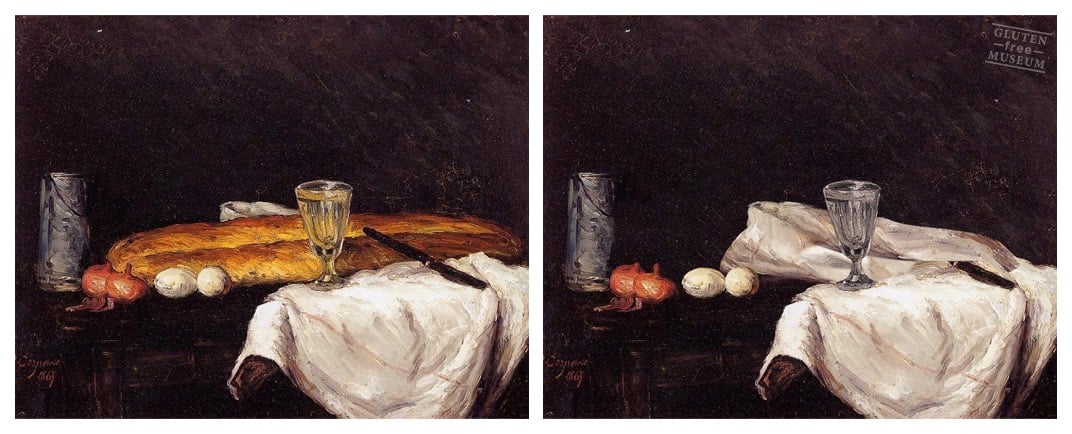
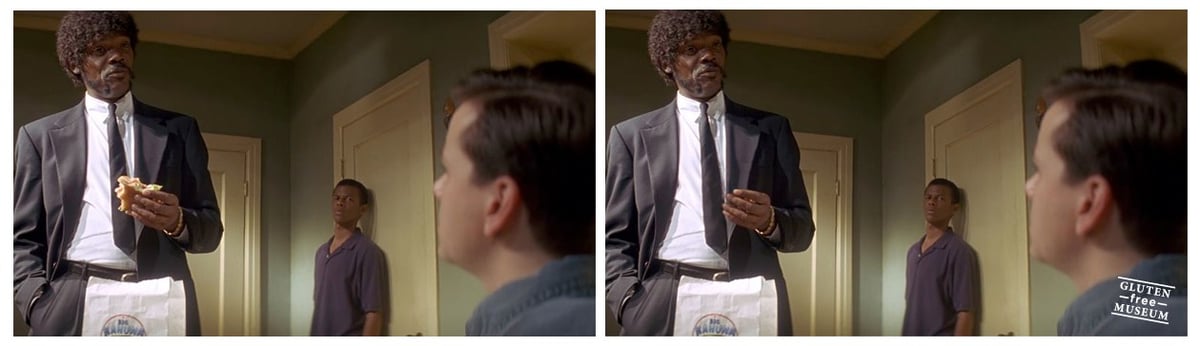
Gluten Free Museum takes works of art (high and low) and removes all of the gluten from them. A one-trick pony, but a particularly entertaining one. (via tmn)

For the first time in more than four years, kottke.org is sporting a new design this morning. Since you should never launch anything completely finished,1 there are probably still some things that need to be ironed out, but I hope most of it works. (Drop me a note if you notice something amiss?) Let’s hop right into what’s new and why. (For reference, here’s what the site looked like until late yesterday, here’s what I said about that design, and here’s what some of the previous designs looked like.)
Design. Gone is the now-beloved blue gradient (which ppl didn’t like when I introduced it), replaced with a colorful rainbow banner thingie. The site title and the old school tagline — “home of fine hypertext products” — are both making a comeback. The march toward simplicity continues…every remaining design element serves a purpose. The type is a bit bigger to offset ever increasing display resolutions (which somewhat paradoxically makes everything smaller). Post titles are quite a bit larger. Media embeds and images are much larger, especially if it’s right at the top of the post. Check out this post and this one for examples of what I’m talking about. Tweaked the footnote style.2 More tweaks to come. (Including moving to some even faster new servers at Arcustech, the fantastic hosts of kottke.org for years now. Big thanks to them for all their support!)
The layout of the site is responsive — not fully so, but if you resize your browser window, it’ll change and flow and do all of the neat things that responsive design does. The type is still my favorite Whitney ScreenSmart by Hoefler & Co (designed by Tobias Frere-Jones), but I finally (FINALLY!!!) turned on smart quotes and such — you know, like “opening and closing quotes around this text” and apostrophes’ apostrophes and the proper m-dash right heeeeeere — so now the designers who read the site can finally stop tutting about it. (And Hoefler and Frere-Jones can stop tearing their hair out about seeing text rendered with their point-perfect typeface littered with dumb quotes. Enjoy your tresses, fellows!)
Mobile. This was the main impetus behind the redesign. Over 40% of you read kottke.org on a mobile device of some kind. The old site worked fine on phones and tablets, but not great. Now, the site looks and works great on mobile. (At least I think it does.)
Tags. Some of my favorite things about kottke.org are the tags and tag pages. Looking at the site through the lens of tags, it becomes apparent that kottke.org is actually a collection of hundreds of small blogs about introversion, Stanley Kubrick, time travel, early color photography, economics, crying at work, and all sorts of other things. For the redesign, I made them more visible on the site and I’m hoping to find more ways to improve their involvement in the site soon. You’ll now find tags at the end of posts no matter where you find them on the site; previously they were only on the individual post pages. Tag pages are now paginated so you can go back through hundreds and even thousands of posts on each topic. I’ve also included a list of related tags at the top of each tag page…which is incredibly addictive for surfing around aimlessly.
Biography. With the help of some friends (aka the kottke.org board of advisors), I rewrote the about page. I liked the brevity of the old version, but in the words of one friend, “the previous version undersold the site so much it was almost inaccurate”. This is the first bio I’ve ever written that takes seriously what the site is and what I’ve done in my career…and as such it makes me really uncomfortable. Taking credit, particularly in public, has never been my thing. But I wanted to have a chance at explaining kottke.org to people who might not know the whole story. Everyone here has an opinion about kottke.org, this is mine.
When I started the site in 1998, people expressing their ideas & beliefs through links and attempting to stitch technology & the liberal arts together were not commonplace pursuits. In many ways, media on the web has come to resemble, in form and function, what kottke.org and other early blogs were doing back then. The largest social media companies in the world are now centered around people collecting and showing each other cool/interesting/funny links in order to say something about what they believe. I’m proud that kottke.org and I have played a role in that (r)evolution.
Future. The past 2.5 years have been the most challenging out of the 18+ years I’ve been doing the site. (Translation: they sucked.) I’ve been working, with many loooong periods of inactivity, on this redesign for more than 2 years. It’s not a cure for cancer or the world’s best design work, but to have it finally be out in the world feels amazing. Like a bad chapter in my life is ending. Like I’m still alive. Vital. A start of something. Like I’m finally investing in myself and my future for the first time in a long while. It feels like hope. And I hope you like it. It’s a genuine pleasure being able to share myself with you like this, and I don’t know what I’d do without it.
Tech investor Fred Wilson recently gave the commencement address for the very first graduating class at the Academy For Software Engineering. In it, he shared the secret to his success:
So with that, I am here to tell you that the secret to success in your career comes down to three things, take risks, work hard, and get lucky.
I essentially1 agree with Wilson here. Earlier today I was listening to the latest episode of the Recode Media podcast where Peter Kafka’s guest was Daring Fireball’s John Gruber. Gruber recounted how he got started blogging about Apple and eventually turned it into a very successful business. I’ve heard the story before and it conforms nicely to Wilson’s path to success.
1. Take risks. Gruber bet heavily on three things for Daring Fireball: Apple, blogs, and (later) podcasts. None looked that impressive from a business standpoint when his bets were made. In 2002 when he started writing DF, Apple was still an underdog computer company whose partisans had mostly stuck with the company through its lean years of offering products that weren’t competing well and which didn’t exemplify the ideals of the Apple of yore. The iPod had just come out a year earlier and the life- industry- company-changing iPhone was years in the future. But Gruber never viewed Apple as an underdog…to him it was a legendary company in the world poised for future greatness. Professional blogs were just starting to be a thing back then as well, and it was far from certain that you might be able to earn even a partial living from them, especially on your own. And when he started his Talk Show podcast in 2007, podcasting was still largely a hobbyist endeavor. Sure, you could make some money doing it, but 9 years on, there’s big money to be had for the most popular shows. Three risky bets that paid off.
2. Work hard. Tens of thousands of posts and hundreds of hours of podcasts over the past 13+ years, yeah, I think that covers it. Gruber has put in the necessary ass-in-chair time.
3. Get lucky. There’s a lot of luck sprinkled around the success of DF, but perhaps the biggest break Gruber got was Apple’s decision to open up the iOS App Store to outside developers. Suddenly, you had all of these developers, startups, established software companies, and venture capitalists pouring money into the development and promotion of iOS apps. So these companies had money and needed somewhere to advertise their apps, a place where they could be sure all of the most influential and rabid Apple aficionados would see their message. Daring Fireball was the obvious place and the site’s RSS sponsorships were the perfect format.
Betsy Mason and Greg Miller are writing a new blog for National Geographic about maps called All Over the Map. Here’s a mission statement.
There is something magical about maps. They transport you to a place you’ve never seen, from the ocean depths to the surface of another planet. Or a world that exists only in the imagination of a novelist.
Maps are time machines, too. They can take you into the past to see the world as people saw it centuries ago. Or they can show you a place you know intimately as it existed before you came along, or as it might look in the future. Always, they reveal something about the mind of the mapmaker. Every map has a story to tell.
You can also follow their progress on Twitter and Instagram. They recently shared this comparative rivers and mountains chart on Instagram; it’s one of my all-time favorite charts.
Older posts





Socials & More